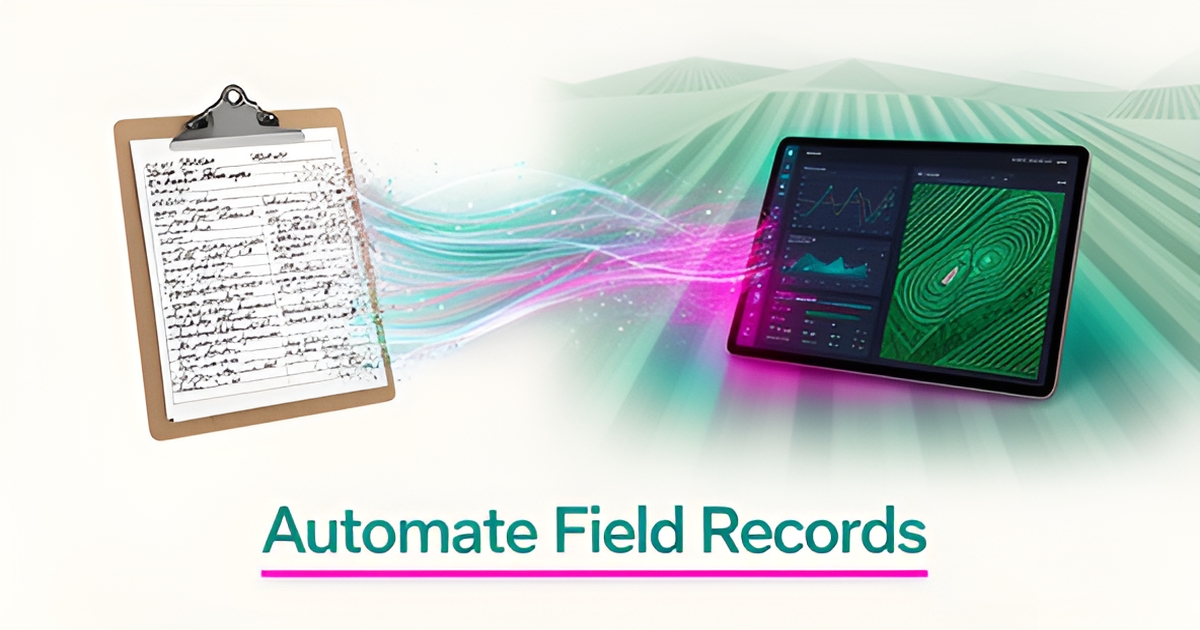
From Manual Logs to AI: How Pesticide Service Companies Can Automate Field Records
Key Facts
- Up to 40% of pesticide treatments may be unnecessary due to calendar-based interventions, according to PlantVoice monitoring data
- Targeted interventions can cut annual pesticide spending by up to 20% per real-time pest monitoring research
- Reducing chemical inputs is associated with an average +15% harvest quality increase according to PlantVoice field results
- Roughly 80% of AI implementation problems stem from poor data pipelines, not algorithms, per agricultural AI adoption analysis
- The recommended AI input mix is 70% imagery, 20% sensor data, 10% farmer logs per industry analysis
- Farmbrite scores 9.3/10 overall as a top pesticide workflow tool in pesticide software reviews
Hire a team member that works 24/7 — for less than a part-time wage.
AI receptionists, SDRs, dispatchers and 99+ roles. Trained on your business, fully managed.
Not sure where to start? Ask our AI planner
The Hidden Costs of Paper Logs and Calendar-Based Guesswork
Paper logs and calendar spray schedules feel simple until an audit, a drift complaint, or a wasted tank reveals the real price. Field crews write notes by hand, sensors log separately, and imagery sits in another folder, so the story of what was applied, where, and why is always incomplete.
Calendar-based interventions drive much of that waste. Plant monitoring data suggests up to 40% of pesticide treatments are unnecessary because they follow the calendar rather than actual pest pressure. The result is higher costs, environmental impact, and chemical residues on the fruit — with no proof the treatment was needed.
Fragmented capture makes it worse. AI adoption analysis for agriculture finds only about 10% of AI inputs are farmer logs and notes, yet those notebooks often contain insights sensors miss — and digitizing them immediately is crucial for accuracy. When notes stay on paper, they never join trap counts or crop physiology data.
That gap creates operational blind spots that surface in compliance. Supervisors review treatment history across multiple fields before planning the next window, but pesticide workflow software reviews note that deeper reporting depends on disciplined data entry. Inconsistent naming, missing signatures, and late entries turn a spray record into an audit risk.
Reactive schedules also lock in chemical overuse. Most treatments are still preventive, calendar-based, and imprecise, keeping crews spraying just-in-case instead of when pest pressure justifies it. Shifting to a predictive model where interventions are triggered by real-time data reduces that over-application.
The cost of staying manual compounds fast. Real-time pest monitoring research reports up to a 20% reduction in annual pesticide spending through targeted interventions, with similar treatment reductions cited from the first season and an average +15% harvest quality increase when chemical inputs drop. Those savings disappear when records are incomplete.
Paper logs create specific failure points across the service operation:
- Delayed transcription turns field notes into approximate dates and rates
- Separate notebooks, sensors, and imagery prevent cross-referencing trap data with crop stress
- Missing sign-offs and inconsistent product naming break audit trails
- Calendar triggers continue even when pest pressure is low
Fixing the data collection pipeline fixes most of the risk. The same adoption analysis notes that if you fix your data collection pipeline, you fix 80% of your AI problems. That means capturing what crews actually do at the point of application and linking it to field, input, and outcome.
For service providers moving from paper to digital recordkeeping, the fastest path is usually rebuilding the one workflow that costs the most — spray recordkeeping — as a fixed-price, phased build. AIQ Labs' AI Workflow Builds do exactly this: structured tasks, consistent documentation of what was applied and where, and no forced changes to how crews work in the field.
The Data Foundation: Why Consistency Beats Volume
Most pesticide service companies assume AI automation starts with selecting a model or platform. The reality is far more mundane: it starts with the discipline of the technician holding the clipboard. Agricultural AI research suggests around 80% of AI implementation problems stem from poor data pipelines, not algorithm failures. If your field inputs are inconsistent, no amount of computing power will produce reliable predictions.
The data composition for effective agricultural AI is surprisingly specific. Industry analysis recommends an input mix of 70% imagery, 20% sensor data, and only 10% farmer logs and notes. Yet most service operations invert this ratio, drowning in handwritten notes while lacking standardized photos of pest pressure, application sites, and crop conditions. Imagery requires consistent angles, distances, and lighting — standards that must be baked into daily workflows, not imposed retroactively.
Sensor data presents its own trap. Soil probes, weather stations, and sap flow sensors generate continuous streams, but research emphasizes they are only useful if maintained and synchronized with imagery. A temperature reading logged at 2 PM means something entirely different than one logged at 6 AM if the timestamp drifts or calibration lapses. The 20% sensor allocation demands rigid maintenance protocols, not just installation.
The 10% allocated to logs and notes carries disproportionate weight. Experts note that old-fashioned notebooks often contain contextual insights sensors miss — the "why" behind a treatment decision, the observation of beneficial insect activity, the neighbor's spray drift. Digitizing these immediately, not at day's end, preserves accuracy. Memory degrades fast; a voice note recorded at the truck captures detail a Friday spreadsheet entry never will.
- Standardize photo protocols: fixed angles, reference objects, consistent lighting windows
- Enforce sensor calibration schedules synced to imagery capture times
- Mandate real-time digital logging via voice or mobile — no end-of-day transcription
- Map every field input to a structured schema before it hits the database
Software evaluations confirm that deeper reporting depends on disciplined data entry. Tools like Farmbrite turn spray planning and execution notes into structured tasks, but they cannot enforce the consistency an AI model requires. That discipline is a management decision, not a software feature. AIQ Labs builds custom systems that ingest this standardized data, but the foundation — consistent, structured, timely inputs — must exist before the first model trains.
AI-Driven Monitoring: From Reactive Logging to Predictive Intelligence
Traditional pest management relies on scheduled applications and manual trap checks, leading to over-treatment and missed early warning signs. AI-powered monitoring systems now integrate real-time insect trap data, weather patterns, and crop physiology to enable precise interventions based on actual infestation levels rather than calendar dates. This shift from reactive logging to predictive intelligence lets pesticide service companies target treatments only when and where they are needed.
By analyzing multi-source data streams — smart trap imagery, sap analysis, environmental sensors — AI models identify pest pressure trends and forecast outbreaks with increasing accuracy. According to PlantVoice, this approach can reduce unnecessary pesticide applications by up to 40% and achieve up to 20% reduction in annual pesticide spending through targeted interventions. Farms using such systems also report an average +15% harvest quality increase, thanks to lower chemical residues and reduced plant stress from over-treatment.
These systems provide 24/7 continuous monitoring across all field plots, including remote areas, creating a historical record that supports compliance and long-term planning. As noted in AI adoption strategies for agriculture, improving data collection pipelines resolves the majority of AI-related challenges, making consistent, high-quality field data the foundation for reliable predictions. For companies ready to go further, AIQ Labs' AI Operating Systems unify trap data, weather inputs, and crop health metrics into one connected operating layer — built in phases and owned outright.
The result is a move from manual, error-prone logs to automated, insight-driven records that trigger precise actions — reducing waste, lowering costs, and improving outcomes without compromising crop protection. This predictive capability transforms field recordkeeping from a compliance task into a strategic advantage for sustainable pest management.
Implementation Roadmap: Transitioning Your Field Operations
Transitioning from paper-based logs to AI-driven field records requires a structured approach that maintains operational continuity while building audit-ready data foundations. Success begins with disciplined data entry practices, since audit-friendly histories depend on consistent capture of field and treatment details across teams. Starting with a single workflow — such as spray planning or execution notes — lets companies validate the system before scaling, reducing disruption and building team confidence.
A phased, milestone-based build works best, where each phase delivers a functional component like structured task tracking or outcome monitoring. This aligns with proven AI adoption principles: fixing the data collection pipeline resolves most implementation challenges, and starting with simple tools that fit existing routines increases the likelihood of sustained use. For pesticide service companies, this might begin with digitizing spray records in one service region before expanding to inventory tracking or client reporting. AIQ Labs prices these builds transparently — you can start monthly, build in milestones, or own the system outright; see pricing for the current models.
Managed AI support can further ease the transition by handling system training, integration with existing tools like scheduling or accounting platforms, and continuous optimization. This ensures the AI system adapts to real-world field conditions while maintaining compliance-ready records. By focusing on incremental progress and data quality first, companies transform manual logs into a reliable digital audit trail without sacrificing service delivery. To explore how AIQ Labs can support your transition, start the 2-minute Fit Check, then book a free 30-minute strategy call.
Still paying for 10+ subscriptions that don’t talk to each other?
We build custom AI systems you own outright. No vendor lock-in. Full control.
Not sure where to start? Ask our AI planner
Frequently Asked Questions
How much can pesticide service companies reduce their annual spending by switching to AI-driven field records?
What percentage of pesticide treatments are unnecessary due to calendar-based spraying?
Why do AI systems in agriculture often fail despite having advanced algorithms?
What is the recommended data input mix for effective agricultural AI?
Can AI tools fix recordkeeping issues if field crews still enter data inconsistently?
What is the first step AIQ Labs recommends when transitioning from paper logs to AI-driven field records?
The Audit Trail Is Your Competitive Edge
Manual logs and calendar-based spraying are not just inefficient; they are expensive risks hiding in plain sight. From unnecessary calendar treatments to audit failures caused by inconsistent data entry, the cost of staying paper-based compounds with every field visit. The transition to AI-driven recordkeeping does not start with complex algorithms, but with disciplined data capture at the point of application. By standardizing how crews log treatments, capture imagery, and sync sensor data, pesticide service companies transform compliance from a reactive scramble into a strategic asset. AIQ Labs builds custom systems that unify these field inputs into audit-ready digital records — reducing errors without forcing crews to change how they work. If you are ready to move from reactive logging to predictive intelligence, start the 2-minute Fit Check to identify your highest-ROI automation opportunity, then book a free 30-minute strategy call to map your implementation roadmap. The goal is not just better data; it is a defensible, efficient operation that turns field records into business value.
Make AI your competitive advantage — not just another tool.
Strategy, implementation and ongoing optimization. One partner, end to end.
Not sure where to start? Ask our AI planner