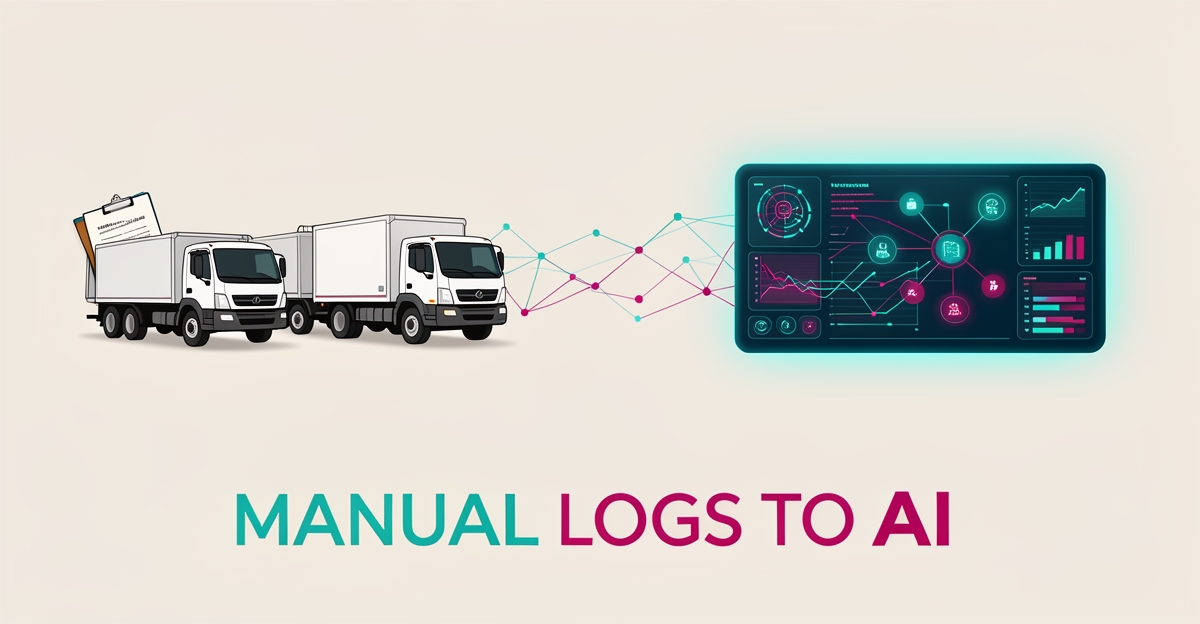
From Manual Logs to AI: How Pressure Washing Fleets Can Track Service History & Client Feedback
Key Facts
- AI-powered log analysis typically reduces false positives substantially compared to rule-based systems, especially when multiple models must agree before flagging
- Organizations commonly report meaningful reductions in Mean Time To Resolution with AI log analysis, often in the 30 to 60 percent range in industry write-ups
- Investigation times are frequently cut significantly when AI surfaces the relevant entries instead of forcing manual keyword searches
- AI-powered systems eliminate manual keyword maintenance by automatically discovering significant service terms
- Ensemble voting requires at least two models to agree before flagging issues, which dramatically reduces false positives in production systems
- AIQ Labs has deployed 200+ multi-agent systems and runs 4 live SaaS products daily, so these patterns are proven in production, not theory
Hire a team member that works 24/7 — for less than a part-time wage.
AI receptionists, SDRs, dispatchers and 99+ roles. Trained on your business, fully managed.
Not sure where to start? Ask our AI planner
Why Manual Service Logs Break Down as Your Fleet Grows
Pressure washing companies relying on manual logs and spreadsheets hit a wall as their service records and client feedback accumulate. Manual analysis works at thousands of log lines but collapses at millions, as human cognitive capacity has hard limits when data volumes explode. This breakdown becomes critical when new equipment issues emerge that weren't anticipated, or when important client concerns get buried in routine service notes.
Rule-based tracking systems fail in three key ways that directly impact fleet operations. New error types, like unexpected pump failures or chemical compatibility issues, go undetected because they weren't predefined in the tracking rules. Critical feedback about service quality often appears in low-priority logs or informal comments, getting overlooked while teams focus on flagged keywords. Static rules quickly become obsolete as service methods evolve, equipment models change, or customer expectations shift, requiring constant manual updates that teams simply can't keep up with.
Traditional log monitoring that relies on predefined rules tends to collapse when new error types emerge, when critical issues hide in lower-priority logs, or when system behaviors change over time. Manual keyword searches at scale routinely match irrelevant entries more often than meaningful ones. Organizations that move to AI-powered analysis typically report fewer false positives, earlier detection of issues traditional monitoring misses, and far less manual keyword maintenance. For pressure washing fleets, this means service histories stay accurate, feedback patterns surface reliably, and teams spend less time managing logs and more time improving service quality. AIQ Labs builds these adaptive systems as managed AI Employees or as a focused Workflow Build that grows with your fleet's data needs.
How AI Log Analysis Works: The Multi-Algorithm Approach
Traditional monitoring fails when new error types emerge or critical issues hide in routine entries. The same limitation plagues pressure washing operations relying on manual service logs and keyword-based feedback tracking. AI-powered analysis solves this by learning patterns automatically rather than depending on predefined rules.
At the core of this approach lies TF-IDF text pattern learning, which discovers important terms by measuring how rarely specific phrases appear across service records. The system recognizes that "pump pressure drop" signals a problem not because it was programmed to, but because the phrase occurs infrequently and in concerning contexts. This eliminates the manual keyword maintenance burden that weighs down rule-based systems.
Three detection models work in concert to identify anomalies from different angles. Isolation Forest spots statistical outliers in equipment performance data. DBSCAN clustering finds unusual groupings in client feedback themes. Statistical Z-score analysis flags readings that deviate significantly from historical norms. Each model operates independently, catching issues the others might miss.
Ensemble voting requires at least two models to agree before flagging an issue, which in production systems dramatically cuts false positives compared to single-rule approaches. For pressure washing fleets, this means fewer wasted service calls and earlier intervention on genuine equipment problems.
- TF-IDF automatically discovers significant service terms without manual keyword lists
- Isolation Forest, DBSCAN, and Z-score models analyze from three independent angles
- Ensemble voting requires 2+ model agreement before alerting
- Zero manual keyword maintenance as the system adapts to new patterns
Natural language processing extends this capability to unstructured client feedback, interpreting meaning rather than matching exact wording. Production AIOps implementations have demonstrated compatibility with virtually any log format, which translates directly to service records and review data. AIQ Labs applies this multi-algorithm architecture to help service businesses automate history tracking and feedback analysis through systems that learn continuously from operational data.
The Business Payoff: Faster Resolutions and Fewer Missed Issues
AI-powered service tracking transforms how pressure washing fleets handle operational challenges by turning raw service data into immediate, actionable insights. Companies implementing these systems commonly see mean time to resolution drop by 30 to 60 percent, allowing teams to address recurring complaints, like inconsistent spray patterns or equipment downtime, before they escalate into customer dissatisfaction. Investigation times are often cut in half, enabling technicians to spend less time diagnosing issues and more time delivering consistent, high-quality results across job sites.
This acceleration directly supports proactive maintenance and quality assurance. AI systems catch subtle anomalies, such as pressure fluctuations or nozzle wear patterns, that manual review routinely overlooks. For pressure washing businesses, this means catching early signs of pump degradation or hose fatigue before they cause job failures or safety risks. Intelligent data compression and deduplication can also trim log storage costs meaningfully, freeing resources for reinvestment in technician training or fleet upgrades.
- Faster response to recurring client complaints about surface damage or streaking
- Proactive equipment maintenance based on usage patterns and failure indicators
- Objective quality comparisons across technicians to standardize service excellence
- Reduced administrative burden from manual log entry and feedback sorting
- Improved first-time fix rates through predictive issue identification
By automating service history tracking and client feedback analysis, pressure washing fleets gain the clarity needed to refine operations continuously. AIQ Labs supports this shift by building custom AI systems that turn service data into a strategic asset, helping businesses resolve issues faster, prevent repeat problems, and deliver reliably superior results with every job.
Implementation Roadmap: From Data Collection to Continuous Learning
Pressure washing fleets generate vast amounts of service logs and client feedback that quickly exceed manual tracking capacity, creating blind spots in service quality and equipment performance. By implementing AI-powered analysis, companies can transform this data into actionable insights that drive proactive maintenance and continuous improvement.
The implementation begins with establishing a robust data collection infrastructure to automatically capture service records, equipment metrics, and client comments in standardized formats. From there, text pattern learning using TF-IDF vectorization identifies significant service terms and phrases without manual keyword definitions, allowing the system to discover what matters most in your operations naturally. This approach eliminates the need for ongoing manual rule maintenance while adapting to evolving service patterns.
Next, deploy a multi-model ensemble detection system combining Isolation Forest for statistical outliers, DBSCAN Clustering for unusual groupings, and Z-score-based statistical analysis to identify service anomalies. Only flag issues when two or more models agree through ensemble voting, dramatically reducing false positives compared to rule-based approaches. Integrate natural language processing to interpret unstructured client feedback and technician notes, extracting semantic meaning rather than relying on exact matches to uncover satisfaction patterns and recurring complaints.
Generate comprehensive reports with original data, anomaly classifications, AI reasoning, and confidence scores to support informed decision-making. Maintain human oversight for critical decisions, particularly those affecting service quality or compliance, while implementing continuous learning mechanisms that allow the system to adapt as equipment ages, service offerings evolve, and client preferences shift. For teams preferring LLM-based approaches, process service logs in manageable chunks, extract error summaries through targeted prompts, and validate outputs against strict JSON schemas to prevent hallucinations while keeping humans in the loop for final verification. AIQ Labs helps pressure washing companies implement these systems through builds tailored to field service operations.
Making It Real: Deploying AI Service Intelligence Without the Complexity
For pressure washing fleets, moving beyond manual logs means confronting real-world hurdles: model drift as service patterns evolve, integration gaps with legacy scheduling tools, and skill shortages in teams accustomed to clipboards not code. These aren't theoretical, they're daily friction points that stall AI adoption before it delivers value. AIQ Labs addresses this by building custom-owned systems that learn from your specific service history and feedback data, adapting continuously without vendor lock-in or subscription creep.
- Model drift is mitigated through continuous retraining on your fleet's evolving data, ensuring detection accuracy stays high as equipment ages or service types shift.
- Deep API integrations connect directly to your existing CRM, dispatch, and invoicing tools, eliminating manual data re-entry and creating a unified service history view.
- We handle the technical lift: our team trains, deploys, and manages the AI system, so your staff focuses on service, not system maintenance.
Still paying for 10+ subscriptions that don’t talk to each other?
We build custom AI systems you own outright. No vendor lock-in. Full control.
Not sure where to start? Ask our AI planner
Frequently Asked Questions
Will manual service logs really break down as my pressure washing fleet grows?
How does AI log analysis find problems that rule-based tracking misses?
Can AI actually understand unstructured client feedback from service notes?
What business results can I expect from automating service history tracking?
Do I need data science skills on my team to run this?
How do I start without committing to a big subscription?
Turn Service Data into Your Fleet's Competitive Edge
As pressure washing fleets grow, manual logs and spreadsheets can't keep pace with the volume and complexity of service records and client feedback. AI-powered analysis solves this by automatically detecting patterns, from equipment wear to recurring complaints, without relying on outdated keyword lists or manual rule updates. Teams see faster resolutions, proactive maintenance, and clearer insights into service quality, all while reducing false positives and administrative overhead. The result is a smarter, more responsive operation that turns every service call into an opportunity to improve. To see how this works for your specific setup, start with the Fit Check, a two-minute assessment that leads to a free 30-minute strategy call to uncover your biggest service tracking bottleneck and identify high-ROI automation opportunities.
Make AI your competitive advantage — not just another tool.
Strategy, implementation and ongoing optimization. One partner, end to end.
Not sure where to start? Ask our AI planner