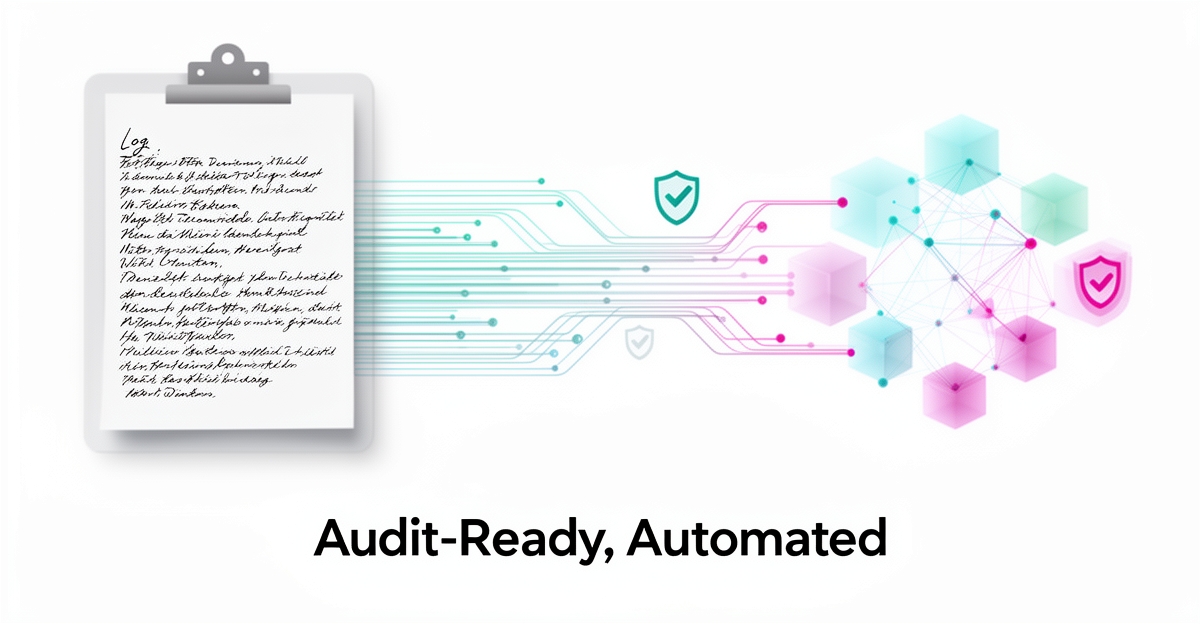
From Manual Logs to AI: How Remediation Firms Can Automate Compliance Documentation
Key Facts
- Manual and paper-based compliance logging is a leading source of audit findings for remediation contractors
- AI agents reduce human error in document classification that plagues manual compliance systems
- AI-driven systems enable real-time compliance risk monitoring and early gap detection
- Owned AI compliance systems provide full audit trail retention and client control over customization
- Human oversight is essential in AI compliance systems for validation and exception handling
- The EU AI Act, in force since 2024 and phasing in through 2026–2027, formalizes expectations for AI systems in regulated contexts
- AIQ Labs builds custom document processing systems that auto-categorize, validate, and store compliance logs
Hire a team member that works 24/7 — for less than a part-time wage.
AI receptionists, SDRs, dispatchers and 99+ roles. Trained on your business, fully managed.
Not sure where to start? Ask our AI planner
The Compliance Log Burden Remediation Firms Face
Environmental remediation contractors face mounting pressure to maintain meticulous compliance documentation, yet many still rely on paper-based or manual systems that introduce significant risk. These legacy processes are not only time-consuming but also prone to human error, inconsistent formatting, and version control issues that can undermine audit readiness. As projects scale across multiple sites and regulatory jurisdictions, the burden of manually tracking permits, sampling records, waste manifests, and remediation reports becomes unsustainable. Without automated systems, teams spend excessive hours compiling logs instead of focusing on fieldwork or strategic remediation planning.
The inefficiencies of manual compliance logging directly impact operational scalability and increase exposure to audit failures. When documentation is fragmented across spreadsheets, physical binders, or disparate digital files, retrieving specific records during inspections becomes a labor-intensive ordeal. Missing or misfiled documents can trigger non-compliance findings, project delays, or financial penalties—even when remediation work meets technical standards. This administrative overhead creates a bottleneck that limits how many projects a firm can effectively manage simultaneously, constraining growth despite market demand.
Compliance concerns are consistently cited as a major inhibitor to AI adoption in regulated industries. Industry surveys in recent years have repeatedly ranked regulatory compliance among the top barriers to realizing productivity gains from generative AI, highlighting how fear of non-compliance stalls innovation even when the technology is available. For remediation firms, this means hesitation to automate documentation stems not from disinterest in efficiency, but from legitimate concerns about maintaining audit-defensible records under evolving environmental regulations. Overcoming this barrier requires AI solutions built with compliance as a foundational design principle—not an afterthought.
AIQ Labs addresses this challenge by developing custom AI-driven document processing systems that automatically categorize, validate, and store compliance logs in alignment with regulatory requirements. These systems reduce manual effort while ensuring every document is traceable, timestamped, and audit-ready—turning a historical liability into a streamlined, scalable operational advantage. By embedding compliance into the automation layer, remediation contractors can finally scale their operations without sacrificing regulatory integrity.
How AI Agents Auto-Categorize, Store and Validate Documentation
A single missing waste manifest or an unlogged chain-of-custody form can turn a routine environmental remediation audit into a costly compliance nightmare. This is precisely where AI agents change the game for remediation contractors—transforming documentation from a manual burden into an automated, audit-ready system.
AI agents excel at automating high-volume, repeatable tasks, freeing teams from the manual grind of filing, labeling, and cross-referencing compliance paperwork. Instead of staff spending hours sorting field reports and disposal records, agents operate across systems, data, and processes to enforce rules consistently and surface risk early. The result is an organization that stays audit-ready by design, not by last-minute scramble.
For remediation firms, this translates into four core benefits:
- Improved accuracy: Automated document classification reduces the human errors that plague manual compliance systems, which are time-consuming, error-prone, and limited in scalability.
- Reduced manual effort: Agents handle the repetitive work of categorizing, storing, and validating records, allowing teams to focus on strategic priorities like site operations and client outcomes.
- Continuous risk monitoring: Rather than periodic reviews, AI systems monitor compliance risk in real time, flagging gaps before they become violations.
- Adaptability to evolving regulations: AI-driven systems can adapt to changing regulatory requirements, keeping firms compliant without slowing operations.
The stakes are rising. Compliance concerns now shape technology decisions at every level of regulated industries, and many firms increasingly view strong compliance as a market differentiator rather than a back-office cost. Firms that can produce complete, defensible records on demand win more work and move faster during inspections.
Regulatory momentum reinforces this shift. The EU's AI Act—now in force, with obligations phasing in through 2026 and 2027—establishes risk-based rules for AI systems, and regulators worldwide are formalizing expectations around automated systems. Any compliance automation a remediation firm deploys should be designed with these expectations in mind from day one.
Human oversight remains essential. Well-designed AI compliance systems include validation layers, configurable escalation, and complete audit trails so that people can intervene when situations exceed the system's authority. This is the architecture AIQ Labs applies when building custom document processing systems for contractors—systems the firm owns outright, with full audit trail retention rather than vendor-locked subscriptions. If you're weighing where this fits, AIQ Labs' AI Workflow Builds rebuild the one workflow that costs you the most, at a fixed price and in phases.
The takeaway for remediation firms is simple: manual logs can't keep pace with modern documentation volume, and AI-driven compliance systems now offer accuracy, monitoring, and audit-readiness that manual processes simply cannot match.
Building an Owned AI Compliance System with Human Oversight
Manual logs create gaps that auditors find first. Environmental remediation firms need documentation that is complete, traceable, and defensible without adding headcount to field work.
Building an owned AI compliance system starts with remediation-specific workflows, not generic document processing. The design maps the entire chain of custody from field sampling to final reporting, with auto-categorization, storage, and validation rules tied to the regulatory regime in play. Data quality and integrity are foundational, because AI-driven compliance systems require high-quality and accurate data to function effectively.
Regulatory alignment shapes architecture from day one. With the EU AI Act in force and its obligations phasing in through 2026 and 2027, compliance is no longer a back-office obligation—expanding regulations have pushed compliance risk into the boardroom. Systems must enforce rules consistently across systems, data, and processes while keeping organizations audit-ready by design.
Human oversight remains essential to ensure systems function correctly and issues are addressed promptly. A human-in-the-loop model is applied to critical decisions such as exception handling, validation overrides, and final sign-off on submissions.
Cybersecurity and ownership controls protect sensitive site data and audit trails. Remediation records contain location, contaminant, and contractor information that must be secured and retained. An owned system means clients retain full control over customization and future development with no vendor lock-in.
Design considerations for a remediation-specific AI documentation workflow include:
- Data ingestion from field forms, photos, lab PDFs, and sensor logs with automated classification and metadata tagging
- Validation rules mapped to EPA, state, and client-specific requirements with real-time flagging of missing or inconsistent entries
- Immutable audit trails with versioned storage, role-based access, and export-ready reports for regulators
- Human review queues for low-confidence extractions and regulatory exceptions with clear escalation paths
This approach reduces manual effort while improving accuracy and oversight. AI agents automate high-volume, repeatable tasks, freeing teams from manual work and allowing focus on strategic priorities. For firms that want a connected layer across documentation, dispatch, and reporting rather than a single isolated workflow, AIQ Labs' AI Operating Systems build one connected operating layer in phases—and you own it outright.
Competitive advantage follows compliance maturity. Firms that embed governance and auditability by design move faster during inspections and win more work.
AIQ Labs builds custom AI systems that ensure regulatory adherence and reduce audit risks with full ownership and audit trail retention. The build follows a true ownership model where clients receive full ownership of custom-built systems with complete control over customization and future development.
Implementation Roadmap From Assessment to Audit-Ready Automation
Moving from manual logs to audit-ready automation is a structural shift that turns compliance from a reactive burden into a competitive advantage. Firms with strong compliance consistently report that it strengthens their market position—yet regulatory adherence is also one of the most-cited barriers to AI adoption. The firms that win are the ones that treat compliance and automation as the same project.
Step one is assessment. Map every touchpoint where field data becomes a compliance record—from chain-of-custody forms to disposal manifests—and identify where manual entry creates audit exposure. Prioritize workflows where AI agents can automate high-volume, repeatable tasks like categorizing lab results or validating disposal certificates against regulatory checklists.
Next, select technology that integrates with your existing operations. Remediation firms need systems that connect field data capture with back-office documentation, not isolated point solutions that create new silos. Look for platforms capable of enforcing rules consistently across systems while surfacing risks early, ensuring you remain audit-ready by design rather than scrambling before inspections.
Design and implementation require a governance-first architecture. With the EU AI Act in force and its obligations phasing in through 2026 and 2027, your system must embed human-in-the-loop controls and maintain complete audit trails. AIQ Labs structures these builds through three payment models—Start Monthly, Build in Milestones, or Own It Outright—so the architecture aligns with both your compliance needs and your cash flow. You can review the models on the pricing page.
Training and monitoring demand continuous oversight. Configure validation layers so every automated action is checked before execution, and establish escalation protocols for edge cases that exceed AI authority. This approach addresses the critical challenge of maintaining human oversight while still capturing the efficiency gains of automation.
Finally, treat optimization as an ongoing discipline. Regularly evaluate system accuracy against actual audit outcomes and retrain agents as regulations evolve. Key implementation priorities include:
- Establishing data quality controls to ensure AI inputs meet regulatory standards
- Creating immutable audit trails that document every automated decision
- Configuring role-based access so sensitive compliance data remains secure
- Scheduling quarterly reviews to align AI behavior with changing environmental regulations
By following this roadmap, remediation contractors transform compliance documentation from a cost center into a defensible asset that proves adherence while reducing manual effort.
Still paying for 10+ subscriptions that don’t talk to each other?
We build custom AI systems you own outright. No vendor lock-in. Full control.
Not sure where to start? Ask our AI planner
Frequently Asked Questions
Is manual compliance logging really that risky for remediation firms?
Why are remediation firms hesitant to automate compliance with AI?
Can AI actually keep up with changing environmental regulations?
Do we lose human oversight if we automate compliance documentation?
Does better compliance actually help the business grow?
What regulatory frameworks should we consider for AI compliance systems?
From Audit Anxiety to Audit-Ready Advantage
Manual logs, scattered spreadsheets and last-minute scrambles are no longer sustainable for remediation firms scaling across sites and jurisdictions. AI agents can now auto-categorize, validate and store compliance documentation with timestamped, immutable audit trails, while human-in-the-loop controls keep oversight where it matters. That shift turns compliance from a cost center and growth bottleneck into a defensible asset that proves adherence and accelerates inspections. Firms that embed governance and auditability by design are better positioned to scale without adding headcount. Start by mapping your highest-risk documentation touchpoints, defining validation rules for EPA, state and client requirements, and piloting owned automation with clear escalation paths. If you want a practical assessment of where AI can remove manual effort while preserving audit integrity, start the two-minute Fit Check at aiqlabs.ai/apply for a free 30-minute strategy call with an AI engineer.
Make AI your competitive advantage — not just another tool.
Strategy, implementation and ongoing optimization. One partner, end to end.
Not sure where to start? Ask our AI planner