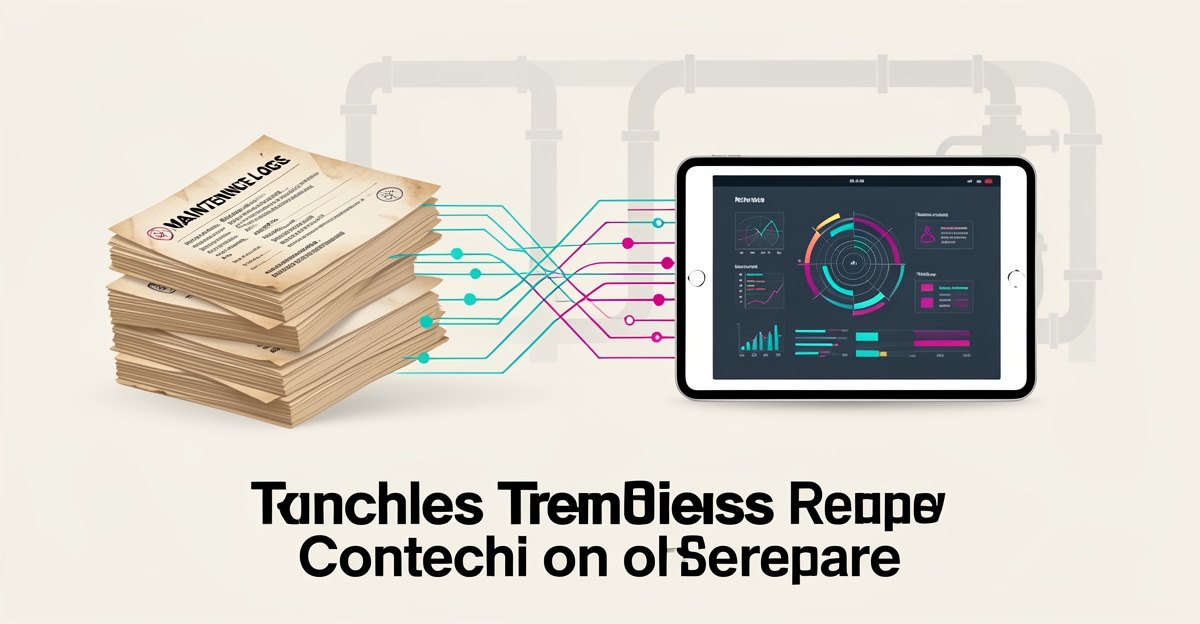
From Manual Logs to AI: How Trenchless Repair Shops Can Automate Repair History Tracking
Key Facts
- Paper logs create compounding blind spots: misfiled records, divergent spreadsheets, and tribal knowledge that leaves with each technician.
- AI document processing can extract structured data from handwritten notes, scanned work orders, and photos without manual retyping.
- Categorized repair histories enable predictive maintenance, prioritizing high-risk assets before they fail.
- Predictive maintenance programs are widely reported to lower maintenance costs and downtime versus reactive repair models.
- A phased rollout, one crew, one repair type, is the lowest-risk path to digitization.
- AIQ Labs has deployed 200+ multi-agent systems and runs 4 live SaaS products daily.
Hire a team member that works 24/7 — for less than a part-time wage.
AI receptionists, SDRs, dispatchers and 99+ roles. Trained on your business, fully managed.
Not sure where to start? Ask our AI planner
The Hidden Cost of Paper Logs and Disorganized Records
Paper logs don't just slow a trenchless crew down, they quietly erode margin, trust, and repeat business. When repair history lives in notebooks, scattered spreadsheets, and a foreman's memory, the shop loses the ability to see patterns before they become problems.
Manual record-keeping creates blind spots that compound over time. Handwritten logs get misfiled, spreadsheets diverge by job site, and tribal knowledge walks out the door when a technician leaves. Without a unified history, warranty claims are missed, the same diagnostic steps are repeated, and compliance documentation is incomplete at the worst possible moment.
The cost shows up as lost revenue and rework. Crews spend hours hunting for prior repairs instead of completing work, customers receive inconsistent explanations, and service managers cannot prove the value of preventive maintenance. Competitors who digitize gain measurable advantages in efficiency and customer trust because decisions are based on data, not memory. As of late 2026, adoption of AI-assisted maintenance and equipment monitoring continues to grow across field-service industries, and the shops still on paper are the ones absorbing the cost of that gap.
When repair logs, maintenance records, and customer complaints are digitized and analyzed, patterns emerge. AI can extract and categorize data from unstructured notes and photos to build an intelligent database that connects repairs to assets, crews, materials, and outcomes. This is the core of AI document processing: systems that automatically extract and categorize data to enable better historical insights and compliance.
The hidden costs of paper logs typically include:
- Missed warranty claims and expired service windows due to incomplete records
- Repeated diagnostic work because prior fixes are not searchable
- Compliance gaps when inspections and repairs cannot be audited quickly
- Lost upsell opportunities from failing to link complaints to recurring failure modes
The predictive upside is well established beyond trenchless work. Across transportation, logistics, and field service, predictive maintenance programs are consistently associated with lower maintenance costs and less unplanned downtime than reactive models. The exact figures vary by operation, but the direction is not in dispute: shops that know their failure history stop paying for the same problem twice.
AIQ Labs builds custom systems, from targeted AI Workflow Builds to full AI Operating Systems, that automatically extract and categorize data from repair logs and maintenance records, turning fragmented history into a searchable, compliant asset.
How AI Transforms Raw Repair Data into Actionable Intelligence
Repair history tracking begins with turning scattered paper logs and technician notes into structured, searchable data. AI-powered extraction tools can automatically pull critical information from scanned work orders, photos of damaged pipes, and handwritten maintenance records, converting them into standardized digital formats without manual entry. This capability allows trenchless repair shops to build a comprehensive repair history database from existing documentation, laying the foundation for deeper analysis, and saving hours of administrative work each week.
Once raw data is digitized, natural language processing (NLP) standardizes inconsistent technician notes by recognizing industry-specific terminology, correcting abbreviations, and mapping varied descriptions of the same repair to a common taxonomy. For example, phrases like "pipe cracked at joint," "failure at coupling," and "seam split" can all be intelligently categorized under a unified failure mode. This normalization ensures that repair histories are comparable across technicians, time periods, and job sites, enabling accurate trend analysis. Shops using AI to process maintenance records can derive actionable insights from previously unusable data, transforming qualitative observations into quantitative patterns.
AI then automates categorization by tagging each repair record with key attributes such as pipe material (PVC, HDPE, clay), failure mode (infiltration, collapse, offset joints), and suspected root cause (ground shift, aging, poor installation). These tags create a multidimensional view of asset health that supports predictive maintenance planning. Organizations implementing AI-powered maintenance intelligence typically report fewer unplanned failures and longer asset lifespans by shifting from reactive repairs to data-driven interventions, the payoff comes from connecting historical repair data with operational context.
For trenchless repair shops, this intelligence means moving beyond simple record-keeping to anticipating where and when failures are likely to occur. By analyzing patterns in categorized repair data, such as recurring issues in specific soil types or pipe diameters, shops can prioritize inspections, optimize material inventory, and schedule preventive linings before emergencies arise. AIQ Labs builds these systems end-to-end, transforming manual logs into a living intelligence layer that informs every repair decision. The result is not just a cleaner database, but a strategic asset that reduces costly surprises and extends the service life of critical infrastructure.
From Reactive Fixes to Predictive Insights: The Business Case
The shift from reactive fixes to predictive insights transforms how trenchless repair shops manage their assets and operations. By digitizing repair history and maintenance records into an intelligent database, businesses can move beyond simple record-keeping to anticipatory decision-making. AI-powered analysis of historical logs, work orders, and customer complaints reveals patterns that signal which assets are likely to fail and when, enabling crews to intervene before breakdowns occur. This proactive approach not only prevents costly emergency callouts but also optimizes labor allocation and parts inventory based on predicted needs. Across field-service and logistics operations, predictive maintenance is consistently associated with lower maintenance costs and less downtime than reactive models, benchmarks highly relevant to trenchless repair.
The business value of such systems tends to show up quickly, with many companies reporting measurable returns within the first year of implementing AI in maintenance processes. This stems from the ability to prioritize high-risk assets, schedule maintenance during planned windows, and avoid the premium costs associated with urgent field deployments. Crews spend less time responding to crises and more time executing planned, efficient repairs, directly improving utilization rates and customer satisfaction. For shops still relying on paper logs or siloed spreadsheets, the transition to an AI-enhanced database creates a single source of truth that supports smarter forecasting and resource planning.
- Identify assets with the highest failure probability based on historical repair frequency and severity
- Optimize technician scheduling by aligning preventive work with availability and skill sets
- Reduce emergency callouts by addressing issues before they escalate into service disruptions
- Extend asset lifespan through timely, data-driven interventions
- Improve first-time fix rates by ensuring crews arrive with the right parts and diagnostic insights
AIQ Labs supports this transformation by building custom systems that automatically extract, categorize, and analyze repair logs, maintenance records, and field notes, turning unstructured data into actionable intelligence. These systems enable shops to not only track what happened but predict what's likely to happen next, creating a foundation for continuous operational improvement. As predictive insights replace guesswork, trenchless repair businesses gain greater control over costs, scheduling, and service reliability, turning maintenance from a cost center into a strategic advantage.
A Practical Roadmap: Implementing AI-Powered Repair Tracking in Your Shop
Starting your AI journey doesn't require a full system overhaul, it begins with understanding what you already have. Trenchless repair shops often sit on years of valuable data trapped in paper logs, spreadsheets, or disconnected digital files. The first step is auditing these existing records to identify gaps, inconsistencies, and opportunities for digitization. This assessment reveals what data is critical, like repair types, materials used, job duration, and customer feedback, and where manual processes create bottlenecks. Starting small with data readiness is a proven path forward.
Once you've mapped your current state, the next phase is digitizing historical logs into a structured format AI can process. This doesn't mean retyping every page, AI-powered data extractors can scan handwritten notes, PDFs, or scanned forms and convert them into clean, searchable data. These tools use natural language processing to identify key fields such as job date, location, repair method (e.g., pipe bursting, CIPP), and outcomes, even when formats vary across technicians. For shops dealing with high volumes of legacy paperwork, this step transforms static archives into a living database.
With clean data in place, you can deploy AI models trained specifically on your shop's repair categories. Unlike generic solutions, custom models learn your terminology, like distinguishing between "lateral reinstatement" and "mainline patch", and recognize patterns in failure rates, material performance, or technician efficiency. Training begins with a subset of your digitized logs, allowing the AI to categorize new entries accurately while flagging anomalies for review. Over time, the model improves with each new log, reducing manual tagging and enabling predictive insights, like which pipe materials fail most often in specific soil types.
Integration is where the system becomes operational. Rather than replacing your existing workflow, AI should connect to tools you already use, like scheduling software, invoicing platforms, or CRM systems, through secure APIs. This ensures that when a job is completed, the AI automatically logs details, updates customer histories, and triggers follow-ups without duplicate entry. For example, after a sewer lining job, the system could flag similar past repairs in the area, suggest preventive checks, or generate a compliance report for municipal records. AIQ Labs handles this integration as part of its AI Workflow Builds, which rebuild the one workflow that costs you the most at a fixed price, in phases, so your custom system works within your current tech stack without disruption.
Addressing concerns about upfront costs and disruption is key to gaining team buy-in. A phased rollout minimizes risk: start with one repair type or one crew, validate accuracy, then expand. Each phase delivers measurable returns, like reduced time spent on paperwork or faster dispute resolution, while building confidence in the system. Training is embedded throughout, with role-specific guidance for technicians, managers, and admin staff. The goal isn't to replace your team but to eliminate repetitive data tasks so they can focus on complex diagnostics and customer service. The aim is simple: handle issues quietly, before they turn into emergencies, and AI-powered tracking makes that possible by turning reactive logs into proactive intelligence.
Still paying for 10+ subscriptions that don’t talk to each other?
We build custom AI systems you own outright. No vendor lock-in. Full control.
Not sure where to start? Ask our AI planner
Frequently Asked Questions
How much does it actually cost a trenchless repair shop to keep using paper logs?
Can AI really read my technicians' messy handwritten notes and old work orders?
What's the actual ROI timeline for switching to AI-powered repair tracking?
Do I need to replace my current scheduling and invoicing software to use AI?
How does predictive maintenance actually reduce emergency callouts for trenchless work?
What's the first step if my shop has years of paper logs but no digital system?
Turn Your Repair History Into a Competitive Edge
Paper logs and scattered spreadsheets are quietly eroding margin, trust, and repeat business for trenchless shops. When repair history is digitized and analyzed, AI can extract and categorize data from handwritten notes, work orders and photos to build an intelligent, searchable database that connects repairs to assets, crews, materials and outcomes. That foundation enables pattern recognition, predictive insights, and proactive maintenance that reduces rework, protects warranty claims, and improves first-time fix rates. Start with an audit of your existing logs, digitize with AI-powered extraction, and train models on your own terminology. If you want a clear, no-obligation view of your highest-ROI automation opportunities, take the 2-minute Fit Check at aiqlabs.ai/apply, then book a free 30-minute strategy call at aiqlabs.ai/book. Prefer email? Reach the team at [email protected].
Make AI your competitive advantage — not just another tool.
Strategy, implementation and ongoing optimization. One partner, end to end.
Not sure where to start? Ask our AI planner