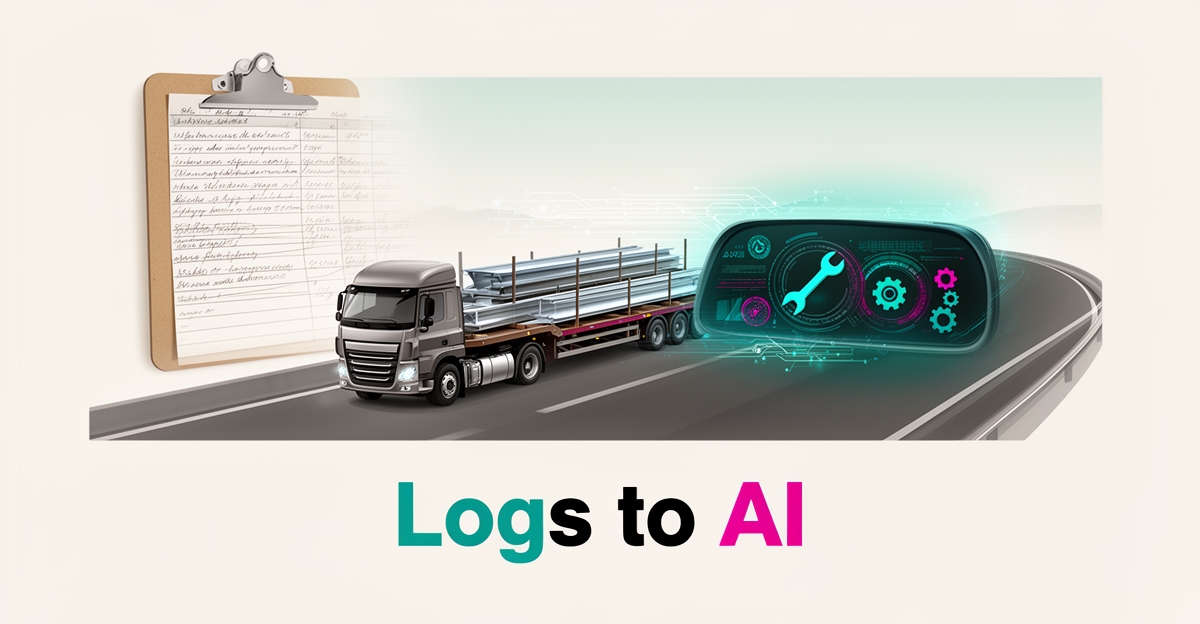
From Manual Logs to AI: Modernizing Fleet Maintenance Tracking in Flatbed Trucking
Key Facts
- Manual logs routinely delay scheduled maintenance, pushing preventable repairs into roadside failures
- Automated service capture typically cuts per-event logging from roughly 15 minutes of paperwork to a few minutes
- Predictive analytics is widely reported to meaningfully reduce unscheduled breakdowns—often cited around 30%
- AI-driven sensor data is commonly credited with lowering fuel waste by 3-4%
- Hidden manual-logbook costs—admin re-entry, missed PM windows, lost utilization—compound quickly as fleets grow past 100 trucks
Hire a team member that works 24/7 — for less than a part-time wage.
AI receptionists, SDRs, dispatchers and 99+ roles. Trained on your business, fully managed.
Not sure where to start? Ask our AI planner
The Hidden Costs of Manual Fleet Maintenance Logs
Paper logs feel cheap until the downtime bill arrives. In flatbed trucking, manual fleet maintenance tracking quietly erodes margins with delays, errors, and missed service windows that compound across a growing fleet.
Industry reporting consistently shows manual logs delay scheduled maintenance—often by double-digit percentages. That slip pushes preventable repairs into roadside failures, extends vehicle out-of-service time, and forces dispatchers to re-route loads at the last minute.
Service capture itself is slow and inconsistent. What takes a driver or tech roughly 15 minutes on paper—remembering details, writing legibly, handing forms to office staff for re-entry—can shrink to a few minutes with automated capture, and the record is accurate the first time.
The financial drain is measurable. For a 200-truck fleet, hidden manual-logbook costs—admin re-entry, missed PM windows, duplicate parts ordering, and lost utilization while trucks wait for paperwork to clear—can reach six figures annually. The exact number varies by operation, but the pattern holds: the bigger the fleet, the faster paper costs compound.
Hidden costs of manual tracking show up daily as:
- Delayed maintenance and longer wait times for scheduled service
- Manual data entry errors that create inaccurate maintenance histories
- Lost driver and dispatcher hours reworking illegible or missing logs
- Reactive repairs instead of planned uptime, increasing breakdown risk
Flatbed operators face unique exposure because equipment varies by load and wear is hard to standardize on paper. Without real-time visibility, maintenance decisions depend on memory and mileage estimates rather than actual vehicle health.
These inefficiencies are why operators are moving toward systems that track vehicle health, maintenance history, and downtime in one place. AIQ Labs builds exactly this kind of system—starting with the one workflow that costs you the most, rebuilt at a fixed price through [AI Workflow Builds](/workflow-builds), or as a full connected layer via [AI Operating Systems](/ai-operating-systems). You own the result outright.
Transitioning from manual logs is not just about digitizing forms. It is about removing the friction that lets small errors become expensive breakdowns, and giving maintenance teams the timely, accurate information needed to keep flatbeds earning.
How AI-Powered Systems Transform Fleet Maintenance
Imagine a system that anticipates maintenance needs before they become problems, saving time and money. AI-powered fleet maintenance tracking is transforming the flatbed trucking industry by providing real-time insights and automating tasks.
By leveraging predictive analytics, fleets can meaningfully reduce unscheduled breakdowns—industry figures commonly cite reductions around 30%. This proactive approach enables operators to schedule maintenance during downtime, minimizing disruptions and improving overall efficiency.
AI-powered systems also help reduce costs by minimizing fuel waste. Fleet studies frequently credit AI-driven sensor data with lowering fuel waste by 3-4%. Automated capture also cuts per-event service logging from roughly 15 minutes to a few minutes, freeing personnel for higher-value work.
The benefits of AI-powered fleet maintenance tracking include:
- Improved efficiency through automation and real-time insights
- Proactive maintenance to prevent breakdowns and reduce downtime
- Cost savings through reduced fuel waste and improved vehicle utilization
- Enhanced decision-making with data-driven insights
AIQ Labs helps SMBs in the flatbed trucking industry implement these systems with a scalable approach that integrates with existing infrastructure. With 200+ multi-agent systems deployed and four live SaaS products we run daily, we know what works in production—not just in demos. By transitioning to AI-powered fleet maintenance tracking, operators can reclaim the hidden costs of manual logbooks and gain a durable edge. See how the work is structured and paid for on our [pricing page](/pricing).
Overcoming Challenges in AI Adoption for Fleet Maintenance
Adopting AI-powered maintenance tracking isn't without its hurdles, but the fleets that succeed share a common approach: they tackle data quality, cybersecurity, and change management head-on. The payoff is significant—manual logs delay scheduled maintenance, and AI systems are built to eliminate that gap entirely.
The first challenge is data quality and integration. AI systems are only as good as the data they consume, and flatbed fleets often struggle with fragmented records spread across paper logs, spreadsheets, and disconnected software. Before deploying any AI solution, audit your existing data sources and establish a single source of truth. This foundational step determines whether your predictive analytics will deliver accurate insights or amplify existing errors.
Cybersecurity presents another critical concern. AI-powered systems handle sensitive operational data, making them attractive targets for threats that could disrupt fleet operations or compromise proprietary information. Mitigate this risk by implementing enterprise-grade security protocols, encrypting data in transit and at rest, and establishing clear access controls. Regular security audits and employee training on phishing awareness further strengthen your defenses.
Change management often proves the most underestimated challenge. Transitioning from familiar manual processes to AI-driven workflows requires buy-in from drivers, maintenance technicians, and operations staff. Address resistance early by involving key stakeholders in the selection process, providing role-specific training, and clearly communicating how AI augments rather than replaces human expertise.
To navigate these challenges successfully, follow these proven strategies:
- Start with a data audit to identify gaps and inconsistencies before implementation
- Choose AI systems with built-in security features and compliance certifications
- Phase implementation gradually, beginning with a pilot fleet segment
- Invest in comprehensive training that addresses both technical skills and mindset shifts
- Establish clear metrics to measure ROI and build organizational confidence
The fleets that overcome these obstacles position themselves for substantial gains. Predictive analytics is widely reported to cut unscheduled breakdowns—often by around 30%—while AI-driven sensor data is credited with lowering fuel waste by 3-4%. These improvements compound over time, creating advantages manual systems simply cannot match.
At AIQ Labs, we build custom AI systems that clients own outright—no vendor lock-in, no subscription dependencies. Our approach emphasizes true ownership and control, ensuring your fleet maintenance system evolves with your business needs rather than constraining them.
The path from manual logs to AI-powered maintenance tracking requires careful planning, but the destination justifies the journey. Fleets that address data quality, security, and change management proactively don't just adopt new technology—they transform their operational capabilities for the long term.
Implementing AI-Powered Fleet Maintenance: A Step-by-Step Guide
Transitioning from paper-based tracking to intelligent automation requires a structured approach that respects operational realities. Manual logs delay scheduled maintenance, creating a cascade of avoidable breakdowns. A practical roadmap starts with an honest assessment of existing data quality, because predictive models are only as reliable as the information feeding them.
- Audit current maintenance records for completeness, consistency, and digitization gaps
- Map integration touchpoints with telematics, ERP, and fuel-card systems
- Define measurable success metrics such as mean time between failures and service capture time
- Select a platform that offers full data ownership and API-first architecture
- Pilot the system on a single vehicle class before fleet-wide rollout
Platform selection should prioritize solutions that unify sensor data, work-order history, and parts inventory without locking operators into proprietary ecosystems. Automated capture can shrink per-event service logging from roughly 15 minutes to a few minutes—but only when the system connects seamlessly to the tools technicians already use. AIQ Labs helps flatbed carriers evaluate vendors against these criteria and builds custom integration layers that preserve existing workflows while adding predictive intelligence, delivered in milestones so you can verify value at every phase.
Training is where many deployments stall. Dispatchers, drivers, and shop managers need role-specific onboarding that demonstrates immediate value — fewer surprise breakdowns, faster parts lookup, automated compliance alerts. Predictive analytics delivers its full benefit only when the entire team trusts and acts on the system's recommendations. Continuous monitoring dashboards, regular model retraining, and a clear escalation path for anomalies keep the system accurate as fleet composition and routes evolve.
The Future of Fleet Maintenance: AI and Beyond
The fleet maintenance tracking landscape is evolving rapidly as flatbed trucking companies move beyond reactive fixes toward intelligent, anticipatory systems. This shift isn't just about digitizing logs—it's about creating a living, learning network that continuously improves fleet health and operational resilience.
AI-powered platforms are now being woven into telematics and IoT ecosystems to deliver a unified view of vehicle performance, driver behavior, and environmental stressors. Integrated systems are reported to cut service capture time from roughly 15 minutes to just a few minutes, freeing technician hours for higher-value tasks. By correlating real-time sensor data with historical maintenance records, AI models uncover subtle patterns that precede mechanical failures—turning guesswork into foresight.
- Predictive analytics is widely credited with reducing unscheduled breakdowns—often around 30%—keeping more trucks on the road and fewer in the shop.
- AI-driven sensor data is commonly reported to lower fuel waste by 3-4%, translating to meaningful savings across large fleets.
- Manual logbooks carry compounding hidden costs—delays, errors, and missed maintenance windows—that scale with fleet size.
Emerging trends point toward edge computing capabilities that process data directly on vehicles, reducing latency and enabling instant alerts even in areas with poor connectivity. Simultaneously, digital twins of fleets are being used to simulate maintenance scenarios and optimize service schedules without disrupting operations. These advancements allow flatbed operators to shift from calendar-based maintenance to condition-based interventions—servicing only when truly needed, based on actual wear and tear.
AIQ Labs supports this evolution by building custom AI systems that integrate with existing telematics, ECM data, and shop management tools—giving flatbed companies full ownership of their intelligence infrastructure. Rather than relying on fragmented SaaS tools, fleets gain a unified platform where predictive insights, work order generation, and parts forecasting operate in concert. This approach ensures scalability, adaptability, and long-term control as technology and operational needs evolve.
From Paper to Predictive: Your Path Forward in Fleet Maintenance
Flatbed trucking operators know that manual maintenance logs are more than just paperwork—they're a silent drain on profitability through delays, errors, and missed service windows that compound with every truck you add. The shift to AI-powered maintenance tracking isn't merely a tech upgrade; it's a strategic move to reclaim operational control, cut unscheduled breakdowns, and free technicians from lengthy service captures so they can focus on higher-value work. By addressing data quality, security, and team adoption head-on, fleets can transform reactive fixes into proactive, condition-based maintenance that keeps trucks earning. If you're ready to assess where your fleet stands, start with the two-minute [Fit Check](/apply) to uncover your highest-impact automation opportunity—no obligation, just clarity on your path forward. Prefer to talk it through? [Book a free 30-minute strategy call](/book) and we'll map the workflow that's costing you the most.
Make AI your competitive advantage — not just another tool.
Strategy, implementation and ongoing optimization. One partner, end to end.
Not sure where to start? Ask our AI planner