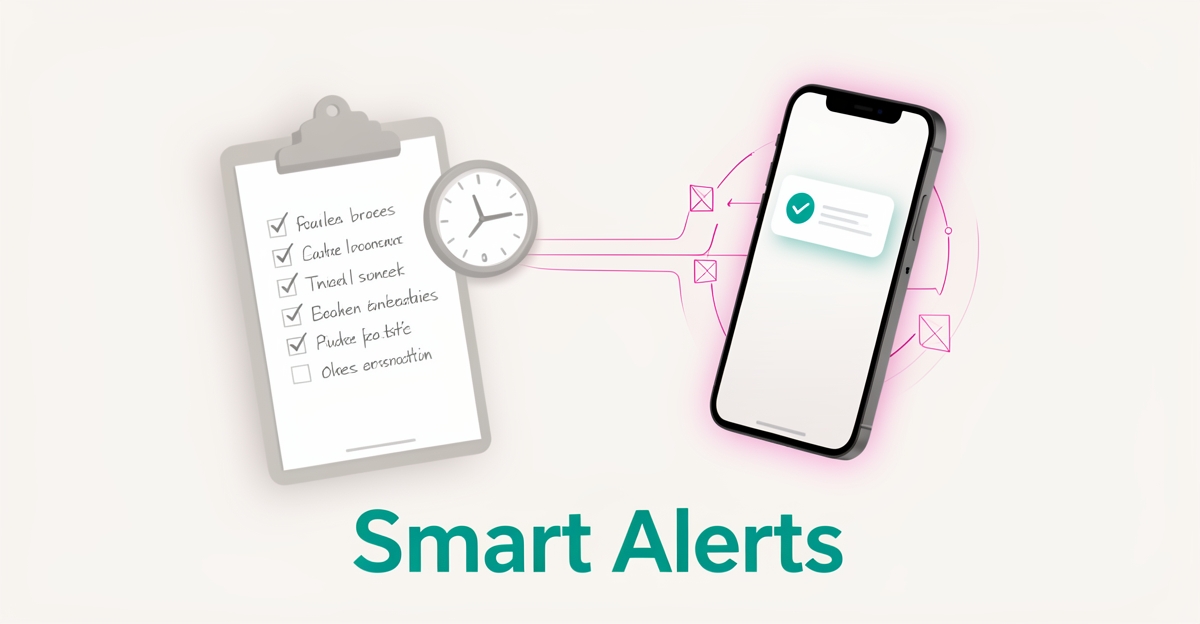
From Manual Logs to Smart Alerts: How AI Automates Cleaning Job Notifications
Key Facts
- AI adoption in janitorial and commercial cleaning has grown sharply since 2022, with most mid-size operations now using at least one automated workflow.
- Operations managers typically spend several hours per week on manual tracking and inventory monitoring alone, time automation can reclaim.
- Automated scheduling and dispatch typically reduce scheduling conflicts and idle time between jobs.
- Automated tracking with photo and timestamp verification tends to improve service consistency and client trust.
- Many clients report greater confidence paying invoices when they receive digital reports with visual proof of completed work.
Hire a team member that works 24/7 — for less than a part-time wage.
AI receptionists, SDRs, dispatchers and 99+ roles. Trained on your business, fully managed.
Not sure where to start? Ask our AI planner
The Hidden Cost of Manual Cleaning Job Tracking
The true cost of manual cleaning job tracking extends far beyond the time spent filling out paper logs or updating spreadsheets. When operations rely on human memory and manual entry, scheduling conflicts become inevitable, leading to double-booked crews or missed appointments that frustrate clients and waste valuable labor hours. This reactive approach forces managers into constant firefighting mode, pulling them away from strategic planning and customer relationship building.
Operations managers commonly lose several hours each week just tracking jobs, inventory, and supply levels, time that could be spent on quality control or business development. Every hour a manager spends chasing updates is an hour not spent growing the business. And the losses compound: without accurate, timely data, workload distribution becomes guesswork, travel between jobs is poorly sequenced, and overtime creeps up because schedules aren't optimized.
The hidden inefficiencies compound when considering delayed reporting and incomplete job verification. Paper-based systems create lag between job completion and managerial awareness, making it impossible to address issues in real time. Clients may experience subpar cleaning without immediate recourse, while managers lack the data needed to recognize performance patterns or provide timely feedback. This disconnect not only damages service quality but also increases the likelihood of preventable errors that require costly rework.
- Manual tracking consumes hours every week per operations manager on job status checks and inventory monitoring alone
- Delayed reporting prevents real-time issue resolution, driving up rework costs
- Poor staff utilization leads to higher overtime costs through inefficient schedule optimization
For cleaning businesses still relying on manual processes, these inefficiencies represent a significant drain on profitability and scalability. The shift toward automated job notifications isn't just about convenience, it's about reclaiming operational control and transforming reactive chaos into predictable, data-driven workflows. AIQ Labs helps cleaning companies make this transition through AI Workflow Builds that eliminate manual entry while providing the real-time visibility needed to optimize every aspect of service delivery.
How AI Transforms Job Notifications and Tracking
AI-powered systems are fundamentally changing how cleaning businesses manage job notifications and tracking, replacing manual logs with intelligent automation. These technologies enable real-time monitoring of job start and end times, automatic completion verification, and instant digital report generation without human intervention.
The transformation leverages IoT sensors, computer vision, and predictive analytics to create seamless workflows. For example, smart cleaning equipment can automatically signal when a job begins and ends through connected devices, while AI vision systems verify task completion by analyzing before-and-after images of cleaned spaces. This eliminates the need for manual check-ins and paper-based reporting.
The technology works by capturing real-time data from cleaning operations and using machine learning to identify patterns, predict completion times, and flag any deviations from expected service standards. Businesses implementing these systems typically report meaningful operational cost reductions alongside improvements in service quality metrics, driven by less idle time, fewer missed jobs, and faster issue resolution.
Key capabilities of AI-driven job tracking include:
- Automatic job start/end alerts triggered by equipment activation or geofencing
- Real-time completion tracking using computer vision to verify cleaned areas
- Instant digital report generation with photos, timestamps, and task details
- Predictive analytics that forecast job duration and optimize scheduling
- Automated customer notifications via SMS or email at key milestones
AIQ Labs develops custom systems that integrate these notification and tracking capabilities directly into existing cleaning workflows. By connecting IoT-enabled cleaning equipment, scheduling software, and communication platforms, these solutions create a unified operational view that reduces administrative overhead while improving service consistency. With 200+ multi-agent systems deployed, AIQ Labs has seen firsthand how this layer turns scattered job data into a single, trustworthy record.
The impact extends beyond simple automation to include enhanced transparency and accountability. Many customers report feeling more confident paying for cleaning services after seeing AI-generated reports that include visual verification of completed work. Additionally, predictive maintenance features can alert supervisors to potential equipment issues before they cause service disruptions, further improving reliability.
As cleaning businesses continue to adopt these intelligent tracking systems, the shift from reactive to proactive service management becomes increasingly evident. Companies using AI for job notifications and tracking are better positioned to meet growing client demands for transparency, consistency, and measurable service quality, all while reducing the manual effort traditionally required for job monitoring and reporting.
Implementing AI Job Automation: A Practical Roadmap for Cleaning Businesses
For cleaning businesses ready to move from manual logs to intelligent automation, a structured implementation strategy ensures success without disruption. AIQ Labs' approach, assess, build in milestones, then connect everything into one operating layer, provides a clear roadmap tailored to cleaning operations, incorporating change management at every stage to drive adoption and measurable results.
The process begins with a thorough assessment of current workflows to pinpoint the highest-impact automation opportunity, such as job start/end alerts, completion tracking, and digital report generation. Most commercial cleaning operations now use at least one automated workflow, yet many still rely on manual entry for notifications and reporting. AIQ Labs evaluates existing tools, data flows, and team capabilities to design a solution that removes the manual data entry that quietly drains your week.
Next, the chosen workflow is rebuilt as a fixed-price, phased build. These systems leverage multi-agent architectures to automate job notifications, trigger alerts based on geofencing or IoT sensor inputs, and generate real-time digital reports without human intervention. AI-powered scheduling tools can let customers book services in seconds, while automated dispatch reduces conflicts and improves staff utilization across client locations. If you'd rather staff the function than build it, AI Employees, such as an AI dispatcher or receptionist, can handle scheduling and client communication at a fraction of the cost of a human hire.
Finally, as more workflows come online, they can be connected into a single AI Operating System, one operating layer that links CRM, scheduling software, and payment platforms, ensuring seamless data synchronization across departments. You own it outright, built in phases so nothing is disrupted. Throughout deployment, change management strategies, including role-based training, feedback loops, and performance tracking, support team adoption and continuous optimization. This phased, partnership-driven approach transforms cleaning operations from reactive logging to proactive, intelligent job management. Start the Fit Check, it takes two minutes, and you'll get a free 30-minute strategy call to map your biggest bottleneck.
Still paying for 10+ subscriptions that don’t talk to each other?
We build custom AI systems you own outright. No vendor lock-in. Full control.
Not sure where to start? Ask our AI planner
Frequently Asked Questions
How much time do operations managers typically spend weekly on manual tracking?
Do automated scheduling systems actually reduce scheduling conflicts?
Can AI systems improve staff utilization rates?
How do AI-powered systems verify that cleaning jobs are actually completed?
What kind of cost savings can cleaning businesses expect from AI automation?
Do customers actually prefer cleaning companies that use AI for real-time updates?
Stop Losing Billable Hours to the Clipboard
The era of chasing paper trails and deciphering handwritten logs is ending. As we've seen, manual tracking quietly drains resources through scheduling conflicts, delayed reporting, and hours of administrative overhead that could be spent growing your business. AI automation flips this dynamic by transforming job notifications into intelligent, real-time systems that verify completion, generate instant reports, and keep clients informed without human intervention. The result is measurable: fewer conflicts, better staff utilization, and clients who trust what they're paying for. For cleaning businesses ready to trade reactive chaos for predictive control, the path forward starts with identifying which manual process is costing you the most visibility and revenue. AIQ Labs builds these custom notification and tracking systems, fixed price, phased delivery, owned outright, designed to integrate with your existing operations while eliminating manual entry entirely. Ready to see what intelligent automation looks like for your specific workflows? Start the Fit Check to map your biggest bottleneck in a free 30-minute strategy call.
Make AI your competitive advantage — not just another tool.
Strategy, implementation and ongoing optimization. One partner, end to end.
Not sure where to start? Ask our AI planner