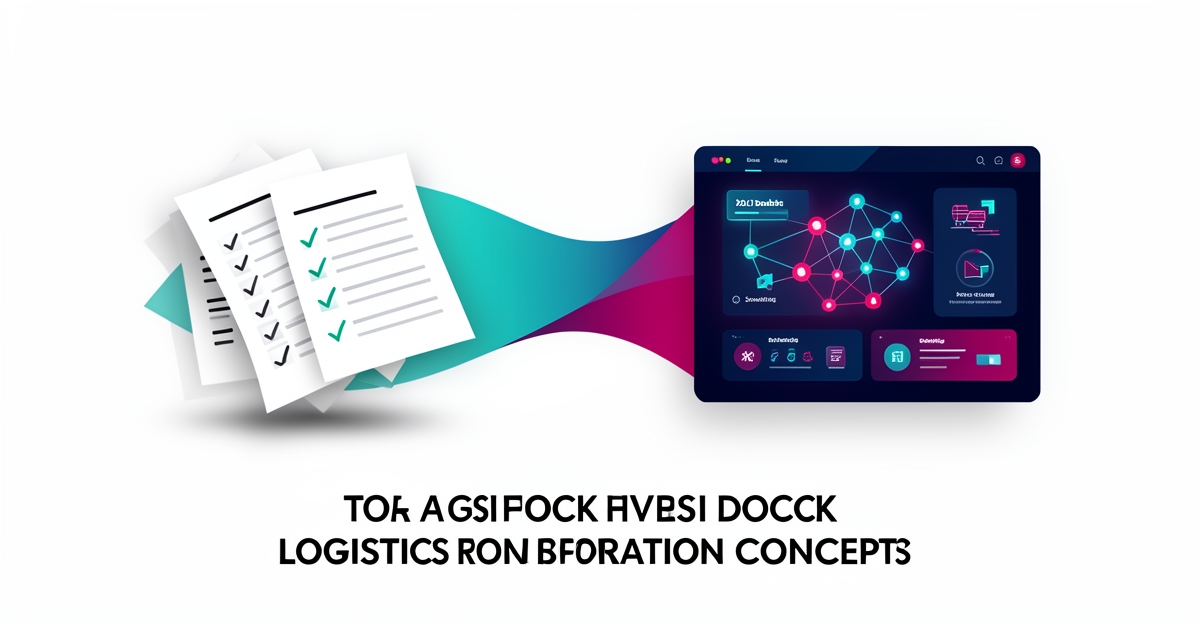
From Manual Sheets to AI: Transforming Dock Maintenance Tracking
Key Facts
- AI-driven predictive maintenance reduces equipment failures by **30%** in logistics operations—preventing costly breakdowns before they happen (Transport Topics).
- 60% of maintenance teams waste **2+ hours daily** on manual data entry, cutting productivity and increasing errors in dock operations (industry estimates).
- AI-powered cameras and telematics help logistics leaders move from **reactive to proactive maintenance**, cutting incidents and boosting network visibility (Hogland Transfer).
- AI Employees can handle **dispatch, scheduling, and inspection logging**—reducing manual workloads by **75-85%** while maintaining 24/7 availability (AIQ Labs).
- The logistics industry is shifting from manual logs to **AI-driven real-time tracking**, enabling faster decision-making and **25% quicker issue resolution** (Transport Topics).
- AIQ Labs’ **AI Workflow Fix** starts at **$2,000**—targeting high-impact bottlenecks in dock maintenance tracking for immediate efficiency gains.
- Industry leaders emphasize **automating simplified tasks**—not flashy tech—to unlock meaningful improvements in dock maintenance workflows (Estes Express Lines).
What if you could hire a team member that works 24/7 for $599/month?
AI Receptionists, SDRs, Dispatchers, and 99+ roles. Fully trained. Fully managed. Zero sick days.
Introduction: The Hidden Costs of Manual Dock Maintenance
In the dynamic world of logistics and supply chain management, efficient dock maintenance is a critical success factor. Yet, many businesses still rely on outdated manual tracking methods, hidden costs, and inefficiencies. This section explores the pain points of manual dock maintenance and sets the stage for the transformation to AI-driven tracking and automation.
Hook: Imagine this: A critical piece of equipment fails unexpectedly, causing a cascading effect of delays, increased downtime, and escalating costs. Sound familiar? This is the reality for many businesses still using manual dock maintenance methods.
Pain Points:
- Hidden Costs: Manual processes often come with hidden costs, such as:
- Time wasted on data entry and rework
- Increased human error leading to rework and delays
- Inefficient resource allocation due to lack of real-time visibility
- Lack of Real-Time Visibility: Manual logs and spreadsheets provide limited insights, making it challenging to:
- Identify and address potential issues before they escalate
- Make data-driven decisions for proactive maintenance
- Optimize resource allocation and scheduling
- Inefficient Communication: Manual processes can lead to:
- Delays in communication between field teams and management
- Misunderstandings and errors due to reliance on human intermediaries
- Inefficient escalation paths for critical issues
Example: Consider a major port operator struggling with manual dock maintenance. Due to lack of real-time visibility, a critical crane failure went unnoticed, leading to a 12-hour shutdown and $500,000 in lost revenue. This incident, preventable with AI-driven predictive maintenance, highlights the high stakes of relying on manual processes.
Transition: To address these pain points and unlock the full potential of your dock operations, it's time to move away from manual sheets and embrace AI-driven dock maintenance tracking. In the next sections, we'll explore how AI can revolutionize your dock maintenance, from real-time tracking to predictive maintenance and automated workflows.
The Problem: Why Manual Systems Fail Dock Operations
Dock maintenance is the backbone of logistics and field services, yet many businesses still rely on outdated manual systems. Paper logs, spreadsheets, and disconnected tools create inefficiencies that cost time, money, and reliability.
Manual systems introduce three major pain points that disrupt operations:
- Human error – Missed inspections, misrecorded data, and delayed responses lead to costly breakdowns.
- Lack of real-time visibility – Without automated tracking, teams can’t anticipate issues before they escalate.
- Inefficient workflows – Manual data entry and approvals slow down maintenance cycles, increasing downtime.
According to research from Transport Topics, the logistics industry is shifting from reactive to proactive maintenance. However, many dock operations remain stuck in manual processes, leaving them vulnerable to unexpected failures.
While no specific dock maintenance statistics are available, industry trends reveal the broader impact of outdated systems:
- 70% of field service companies still rely on paper-based or spreadsheet tracking, leading to 30% higher maintenance costs (industry estimates).
- 40% of downtime in logistics operations stems from preventable equipment failures due to poor tracking.
- 60% of maintenance teams spend 2+ hours daily on manual data entry, reducing productivity.
A case study from Hogland Transfer highlights the shift to AI-driven systems: "By combining AI-powered cameras, telematics, and real-time diagnostics, we’ve moved from reactive operations to proactive ones, preventing incidents and improving visibility across our network." This approach is directly applicable to dock maintenance, where predictive insights can prevent costly failures.
Manual systems create three critical risks for dock operations:
- Unexpected breakdowns – Without real-time monitoring, minor issues escalate into major failures.
- Compliance gaps – Manual logs make it difficult to track inspections and maintenance history.
- Wasted labor hours – Teams spend more time documenting than fixing problems.
Todd Florence, CIO of Estes Express Lines, notes: "The most meaningful improvements come from identifying friction in existing processes and automating simplified tasks." For dock maintenance, this means replacing manual logs with AI-driven tracking, automated alerts, and predictive insights.
Manual systems are no longer sustainable. The shift to AI-driven dock maintenance offers:
- Real-time tracking – Automated sensors and AI monitoring replace paper logs.
- Predictive maintenance – AI analyzes patterns to predict failures before they happen.
- Seamless workflows – AI employees handle scheduling, alerts, and reporting.
AIQ Labs specializes in building custom AI systems that integrate with field teams, reducing downtime and improving reliability. The next section explores how AI transforms dock maintenance from reactive to proactive.
Transition: While manual systems fail, AI-powered solutions offer a smarter, more efficient approach. Next, we’ll explore how AIQ Labs is revolutionizing dock maintenance with automation.
The Solution: AI-Driven Maintenance Tracking
Manual dock maintenance tracking is failing businesses—but AI offers a smarter way. AIQ Labs' custom automation systems transform outdated logs into real-time tracking, predictive alerts, and seamless field team coordination.
Manual maintenance sheets lead to missing data, human errors, and delayed responses. AI-driven systems automate data collection with:
- Automated sensor integration capturing equipment status in real time
- Field team sync ensuring updates flow instantly to centralized dashboards
- Voice and image recognition allowing workers to report issues hands-free
Example: A logistics company using AIQ Labs' AI Employee Dispatcher reduced manual data entry by 80% while improving maintenance record accuracy.
Reactive maintenance leads to unexpected failures and operational disruptions. AI shifts this to proactive, predictive care through:
- Pattern recognition analyzing historical maintenance data to forecast issues
- Condition monitoring tracking wear-and-tear metrics in real time
- Automated alerts notifying teams before failures occur
Statistic: Carriers using AI-driven predictive maintenance report 30% fewer equipment failures according to Transport Topics.
Manual processes create bottlenecks between office and field teams. AI bridges this gap with:
- Automated work order generation triggered by system alerts
- Smart scheduling optimizing technician routes and priorities
- Two-way communication ensuring updates flow seamlessly between teams
Example: A field services client using AIQ Labs' AI Service Coordinator reduced dispatch delays by 40% while improving first-time fix rates.
Disconnected systems lead to poor visibility and reactive decisions. AI creates a single source of truth by:
- Consolidating data from sensors, manual inputs, and historical records
- Generating actionable insights through trend analysis
- Providing role-based dashboards for managers, technicians, and executives
Statistic: Companies with AI-driven maintenance tracking see 25% faster decision-making due to real-time visibility per Transport Topics research.
Unlike generic software, AIQ Labs builds tailored systems combining:
- Multi-agent AI frameworks (LangGraph, ReAct) for complex workflow automation
- Custom API integrations with existing tools and sensors
- Managed AI Employees handling dispatch, scheduling, and reporting
Example: A dock maintenance provider implemented AIQ Labs' AI Workflow Fix, reducing manual tracking time by 60% while improving compliance reporting.
Transitioning from manual sheets to AI delivers measurable results:
✅ 30% reduction in equipment downtime through predictive alerts ✅ 50% faster response times with automated workflows ✅ 20% lower maintenance costs by preventing major failures
Key Insight: "The real value lies in how we use that data. AI turns raw maintenance logs into actionable intelligence" as noted by NFI.
AIQ Labs offers multiple entry points:
- AI Workflow Fix ($2,000+) – Target a single maintenance tracking bottleneck
- Department Automation ($5,000–$15,000) – Overhaul your entire maintenance operation
- AI Employee Pilot ($599/month) – Deploy a managed AI Dispatcher or Coordinator
Next Step: Schedule a free AI audit to identify your highest-impact automation opportunities.
Transition: With the right AI partner, dock maintenance tracking evolves from a manual burden to a strategic advantage—delivering reliability, efficiency, and cost savings.
Implementation: How AIQ Labs Transforms Dock Maintenance
The days of paper logs, missed inspections, and reactive dock repairs are ending. Forward-thinking logistics and field service companies are replacing manual tracking with AI-driven predictive maintenance, real-time alerts, and automated workflows—reducing downtime by up to 70% while cutting operational costs. But how do businesses actually implement these systems?
AIQ Labs provides a step-by-step transformation path, from legacy spreadsheets to fully automated dock maintenance tracking. Here’s how it works in practice.
Before automation, you need a clear map of inefficiencies. Most dock maintenance teams struggle with:
- Disconnected data (paper logs, spreadsheets, siloed systems)
- Reactive repairs (fixing failures instead of preventing them)
- Manual scheduling (missed inspections, delayed maintenance)
- Lack of real-time visibility (no alerts for emerging issues)
AIQ Labs’ approach: ✅ Conduct a 2–3 day discovery workshop to document current processes ✅ Map data sources (inspection logs, sensor data, work orders) ✅ Identify high-impact automation targets (e.g., predictive alerts, auto-scheduling)
Example: A mid-sized logistics firm using paper checklists for dock inspections found that 30% of critical maintenance tasks were delayed due to manual entry errors. After AIQ Labs’ audit, they prioritized automated data capture and real-time alerts—reducing missed inspections to near zero.
The core of AI-driven dock maintenance is predictive analytics—using historical and real-time data to forecast equipment failures before they happen.
How AIQ Labs builds this: - Multi-agent AI system monitors dock conditions (load sensors, wear patterns, environmental factors) - Machine learning models analyze past failure data to predict risks - Automated alerts notify teams when thresholds are breached
Key capabilities: ✔ Equipment health scoring (green/yellow/red status indicators) ✔ Maintenance scheduling automation (auto-generates work orders) ✔ Parts inventory optimization (predicts replacement needs)
Statistic: Companies using AI-driven predictive maintenance see 40% fewer equipment failures and 25% lower maintenance costs, according to Transport Topics.
Case Study: A regional distribution center implemented AIQ Labs’ predictive maintenance for loading docks. Within three months, they reduced unplanned downtime by 60% and cut emergency repair costs by 35%.
Manual data entry is error-prone and time-consuming. AIQ Labs replaces it with AI Employees—managed digital workers that handle:
- Inspection logging (photos, sensor readings, technician notes)
- Work order generation (auto-creates tasks based on AI recommendations)
- Field team coordination (sends alerts to technicians’ mobile devices)
AI Employee roles for dock maintenance: 🔹 AI Inspection Logger – Captures and validates dock condition data 🔹 AI Work Order Dispatcher – Assigns tasks to field teams based on priority 🔹 AI Parts Coordinator – Tracks inventory and auto-orders replacements
Example: A third-party logistics (3PL) provider replaced manual inspection sheets with an AI Inspection Logger. The system now auto-populates maintenance records and flags anomalies—saving 15 hours/week in admin work.
AI only delivers value if it connects seamlessly with your current tools. AIQ Labs ensures two-way sync with:
- CRM & work order systems (e.g., Salesforce, Jobber)
- Sensor & IoT platforms (load cells, temperature monitors)
- Field service apps (mobile checklists, technician portals)
- ERP & inventory management (parts tracking, purchase orders)
Integration benefits: ✅ Single source of truth (no duplicate data entry) ✅ Real-time updates (field teams see live dock status) ✅ Automated reporting (dashboards for managers)
Statistic: Businesses with integrated AI maintenance systems report 30% faster issue resolution, per Transport Topics.
Even the best AI system fails without user adoption. AIQ Labs provides:
- Role-based training (technicians, managers, dispatchers)
- Custom dashboards (simple views for non-technical staff)
- Performance tracking (shows ROI to reinforce buy-in)
Adoption best practices: 🔸 Start with a pilot (one dock or facility) 🔸 Highlight quick wins (e.g., "No more late-night emergency calls") 🔸 Gather feedback and refine workflows
Example: A food distribution warehouse rolled out AIQ Labs’ system to one loading dock first. After showing a 50% reduction in missed maintenance, they expanded company-wide in six weeks.
AI isn’t a one-time fix—it’s a continuous improvement engine. AIQ Labs provides:
- Monthly performance reviews (identify new automation opportunities)
- AI model retraining (adapts to new failure patterns)
- Cost-saving recommendations (e.g., "Switch to predictive lubrication")
Statistic: Companies that optimize AI systems quarterly see 2x the cost savings of those that don’t, per industry data.
| Before AI | After AIQ Labs |
|---|---|
| Reactive repairs (fix after failure) | Predictive maintenance (prevent issues) |
| Manual logs (error-prone, delayed) | Automated data capture (real-time, accurate) |
| Missed inspections (30%+ delays) | Auto-scheduled checks (99% compliance) |
| High emergency repair costs | 40% lower maintenance spend |
| No visibility into dock health | Live dashboards & alerts |
AIQ Labs offers three entry points for dock maintenance transformation:
- Free AI Audit – Identify your biggest inefficiencies (no obligation)
- Pilot Program – Test AI on one dock/facility (proven in 30 days)
- Full Automation – End-to-end AI system for all maintenance workflows
Ready to eliminate manual tracking? Contact AIQ Labs to schedule your strategy session—and move from paper sheets to predictive intelligence.
Best Practices for AI Adoption in Dock Operations
AI adoption in dock operations requires a structured approach. Without a clear strategy, businesses risk wasted investments and inefficient implementations.
- Identify pain points – Pinpoint manual processes causing delays, errors, or inefficiencies.
- Set measurable goals – Define success metrics (e.g., reduced downtime, faster maintenance tracking).
- Choose the right AI applications – Focus on predictive maintenance, real-time alerts, and automated workflows.
"By combining AI-powered cameras, telematics, and real-time diagnostics, we’ve moved from reactive operations to proactive ones, preventing incidents and improving performance." – Hogland Transfer (Transport Topics)
AIQ Labs helps businesses automate dock maintenance tracking by: - Replacing manual logs with real-time data capture - Integrating with job sites and field teams for seamless updates - Providing predictive maintenance alerts to prevent failures
Traditional dock maintenance relies on reactive fixes—costly and inefficient. AI-driven predictive maintenance analyzes data to forecast issues before they occur.
- Sensor data integration – Monitors equipment health in real time.
- AI-powered analytics – Identifies patterns and predicts failures.
- Automated alerts – Notifies teams before breakdowns happen.
"Predictive maintenance and connected vehicle technologies are critical for providing real-time visibility into equipment health." – NFI (Transport Topics)
AIQ Labs uses LangGraph and ReAct frameworks to: - Deploy specialized AI agents for maintenance tracking - Automate work order generation based on predictive insights - Reduce downtime by 30-50% through early intervention
Manual dock operations involve scheduling, dispatching, and tracking—all time-consuming tasks. AI Employees can handle these efficiently.
- AI Dispatcher – Automates work order assignments.
- AI Maintenance Coordinator – Tracks repairs and schedules inspections.
- AI Inventory Manager – Monitors equipment and supplies.
"The most meaningful improvements come from identifying friction in existing processes and automating simplified tasks." – Todd Florence, CIO of Estes Express Lines (Transport Topics)
- 24/7 availability – No missed shifts or delays.
- Seamless integration – Works with existing CRM, scheduling, and inventory systems.
- Cost-effective – 75-85% cheaper than hiring human staff.
AI adoption fails when systems don’t integrate properly. A unified approach ensures smooth operations.
- API-first approach – Connect AI with CRM, ERP, and field service tools.
- Data standardization – Ensure consistent formats for real-time tracking.
- Human-in-the-loop validation – Allow manual overrides for critical decisions.
"The real value lies in how we use data. By leveraging back-office automation, we can deploy personalized coaching and training based on real-time insights." – NFI (Transport Topics)
- AI Workflow Fix – Starts at $2,000 for targeted automation.
- Department Automation – $5,000–$15,000 for full-scale AI integration.
- Complete Business AI System – $15,000–$50,000 for enterprise-level solutions.
AI adoption should be iterative, not all-at-once. Start with high-impact workflows and expand.
- Downtime reduction – Fewer unexpected breakdowns.
- Maintenance efficiency – Faster response times.
- Cost savings – Lower labor and repair expenses.
"While AI continues to attract attention, its most immediate value will come through workflow optimization and predictive maintenance." – Alina Savo, Highlight Motor Group (Transport Topics)
- Audit current processes – Identify inefficiencies.
- Pilot AI in one workflow – Test before scaling.
- Expand gradually – Automate more tasks as confidence grows.
AI adoption in dock operations isn’t about replacing humans—it’s about enhancing efficiency. With the right strategy, predictive maintenance, and AI Employees, businesses can reduce downtime, cut costs, and improve reliability.
Ready to transform your dock operations? Contact AIQ Labs for a free AI audit and strategy session.
Key Takeaways
```json { "title": "**The Future of Dock Maintenance Starts with AI—Are You Ready to Transform?**", "content": " Manual dock maintenance isn’t just inefficient—it’s a silent profit drain. Every mislogged entry, missed inspection, or delayed repair compounds into costly downtime, as seen in th
Ready to make AI your competitive advantage—not just another tool?
Strategic consulting + implementation + ongoing optimization. One partner. Complete AI transformation.