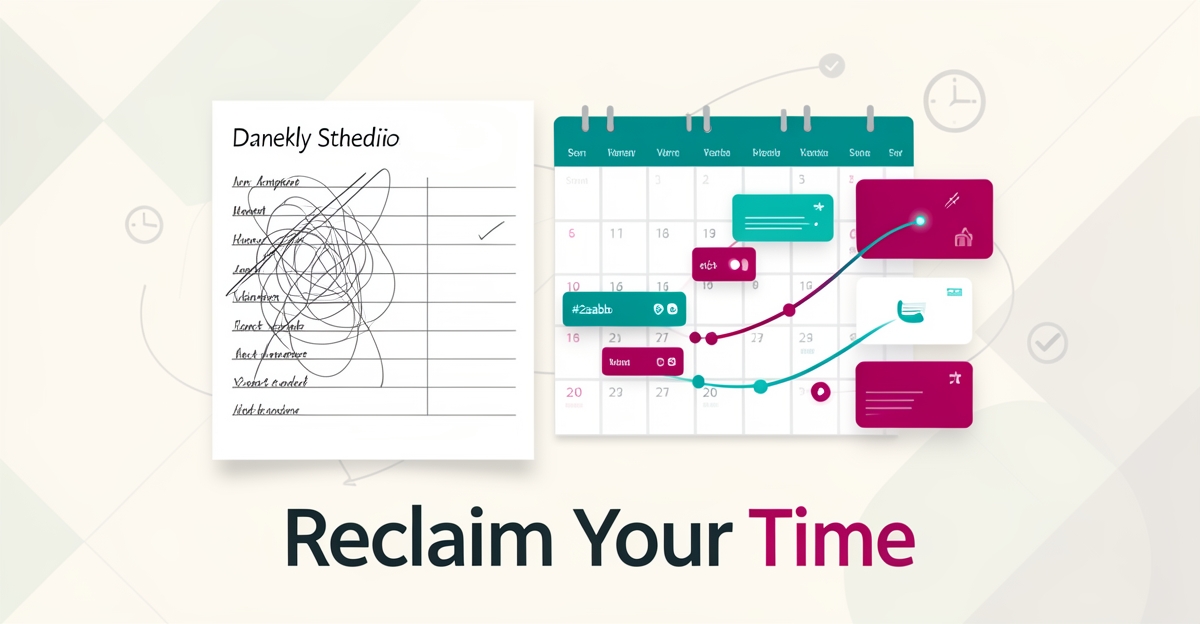
From Manual to AI: Automating Dance Class Scheduling for Busy Studios
Key Facts
- The dance studio management software market is projected to grow from roughly $412 million to over $1 billion by 2033 according to industry research
- Small and medium studios account for the majority of market revenue in the dance studio software sector per market analysis
- AI-powered booking systems typically save studio administrators 8-10 hours per week on scheduling tasks based on industry data
- 62% of studios using custom booking questions reported instructors felt more prepared for sessions according to studio surveys
- SMS open rates typically exceed 90%, making text messaging one of the most reliable channels for time-sensitive studio announcements per communication research
- Manual scheduling commonly consumes 8-10 hours weekly through spreadsheets, phone calls, and paper-based systems from market research
- Phone tag for availability confirmation can waste 15-20 minutes per scheduling change in manual systems
Hire a team member that works 24/7 — for less than a part-time wage.
AI receptionists, SDRs, dispatchers and 99+ roles. Trained on your business, fully managed.
Not sure where to start? Ask our AI planner
The Hidden Cost of Manual Scheduling in Dance Studios
The administrative burden of manual scheduling continues to drain dance studios of valuable time and resources. Many owners still rely on spreadsheets, phone calls, and paper-based systems to coordinate classes, manage instructor availability, and track student enrollment, a process that commonly consumes 8-10 hours weekly according to market research. This operational drain represents a significant opportunity cost, particularly for small and medium studios that make up the bulk of a dance studio software market projected to grow from roughly $412 million to over $1 billion by 2033. These hours spent on repetitive scheduling tasks could otherwise be invested in curriculum development, student engagement, or studio growth initiatives.
The hidden costs extend beyond simple time loss. Manual scheduling systems are prone to human error, leading to double-booked studios, missed communications, and last-minute cancellations that disrupt both instructors and families. Studios using manual methods often struggle to accommodate last-minute changes or special requests, resulting in frustrated students and underutilized studio space. Without real-time visibility into class capacity and instructor schedules, administrators spend excessive time coordinating changes that could be resolved instantly with automated systems. These inefficiencies compound over time, contributing to staff burnout and reduced operational agility in an increasingly competitive market.
- Spreadsheet-based scheduling creates version control issues when multiple staff members update files
- Phone tag for availability confirmation can waste 15-20 minutes per scheduling change
- Paper-based systems lack audit trails, making it difficult to track historical enrollment patterns
- Manual conflict resolution often requires 30-45 minutes daily to address overlapping bookings
- Inconsistent communication channels lead to missed reminders and higher no-show rates
For studios seeking to reclaim this lost time, AI-powered scheduling automation offers a practical solution that integrates with existing workflows. Rather than replacing human judgment, these systems handle the repetitive administrative tasks that consume valuable hours each week. Studio owners can redirect their focus toward teaching quality, student relationships, and artistic development, areas where human expertise truly differentiates their offerings. As the dance studio management software market continues its growth, studios that automate scheduling gain a competitive advantage through improved operational efficiency and enhanced student experience. To explore how AI automation can transform your studio's scheduling workflow, start the two-minute Fit Check at https://aiqlabs.ai/apply, then schedule a free 30-minute strategy call at https://aiqlabs.ai/book to identify your specific automation opportunities.
How AI Scheduling Solves Core Studio Pain Points
Picture a Friday afternoon when two classes get double-booked, an instructor calls out sick, and fifteen parents need to be notified before the weekend. For most studio owners, that means hours of phone calls and spreadsheet surgery. AI-powered scheduling handles these scenarios automatically, resolving conflicts, matching availability, and keeping families informed without anyone lifting a finger.
The core capability is automated conflict resolution. AI scheduling systems continuously scan class rosters, instructor availability, and room assignments to catch double-bookings and cancellations the moment they occur, then propose or execute fixes instantly. Tools in this category can manage class schedules, automate sign-ups, and handle cancellations without manual tracking, keeping every class organized, on time, and filled to capacity. According to industry research, these AI-powered booking systems typically save studio administrators 8-10 hours per week, time that flows back into teaching, choreography, and parent relationships.
Availability matching works the same way. Instead of a studio manager manually cross-referencing which instructors can teach which time slots, the system weighs instructor qualifications, room capacity, and student demand to build an optimized schedule. When something changes, a teacher's availability shifts, enrollment spikes, the schedule adapts rather than breaking.
Preference handling is where AI scheduling quietly improves the student experience. Custom booking questions capture each student's goals, experience level, and scheduling needs at registration, feeding that context directly to instructors. The results are measurable: data on studio booking practices shows that 62% of studios using custom booking questions said their instructors felt more prepared walking into sessions. Prepared instructors deliver better classes, and better classes keep students enrolled.
Communication closes the loop. No-shows and missed updates are largely a messaging problem, and AI solves it through automated, multi-channel outreach:
- Automated class reminders sent before every session
- Instant weather cancellation and schedule-change notifications
- Recital and event updates delivered to the right audience
- SMS-first delivery for time-sensitive messages
Text messaging is the backbone here because SMS open rates typically exceed 90%, making it one of the most reliable channels for time-sensitive studio announcements. When a reminder system reaches nearly every parent who receives it, empty spots get filled and no-shows drop, without a single manual follow-up call.
This is the same principle AIQ Labs applies across scheduling automation more broadly: production-ready systems that integrate with existing calendars and communication tools, so the studio keeps the platforms it already uses while the AI handles the coordination layer. Whether that starts with a single workflow rebuild or grows into a fuller connected operating layer, the value isn't novelty, it's the reclaimed hours. As one studio industry analysis put it, AI-powered scheduling is valuable because it gives owners eight extra hours per week to spend on the human work that actually differentiates their studios.
Implementation: From Manual Workflow to AI-Powered System
Transitioning from manual scheduling to an AI-powered system doesn't require a complete overhaul overnight. AIQ Labs recommends a phased approach using the Build in Milestones model, allowing studios to implement changes incrementally while maintaining operational continuity. This low-risk strategy ensures each phase delivers measurable value before moving to the next, and the Start Monthly model keeps costs predictable while you validate the results.
The process begins with data migration, where existing class schedules, instructor availability, and student enrollment records are cleaned, structured, and imported into the new AI system. This foundational step ensures the AI has accurate historical data to learn from and optimize future scheduling decisions. Once data is migrated, the system integrates with existing tools like Google Calendar for real-time sync of class times and instructor availability, and Twilio for automated SMS reminders, leveraging the fact that SMS open rates typically exceed 90%, making text one of the most reliable channels for time-sensitive studio announcements.
Staff training follows, focusing on how instructors and front desk teams interact with the AI system for availability updates, class changes, and student inquiries. Training emphasizes the AI's role as a supportive tool rather than a replacement, highlighting how AI-powered booking systems typically save administrators 8-10 hours per week by automating sign-ups, cancellations, and conflict resolution. Finally, change management ensures smooth adoption through clear communication, feedback loops, and gradual rollout, starting with one class type or location before expanding studio-wide. Each phase is designed to deliver immediate improvements in scheduling accuracy and admin efficiency, building confidence for broader AI adoption across studio operations. According to industry research, studios using AI-driven scheduling report meaningful time savings and improved class organization, validating the impact of this structured transition.
- Migrate and structure existing scheduling data for AI training
- Integrate with Google Calendar and Twilio for real-time sync and automated reminders
- Train staff on AI-assisted workflows and change management
- Roll out incrementally using Build in Milestones for low-risk adoption
- Monitor and optimize based on admin time savings and class fill rates
This methodical implementation not only reduces disruption but also positions studios to realize ongoing benefits, from reduced no-shows to better instructor preparedness, as the AI system learns and adapts over time. Research shows that 62% of studios using custom booking questions noted instructors felt more prepared for sessions, demonstrating how automation enhances both operational and teaching quality. And because the system is built in phases and owned outright, studios gain a scalable solution that evolves with their needs, without the complexity of managing multiple disconnected tools. You can explore how the pricing models work at aiqlabs.ai/pricing.
Still paying for 10+ subscriptions that don’t talk to each other?
We build custom AI systems you own outright. No vendor lock-in. Full control.
Not sure where to start? Ask our AI planner
Frequently Asked Questions
How much time does manual scheduling actually cost my dance studio each week?
Will AI scheduling replace my staff or just handle the boring admin work?
Do parents actually read automated class reminders?
Can AI scheduling really reduce no-shows and keep classes full?
Will instructors be better prepared with AI scheduling?
Is the dance studio software market big enough to justify investing now?
Reclaim Your Week: Put Scheduling on Autopilot
Manual scheduling quietly costs your studio 8-10 hours every week, hours that could go toward choreography, student relationships, and growth. As we've covered, AI-powered scheduling resolves double-bookings automatically, matches instructor availability in real time, personalizes the student experience, and keeps families informed through SMS reminders that reach over 90% of recipients. And with a phased, milestone-based implementation, you don't have to overhaul everything overnight: migrate your data, integrate with tools like Google Calendar, train your staff, and roll out one class at a time. The studios thriving in 2026 and beyond will be those that treat technology as a teaching tool, not just an administrative convenience, and research shows studios using AI-driven scheduling report meaningful time savings and better-prepared instructors. If you're ready to see what those reclaimed hours could mean for your studio, start with the two-minute Fit Check at aiqlabs.ai/apply, then book a free 30-minute strategy call at aiqlabs.ai/book. It's a real working session with an AI engineer to map your biggest scheduling bottleneck, and if there isn't a clear win, we'll tell you that too.
Make AI your competitive advantage — not just another tool.
Strategy, implementation and ongoing optimization. One partner, end to end.
Not sure where to start? Ask our AI planner