From Manual to AI: How Asian Fusion Restaurants Can Automate Their Daily Operations
Key Facts
- Manual inventory, scheduling, and order workflows typically consume dozens of manager hours per week that automation can reclaim
- AI demand forecasting is widely used in food service to reduce over-ordering and spoilage of specialty ingredients
- AI-assisted scheduling tools help restaurants align labor with forecasted demand, reducing both overtime and shift gaps
- The Asia-Pacific AI market has grown rapidly through 2026, expanding the pool of restaurant-ready automation tools
- AIQ Labs has deployed 200+ multi-agent systems and runs 4 live SaaS products daily
- AI Employees from AIQ Labs cost roughly 80% less than an equivalent human hire
Hire a team member that works 24/7 — for less than a part-time wage.
AI receptionists, SDRs, dispatchers and 99+ roles. Trained on your business, fully managed.
Not sure where to start? Ask our AI planner
The Manual Operations Trap Facing Asian Fusion Kitchens
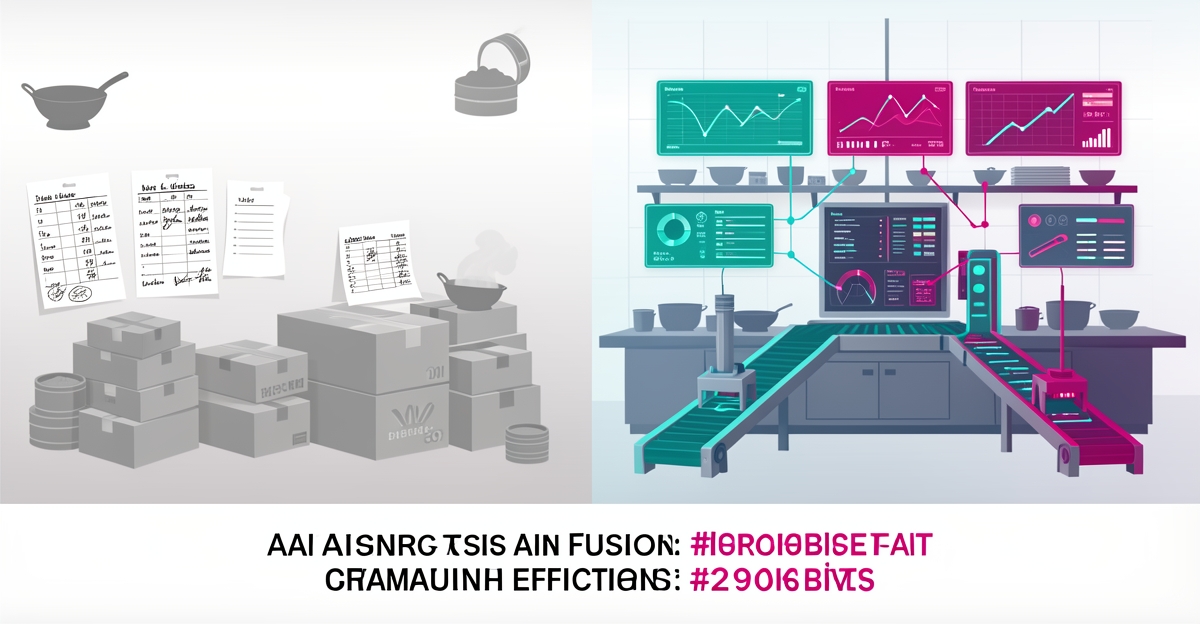
Asian fusion kitchens operate in a high-pressure environment where manual processes create daily bottlenecks that impact both profitability and customer experience. Staff juggle spreadsheets for inventory, handwritten schedules for shifts, and paper tickets for order processing, tasks that consume valuable time and are prone to human error. This manual overload increases labor costs, leads to food waste, creates scheduling conflicts, and delays service, ultimately eroding the very creativity and personal touch that define successful Asian fusion establishments.
The pattern is consistent wherever manual workflows compete with automated ones: machines don't get tired, don't forget to reorder the galangal, and don't misread a handwritten ticket during a Friday rush. The advantage isn't intelligence, it's consistency. AI systems execute the same check the same way every time, at any hour, which is exactly what kitchen operations need during split-second, high-volume service. For restaurants, that consistency translates into near-instantaneous inventory updates, better labor allocation, and faster order routing.
Manual processes also demand disproportionate time from your best people. Restaurant managers and chefs routinely spend hours each week tracking ingredient levels, adjusting staff schedules, and reconciling orders, routine work that diverts attention from menu innovation and guest engagement. That imbalance strains resources and increases the likelihood of costly errors when volume spikes.
- Inventory inaccuracies lead to over-ordering or stockouts of specialty ingredients
- Manual scheduling creates shift gaps or overtime during peak hours
- Paper-based order processing increases ticket errors and kitchen miscommunication
- Time spent on administrative tasks reduces availability for food preparation and service
- Inconsistent tracking prevents data-driven decisions about menu performance and waste reduction
By recognizing these operational traps, Asian fusion restaurants can see where AI automation delivers the most immediate relief, transforming reactive, error-prone workflows into proactive, consistent systems that free staff to focus on what matters most: crafting exceptional dining experiences. AIQ Labs helps restaurants identify these pain points and build custom AI solutions that integrate with existing kitchen workflows while preserving the cultural authenticity and culinary creativity at the heart of Asian fusion cuisine.
Why AI Outperforms Manual Workflows in Restaurant Operations
The restaurant industry is in the middle of a genuine operational shift, driven by AI's demonstrated advantages over manual workflows in routine, repetitive tasks. Human operators bring creativity and intuition to the table; AI systems deliver something equally valuable: relentless consistency, near-instant response, and the ability to process large amounts of data without fatigue or distraction.
The performance gap shows up wherever the two approaches are compared on structured, repetitive work. Automated systems don't just occasionally beat manual processes on speed and accuracy, they do it every single time, because they execute rules the same way regardless of how busy the Friday dinner rush gets. These aren't marginal improvements; they represent a fundamental change in how routine work gets done.
For Asian fusion restaurants, these advantages translate directly into operational benefits. AI demand forecasting is widely used across food service to cut over-ordering and spoilage. AI-assisted scheduling aligns labor with forecasted covers, reducing both overtime and understaffed shifts. Automated order routing reduces ticket errors and speeds up kitchen communication. And because the systems run continuously, monitoring happens around the clock, catching issues before they become problems.
The time differential is where owners feel it most. Tasks that eat hours of a manager's week, counting stock, rebuilding schedules, chasing order discrepancies, can largely run themselves once automated. That frees restaurant staff to focus on what humans do best: creative menu development, building customer relationships, and handling complex service situations that require emotional intelligence.
The Asia-Pacific region has seen sustained AI market growth through 2026, which means more restaurant-ready automation options are available than ever, and the tooling continues to mature quickly. Restaurants no longer need enterprise budgets to access demand forecasting, intelligent scheduling, and automated order management tailored to their operations.
Key operational advantages AI delivers include:
- Instant, consistent execution of routine checks and reorders, every time
- Elimination of fatigue-driven errors during long shifts
- Consistent performance without distraction during peak service
- Real-time data processing across multiple operational areas simultaneously
- Predictive capabilities that anticipate needs before they arise
For Asian fusion restaurants specifically, AI systems can be customized to understand the complex flavor profiles, cultural preferences, and operational nuances that make these establishments unique. This cultural and flavor-specific logic, something AIQ Labs builds directly into its custom systems, ensures automation enhances rather than homogenizes the dining experience.
The evidence from real deployments is clear: for routine operational tasks, AI doesn't just match human performance, it substantially exceeds it while requiring a fraction of the time investment.
Practical AI Automation Roadmap for Kitchen, Inventory and Staffing
Manual workflows in busy Asian fusion kitchens create bottlenecks that compound during service. A step-by-step AI roadmap lets restaurants automate kitchen scheduling, inventory tracking, staff shifts, and order processing while keeping cultural flavor logic intact.
Start by defining operational needs and objectives. Map the daily pain points that drain staff time and create errors, such as ingredient waste, last-minute scheduling changes, and order handoff delays. Clarify success metrics for each workflow before selecting tools. This focus prevents over-automation and keeps creative tasks human-led.
Evaluate tools against restaurant-specific requirements. The rapid growth of the AI market through 2026 means more restaurant-ready options than ever, but selection still matters. Prioritize systems that integrate with existing POS and inventory software, support Asian fusion ingredient names and units, and allow custom rules for flavor-specific logic.
Configure the system for Asian fusion requirements. Effective setups define the AI's role, tasks, and context explicitly. Provide examples of menu items, substitution rules, and peak service protocols so the system understands cultural and operational nuance, when to flag a low-stock specialty ingredient versus a commodity one, and how prep lists should differ across menu lines.
Pilot one workflow with measurable guardrails. Choose a single process like inventory tracking and run it for two weeks. Ask the system to explain its reasoning for reorders or schedule changes, then verify against kitchen reality. This is where a fixed-price, phased approach like AI Workflow Builds helps: you rebuild the one workflow that costs the most, approve each phase, and only continue when the results hold up.
Expand gradually with human oversight. Once the pilot meets targets, add adjacent workflows such as staff shift optimization and order routing. Keep human review for plating decisions, supplier relationships, and guest experience.
A practical rollout sequence looks like this:
- Define operational needs and objectives for kitchen, inventory and staffing
- Evaluate tools for integration, customization and cultural logic support
- Configure detailed rules for your Asian fusion menu and service protocols
- Pilot one workflow, verify its reasoning, then expand
AIQ Labs builds custom, production-ready AI systems designed for restaurant operations with cultural and flavor-specific logic built in, and offers ownership models that avoid vendor lock-in. This approach lets teams automate repetitive work and free staff for the creative tasks that define Asian fusion dining.
Human-AI Collaboration That Protects Culture and Service
Automation without oversight risks losing the cultural nuance that defines Asian fusion dining. A hybrid model keeps human creativity and relationship stewardship at the center while letting AI handle repetitive, data-heavy work. That balance protects service quality, menu authenticity, and staff morale during change.
Asian fusion restaurants are adopting AI in a fast-maturing landscape. Operational tools are improving quickly, but adoption still requires deliberate change management, clear boundaries, staff training, and honest measurement.
The time savings from automation are what make the collaboration model work. When routine monitoring and reconciliation run themselves, teams get hours back every week for creative tasks. The consistency gains from standardized routine decisions, fewer stockouts, fewer scheduling conflicts, fewer ticket errors, compound into a noticeably smoother service.
Protect culture and service with clear boundaries for automation:
- Keep menu development, flavor balancing, and storytelling human-led. Use AI for prep lists, cost modeling, and supplier tracking.
- Maintain human-in-the-loop controls for pricing, promotions, and guest recovery where empathy drives loyalty.
- Define data quality standards and privacy guardrails before rollout to avoid bias and protect guest information.
- Train staff on AI collaboration so routine tasks shift to machines and relationship-building stays with people.
AIQ Labs designs restaurant systems with this collaboration in mind, delivered through three entry points. AI Employees provide managed AI staff, receptionists, dispatchers, schedulers, and 99+ other roles, at roughly 80% less cost than a human hire. AI Workflow Builds rebuild the one workflow that costs you the most, at a fixed price, in phases. And AI Operating Systems connect everything into one operating layer, built in phases and owned outright.
Payment flexibility supports restaurant realities. Start Monthly gets you running on a flat monthly plan. Build in Milestones lets you approve and pay per phase, keeping the work completed so far. Own It Outright gives you full ownership of code, agents, and data for a complete AI operating system, no vendor lock-in.
Over-reliance risks emerge when automation replaces judgment. Data quality, system failures, and privacy compliance require ongoing review. With structured change management, clear escalation paths, and continuous optimization, restaurants gain efficiency without losing the human touch that makes Asian fusion distinct.
Still paying for 10+ subscriptions that don’t talk to each other?
We build custom AI systems you own outright. No vendor lock-in. Full control.
Not sure where to start? Ask our AI planner
Frequently Asked Questions
Will AI make my Asian fusion kitchen lose its cultural authenticity?
How much time could AI actually save my restaurant staff each week?
Is the restaurant market really ready for AI automation?
What performance advantage does AI have over manual kitchen workflows?
Do I need to replace my POS and inventory software to use AI?
What is the best way to start automating without overhauling everything at once?
The Kitchen of Tomorrow Starts With Today's First Step
Asian fusion restaurants don't need to choose between tradition and technology, the most successful operations are already proving they can coexist. By automating inventory tracking, staff scheduling, and order routing, kitchens reclaim the hours that manual processes consume and redirect that energy toward menu development, guest relationships, and the creative instincts no algorithm can replicate. The practical path forward isn't a full overhaul, it's identifying one bottleneck, piloting an AI workflow with clear guardrails, and expanding only when the results speak for themselves. AIQ Labs helps restaurants take that first step with custom systems that preserve cultural nuance while eliminating the repetitive work that burns out teams. Start with the two-minute Fit Check at aiqlabs.ai/apply, then book a free 30-minute strategy call to map your biggest operational win, no obligation, just clarity on where automation delivers the fastest return.
Make AI your competitive advantage — not just another tool.
Strategy, implementation and ongoing optimization. One partner, end to end.
Not sure where to start? Ask our AI planner