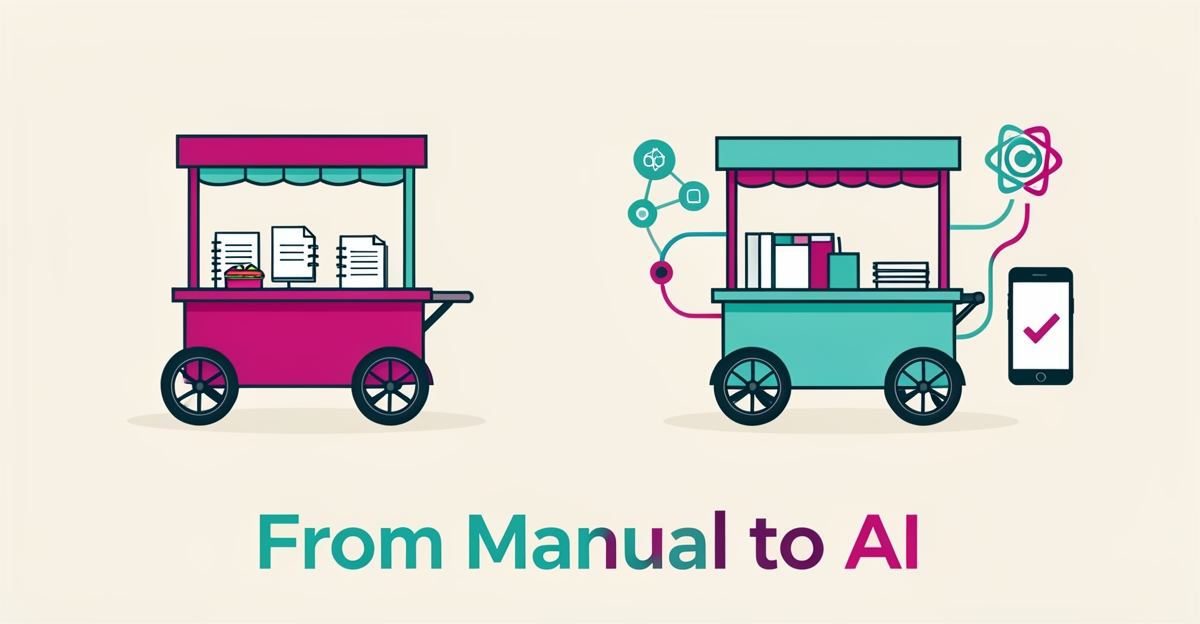
From Manual to AI: How a Food Vendor in Halifax Could Automate Its Order Flow
Key Facts
- Industry research suggests a large share of restaurant calls go unanswered during peak hours, sending hungry customers straight to competitors according to hospitality technology reports.
- Most food and beverage manufacturers now cite labor shortages as a primary driver for automation per CRB Group findings.
- AI workflow automation targets the highest-friction step in an order flow, intake, validation, and routing, so the same team can handle higher volumes.
- AIQ Labs builds these systems on a fixed price, in phases, with the vendor owning every component outright.
- No staff need to be replaced; the goal is removing repetitive data entry so people can focus on food and customers.
Hire a team member that works 24/7 — for less than a part-time wage.
AI receptionists, SDRs, dispatchers and 99+ roles. Trained on your business, fully managed.
Not sure where to start? Ask our AI planner
The Manual Bottleneck: Why Paper Orders Hold Back Food Vendors
For food vendors relying on manual order systems, the daily rhythm of service often masks a growing operational strain. Paper tickets, handwritten notes, and verbal order-taking create friction points that escalate during peak hours, turning what should be a smooth customer experience into a bottleneck of missed calls, errors, and overwhelmed staff.
This challenge is not isolated, it reflects a broader industry struggle. Hospitality research suggests that a large share of restaurant calls go unanswered during peak periods, directly impacting revenue when hunger drives impulse decisions according to industry reporting. At the same time, labor shortages are a leading driver of automation adoption across food and beverage operations per CRB Group findings, pushing even small vendors to rethink traditional workflows.
The manual approach introduces avoidable risks at every stage. Staff juggling order-taking with food preparation face cognitive overload, increasing the likelihood of misheard specifications, incorrect toppings, or lost tickets during rushes. These errors waste ingredients and erode trust, customers who receive the wrong order are less likely to return, especially in competitive markets where alternatives are just a block away.
Beyond immediate mistakes, the system lacks scalability. As demand grows, adding more human resources to handle phones and orders becomes economically unsustainable, particularly when factoring in recruitment, training, and the inherent limits of human availability. Paper-based workflows cannot operate outside business hours or adapt to fluctuating volumes without proportional increases in labor cost.
These inefficiencies compound over time, creating a hidden drag on profitability. Vendors remain trapped in a cycle where growth requires more hands, but hiring those hands gets harder each year. The result is a ceiling on operational capacity, time spent correcting order mistakes or chasing down missing details is time not spent refining recipes, improving service speed, or exploring new menu items.
Recognizing this pattern is the first step toward breaking free. For a busy Halifax food vendor, think hot dogs at lunch rush, the decision to explore AI-driven automation isn't about chasing trends. It's about resolving a fundamental mismatch between outdated processes and modern customer expectations. By addressing the root causes of manual bottlenecks, a vendor can reclaim efficiency without sacrificing the personal touch that defines their brand.
How AI Workflow Automation Solves the Order Flow Problem
Picture the familiar bottleneck: orders arrive via phone, paper slips, and shouted calls, creating confusion during peak lunch rushes. Staff struggle to validate requests against inventory, mishearing toppings or missing special instructions. This manual flow leads to delays, errors, and frustrated customers, especially when the stand serves over 100 orders in a single hour.
This is exactly the kind of problem AIQ Labs' AI Workflow Builds are designed for: rebuild the one workflow that costs the most, at a fixed price, in phases. A custom AI workflow system can capture orders through voice or digital channels, validate them in real time using AI agents, and route tasks to the appropriate staff member. The system checks for item availability, confirms complex modifications, and integrates with the vendor's existing point-of-sale and inventory tools. By automating the intake and validation steps, the time between order receipt and kitchen initiation shrinks, freeing the same team to handle higher volumes without adding headcount.
AI agents can manage routine tasks like order confirmation and upsell suggestions, freeing staff to focus on food preparation and customer engagement. This shift aligns with the broader industry trend where most food and beverage manufacturers now use automation to address labor shortages per CRB Group findings.
- Voice and digital order capture via phone, SMS, or web form
- AI validation against menu, inventory, and pricing rules
- Automated task routing to kitchen or assembly staff
- Real-time sync with POS and inventory systems
- Fallback to human staff for complex or ambiguous orders
By embedding AI into the order flow, not as a replacement but as a workflow enhancer, a vendor keeps its personal touch while eliminating manual bottlenecks. The system handles the initial intake, validation, and routing, allowing human workers to focus on what they do best: preparing food and connecting with customers. This balanced approach reflects the industry's move toward using AI for repetitive tasks, elevating the human elements of hospitality as noted by hospitality technology leaders.
Implementation: From Paper to AI Without Disrupting Staff or Service
The engagement begins with a discovery phase to map the paper-based order flow, identifying bottlenecks during peak lunch rushes when handwritten tickets pile up and slow service. AIQ Labs analyzes the existing workflow, from customer request at the counter to staff assembly and payment, without disrupting daily operations, ensuring the solution fits within the current staffing model. This phase focuses on pain points like order inaccuracies and delayed fulfillment, which are common in food service where staff overwhelmed with manual tasks let calls go unanswered.
From there, the build happens in phases, aligned with the Build in Milestones payment model. The vendor approves and pays for each completed segment, starting with digital order intake via a simple tablet interface, then integrating kitchen display logic, and finally adding automated payment routing, retaining ownership of every component as it ships. The system coordinates between customer-facing input and back-end task assignment, eliminating manual ticket handling while preserving the vendor's control over their AI assets. No staff are replaced; instead, cashiers shift focus to customer engagement and order accuracy checks, with AI handling repetitive data entry.
Deployment and training happen over a short window, with the system going live during a slow afternoon so staff can adapt without pressure. Training is role-specific and hands-on, using the vendor's actual menu and peak-hour scenarios to build confidence. By the end of the rollout, the vendor owns a digital asset that reduces reliance on paper and enables the workflow to scale without adding headcount, proving that thoughtful, milestone-based implementation can modernize legacy processes while keeping the human touch central to service.
Still paying for 10+ subscriptions that don’t talk to each other?
We build custom AI systems you own outright. No vendor lock-in. Full control.
Not sure where to start? Ask our AI planner
Frequently Asked Questions
How does AI workflow automation speed up order processing for a food vendor?
Can AI automation help small food vendors handle higher order volumes without hiring more staff?
Why do so many restaurant calls go unanswered during peak hours?
Is AI automation in food service mainly about replacing human workers?
How does AIQ Labs implement an AI system without disrupting daily operations?
What does an AI workflow build cost?
The Smart Way to Keep the Sizzle Without the Stress
Moving from paper tickets and shouted orders to an AI-driven intake and validation workflow shows what's possible when automation enhances, rather than replaces, the human side of service. By capturing orders by voice or digital channel, validating them against menu and inventory in real time, and routing tasks to staff, a food vendor can cut order-to-kitchen delays and handle higher volumes with the same team while preserving the personal touch that defines their brand. A phased, milestone-based implementation keeps daily service running, gives staff role-specific training, and leaves you owning a system that fits your existing POS and staffing model. Manual bottlenecks are a growth ceiling for food businesses, especially when calls go unanswered during peak demand. If you're weighing a similar shift, start by mapping your highest-friction order moments and test a focused workflow fix before scaling. Take the two-minute Fit Check at https://aiqlabs.ai/apply, then book a free 30-minute strategy call with AIQ Labs to map your bottleneck and identify a high-ROI automation opportunity. You can also reach the team directly at [email protected].
Make AI your competitive advantage — not just another tool.
Strategy, implementation and ongoing optimization. One partner, end to end.
Not sure where to start? Ask our AI planner