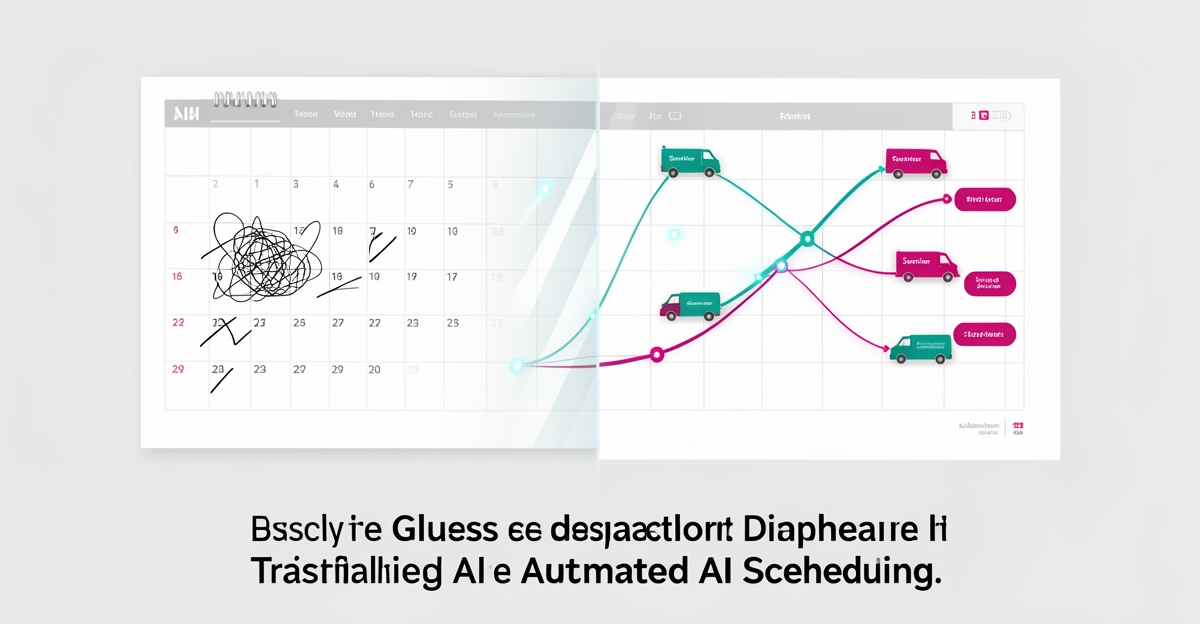
From Manual to AI: How One Glass Installer in Halifax Automated Job Scheduling and Dispatch
Key Facts
- Manual scheduling typically consumes several hours per week in administrative tasks for small field service teams.
- Manually managed appointment calendars are prone to double-bookings, wrong addresses, and missed appointments, the most common failure points field service owners report.
- Industry research on AI scheduling tools suggests staff can reclaim a meaningful share of their day when routine booking requests are automated.
- AI scheduling systems handle routine requests automatically, freeing staff for complex situations that need human judgment.
- Each manually scheduled appointment costs minutes of availability checking, confirmation calls, and reminder sending, time that compounds across a busy week.
- AIQ Labs has deployed 200+ multi-agent systems, including scheduling and dispatch workflows for trades businesses.
Hire a team member that works 24/7 — for less than a part-time wage.
AI receptionists, SDRs, dispatchers and 99+ roles. Trained on your business, fully managed.
Not sure where to start? Ask our AI planner
The Hidden Cost of Manual Scheduling in Field Services
For a small field service team, the schedule is the business. When it's managed by hand, the cracks show up as missed revenue, frustrated technicians, and an office that never catches up.
Manual scheduling quietly drains capacity. Small teams commonly lose several hours a week to scheduling admin, time that should go to sales, quoting, or customer care. That load compounds because each appointment carries overhead: checking availability, confirming details, sending reminders.
The error cost is material. Hand-managed calendars produce double-bookings, wrong addresses, and last-minute scrambles, the failure modes every dispatcher recognizes. Each appointment costs minutes of manual coordination, and those minutes become idle trucks and overtime for a Halifax glass installer. Technicians arrive to find a job already booked, or sit waiting while the office untangles a conflict. The owner is pulled into dispatch instead of growing the business.
The operational pain points show up consistently across field services:
- Double-bookings and typos from manually managed calendars
- Technician idle time between jobs due to poor route sequencing
- Administrative overload from hours spent weekly on scheduling tasks
- Delayed confirmations and reminders that increase no-shows
This is where manual scheduling creates hidden cost. Errors don't just cause inconvenience; they erode utilization and customer trust. Staff performance suffers when teams spend their day firefighting the calendar instead of serving customers.
AIQ Labs sees this pattern constantly in trades businesses that rely on phones and spreadsheets. The case of a small glass and mirror business in Halifax illustrates how automating job intake, conflict detection, and dispatch reduces scheduling errors and improves technician utilization.
The contrast is clear. Manual scheduling offers a personal touch and flexibility for edge cases, but it caps out, a human dispatcher can only juggle so many jobs before things slip. An automated scheduling layer handles five bookings a day or fifty with the same effort, and eliminates the typos and double-bookings that come from manual entry.
When routine scheduling is automated, staff can focus on complex, high-value work. Industry research suggests the majority of routine scheduling requests can be handled by AI agents, freeing teams for the exceptions that need human judgment.
The cost of staying manual is not just time. It is lost bookings, lower morale, and a ceiling on growth that no amount of overtime can fix.
How AI-Powered Scheduling Eliminates Errors and Frees Up Capacity
Manual scheduling errors are more than a headache; they are a steady drain on resources and efficiency. Double-bookings, missed appointments, and wrong addresses compound into wasted technician hours and frustrated customers.
AI-powered scheduling tools attack the problem from several angles. Here are the key ways they deliver results:
- Automating routine tasks, such as sending reminders and checking availability
- Providing real-time availability updates to reduce scheduling conflicts
- Handling a high volume of bookings with ease, whether it's five or fifty per day
- Freeing up staff to focus on complex, high-value tasks
By automating these tasks, businesses shed the administrative burden of manual scheduling, the hours of availability checks, confirmations, and reminder calls each week. That, in turn, leads to improved technician utilization and more jobs completed per day. As the Halifax glass installer's story illustrates, AI-powered scheduling can have a significant impact on a business's bottom line.
The Halifax glass installer's experience is a prime example. By automating job intake, conflict detection, and dispatch, the company reduced scheduling errors and improved technician utilization. With the help of AIQ Labs' Workflow Builds, the company designed and deployed a custom AI workflow that integrated with its existing CRM and scheduling tools, resulting in a more efficient and streamlined scheduling process, built in phases at a fixed price, and owned outright by the business.
Implementation: Integrating AI Dispatch with Existing Tools Without Disruption
The glass installer in Halifax had a familiar problem: a spreadsheet, a phone, and a calendar that never quite matched. Dispatch relied on manual checks, and every new job risked overlap, missed reminders, and technicians driving across town for a 20-minute repair.
The team wanted automation without ripping out the tools they trusted. The rollout starts with a focused assessment of intake, CRM entries, and calendar flows to map where errors enter the system. AIQ Labs designs the workflow around existing CRM and scheduling tools, using APIs to pull real-time availability and push confirmed jobs back without duplicate entry.
Integration is done via APIs that provide fresh information exactly when needed, enabling simple regular data requests or flexible query APIs for scheduling logic. That approach keeps the current stack intact while adding an automation layer that validates conflicts before dispatch.
A phased rollout limits risk. The first phase automates job intake and conflict detection for a single crew, then expands to full dispatch and technician routing. Staff training runs in parallel, with role-specific walkthroughs that show how the AI handles routine requests and when human override applies.
- Assessment of current CRM, calendar, and dispatch tools to identify error points
- API integration for real-time availability, job creation, and status sync
- Phased deployment starting with intake and conflict detection, then full dispatch
- Team training on exception handling and dashboard monitoring
Manual scheduling consumes hours every week and produces recurring errors in hand-managed calendars. With AI-powered scheduling, routine work is handled automatically, freeing staff for complex situations.
The milestone-based approach means each phase ships, is approved, and is paid before the next begins. That structure minimizes downtime and gives the business ownership of the custom workflow at each step. Compatibility is prioritized so technicians continue using familiar interfaces while the AI works behind the scenes.
The utilization benefits are real. With conflicts caught before dispatch and routes sequenced automatically, a small installer gets tighter routes, fewer double-bookings, and more jobs completed per day without adding headcount.
Security and compliance stay in view as the system connects to business data. New AI regulations increasingly demand transparency in AI decisions, and industry frameworks like ISO 27001, SOC 2, and the NIST AI Risk Management Framework should be followed. The design keeps audit trails and human-in-the-loop controls for critical dispatch decisions.
By the end of the rollout, job intake, conflict detection, and dispatch operate as a unified workflow. The business keeps its existing tools, gains real-time coordination, and sheds the manual burden that drove errors.
Still paying for 10+ subscriptions that don’t talk to each other?
We build custom AI systems you own outright. No vendor lock-in. Full control.
Not sure where to start? Ask our AI planner
Frequently Asked Questions
How much time does manual scheduling actually cost a small field service business?
What kind of errors does manual scheduling create?
Can AI scheduling really handle the volume of a growing business?
Will automating scheduling improve my team's performance?
Do I need to replace my existing CRM and scheduling tools to use AI dispatch?
What happens when the AI encounters a scheduling situation it can't handle?
The Schedule Shouldn't Run You: What Comes Next
The Halifax glass installer didn't overhaul its business to fix its schedule, it kept the CRM, calendar, and tools the team already trusted, and added an AI layer for job intake, conflict detection, and dispatch. The result: fewer double-bookings, tighter routes, and technicians completing more jobs per day without added headcount. If your week still disappears into spreadsheet checks and phone tag, start small: map where errors enter your scheduling process today, and pick one workflow to automate first. That's exactly how AIQ Labs approaches these builds, phased workflow builds where you approve each milestone and own the system outright, not another subscription to babysit. Curious whether this fits your operation? Take the two-minute Fit Check at aiqlabs.ai/apply and book a free 30-minute strategy call. It's a working session with an engineer, not a pitch, and if there's no clear win for your business, we'll tell you that too.
Make AI your competitive advantage — not just another tool.
Strategy, implementation and ongoing optimization. One partner, end to end.
Not sure where to start? Ask our AI planner