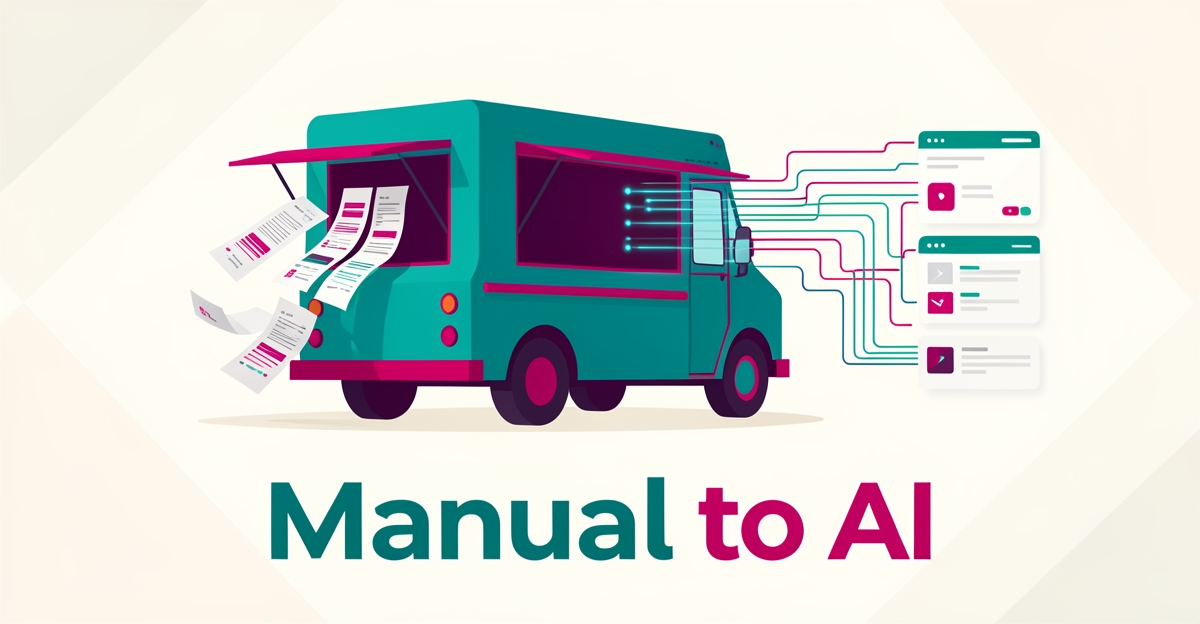
From Manual to AI: How One Halifax Food Truck Automated Its Order Entry System
Key Facts
- Food trucks typically operate on thin profit margins after food, labor, fuel, and permit costs, often in the low double digits.
- Owners commonly spend several hours a week on manual catering inquiries; AI intake automation can reduce that to a fraction of the time.
- Automated order capture removes the transcription errors that come from shouted tickets and handwritten notes.
- Automated pre-order systems typically save food trucks significant hours monthly while cutting errors that cause food waste.
- AI forecasting can meaningfully reduce food waste by predicting daily prep quantities more accurately than gut feel.
- AIQ Labs has deployed 200+ multi-agent systems and runs 4 live SaaS products daily, this is production work, not theory.
Hire a team member that works 24/7 — for less than a part-time wage.
AI receptionists, SDRs, dispatchers and 99+ roles. Trained on your business, fully managed.
Not sure where to start? Ask our AI planner
The Hidden Cost of Manual Order Entry in Food Trucks
Food trucks operate on razor-thin margins. After food, labor, fuel, and permits, what's left is often a modest percentage of every dollar earned. In this environment, even small inefficiencies compound rapidly, turning operational friction into tangible profit loss. Manual order entry, particularly for catering inquiries handled through scattered channels like Instagram DMs, texts, and phone calls, is a critical pain point that silently erodes both time and revenue.
Owners commonly spend several hours per week manually managing catering inquiries, time that could otherwise go to food preparation, customer engagement, or strategic planning. This administrative burden doesn't just slow response times; it increases the likelihood of errors in order details, headcounts, or dietary restrictions, mistakes that directly hurt customer satisfaction and waste ingredients. For a business where every dollar counts, these hidden costs accumulate quickly.
Automating order entry transforms this liability into a streamlined, accurate process. AI-powered systems can handle end-to-end intake, collecting event details, qualifying leads, generating quotes, and routing high-potential inquiries, cutting catering management time by 80% or more in typical deployments. This shift doesn't just save time; it minimizes human error in order transcription, a common source of food waste and customer dissatisfaction when orders are shouted across noisy environments or handwritten under pressure.
- Eliminates repetitive data entry across multiple platforms
- Ensures consistent capture of event specifications and dietary needs
- Routes qualified leads directly to owners for faster follow-up
- Speeds up order processing for every customer
- Decreases errors that lead to incorrect preparations or wasted ingredients
By addressing this often-overlooked bottleneck, food truck operators reclaim valuable hours each week, time that can be reinvested into perfecting recipes, engaging customers, or pursuing growth. Automating order entry isn't just about efficiency; it's a strategic move to protect profitability in a competitive mobile food landscape. AIQ Labs helps food trucks identify and automate these high-impact workflows through AI Workflow Builds, rebuilding the one workflow that costs you the most, at a fixed price.
How AI Automation Transforms Order Entry Without Staff Retraining
The Halifax food truck replaced its chaotic order intake with AI-powered agents that handle catering requests around the clock. The shift speeds up order processing while eliminating the transcription errors that plague manual entry.
The system operates without requiring staff retraining, a critical advantage for small teams. Instead of learning complex new software, employees interact with familiar tools while AI handles the backend workflow. Restaurant technology analysts consistently find that automated systems demand significantly less manager time than manual methods.
Key components of the automated order entry system include:
- AI agents that capture catering details 24/7 through messaging platforms
- Digital pre-order validation that confirms accuracy before kitchen preparation
- Automatic quote generation based on headcount and dietary requirements
- Direct integration with existing POS and calendar systems
- Intelligent routing that flags urgent requests for immediate attention
The impact on administrative burden is substantial. In typical deployments, AI reduces catering management time by 80% or more, letting owners redirect focus toward food quality and customer experience.
AIQ Labs builds these end-to-end workflows to integrate with the tools businesses already use. The approach eliminates the productivity dip typically associated with new technology adoption, as staff continue working within familiar interfaces while AI handles data validation and entry.
Order accuracy improves dramatically when digital validation replaces shouted tickets and handwritten notes. Automated pre-order systems typically save significant hours monthly while reducing errors that lead to food waste. The system checks each order against menu availability and confirms details instantly with customers.
The technology operates invisibly during service hours. Staff members receive validated orders through existing kitchen displays or ticket printers, requiring no changes to established workflows. This invisible integration explains why adoption succeeds where traditional software implementations often fail.
By removing manual transcription from the equation, the food truck eliminated a primary source of operational friction. Every order enters the system with complete accuracy, every catering inquiry receives an immediate response, and the team maintains their established routines without interruption.
Implementation Steps and Measurable Outcomes for Food Truck AI Adoption
The Halifax food truck case shows that AI adoption succeeds through methodical execution, not overnight transformation. By following a phased implementation strategy, the truck achieved measurable results within weeks rather than months, validating the approach for other small businesses considering similar transitions.
The process begins with auditing current operations to identify specific time sinks, such as manual order entry or inventory tracking. This initial assessment typically reveals hours of weekly admin work, like catering inquiries, that automation can absorb almost entirely.
Next comes deploying targeted automation in sequence rather than all at once. The Halifax truck implemented a catering intake agent first, followed by pre-order systems, and finally integrated inventory forecasting. This staged approach allowed staff to adapt gradually while the AI learned from real transaction data.
- Audit current operations to pinpoint where manual processes create bottlenecks or errors
- Deploy catering intake agents to handle 24/7 inquiry collection and quote generation
- Launch pre-order systems that reduce customer wait times and increase average order value
- Integrate inventory forecasting to predict daily prep quantities from real sales data
The financial logic behind this structured approach is straightforward: hours saved on admin are hours returned to revenue-generating work, and errors eliminated are ingredients not wasted. Exact payback periods vary by operation, but for businesses running on thin margins, even a handful of reclaimed hours per week compounds quickly.
AIQ Labs structures these implementations through payment models that align with small-business cash flow realities. Start Monthly provides a flat-rate plan covering build, training, and monitoring, typically far less than the cost of a part-time hire. Build in Milestones lets you pay per phase and keep everything built if you choose to pause. And for businesses that want full control, Own It Outright delivers a system you own with no ongoing fees. No fake prices, no invented numbers, see the details at aiqlabs.ai/pricing.
The Halifax truck's journey from manual chaos to automated precision demonstrates that AI adoption succeeds when treated as an operational evolution, not a technological leap. By focusing on specific pain points, order entry, catering management, and inventory forecasting, the business achieved sustainable efficiency gains without disrupting daily service or requiring extensive staff retraining.
Still paying for 10+ subscriptions that don’t talk to each other?
We build custom AI systems you own outright. No vendor lock-in. Full control.
Not sure where to start? Ask our AI planner
Frequently Asked Questions
How much time can a food truck owner save by automating catering order entry?
Do staff need retraining when implementing AI order entry systems in food trucks?
What does it cost to automate order entry for a food truck?
How does AI improve order accuracy in food truck operations?
What are the key components of an AI-powered order entry system for food trucks?
Can AI automation help reduce food waste in food trucks?
Turning Order Entry Into Your Competitive Edge
Automating order entry isn't just about saving time, it's about protecting thin margins and reclaiming hours for what truly matters: great food and real customer connections. As the Halifax food truck shows, AI-powered systems can cut catering management time by 80% or more, eliminate costly errors, and integrate without disrupting your team's workflow. Ready to see where automation could unlock value in your business? Start with the 2-minute Fit Check at aiqlabs.ai/apply, then book a free 30-minute strategy call to map your biggest bottleneck, no obligation, just clarity. AIQ Labs has deployed 200+ multi-agent systems and runs 4 live SaaS products daily, so you're working with a team that builds production systems, not demos.
Make AI your competitive advantage — not just another tool.
Strategy, implementation and ongoing optimization. One partner, end to end.
Not sure where to start? Ask our AI planner