From Manual to AI: How a Halifax Solar Company Could Automate Its Permit Tracking and Workflow
Key Facts
- Manual permit tracking, spreadsheets, email threads, and sticky notes, is a systemic source of delays for solar installers
- AI-powered permit tracking reduces errors by enforcing consistent data capture and document checks across departments
- Automating routine tracking frees staff to focus on higher-value work like system design and client engagement
- A custom AI workflow can integrate with municipal portals and internal tools to automate submissions and send timely reminders
- An AI system trained on Halifax-specific regulations can flag missing items like electrical schematics before submission
- Ongoing reporting from the AI system highlights compliance trends to help refine internal processes and anticipate bottlenecks
- Starting with a pilot on permit tracking lets an installer test AI automation with minimal risk before scaling
Hire a team member that works 24/7 — for less than a part-time wage.
AI receptionists, SDRs, dispatchers and 99+ roles. Trained on your business, fully managed.
Not sure where to start? Ask our AI planner
The Permit Bottleneck Slowing Halifax Solar Installers
Solar installers in Halifax face a growing bottleneck that slows projects and frustrates teams: manual permit tracking. Relying on spreadsheets, email threads, and sticky notes to monitor municipal submissions creates avoidable delays, missing documentation, and compliance risks that ripple through every installation. For a typical Halifax solar company, these manual processes can push permit approval timelines well past what they should be, with teams spending hours each week chasing updates and correcting preventable errors. AIQ Labs highlights that manual tracking often lacks real-time visibility into submission status, leaving companies unaware of missing documents until a permit is rejected or stalled, sometimes days after the fact. This reactive approach wastes time and increases the likelihood of costly rework and scheduling disruptions. Without automated reminders and document checks, teams routinely overlook critical deadlines or fail to attach required forms, triggering municipal hold-ups that could have been avoided. The cumulative effect is a significant drag on project velocity, where even small delays in permitting compound across multiple installations, impacting revenue forecasts and customer satisfaction. For solar companies operating in Halifax's competitive market, this inefficiency isn't just an operational hiccup, it's a barrier to scaling. Manual systems also struggle to keep pace with evolving municipal requirements, especially when portals update formats or deadlines shift without notice. Teams using manual methods often duplicate efforts, rechecking the same portals multiple times a day just to feel confident nothing changed. This constant vigilance drains focus from core installation work and increases burnout risk among project coordinators. The pain points are clear: delayed approvals, incomplete submissions, and a perpetual state of catch-up that undermines both efficiency and compliance. Addressing this bottleneck requires more than diligence, it demands a system that tracks, reminds, and validates automatically. When permit tracking remains manual, the risk of error isn't occasional, it's systemic. These challenges are widespread among Halifax solar installers, where limited administrative staff juggle numerous projects while navigating inconsistent municipal processes. The result is a workflow where permit management consumes disproportionate time and energy, directly contradicting with the industry's need for speed and precision. Left alone, this bottleneck will continue to throttle growth. The opportunity to change this dynamic exists, but it starts with recognizing that the current approach isn't just inefficient; it's actively holding projects back.
What AI Permit Tracking Looks Like in Practice
Consider a Halifax solar installer facing mounting delays as manual permit tracking consumes valuable time and leads to frequent submission errors. This is the scenario AIQ Labs' Workflow Builds are designed for: rebuilding the one workflow that costs the most, at a fixed price, in phases.
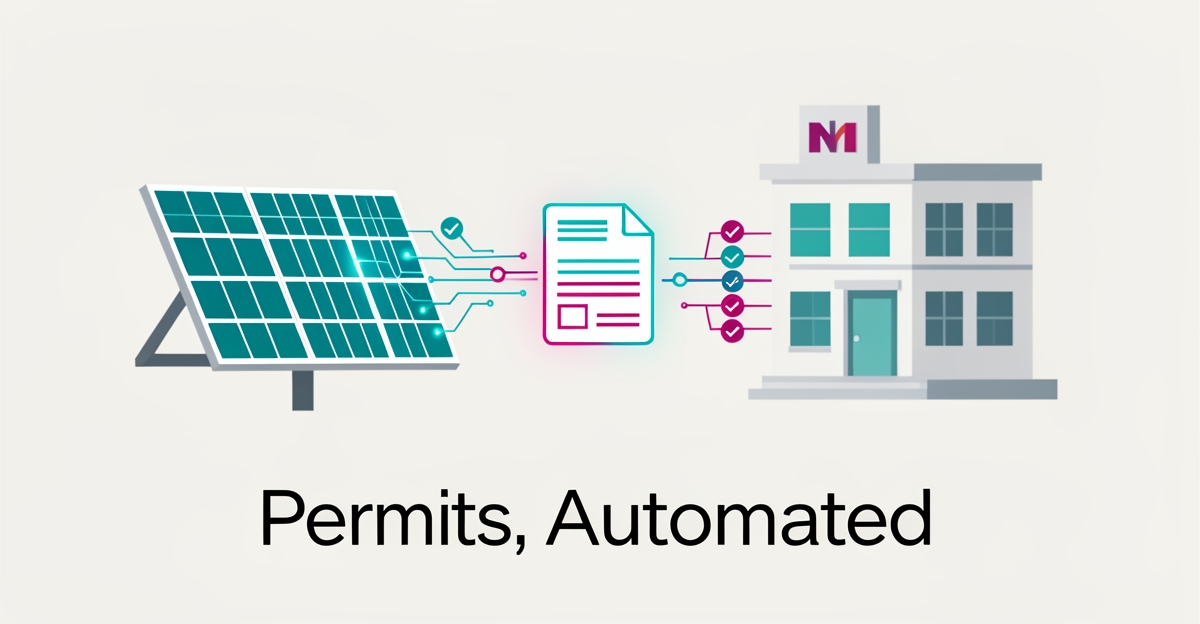
The AI solution would integrate directly with municipal portals and internal tools to automate permit submissions, send timely reminders, and flag missing documents before they cause bottlenecks. That end-to-end automation is what allows installers to accelerate project timelines and improve customer satisfaction. The system also cuts operational errors by enforcing consistent data capture and routing across departments, eliminating the need for repetitive manual checks.
Productivity gains tend to be immediate, since staff otherwise spend hours each week chasing updates and correcting avoidable mistakes. With the AI handling routine tracking and follow-ups, the team can redirect focus toward higher-value tasks like system design and client engagement. Compliance improves as well, since the AI enforces standardized submission protocols aligned with local regulations, reducing the risk of rework due to non-conforming filings.
- Automated submission monitoring, reminders, and document checks
- AI-powered tracking reduces errors and improves productivity
- Custom AI integrates with government portals and internal tools
By replacing fragmented manual processes with a unified, intelligent workflow, a Halifax installer can shorten permitting cycles and build a scalable foundation for future growth. AIQ Labs' approach demonstrates how targeted AI automation can deliver tangible operational improvements without requiring businesses to overhaul their entire infrastructure, even in complex, regulation-heavy industries like solar installation. For companies looking to replicate these results, the next step is identifying which workflows consume the most time and are prone to human error, prime candidates for AI-powered transformation. Starting with a free strategy call helps clarify where AI can deliver the highest return, whether through a targeted workflow fix or a broader AI Operating System. AIQ Labs supports this journey with custom-built systems that businesses own outright, ensuring long-term control and adaptability as needs evolve.
Building an Owned AI Workflow for Municipal Compliance
A recurring bottleneck for solar companies: permit submissions stalled by missed deadlines and incomplete documentation. AIQ Labs designs custom AI systems that connect directly to municipal portals and internal project management tools, creating a unified compliance workflow. This integration allows the AI to monitor submission statuses in real time and trigger actions based on municipal requirements. AIQ Labs builds these systems with deep two-way API connections, ensuring data flows seamlessly between government platforms and business operations without manual intervention.
The AI can be trained on Halifax-specific permit regulations, document checklists, and submission timelines to ensure accuracy and compliance. Using historical permit data, the system learns to identify missing items, such as electrical schematics or zoning approvals, before submission. It then automatically generates reminders for the team and flags discrepancies for review. This proactive approach means the company catches issues early and maintains consistent follow-up, rather than discovering problems after a rejection. AI-powered permit tracking and workflow automation directly contributes to fewer errors and faster approval cycles.
To sustain performance, the system includes continuous monitoring and feedback loops. The AI logs every interaction with municipal portals, tracks response times, and alerts administrators to recurring delays or pattern changes. Monthly reports highlight compliance trends, helping the company refine internal processes and anticipate municipal bottlenecks. Ownership of the AI system remains with the solar company, allowing them to adapt the workflow as regulations evolve or new permit types emerge. This ownership model, built via the Own It Outright payment option, ensures long-term control without dependency on external platforms or recurring licensing fees.
From Pilot to Production: Implementing AI Permit Automation
Starting small with a focused pilot project allows solar SMBs to test AI permit automation without overwhelming their teams or budgets. A Halifax solar company would typically begin by targeting just their municipal submission tracking process, often the workflow consuming the most staff time and causing the most frequent delays. By proving value in this single workflow first, they build confidence and gather critical data before expanding to full-scale implementation. This phased approach reduces risk while delivering early wins that justify further investment. AIQ Labs recommends this strategy because it aligns with their Build in Milestones payment model, where clients approve and pay for each phase as it ships, keeping everything built so far even if they pause.
Identifying the right manual processes to automate is the critical first step, look for repetitive, rule-based tasks that cause bottlenecks or errors. For solar installers, permit tracking often fits this perfectly: checking government portals for status updates, sending follow-up reminders, and verifying document completeness are prime candidates for AI automation. Manual permit tracking is not only time-consuming but also prone to human error, with missed deadlines and incomplete submissions triggering costly delays. By focusing on this high-friction workflow, installers can directly improve project timelines and customer satisfaction. AIQ Labs helps SMBs pinpoint these opportunities through a two-minute Fit Check, ensuring automation efforts target the processes with the highest return potential.
Integration with government portals requires careful planning but is achievable with the right technical approach. AI-powered systems can be built to securely connect to municipal websites using APIs or automated browser interactions, enabling real-time status checks and document submissions without manual logins. Such a system can pull permit status data directly from Nova Scotia's online permitting portal, compare it against internal project timelines, and trigger automated actions when discrepancies arise. This eliminates the need for staff to repeatedly check multiple websites while ensuring compliance with local requirements. Training the AI on specific municipal rules and document requirements is equally important, it learns to flag missing items like electrical diagrams or site plans before submission, preventing rework. Ongoing performance monitoring then tracks key metrics like submission success rates and average processing times, allowing continuous optimization. AIQ Labs supports this through phased builds and ongoing guidance, refining the system as regulations evolve or business needs change, whether the end state is a single automated workflow or a full AI Operating System connecting the whole business.
Still paying for 10+ subscriptions that don’t talk to each other?
We build custom AI systems you own outright. No vendor lock-in. Full control.
Not sure where to start? Ask our AI planner
Frequently Asked Questions
How much can AI-powered permit tracking reduce delays for solar installers?
What specific tasks does an AI permit tracking system automate for solar companies?
Is AI permit tracking only for large solar companies, or can small businesses benefit too?
How does an AI system ensure compliance with Halifax-specific municipal permit requirements?
What happens if I want to stop using the AI system after starting implementation?
Do I need to overhaul my entire workflow to use AI for permit tracking?
Your Next Permit Doesn't Have to Wait
Manual permit tracking doesn't just slow projects, it quietly taxes every installation with wasted hours, preventable errors, and stalled revenue. For a Halifax solar installer, AI-powered automation can take over the chasing, checking, and reminding so teams focus on design, installation, and customer relationships instead of municipal portals. And it doesn't require ripping out existing tools; a custom system integrates with them, creating a unified workflow that flags missing documents, sends timely reminders, and maintains compliance automatically. For solar companies still juggling spreadsheets and email threads, the path forward starts with identifying which manual processes consume the most time and introduce the most risk. AIQ Labs builds custom systems that businesses own outright, whether through a targeted Workflow Build or a broader AI Operating System. If permit bottlenecks are holding your projects back, start with the two-minute Fit Check at AIQ Labs to map your biggest opportunity, then book a free 30-minute strategy call to see exactly where AI can deliver the highest return for your operations.
Make AI your competitive advantage — not just another tool.
Strategy, implementation and ongoing optimization. One partner, end to end.
Not sure where to start? Ask our AI planner