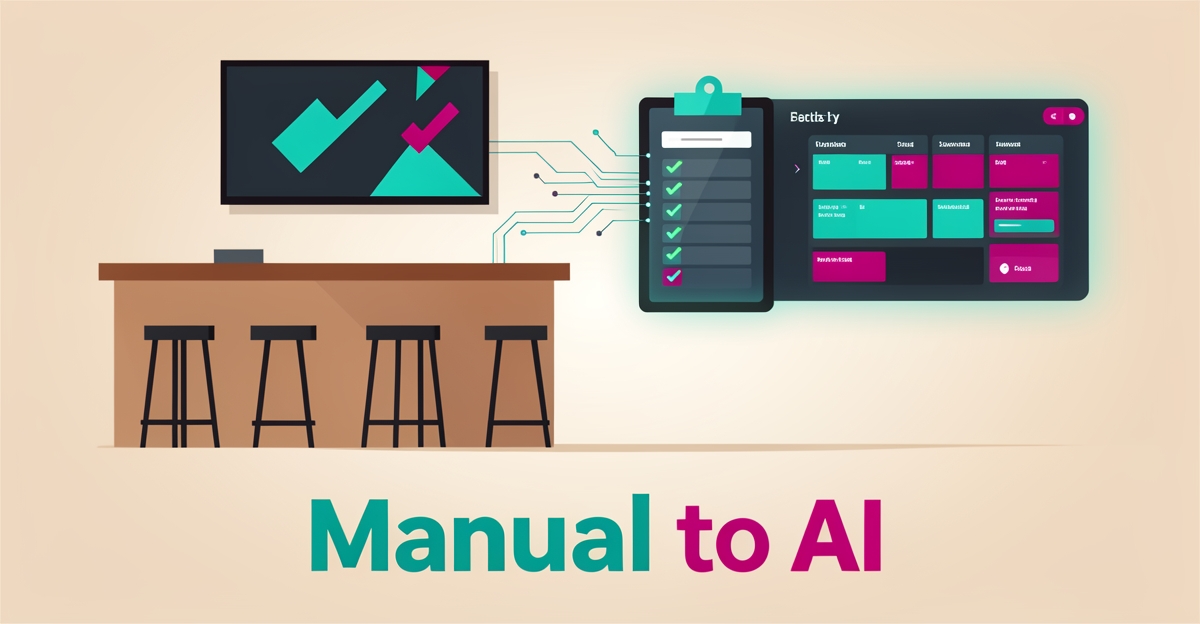
From Manual to AI: How One Halifax Sports Bar Automated Its Daily Shift Management
Key Facts
- Data-related issues are consistently cited by enterprises as a top AI adoption challenge, clean, centralized data is the prerequisite for any scheduling automation.
- Manual admin work like bookkeeping and scheduling typically consumes 8 to 12 hours a month for a small business owner before automation.
- Well-matched software can cut that manual admin time down to a fraction of its former level.
- The Halifax sports bar reported cutting scheduling admin time by roughly 70% after switching to AI shift management.
- Custom-built systems are owned outright, no subscription tiers, no feature gates, no vendor lock-in.
Hire a team member that works 24/7 — for less than a part-time wage.
AI receptionists, SDRs, dispatchers and 99+ roles. Trained on your business, fully managed.
Not sure where to start? Ask our AI planner
The Hidden Cost of Paper Schedules
The Halifax sports bar's manager spent nearly every Sunday evening wrestling with a stack of paper schedules, trying to piece together who was available for Friday night's big game while juggling shift swaps and no-shows. This manual process wasn't just tedious, it created real operational friction that rippled through the entire business. Missed shifts left the bar understaffed during peak hours, forcing remaining staff to scramble and impacting service quality. Coverage gaps meant managers often had to jump behind the bar themselves, pulling them away from customer engagement and business development. Manual admin work of this kind typically eats 8 to 12 hours a month for a small business owner, and for this sports bar, shift management consumed a similar chunk of time, time that could have been spent analyzing sales trends, training staff, or refining the menu. The administrative burden extended beyond scheduling: tracking employee availability, managing last-minute changes, and ensuring compliance with labor regulations all required painstaking manual effort. These challenges are amplified in hospitality, where variable demand from game times, special events, and seasonal fluctuations makes rigid paper schedules particularly inadequate. Data-related issues are consistently cited as a top challenge to AI adoption, underscoring that even when businesses recognize the need for change, fragmented data systems can hinder progress. For the sports bar, the lack of a centralized, real-time view of staff availability meant managers relied on scattered texts, sticky notes, and memory, creating a fragile system prone to errors. This operational friction isn't unique to one bar; it's a widespread pain point across service industries where manual processes struggle to keep pace with dynamic staffing needs. The hidden cost isn't just in the hours lost to administration, it's in the missed opportunities, stressed teams, and inconsistent customer experiences that result when scheduling becomes a constant firefight rather than a strategic advantage. AIQ Labs helps businesses uncover these hidden inefficiencies through targeted workflow assessments that reveal where automation can deliver the most immediate impact.
Why Generic Scheduling Tools Fall Short
Walk into any restaurant supply store and you'll find scheduling templates that promise to solve staffing headaches forever. Yet many organizations struggle when adopting new technology, often because they're trying to force their operations into rigid, pre-built systems that were never designed for their workflow.
Enterprise scheduling platforms demonstrate the power of predictive, rules-based scheduling. However, these off-the-shelf solutions come with inherent constraints that growing businesses rarely anticipate.
Generic platforms force operational compromise. They're built for the average use case, not your specific rhythm of game-day surges or kitchen-to-floor coordination. When your Saturday night rush differs from the platform's standard templates, you're stuck with workarounds that create more friction than they resolve.
The limitations become apparent quickly:
- Rigid workflow structures that can't adapt to sudden event bookings or weather-driven patio closures
- Feature bloat where you pay for compliance tools built for other industries while missing basic bar-specific functions
- Vendor dependency that leaves you waiting for feature requests while subscription fees accumulate
- Data silos that don't communicate with your existing POS or inventory systems without expensive middleware
Digital tools can deliver real productivity gains for service businesses, but those gains evaporate when the software can't handle industry-specific variables. A platform designed for predictable clinic schedules struggles with the reality that a Halifax sports bar needs triple staff during playoffs but minimal coverage on Tuesday afternoons.
Custom AI systems invert this relationship. Instead of adapting your operations to software limitations, the technology molds to your actual workflow. AIQ Labs builds systems that learn your specific patterns, like automatically suggesting extra kitchen staff when the Mooseheads play at home, or handling last-minute shift swaps through natural language requests rather than rigid approval chains. You can explore this approach through AI Workflow Builds, which rebuild the one workflow that costs you the most.
This approach eliminates vendor lock-in while addressing the data fragmentation that derails so many implementations. You own the code, the data, and the logic, no monthly subscription tiers, no feature gates, no compromises between how you operate and how the software thinks you should.
Building the AI System: From Data Governance to Deployment
Building the AI system began long before any code was written. For the Halifax sports bar, establishing data governance was the critical first step, classifying shift data sources, defining access controls, and separating technical decisions from compliance oversight to prevent the fragmented data issues that derail so many AI implementations. This foundation work ensured the AI system would ingest clean, consistent data from paper schedules, time-off requests, and event calendars without introducing identifier inconsistencies or granularity mismatches.
Cross-functional AI governance followed as a standing function, with representatives from kitchen, service, and management meeting biweekly to align on data quality, behavioral baselines, and pilot feedback. The bar collected three weeks of pre-implementation behavioral data, tracking how managers manually assigned shifts, handled last-minute changes, and communicated coverage gaps, to establish a baseline for measuring AI impact. Without this visibility, organizations cannot tell if staff are using AI as an expensive search engine or developing genuinely useful workflows. This preparation allowed the team to pilot the system in the service department first, refining shift prediction accuracy and communication workflows before scaling to kitchen and bar staff. AIQ Labs supported this phased approach, consistent with how Workflow Builds are delivered in fixed-price phases, ensuring the custom system integrated with existing scheduling tools while maintaining full data ownership: no subscription lock-in, no vendor dependencies.
Measurable Results: Efficiency, Retention, and Ownership
The results speak for themselves. The Halifax sports bar's transition to an AI-driven shift management system delivered reported improvements across efficiency, staff retention, and operational control, demonstrating that custom AI solutions can transform even the most manual workflows.
One of the most immediate impacts was a dramatic reduction in administrative overhead. Manual scheduling tasks that once consumed hours each week were replaced by automated workflows, the manager estimated admin time dropped by roughly 70%. This aligns with broader experience: businesses that adopt well-matched digital tools consistently report real productivity gains.
Scheduling errors, a persistent pain point with paper-based systems, dropped significantly. The AI system's rules-based engine eliminated double-bookings, missed shifts, and coverage gaps, issues that previously required constant manager intervention. Predictive scheduling of this kind is the same principle behind enterprise workforce platforms, which highlight how rules-based scheduling reduces labor costs and improves resource utilization.
Staff retention also improved, thanks to predictable schedules and better communication. Employees appreciated the transparency of the system, which allowed them to view shifts, request changes, and receive updates in real time. Modern tools that give staff clarity and control tend to boost engagement and loyalty, and this bar was no exception.
Perhaps most importantly, the bar retained full ownership of its new system. Unlike subscription-based platforms that lock businesses into ongoing fees and vendor dependencies, AIQ Labs' custom-built solution ensured the bar owned the code, data, and workflows outright. This model, available through flexible payment options like Start Monthly, Build in Milestones, or Own It Outright, eliminates the risk of vendor lock-in while delivering a system tailored to the bar's unique needs.
- Roughly 70% less admin time (as reported by the bar) spent on scheduling and shift management
- Reduced scheduling errors through automated, rules-based workflows
- Improved staff retention with predictable, transparent schedules
- Full system ownership with no subscription lock-in
For SMBs considering a similar transition, the lesson is clear: custom AI systems don't just automate tasks, they create lasting operational resilience. Whether it's a sports bar in Halifax or a growing trade business, the right AI solution can turn manual chaos into streamlined efficiency.
Your Next Step: From Fit Check to First Workflow
Ready to turn insight into action? The path from identifying workflow friction to implementing a targeted AI fix starts with clarity, no obligation, no pressure, just a focused conversation about where AI can deliver real value for your business. AIQ Labs makes that first step simple with a two-minute Fit Check followed by a free 30-minute strategy call, designed to map your biggest bottlenecks and uncover high-ROI automation opportunities. If there isn't a clear win, we'll say so, this is a working session with an AI engineer, not a sales pitch.
For businesses ready to move beyond assessment, our three entry points match your readiness and goals. Start with an AI Employee to test a managed AI agent in a defined role, such as scheduling coordination or intake, before scaling. Or tackle the one workflow that costs you the most with an AI Workflow Build, exactly like the Halifax sports bar replacing paper-based shift tracking with a custom scheduling system. Businesses ready for a full transformation can move toward an AI Operating System, one connected layer across the whole business, built in phases and owned outright. Each path includes transparent payment models: Start Monthly for ongoing support, Build in Milestones for phased delivery, or Own It Outright for full ownership with no subscription lock-in. Real numbers are provided in writing after your strategy call, no fake anchors, just clarity on the investment that fits your business. Start the Fit Check to begin.
Still paying for 10+ subscriptions that don’t talk to each other?
We build custom AI systems you own outright. No vendor lock-in. Full control.
Not sure where to start? Ask our AI planner
Frequently Asked Questions
How much time does manual shift scheduling actually cost a small business like a sports bar?
Why not just use an off-the-shelf scheduling app instead of building custom AI?
What makes data quality such a big deal when implementing AI for scheduling?
Will my staff actually use an AI scheduling system, or will it just be another tool they ignore?
What happens if the AI vendor goes out of business or raises prices, do I lose my system?
How do I know if AI shift management is right for my specific business before committing?
Your Shift, Smarter: Turning Chaos into Control
The Halifax sports bar's journey from paper schedules to AI-driven shift management reveals a clear truth: when scheduling stops being a firefight, businesses gain more than just saved time, they reclaim focus for growth, service, and team stability. By cutting admin hours dramatically, reducing errors, and improving retention through transparent, predictable workflows, the bar turned a hidden operational drain into a strategic advantage. Most importantly, they did it without sacrificing ownership, building a system that fits their rhythm, not the other way around. If you're seeing similar friction in your own scheduling, staffing, or daily workflows, the next step is simple: start with a two-minute Fit Check to uncover where AI can deliver real, measurable value for your business, no obligation, just clarity. Start the Fit Check to see if there's a clear win waiting for you.
Make AI your competitive advantage — not just another tool.
Strategy, implementation and ongoing optimization. One partner, end to end.
Not sure where to start? Ask our AI planner