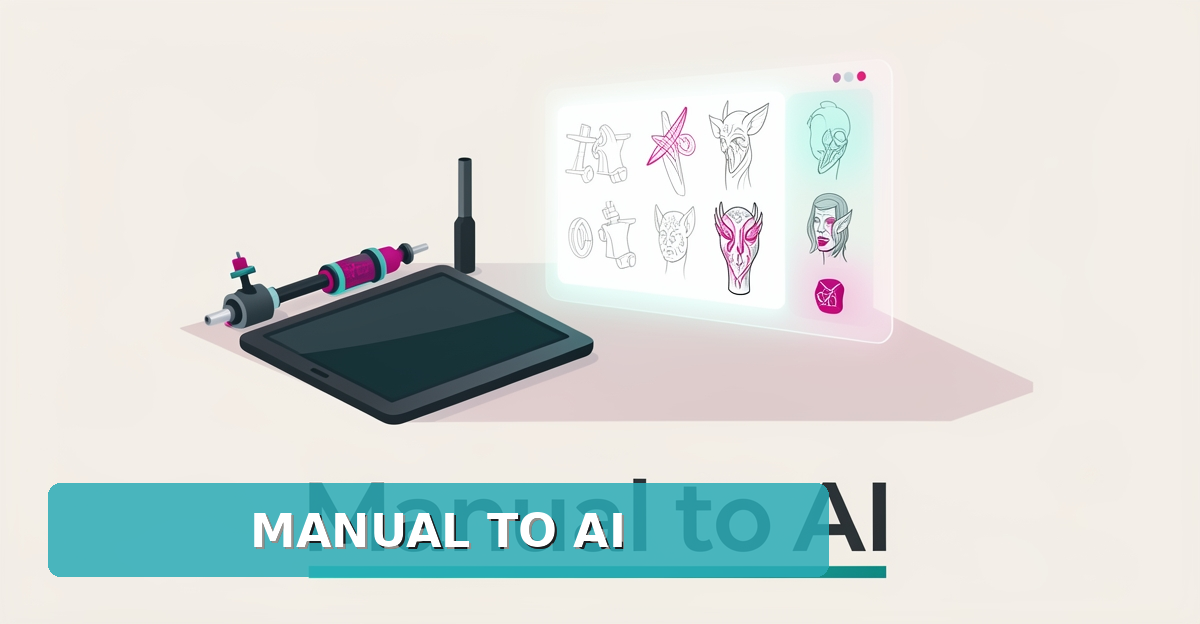
From Manual to AI: How One Halifax Tattoo Studio Automated Its Design Consultation Process
Key Facts
- AI reduced design consultation friction by providing pre-vetted design directions to clients before appointments
- Artists redirected time from administrative sketching to high-value creative work and client relationship building using AI augmentation
- The Halifax studio implemented a multi-agent architecture to analyze client preferences and cross-reference them with artist portfolios
- AI handled analytical heavy lifting in design matching while artists retained full control over final approval and creative nuances
- The system identified stylistic correlations between client preferences and artist portfolios that might otherwise go unnoticed through data-driven matching
- AI reduced errors and inconsistencies in translating client preferences into visual concepts during the consultation process
- Clients arrived at consultations with clearer expectations, guided by AI's style-matching accuracy, resulting in fewer revision cycles
Hire a team member that works 24/7 — for less than a part-time wage.
AI receptionists, SDRs, dispatchers and 99+ roles. Trained on your business, fully managed.
Not sure where to start? Ask our AI planner
The Hidden Cost of Manual Design Consultations in Creative Studios
The traditional tattoo design consultation often becomes a bottleneck in creative studios, where artists spend excessive time on repetitive revisions and misaligned expectations. This manual back-and-forth not only delays client onboarding but also drains creative energy that could be directed toward actual tattooing and client relationship building. In service-based businesses like tattoo studios, the burden of repetitive tasks typically has a direct impact on operational efficiency and artist satisfaction.
Without automated systems to analyze client preferences and suggest style matches, studios rely on lengthy verbal or written exchanges that frequently result in multiple design iterations. This process extends consultation timelines and increases the likelihood of dissatisfaction when final designs don't fully capture the client's vision. Artists can end up stuck in a cycle of adjustments that delays their ability to take on new clients, directly affecting studio capacity and revenue potential.
The cumulative effect of these inefficiencies shows up as artist burnout, as creative professionals spend disproportionate time on administrative and revision-heavy tasks rather than core artistic work. When artists are consumed by consultation logistics, they have less bandwidth for innovation, skill development, or meaningful client engagement, key differentiators in a competitive market.
For studios aiming to scale, manual consultation processes create a hard ceiling on growth. Each hour spent refining designs through trial and error is an hour not spent tattooing, consulting new clients, or developing artistic portfolios. This inefficiency limits how many clients a studio can realistically serve, constraining both short-term throughput and long-term scalability. Addressing this friction point is essential not just for improving workflow, but for unlocking the studio's full creative and economic potential. AIQ Labs helped one Halifax studio overcome this by implementing a custom AI workflow build that integrates client intake forms with artist portfolios to accelerate decision-making and reduce design iterations.
How AI Augments, Not Replaces, Tattoo Artist Expertise in Design Matching
When a client walks into a tattoo studio with a vision, whether it's a vague concept or a meticulously curated Pinterest board, the traditional consultation process often involves hours of subjective interpretation and iterative sketching. AI changes this dynamic not by wielding the needle, but by handling the analytical heavy lifting that precedes the artistry.
The Halifax studio's workflow begins with intelligent intake analysis. When clients submit their design preferences through digital forms, AI parses the data to identify style keywords, thematic elements, and aesthetic preferences. Rather than replacing the artist's eye, this initial processing creates a structured foundation that reduces the ambiguity typically associated with early-stage consultations.
At the core of this system lies a multi-agent architecture. Different specialized agents handle distinct tasks: one analyzes client input for thematic clustering, another cross-references these preferences against the studio's portfolio database, and a third generates preliminary design directions based on style matching. This mirrors the pattern seen across industries where AI handles data processing while humans retain decision-making authority.
Critically, the system operates on an augmentation model that preserves artistic integrity. AI can augment artist expertise, but it cannot replace human creativity and judgment. The technology excels at pattern recognition and rapid iteration, tasks that traditionally consume hours of an artist's schedule, while the tattoo artist maintains full control over final design approval, custom modifications, and the creative nuances that define their signature style.
This division of labor delivers tangible operational benefits:
- Reduced consultation friction: Clients arrive at appointments with pre-vetted design directions, minimizing the back-and-forth typically required to align expectations
- Enhanced precision: AI reduces errors and inconsistencies in translating client preferences into visual concepts
- Creative bandwidth preservation: Artists redirect time from administrative sketching to high-value creative work and client relationship building
- Data-driven matching: The system identifies stylistic correlations between client preferences and artist portfolios that might otherwise go unnoticed
The workflow also addresses the challenge of subjective data quality. Because tattoo design preferences are inherently personal and often difficult to articulate, the AI serves as an interpretive layer that translates emotional or abstract client descriptions into concrete visual parameters. However, the artist remains the final arbiter of feasibility, ensuring that AI-generated suggestions align with technical constraints such as skin placement, ink behavior, and long-term aesthetic aging.
AIQ Labs developed this custom solution using the same production-grade architecture found in its multi-agent deployments. By implementing human-in-the-loop controls, the system ensures that while AI accelerates the consultation phase, every design ultimately reflects the artist's expertise and creative vision. The result is a studio environment where technology handles the repetitive analysis, and artists focus on what they do best: transforming skin into art.
From Consultation to Confirmation: Implementing AI in a Real Tattoo Studio Workflow
The Halifax tattoo studio began by mapping their existing consultation workflow, from initial client inquiry to final design approval, identifying repetitive steps where AI could add value. Using AIQ Labs' Build in Milestones model, they started with a focused workflow fix targeting design suggestion generation, integrating the AI system with their client intake forms and artist portfolios via API connections. This allowed the AI to analyze client-submitted preferences, style inspirations, and placement ideas, then cross-reference them with the studio's portfolio to surface relevant artist matches and design concepts. Artists reviewed these AI-generated suggestions within their familiar interface, requiring minimal training, primarily learning how to adjust filters and provide feedback to refine outputs. The system operated under strict human-in-the-loop controls, ensuring artists retained final approval over all design recommendations before any client-facing communication.
As the studio scaled the implementation, they adopted a Start Monthly approach to expand the AI's role into scheduling and revision tracking, creating a seamless flow from consultation to booking. The AI began auto-populating calendar slots based on artist availability and client preferences, reducing manual coordination. Over time, the studio noted fewer revision cycles as clients arrived at consultations with clearer expectations, guided by the AI's style-matching accuracy. By owning the custom-built system outright, they avoided vendor lock-in and retained the ability to refine the workflow as their needs evolved, turning a previously manual, time-intensive process into a streamlined, artist-augmented consultation journey. For studios considering a similar shift, the path starts with a free strategy call to map their bottleneck and identify high-ROI automation opportunities. Start the Fit Check to begin.
Still paying for 10+ subscriptions that don’t talk to each other?
We build custom AI systems you own outright. No vendor lock-in. Full control.
Not sure where to start? Ask our AI planner
Frequently Asked Questions
How does AI actually help tattoo artists during the design consultation process?
Will AI replace tattoo artists or take over creative control?
What specific inefficiencies does manual tattoo consultation create for studios?
How does the AI system integrate with a tattoo studio's existing tools?
What are the measurable benefits of automating tattoo design consultations with AI?
Is it difficult for tattoo artists to learn and use AI tools in their workflow?
The Needle Meets the Algorithm: Your Next Move
The Halifax studio's journey shows that AI doesn't diminish the artist's hand, it sharpens it. By automating the analytical grind of preference matching and style clustering, the studio reclaimed hours once lost to revision cycles, redirecting that energy toward the creative work that actually fills chairs and builds reputations. The result is a consultation process where technology handles the pattern recognition while artists retain full creative authority, delivering precision without sacrificing the human nuance that defines exceptional tattoo work. If your studio is still trading creative bandwidth for administrative back-and-forth, the path forward starts with mapping your specific bottleneck. AIQ Labs builds custom systems you own outright, no subscriptions, no lock-in, designed to fit your workflow rather than force you into a template. Start the Fit Check to identify where automation could return the most time to your artists, or book a free strategy call to explore what a tailored AI workflow might look like for your studio.
Make AI your competitive advantage — not just another tool.
Strategy, implementation and ongoing optimization. One partner, end to end.
Not sure where to start? Ask our AI planner