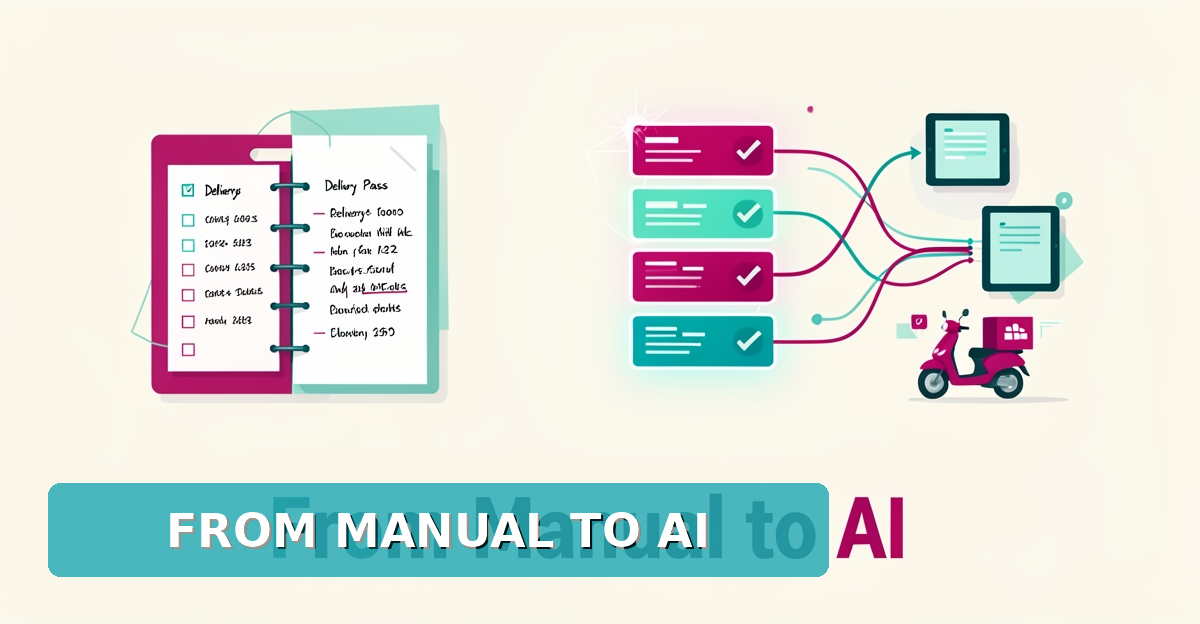
From Manual to AI: How One Mediterranean Restaurant in Halifax Automated Its Kitchen Orders and Delivery Logs
Key Facts
- A Halifax Mediterranean restaurant sharply reduced prep errors after automating kitchen orders with AI.
- AI replaced repetitive tasks like order entry and delivery logging while staff focused on plating, timing, and hospitality.
- Cedefop surveyed 5,342 employees across 11 European countries on AI's impact on jobs and workplace skills.
- AI's overall impact on jobs is modest because technology replaces tasks rather than entire jobs, Cedefop research finds.
- "Some jobs will be destroyed, but the overall jobs impact is modest," says Giovanni Lanfranchi of HERE Technologies.
- The restaurant's AI system synced POS orders, delivery confirmations, and ingredient tracking in real time via two-way API integrations.
- "How can we get people ready to work alongside AI?" asks Cedefop Executive Director Jürgen Siebel.
Hire a team member that works 24/7 — for less than a part-time wage.
AI receptionists, SDRs, dispatchers and 99+ roles. Trained on your business, fully managed.
Not sure where to start? Ask our AI planner
The Hidden Costs of Manual Kitchen Operations
The dinner rush hits, and chaos descends. Orders scribbled on tickets get misread, delivery drivers wait for confirmations that never come, and the kitchen runs out of key ingredients mid-service. For many restaurants, this scenario plays out nightly, an expensive cycle of errors that erodes both profits and reputation.
Manual order entry remains one of the most vulnerable points in restaurant operations. When front-of-house staff juggle phone orders, table tickets, and delivery app notifications simultaneously, mistakes multiply. A misheard modification or illegible handwriting triggers a cascade of problems: the kitchen preps the wrong dish, the customer sends it back, and the ingredient waste compounds. In the case of one Halifax Mediterranean restaurant, these manual processes were creating significant friction before they turned to automation, and saw prep errors drop sharply after implementing AI-driven systems.
The communication gap between front-of-house and kitchen staff creates another layer of operational friction. During peak hours, verbal updates get lost, special requests go uncommunicated, and timing coordination falls apart. A server promises a table their appetizers in ten minutes, unaware the kitchen is backed up with delivery orders. These disconnects damage the customer experience and strain team morale.
Delivery logistics present their own hidden costs. Without automated tracking:
- Staff manually confirm each delivery status, pulling them away from in-house customers
- Delayed or missed deliveries go unnoticed until customer complaints arrive
- Drivers waste time waiting for orders that aren't ready, reducing their hourly efficiency
- No real-time visibility means reactive problem-solving instead of proactive management
Ingredient management suffers similarly under manual systems. Without accurate tracking, kitchens over-order perishables that spoil or run out of popular items during service. This waste directly impacts margins, yet many restaurants lack the infrastructure to connect sales data with inventory in real time.
According to Cedefop's research on AI in the workplace, technology more often replaces specific tasks rather than entire jobs, freeing workers to focus on higher-value activities. For restaurant staff, this shift means less time on repetitive data entry and more attention on food quality and customer service.
The compounding effect of these manual inefficiencies, prep errors, communication breakdowns, delivery delays, and inventory waste, creates an operational ceiling that limits growth. AIQ Labs worked with the Halifax restaurant to identify these specific bottlenecks, designing a custom workflow build that integrated directly with their existing POS and delivery platforms. The solution didn't require replacing their entire operation, just automating the repetitive tasks that were consuming staff time and generating errors.
How One Halifax Restaurant Automated Its Entire Kitchen Workflow
The kitchen at a popular Mediterranean restaurant in Halifax was once a hub of manual effort, where order slips piled up and delivery confirmations relied on memory and sticky notes. Recognizing that these repetitive tasks were draining staff energy and introducing avoidable errors, the owners sought a smarter way forward. They partnered with AIQ Labs to design a custom AI workflow system that would touch every stage of their kitchen and delivery process, without losing the warmth and authenticity that defined their service.
The solution began with integrating the restaurant's existing POS system with an AI-powered order entry agent. As soon as a customer placed an order, whether in-house, online, or via phone, the AI agent instantly captured the details, translated special requests into kitchen instructions, and routed them to the correct station. This eliminated the need for manual transcription, a common source of mistakes. The owners reported a sharp drop in prep errors, improving consistency and reducing food waste. Task-level automation like this typically yields measurable gains in accuracy, especially in fast-paced food service environments.
Next, the system automated delivery confirmation. When a driver marked an order as complete in the delivery app, the AI agent triggered a real-time log update, notified the kitchen, and even prompted a follow-up message to the customer if needed. This closed the loop between preparation and fulfillment, reducing missed deliveries and improving transparency. The AI also began tracking ingredient usage in real time, comparing actual consumption against expected levels based on order volume. This allowed managers to spot discrepancies early, like unexpected spikes in lamb usage or sudden drops in olive oil, helping prevent both overstocking and shortages.
- Order entry automated from POS to kitchen display
- Delivery confirmations synced and logged in real time
- Ingredient usage tracked against sales data
- Alerts triggered for low stock or preparation deviations
- All data accessible via a simple dashboard for managers
Throughout the implementation, the focus remained on augmentation, not replacement. Kitchen staff continued to prepare meals with the same care and tradition, but now with fewer interruptions and clearer guidance. The AI handled the repetitive logistics; the humans focused on flavor, presentation, and hospitality. As workforce studies show, this balance, where AI takes on routine tasks while humans elevate their roles, is key to sustainable adoption.
By owning the system outright, the restaurant gained full control over its workflows, avoiding ongoing subscription fees and vendor lock-in. The transformation wasn't about replacing the soul of the business, it was about protecting it, one automated task at a time.
Integrating AI with Your Existing POS and Delivery Platforms
A kitchen that still runs on shouted tickets and paper logs can't scale the way modern diners expect. The Halifax Mediterranean restaurant case shows how AI can sit on top of what's already working and remove the friction without a full rebuild.
Integration starts with two-way API connections between the restaurant's POS, delivery platforms, and inventory databases. Orders placed in-store or through third-party apps flow automatically into kitchen displays, while status updates travel back to customers in real time. That closed loop eliminates manual re-entry, the main source of prep mistakes, and is what drove the restaurant's error reduction.
Custom workflow systems are built to map existing processes first, then automate repetitive data movement. Deep two-way API integrations create seamless operational workflows between POS, delivery, accounting, and other critical systems with automated data synchronization. Staff keep using the same POS and delivery screens they know; the AI handles the handoffs behind the scenes.
The approach mirrors broader workplace findings that AI often replaces tasks rather than entire jobs. According to Cedefop's AI skills survey, the overall jobs impact of AI is modest, with AI often replacing tasks rather than entire jobs, while creating new ones. In a kitchen, that means cooks focus on plating and quality while automation confirms delivery hand-offs and tracks ingredients.
Two-way integration also powers ingredient tracking without extra admin. When an order fires, inventory levels decrement automatically and reorder thresholds trigger alerts to suppliers. The system learns patterns over time, reducing stockouts and waste while keeping the menu authentic.
For restaurants wary of overhaul risk, the technical pattern is consistent:
- POS and delivery platform APIs mapped for order capture and status updates
- Kitchen display integration for automated ticket routing and timing
- Inventory database sync for real-time ingredient consumption and reorder signals
- Monitoring and validation layers to ensure actions execute correctly before staff see them
AIQ Labs builds these custom workflow and integration layers for SMBs that want ownership of their systems, rebuilding the one workflow that costs the most, at a fixed price, in phases. The Halifax restaurant used a custom workflow system that integrates with POS and delivery platforms, enabling faster service without sacrificing authenticity. Automation handles repetitive tasks while staff focus on customer experience, which is where human judgment matters most.
Responsible implementation remains essential. Ethics guidance for trustworthy AI emphasizes human agency and oversight, technical robustness and safety, privacy and data governance, and transparency. Those principles guide how data moves between platforms and who approves exceptions.
The result is a kitchen that moves faster, makes fewer mistakes, and lets the team serve guests instead of chasing tickets.
Why Workforce Adaptation Matters More Than Job Replacement
When a kitchen order goes in wrong, the fix is human: a cook catches it, a server apologizes, a manager comps the dish. That is exactly why the story of one Mediterranean restaurant in Halifax matters, automation did not remove people from the process, it made their judgment more valuable. By automating order entry, delivery confirmation, and ingredient tracking, the restaurant cut prep errors significantly, while staff stayed focused on food quality and guest experience.
The broader evidence backs this up. A Cedefop survey of 5,342 employees across eleven European countries found that AI's overall impact on jobs is modest, because technology much more often replaces tasks rather than entire jobs, and frequently creates new ones in the process. Giovanni Lanfranchi of HERE Technologies put it plainly: some jobs will be destroyed, but the overall jobs impact is modest, with automation creating a lot of new roles.
In practice, that means the repetitive work that used to eat a shift, rekeying orders, logging deliveries, updating ingredient counts, moves to the system, not the staff. Kitchen teams spend their attention on plating, timing, and consistency. Front-of-house staff spend theirs on customers. This is the augmentation, not replacement pattern that Cedefop's research consistently identifies.
But augmentation only works when people know how to work with the technology. Cedefop Executive Director Jürgen Siebel framed the challenge directly: the questions we should all be asking are how to get people ready to work alongside AI, and what types of training and jobs we need for that. For a restaurant, that readiness looks less like data science and more like practical fluency:
- Understanding what the automated system handles and what still requires human judgment
- Recognizing when an order or inventory record needs manual review
- Feeding exceptions back so the workflow improves over time
- Building confidence that the tool supports their role rather than threatening it
That training-first approach is also how AIQ Labs frames deployments: systems are built to integrate with the tools a team already uses, in this case, the restaurant's POS and delivery platforms, and staff are brought along through the transition rather than bypassed. The survey research also flags a digital divide: not all workers and businesses are equally prepared for AI-driven change, which makes targeted upskilling essential for smaller operators.
The Halifax case shows what happens when adaptation is done well, fewer errors, faster service, and staff time redirected to the work customers actually notice. The technology handled the logs; the people handled the hospitality.
Getting Started: From Manual Chaos to Automated Precision
The journey from manual chaos to automated precision begins with a clear-eyed assessment of where your restaurant bleeds time and accuracy. For the Halifax Mediterranean spot, kitchen order entry and delivery logs were prime culprits, manual processes led to prep errors that directly impacted customer satisfaction and waste. By pinpointing these high-error workflows first, owners can target automation where it delivers the fastest, most measurable relief, turning daily frustrations into streamlined operations. Focusing on discrete, error-prone tasks like order entry typically yields the quickest wins in AI adoption, often cutting mistakes dramatically when implemented thoughtfully.
Choosing between point solutions and a custom system hinges on your restaurant's complexity and growth plans. Off-the-shelf tools might solve a single problem, like syncing orders with a delivery app, but often create new silos or require costly workarounds. A custom approach, like the one AIQ Labs built for the Halifax restaurant, integrates POS, kitchen displays, and delivery platforms into a single owned system, eliminating manual handoffs and scaling with your menu or locations. This avoids the trap of subscribing to multiple disconnected apps that never truly talk to each other, instead creating a cohesive workflow that grows with your business.
Integration isn't just about connecting software, it's about ensuring data flows accurately and securely between your POS, inventory tracker, and delivery partners without disrupting service. The Halifax case succeeded because the AI system was designed to work with existing tools, not replace them overnight, using APIs to sync order details, prep times, and delivery confirmations in real time. This minimizes downtime during rollout and builds trust with staff who see the system as a helper, not a threat. Proper integration also means your data stays clean and actionable, forming the foundation for smarter decisions down the line.
Measuring ROI starts with tracking what matters most: error rates, order-to-table time, and staff hours saved on repetitive tasks. In the Halifax restaurant's case, automating kitchen order entry and delivery logs drove a major reduction in prep errors, directly cutting waste and improving dish consistency. Beyond errors, monitor how automation affects ticket times during peak hours and whether your team can redirect energy toward hospitality or food quality. These metrics tell the real story, whether your investment is paying off in faster service, happier customers, and a calmer kitchen.
- Track prep error rates before and after automation
- Measure average order-to-table time during rush periods
- Log staff hours spent on manual order entry and delivery logs
- Monitor customer feedback on order accuracy and speed
- Calculate waste reduction from fewer incorrect preparations
Still paying for 10+ subscriptions that don’t talk to each other?
We build custom AI systems you own outright. No vendor lock-in. Full control.
Not sure where to start? Ask our AI planner
Frequently Asked Questions
How much did the Halifax restaurant reduce its prep errors after automating kitchen operations with AI?
Does AI in restaurants replace kitchen staff or just help them with repetitive tasks?
What kind of AI system did AIQ Labs build for the Halifax restaurant, and did it require replacing their existing POS?
How does automating delivery confirmation improve restaurant operations beyond just tracking orders?
What should restaurant owners track to measure the ROI of automating kitchen workflows with AI?
Is workforce training important when introducing AI in a restaurant kitchen, and what should it focus on?
Where Automation Meets Authenticity in the Kitchen
The Halifax Mediterranean restaurant's journey shows how targeted AI automation, like streamlining order entry and delivery logs, can cut prep errors sharply while preserving the human touch that defines great hospitality. By integrating custom workflows with existing POS and delivery platforms, they turned repetitive bottlenecks into seamless processes, freeing staff to focus on food quality and guest experience. For restaurant owners seeing similar friction in manual operations, the path forward starts with identifying those high-error, time-consuming tasks. AIQ Labs helps SMBs build owned, integrated systems that scale with authenticity intact, no vendor lock-in, just measurable gains in efficiency and consistency. To explore where AI could unlock similar value in your business, take the two-minute Fit Check and book a free 30-minute strategy call to map your biggest bottlenecks and highest-ROI opportunities.
Make AI your competitive advantage — not just another tool.
Strategy, implementation and ongoing optimization. One partner, end to end.
Not sure where to start? Ask our AI planner