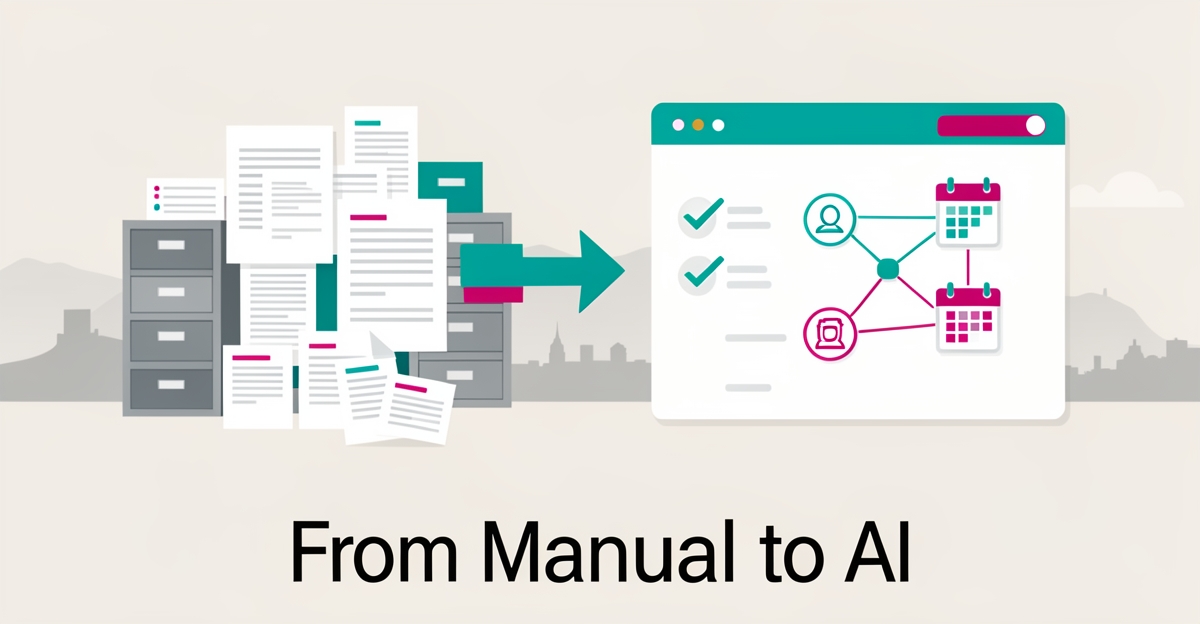
From Manual to AI: How One Real Estate School in Halifax Automated Its Course Enrollment Process
Key Facts
- Most SMBs lack the in-house expertise to implement AI on their own and turn to external partners to get systems into production
- SaaS sprawl is a common SMB problem, organizations typically use well under half of the software licenses they pay for, wasting budget that could fund automation
- A majority of small and mid-sized businesses now view AI as essential to competing with larger enterprises, as of late 2026
- AI automation of enrollment and scheduling typically reduces operational costs while improving accuracy
- AIQ Labs has deployed 200+ multi-agent systems and runs 4 live SaaS products daily
Hire a team member that works 24/7 — for less than a part-time wage.
AI receptionists, SDRs, dispatchers and 99+ roles. Trained on your business, fully managed.
Not sure where to start? Ask our AI planner
The Manual Enrollment Bottleneck: Why Traditional Processes Fail Modern Real Estate Schools
Manual enrollment feels manageable until enrollment season hits. For real estate schools, the bottleneck shows up as delayed applications, double-booked classes, and staff tied to repetitive data entry instead of student support.
Traditional processes rely on forms, email threads, and spreadsheets. That creates high administrative labor as staff manually review each application, confirm prerequisites, and coordinate schedules. Scheduling errors compound quickly, and slow application reviews mean prospective students wait days for a response.
The strain is typical for SMBs in education. Industry research on managed intelligence suggests organizations globally use only about half of the SaaS licenses they pay for, and many businesses continue onboarding several new SaaS applications per month, which fragments enrollment data across tools that don't talk to each other.
This fragmentation drives the manual work that schools want to eliminate. Staff copy information between systems, chase missing documents, and manually reconcile waitlists. The result is error-prone workflows that scale poorly with demand.
Common pain points in manual course enrollment include:
- High administrative labor from repetitive form processing and data entry
- Scheduling errors and double-bookings from disconnected calendars
- Slow application reviews that delay student onboarding
- SaaS sprawl and license waste across enrollment, CRM, and scheduling tools
SMBs face a compounding challenge. Surveys of small and mid-sized businesses consistently find that a large majority need an outside partner to implement and fully benefit from AI. That need reflects both capability gaps and the cost of building internal infrastructure for automation.
At the same time, competitive pressure is rising. As of late 2026, a majority of SMBs believe AI is required to compete with larger enterprises. For a Halifax real estate licensing school, that means manual enrollment is not just inefficient, it is a growth constraint.
AIQ Labs sees this pattern across education and training clients, where enrollment, application review, and scheduling are prime candidates for AI Workflow Builds. The manual bottleneck is not a staffing problem alone; it is a process design problem amplified by tool sprawl and limited internal AI expertise.
How AI Transformed Course Enrollment: Automation of Applications, Reviews, and Scheduling
Enrollment season no longer means drowning in paperwork for one Halifax real estate school. By replacing manual processes with an intelligent, multi-agent AI system built by AIQ Labs, the institution transformed a bottleneck-prone operation into a seamless digital experience.
The school implemented a custom solution where specialized AI agents collaborate to handle distinct enrollment stages. Rather than relying on staff to manually review every application, the system now automatically processes submissions, verifies prerequisites, and flags incomplete files for human review. This multi-agent architecture ensures that each step, from initial inquiry to final seat confirmation, flows without manual intervention.
The impact on processing speed was substantial. Education technology guidance on AI consistently notes that automating administrative tasks like enrollment and scheduling reduces operational costs while improving accuracy. The Halifax school experienced this firsthand, eliminating the data entry errors that previously delayed student confirmations and frustrated applicants.
Key automated workflows now include:
- Instant application review and validation against licensing requirements
- Intelligent scheduling that matches students to available course sessions
- Automated waitlist management and real-time seat availability updates
- Personalized enrollment confirmations and prerequisite reminders
Beyond efficiency gains, the system enables a more responsive student experience. AI-powered tools can analyze student data to provide personalized recommendations, improving engagement and outcomes. The school uses this capability to guide prospective real estate agents toward appropriate courses based on their backgrounds and career goals.
This transformation reflects broader market momentum. AI adoption across the real estate sector has accelerated sharply through 2026, and for small and mid-sized institutions such automation is becoming table stakes. Most SMBs now see AI as necessary to remain competitive, though most also need external expertise to implement these systems effectively.
By partnering with AIQ Labs to build a custom solution rather than stitching together generic software, the school gained a tailored enrollment ecosystem that integrates directly with their existing student management systems. The result is a scalable foundation that handles peak registration periods without additional administrative headcount, allowing staff to focus on educational quality rather than paperwork.
From Pilot to Partnership: The AIQ Labs Implementation Process for Education SMBs
The move from pilot to production is where most education SMBs stall. For the Halifax real estate licensing school, the shift required a structured path that protected existing tools while building owned automation.
Discovery starts with business process analysis and requirements gathering. The team maps enrollment, application review, and scheduling workflows, then assesses the current technology and data infrastructure. This ensures the solution integrates with existing tools rather than replacing them.
Architecture design follows, with ROI projection and timeline development built in. AIQ Labs offers three entry points that fit different stages: AI Employees for managed AI staff handling day-to-day execution, AI Workflow Builds to rebuild the one workflow that costs the most at a fixed price, and AI Operating Systems for a single connected operating layer built in phases. Ownership is built in from the start, you own the system outright, with no vendor lock-in.
Development and integration span custom building and two-way API connections to CRM, scheduling, and payment systems. Testing, validation, and performance optimization run in parallel with security implementation and compliance verification. The school retains full control over code, agents, and data when complete.
Deployment and training are compressed into focused go-live support. Users receive role-specific training, documentation is delivered, and performance monitoring is set up. Ongoing support ensures the system adapts as enrollment patterns change.
Optimization and scale continue after launch. Continuous monitoring, feature enhancement, and ROI tracking keep the system aligned with business goals. Payment is milestone-based, you build in phases and pay as each phase lands, so the investment tracks delivered value rather than promises.
The context matters. As of late 2026, most small and mid-sized businesses are already using AI tools in some form, and a majority believe AI is required to compete with larger enterprises. The same research consistently shows most SMBs need an outside partner to implement and fully benefit from AI.
For education, the payoff is operational. AI can automate course enrollment, application reviews, and scheduling, improving student experience and reducing operational costs. The school's enrollment workflow moves from manual handoffs to an integrated, owned system.
Key elements of the phased implementation include:
- Discovery and architecture with business process analysis and ROI modeling
- Custom development with deep integration to existing CRM and scheduling tools
- Deployment with role-based training and performance monitoring setup
- Ongoing optimization and scaling with continuous improvement and adoption support
AIQ Labs delivers this end-to-end partnership for education and training SMBs, emphasizing systems businesses own and can evolve without platform dependency.
Still paying for 10+ subscriptions that don’t talk to each other?
We build custom AI systems you own outright. No vendor lock-in. Full control.
Not sure where to start? Ask our AI planner
Frequently Asked Questions
How does AI automation improve the course enrollment process for real estate schools?
What are the main pain points of manual enrollment systems in education SMBs?
Can AI-powered tools really improve student engagement and outcomes in education?
Why do most SMBs need an outside partner to implement AI successfully?
Is AI becoming necessary for small education providers to stay competitive?
What does it cost to automate enrollment with AI?
Turning Enrollment Bottlenecks into Competitive Advantage
The Halifax real estate school's journey from manual chaos to AI-powered enrollment shows how targeted automation solves real operational pain points, eliminating data entry errors, reducing scheduling conflicts, and freeing staff to focus on student success rather than spreadsheets. By replacing fragmented tools with a custom, owned AI system built through AIQ Labs' phased, milestone-based approach, the school gained a scalable foundation that handles peak demand without adding headcount. For education SMBs facing similar bottlenecks, the path forward starts with identifying your highest-impact workflow. Take the 2-minute Fit Check, then book a free 30-minute strategy call to map your biggest bottleneck and uncover high-ROI opportunities, no obligation, just clarity on where AI can work for your school.
Make AI your competitive advantage — not just another tool.
Strategy, implementation and ongoing optimization. One partner, end to end.
Not sure where to start? Ask our AI planner