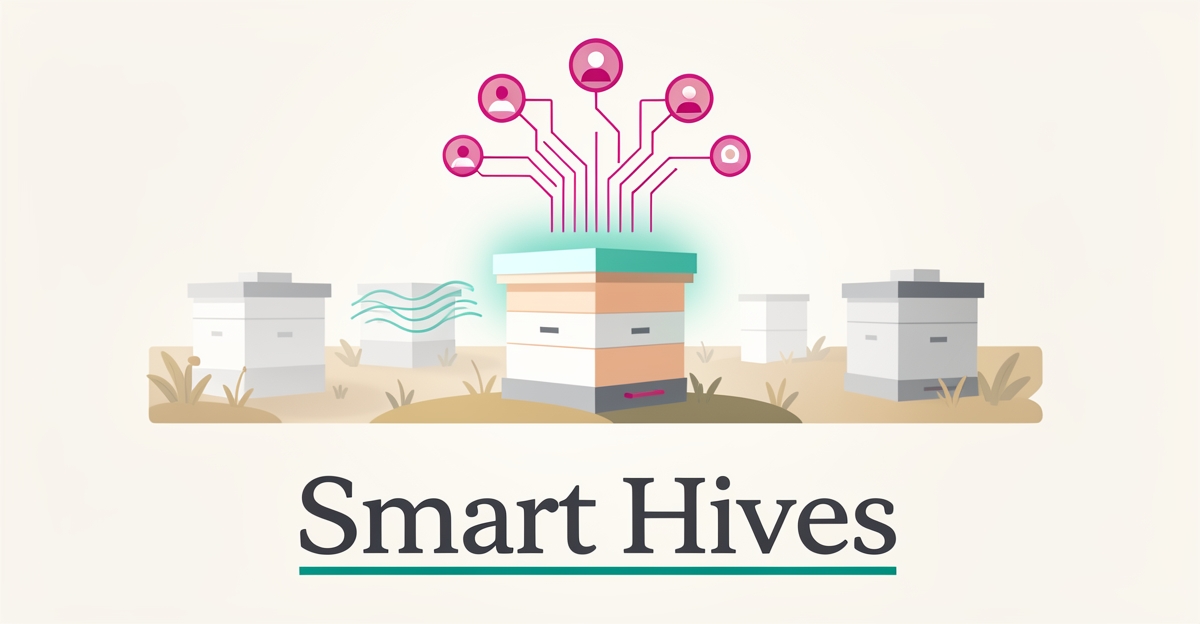
From Manual to AI: Transforming Beekeeping Operations with Smart Automation
Key Facts
- Acoustic analysis platforms such as BeeHero are reported to identify queenless colonies within about 24 hours according to industry evaluations
- Commercial beekeepers using AI hive platforms have reported yield gains in the 15-25% range through data-driven hive placement, though results vary by operation
- AI-driven yield predictions increasingly inform business decisions for commercial apiaries by integrating weather and bloom data
- Arnia's disease detection module is noted for identifying European foulbrood and Nosema infections through behavioral activity analysis
- Continuous monitoring captures temperature, humidity, weight, and acoustic data at short intervals for comprehensive colony assessment
- AI-powered precision farming is cited as predicting crop yields with high accuracy based on agricultural research
- AI models are reported to detect plant stress or disease with roughly 90% accuracy enabling early intervention
Hire a team member that works 24/7 — for less than a part-time wage.
AI receptionists, SDRs, dispatchers and 99+ roles. Trained on your business, fully managed.
Not sure where to start? Ask our AI planner
The Hidden Costs of Manual Beekeeping: Why Paper Records Fail Modern Apiaries
Traditional paper-based beekeeping records create operational blind spots that directly affect colony survival and apiary productivity. Manual logs force beekeepers to rely on memory and delayed observations, often missing early warning signs of disease or stress that timely intervention could address. That lag in detection contributes to preventable colony losses that accumulate over seasons, undermining both ecological stability and business viability for modern apiaries.
Paper records also introduce avoidable inaccuracies in yield forecasting and resource planning, since they lack the granular, real-time data needed to correlate hive performance with environmental variables like forage availability and weather patterns. Without automated tracking of weight fluctuations, temperature shifts, or acoustic signatures, beekeepers operate on estimates rather than evidence, leading to suboptimal hive placement and inefficient feeding or treatment schedules. These inefficiencies compound over time, increasing labor costs while reducing honey output and pollination service reliability.
- Acoustic analysis platforms are reported to identify queenless colonies within about 24 hours—a detection window far faster than manual inspection allows.
- Commercial beekeepers using AI-powered platforms have reported yield increases in the 15-25% range through data-driven hive placement and timing recommendations, though results vary by operation.
- AI-driven yield predictions have reached the point where they can inform real business decisions for commercial apiaries by integrating historical weather, bloom schedules, and colony strength metrics.
These limitations scale poorly as apiaries grow, turning a manageable record-keeping task into a bottleneck that constrains expansion and increases exposure to systemic risk. AIQ Labs addresses this gap through AI Workflow Builds—rebuilding the one workflow that costs you the most, at a fixed price and in phases—so beekeepers can shift from reactive record-keeping to proactive colony management without adding administrative overhead.
AI-Powered Hive Intelligence: Real-Time Monitoring and Predictive Analytics for Colony Health
The traditional approach to hive management relies on periodic manual inspections, which can miss critical changes in colony health until problems become severe. AI-powered hive intelligence transforms this reactive model into a proactive system by continuously analyzing sensor data and acoustic patterns to detect issues before they escalate.
Industry evaluations report that acoustic analysis can identify queenless colonies within roughly 24 hours by detecting subtle shifts in colony buzz frequency that human inspectors often miss until days later according to industry evaluations. This early warning capability lets beekeepers intervene quickly—introducing a new queen or letting the colony raise one—preventing prolonged broodless periods that weaken the hive.
Beyond queen loss detection, AI systems monitor for swarming behavior and disease outbreaks through multi-sensor fusion. In-hive sensor arrays capture temperature, humidity, weight, and acoustic signatures at regular intervals, feeding machine learning models that recognize patterns associated with specific threats as demonstrated in field tests. For example, Arnia's disease detection module has shown particular strength in identifying European foulbrood and Nosema infections through behavioral changes in colony activity.
These real-time insights directly support data-driven decisions that improve operational outcomes. Commercial beekeepers using AI-powered platforms have reported yield increases in the 15-25% range by following recommendations on optimal hive placement and timing based on predictive analytics. Such improvements come from aligning hive management with forage availability, weather patterns, and colony strength metrics—factors that are difficult to optimize through manual record-keeping alone.
- Continuous monitoring of temperature, humidity, weight, and acoustic data
- Early detection of queen loss, swarming, and disease—often within 24-48 hours
- Predictive analytics for honey yield and forage optimization
- Resource allocation recommendations based on hive performance rankings
- Integration with weather data and bloom calendars for contextual insights
For beekeeping operations looking to modernize, AIQ Labs builds custom sensor integration and analytics platforms that turn raw hive data into actionable intelligence—moving beekeepers from reactive inspections to predictive colony management. This approach reduces losses and unlocks measurable gains in honey production and operational efficiency through continuous, AI-driven hive intelligence.
From Inspection to Intelligence: Implementing AI Workflow Automation in Beekeeping Operations
The leap from paper records to intelligent automation doesn't happen overnight—it requires a structured approach that respects both the complexity of beekeeping and the realities of running a small operation. Successful implementations follow a phased methodology that transforms manual inspections into continuous data streams without disrupting daily workflows.
The first phase replaces clipboards with connected sensors. Modern IoT devices capture temperature, humidity, acoustic signatures, and weight data at short intervals, creating a digital baseline for every colony. According to recent evaluations of beekeeping platforms, acoustic analysis alone can identify queenless colonies within about 24 hours—often days before human inspectors would notice behavioral changes. This sensor foundation enables the shift from reactive to predictive management, allowing beekeepers to catch issues before they become crises.
Once data flows continuously, the second phase introduces multi-agent AI systems that interpret patterns and trigger actions. These systems don't just monitor—they integrate with existing business tools to automate scheduling, invoicing, and resource allocation. The transformation mirrors broader agricultural trends where AI-powered precision farming has demonstrated high-accuracy crop yield prediction while reducing resource waste. For apiaries, this means connecting hive sensors to calendar systems for automated inspection scheduling and payment platforms for seamless client billing.
AIQ Labs structures this transition in distinct, milestone-based phases—so you pay as value is delivered, never for a giant upfront build:
- Discovery & Architecture: Mapping current paper-based workflows and identifying the highest-cost automation targets
- Development & Integration: Building custom connections between sensors, calendars, and payment systems
- Deployment & Training: Launching production systems with role-specific training for field teams
- Optimization & Scale: Continuous monitoring and expansion as the operation grows
The final phase establishes true operational intelligence. Rather than simply digitizing old processes, the system learns from historical data to optimize hive placement and forage timing. Commercial beekeepers using these integrated approaches have reported yield gains in the 15-25% range through data-driven resource allocation. Larger operations can go further with an AI Operating System—one connected layer across monitoring, scheduling, and billing, built in phases and owned outright. This evolution represents the shift from reactive beekeeping to predictive apiary management—where AI handles routine monitoring while beekeepers focus on strategic decisions that require human judgment and expertise.
Still paying for 10+ subscriptions that don’t talk to each other?
We build custom AI systems you own outright. No vendor lock-in. Full control.
Not sure where to start? Ask our AI planner
Frequently Asked Questions
How does AI help detect queenless colonies faster than manual inspection?
What yield improvements do commercial beekeepers typically see with AI-powered hive monitoring?
Can AI beekeeping tools integrate with weather and bloom data for better decisions?
Is AI beekeeping only for large commercial operations?
What diseases can AI detect in beehives through behavioral changes?
How does AIQ Labs help beekeepers transition from paper records to AI automation?
From Hive to Harvest: Turning Beekeeping Data into Business Growth
The journey from paper logs to AI-powered hive intelligence reveals a clear path forward for modern apiaries: real-time monitoring prevents costly losses, predictive analytics optimize yield and resource use, and phased automation transforms reactive beekeeping into strategic colony management. By embracing these tools, beekeepers protect their colonies and unlock measurable gains in honey production and operational efficiency—turning data into decisions that sustain both hives and livelihoods. For operations ready to move beyond guesswork, the next step is simple: take the two-minute Fit Check, then book a free 30-minute strategy call to map your biggest bottlenecks. You'll get practical, owned-outright AI solutions built for your workflow—no vendor lock-in, just systems tailored to your apiary's rhythm.
Make AI your competitive advantage — not just another tool.
Strategy, implementation and ongoing optimization. One partner, end to end.
Not sure where to start? Ask our AI planner