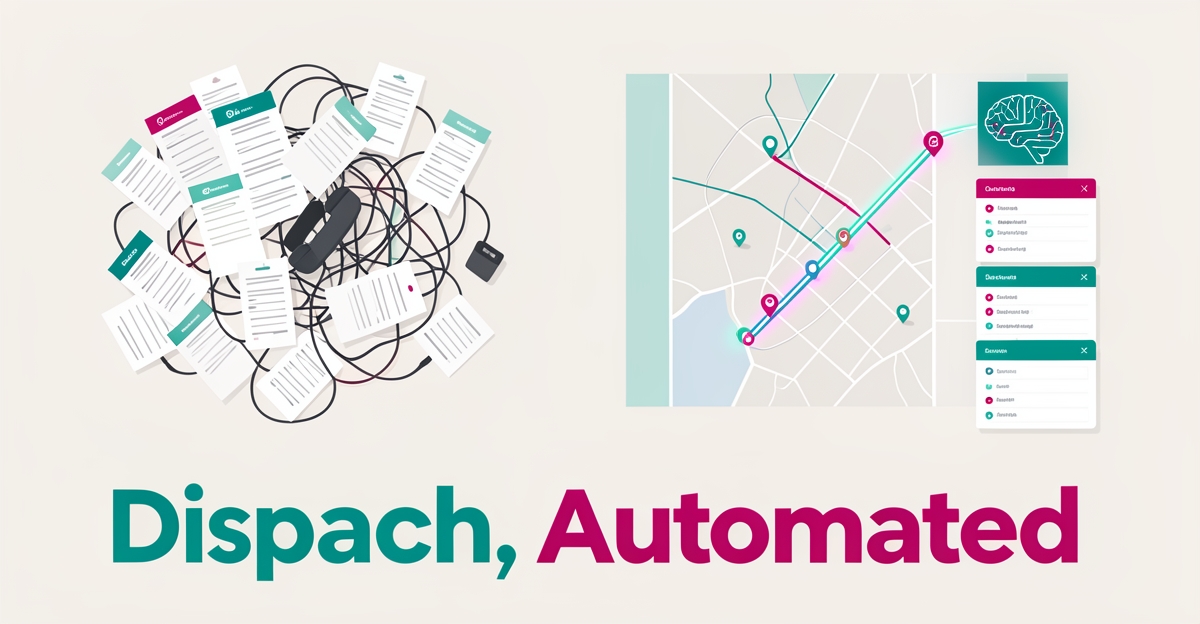
From Manual to AI: Transforming Carpet Cleaning Job Dispatch with Automation
Key Facts
- A significant share of inbound leads is typically lost to slow response times in manually dispatched operations
- AI dispatch tools can meaningfully reduce administrative time spent on scheduling and coordination
- Businesses that automate dispatch commonly report faster quote-to-booking conversion
- As of late 2026, a growing share of small service businesses has adopted AI in some form, giving early adopters an edge
- AI dispatch assigns technicians by GPS proximity, skill certifications, and real-time workload automatically
- Manual scheduling errors cause double-bookings and rework that erode profitability and customer trust
Hire a team member that works 24/7 — for less than a part-time wage.
AI receptionists, SDRs, dispatchers and 99+ roles. Trained on your business, fully managed.
Not sure where to start? Ask our AI planner
The Hidden Cost of Manual Dispatch in Carpet Cleaning
The hidden cost of manual dispatch in carpet cleaning isn't just about missed appointments, it's about revenue leaking from every unoptimized step in the customer journey. When dispatch relies on spreadsheets, whiteboards, or fragmented tools, response times slow, leads go cold, and technicians spend more time waiting than working. These inefficiencies compound quickly, turning operational friction into measurable financial loss.
When response times lag, a meaningful share of inbound leads goes cold before a quote is even sent, a direct consequence of manual dispatch systems that can't instantly match customer requests with available technicians. Each lost lead represents not just a missed job, but a broken first impression that erodes trust and increases customer acquisition costs. Meanwhile, scheduling errors, like double-booking or assigning the wrong technician to a job, further erode profitability by causing delays, rework, and dissatisfied clients who are unlikely to return or refer others.
Even when jobs are booked, manual dispatch creates hidden waste through technician idle time. Without real-time visibility into location, service type, and availability, crews often travel farther than necessary or wait unnecessarily between appointments. This inefficiency reduces daily job capacity and increases fuel and labor costs per completed job. Compounding the issue, quote-to-booking rates tend to stagnate when lead routing depends on whoever happens to answer the phone.
- Slow response times lose inbound leads before a quote is even sent
- Manual scheduling creates avoidable travel time and technician downtime
- Quote-to-booking rates remain stagnant without intelligent lead routing
- Errors in assignment lead to rework, complaints, and lost repeat business
- Operational blind spots prevent real-time adjustments for cancellations or overruns
For carpet cleaning businesses still dependent on manual dispatch, the cost isn't just operational, it's strategic. Every minute a technician sits idle, every lead lost to delay, and every scheduling mistake erodes margins and limits scalability. AIQ Labs helps companies close these gaps by building AI-driven dispatch systems that assign jobs intelligently, reduce response delays, and maximize technician utilization, turning dispatch from a cost center into a competitive advantage. For owners who want to start with a single high-impact workflow, a fixed-price Workflow Build is often the fastest entry point.
How AI Dispatch Solves Core Carpet Cleaning Challenges
Manual dispatch still relies on spreadsheets, whiteboards, or a dispatcher's memory, methods that crumble when a job runs long, a technician calls out, or a high-value lead comes in after hours. AI-powered dispatch replaces that fragility with a system that evaluates location, availability, and service type in seconds, then assigns the right technician automatically. Operators who make the switch typically report significant reductions in administrative time, along with fewer of the scheduling errors that cost crews hours each week.
The impact goes beyond the back office. Faster lead routing closes the gap created by slow response times, routing inquiries instantly, even at 10 p.m. on a Saturday. Real-time schedule adjustments mean when a morning job overruns, the system recalculates the afternoon slate and notifies affected technicians and customers without a single phone call.
- Technician assignment based on GPS proximity, skill certifications, and current workload
- Automatic rescheduling when jobs run long, cancellations hit, or emergency calls arrive
- Real-time customer notifications with accurate arrival windows
- Integration with existing scheduling platforms so data stays synchronized
- Historical analytics that reveal peak-demand patterns and crew utilization gaps
Businesses that automate dispatch commonly report strong returns and short payback periods, and many find they no longer need seasonal hiring sprees to cover their busiest months. AIQ Labs builds production-ready dispatch automation that connects with the tools you already use, CRM, calendar, routing, and communication platforms, so the transition feels like an upgrade, not a replacement. The result is a dispatch operation that runs itself, freeing owners to focus on growth instead of the daily puzzle of who goes where.
Real-World Results: ROI and Operational Gains from AI Dispatch
Carpet cleaning businesses that have embraced AI dispatch automation are seeing results that go far beyond incremental improvements. Operators report faster payback on automation investments than on most other operational upgrades, because the savings compound across scheduling, routing, and lead capture simultaneously. These gains aren't isolated, businesses using AI-powered tools commonly report improved quote-to-booking rates, directly linking smarter dispatch to higher conversion.
The operational ripple effects are equally compelling. By automating technician assignment based on real-time location, availability, and job type, companies free staff to focus on customer-facing tasks rather than manual scheduling. This shift eliminates the constant back-and-forth of coordinating crews, minimizes idle time between jobs, and ensures the right technician arrives with the right equipment, critical factors in a trade where timing and preparation directly impact service quality.
- Faster response times capture inbound leads that would otherwise be lost to delays
- AI-driven routing reduces fuel costs and vehicle wear by optimizing travel between jobs
- Real-time schedule adjustments prevent bottlenecks when jobs run over or cancellations occur
- Administrative burden drops as AI handles dispatch logic, allowing managers to focus on growth
These outcomes validate AI dispatch not as a futuristic concept, but as a practical upgrade delivering measurable efficiency and revenue gains. For carpet cleaning businesses ready to move beyond manual workflows, the path forward is clear: automation pays for itself quickly while building a more resilient, scalable operation. AIQ Labs has deployed 200+ multi-agent systems and runs four live SaaS products daily, so the dispatch systems we build are proven in production, not prototypes.
Implementing AI Dispatch: From Manual to Automated Workflow
Manual dispatch keeps carpet cleaning owners tied to the phone, juggling routes, cancellations, and last-minute calls. Moving to AI-driven dispatch removes that bottleneck by assigning technicians based on location, service type, and real-time availability.
The transition starts with mapping the current workflow. Document how jobs arrive, how quotes become bookings, and how technicians are chosen today. This baseline reveals manual steps, data gaps, and integration points with existing scheduling software. Clear process maps make the build precise and reduce change management friction later.
Tool selection follows the process map. Companies evaluate AI dispatch that integrates with their current CRM, calendar, and field tools rather than replacing them. AIQ Labs builds production-ready systems that work with existing scheduling tools, creating seamless operational workflows with deep two-way API integrations. Ownership of the custom system avoids vendor lock-in and platform dependencies, our Build in Milestones and Own It Outright models are designed around that principle.
Integration is staged to protect daily operations. First, connect job intake and customer data sources. Next, enable automated scheduling tools that assign jobs to technicians based on availability and workloads. Then layer intelligent routing that analyzes traffic conditions, staff locations, and job durations to generate efficient routes. Real-time adjustments automatically edit the day's schedule if a job runs longer or a client cancels.
Team training and change management determine adoption speed. Technicians need clear visibility into assignments, route changes, and customer notes. Dispatchers shift from manual entry to exception handling and oversight. Training should cover the new interface, escalation paths, and how the AI learns from corrections.
A practical rollout plan includes:
- Audit current dispatch steps and data flows for accuracy and timing
- Pilot AI dispatch on one route or service type before company-wide launch
- Train staff on monitoring, overrides, and feedback loops for continuous improvement
- Measure quote-to-booking speed, admin time, and missed calls weekly
Results show why companies move quickly. Businesses that automate lead routing consistently report faster quote-to-booking conversion, and recovering leads that would otherwise be lost to slow response times is often the single largest early win.
Operational efficiency also improves. Automated scheduling and routing typically cut administrative hours substantially, and as of late 2026, a growing share of small businesses has adopted AI in some form, early adopters in local service trades are already pulling ahead of competitors still dispatching by whiteboard.
Once live, the system compounds value. Dispatch becomes predictable and scalable, freeing owners from seasonal hiring pressure and letting teams focus on service quality.
Still paying for 10+ subscriptions that don’t talk to each other?
We build custom AI systems you own outright. No vendor lock-in. Full control.
Not sure where to start? Ask our AI planner
Frequently Asked Questions
How much revenue are carpet cleaning businesses losing due to slow response times with manual dispatch?
Can AI dispatch really improve quote-to-booking rates, and by how much?
What kind of ROI can a carpet cleaning business expect from implementing AI dispatch?
Will AI dispatch reduce the administrative burden on my team?
Is AI dispatch only for large carpet cleaning companies, or can small businesses benefit too?
What happens if a job runs late or a customer cancels, can AI dispatch adjust in real time?
Turn Dispatch from a Bottleneck into Your Competitive Edge
Manual dispatch in carpet cleaning silently drains revenue through lost leads, technician idle time, and scheduling errors that frustrate customers and erode trust. AI-powered automation reverses this by intelligently assigning jobs based on location, skill, and availability, cutting response delays, reducing administrative work, and capturing the inbound leads typically lost to slow replies. Every month you wait, competitors who automate pull further ahead on response speed and booking rates. For owners ready to stop juggling schedules and start scaling service quality, the path forward is clear: assess your current workflow, identify where automation removes friction, and take the first step toward a dispatch system that works as hard as your team. Start the Fit Check to map your biggest bottleneck and discover where AI can deliver measurable impact, no obligation, just clarity.
Make AI your competitive advantage — not just another tool.
Strategy, implementation and ongoing optimization. One partner, end to end.
Not sure where to start? Ask our AI planner