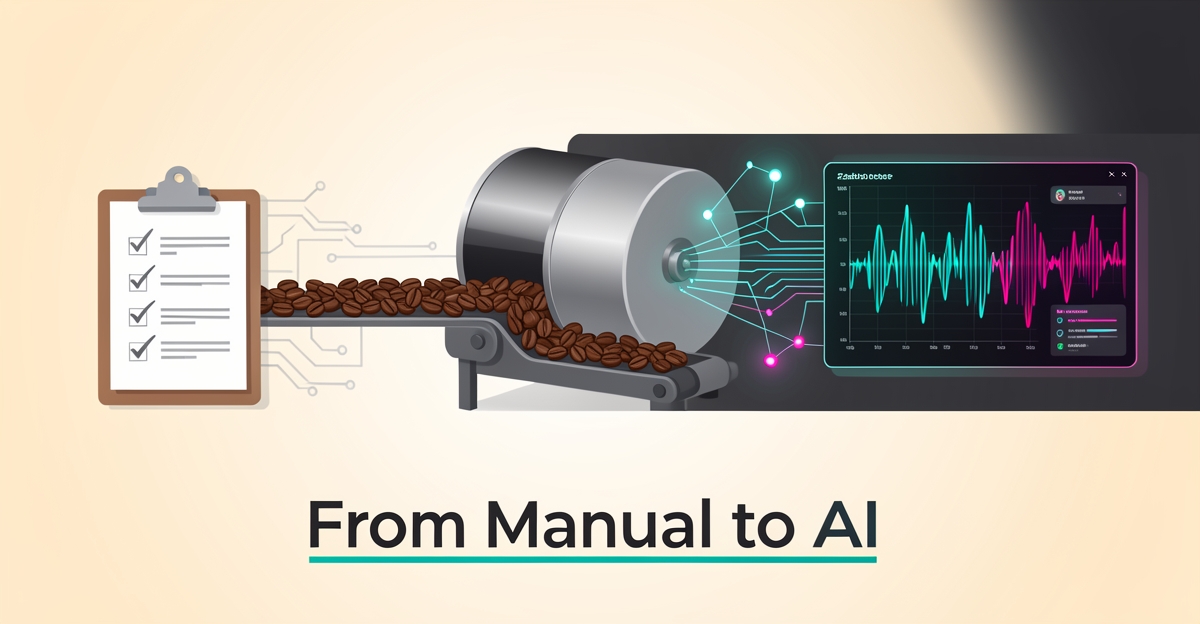
From Manual to AI: Transforming Coffee Roastery Quality Control with Smart Sensing and Analysis
Key Facts
- A growing share of coffee processing plants use fully automated green bean cleaning systems, according to industry reporting on digital transformation in coffee
- AI-powered sorting machines substantially reduce human error compared to manual inspection, per industry statistics
- A large majority of coffee roasters now use data analytics to optimize brew parameters for different beans per industry reporting
- Customer purchase analytics helps coffee brands forecast demand more accurately, tightening inventory and reducing waste according to industry reporting
- AI coffee analytics can surface flavor trends that support new product development per industry reporting
- The global manual and automatic coffee machines market is projected to keep growing steadily through 2034 per Verified Market Reports
Hire a team member that works 24/7 — for less than a part-time wage.
AI receptionists, SDRs, dispatchers and 99+ roles. Trained on your business, fully managed.
Not sure where to start? Ask our AI planner
The Manual Quality Control Bottleneck in Roasteries
Walk into a specialty roastery during production hours and you'll likely find quality control happening the way it has for decades: a cupper scribbling tasting notes on a paper log, a roaster eyeballing bean color against memory, and a clipboard tracking batch details that may never be digitized. It's a system built on human judgment, and human judgment, under production pressure, is inconsistent by nature.
The cost of that inconsistency is real. AI-powered sorting machines in coffee production substantially reduce human error compared to manual inspection, according to industry reporting on digital transformation in coffee. That gap exists precisely because manual inspection and sensory evaluation leave so much room for error, fatigue, palate drift between morning and afternoon, and simple transcription mistakes all compound batch to batch.
Manual QC also creates a data problem that's harder to see. Sensory notes written on paper or scattered spreadsheets can't be queried, compared, or learned from. When a roaster wants to understand why a particular origin performed differently last quarter, the answer is buried in handwriting, if it was recorded at all. The contrast with data-driven operations is stark: industry reporting suggests a large majority of coffee roasters now use data analytics to optimize brew parameters for different beans, and analytics-driven brands forecast demand more accurately than those relying on intuition. Roasters still relying on paper logs simply can't access these capabilities.
The bottlenecks of manual quality control tend to cluster in predictable places:
- Subjective roast profiling, where results depend on who is cupping that day and how calibrated their palate is
- Paper-based quality logs that fragment information across binders, notebooks, and filing cabinets
- Manual data entry that introduces transcription errors and delays analysis by days or weeks
- Lost institutional knowledge when experienced staff leave, taking roast intuition that was never documented
These gaps matter more as the industry modernizes around them. The coffee industry is undergoing what industry analyses describe as a significant transformation through AI and automation in quality control, and the global coffee machine market is projected to keep growing steadily through 2034, according to Verified Market Reports. Roasters who keep quality data locked in paper are competing against operations that turn every batch into structured, analyzable intelligence.
The good news is that the data already exists inside most roasteries, it's just trapped in unstructured form. Tasting notes, roast curve printouts, and quality logs can be captured, digitized, and analyzed automatically. This is where modern document processing and AI analysis come in: systems built for food processing operations can ingest sensory notes and quality records, extract structured insights, and surface patterns no human reviewer could spot across thousands of batches. The bottleneck isn't a lack of information, it's the manual methods standing between roasters and their own data.
How AI, Smart Sensing, and Data Analytics Transform QC
Quality control in coffee roasting is shifting from manual tasting sheets to connected systems that learn with every batch.
Automation is now reshaping the raw material stage. Industry reporting shows a growing share of coffee processing plants use fully automated green bean cleaning systems, and AI-powered sorting machines substantially reduce human error compared to manual sorting. The result is cleaner input, fewer defects reaching the roaster, and more consistent roast profiles across lots.
Data analytics is the lever roasters pull to turn production data into commercial advantage. Recent reporting finds most roasters now use data analytics to optimize brew parameters for different beans. Customer purchase data analytics helps brands forecast demand more accurately, which tightens inventory and reduces waste. For roasters, this means roast curves and brew parameters can be adjusted by bean origin, age, and seasonal preference rather than by guesswork.
Smart sensing with IoT and machine learning closes the loop in real time. Sensors monitor temperature, airflow, moisture, and bean color during roast, while machine learning models flag anomalies before they become defects. This real-time defect detection replaces end-of-batch checks with continuous oversight, protecting brand consistency and margin.
Together, the three levers create measurable gains:
- Cleaner green beans and materially less sorting error from automated cleaning and AI sorting
- Brew parameter optimization and more accurate demand forecasting from purchase analytics
- Continuous quality monitoring via IoT sensors and ML models for immediate defect alerts
For coffee businesses, the practical value is automation of data collection and analysis. Sensory notes, roast profiles, and quality logs can be analyzed automatically instead of being locked in spreadsheets and notebooks. AIQ Labs builds production-grade AI systems for food processing operations that ingest those logs, surface patterns, and trigger actions without manual review.
The shift is from reactive QC to predictive quality. Roasters who combine automated sorting, analytics-driven brew optimization, and smart sensing can protect consistency, accelerate new product launches, and scale without adding headcount to quality teams.
Building an AI Quality System Roasters Can Own and Scale
Coffee roasters looking to modernize quality control can start by automating data capture across their roasting process. Integrating IoT sensors with roast profiles allows real-time monitoring of temperature, airflow, and bean development, key factors that influence flavor consistency. This foundational step replaces manual logging with continuous, objective data streams that feed directly into AI analysis. Industry reporting suggests most roasters already use data analytics to optimize brew parameters, showing strong readiness for deeper automation.
The next phase involves linking this sensor data to sensory evaluation logs and quality notes from cupping sessions. By training AI models on historical roast profiles paired with expert tasting notes, roasters can create predictive systems that flag potential defects before they affect batches. AI-powered sorting in coffee production demonstrates how machine learning improves consistency when applied to quality assessment. Over time, these models learn subtle patterns linking roast parameters to flavor outcomes, enabling proactive adjustments.
Finally, roasters can scale this system by connecting it to broader operational workflows, inventory forecasting, demand planning, supplier coordination. AIQ Labs supports this progression through three entry points: AI Workflow Builds to rebuild the one workflow that costs you the most at a fixed price, AI Employees to staff functions like production reporting and quality documentation at a fraction of the cost of a human hire, and AI Operating Systems to connect everything into one operating layer you own outright. With the ability to own and refine the system, roasters gain long-term control over quality, reduce reliance on subjective evaluations, and build a scalable foundation for innovation. This approach turns quality control from a reactive checkpoint into a continuous, intelligent feedback loop.
Still paying for 10+ subscriptions that don’t talk to each other?
We build custom AI systems you own outright. No vendor lock-in. Full control.
Not sure where to start? Ask our AI planner
Frequently Asked Questions
Why is manual quality control so inconsistent in coffee roasteries?
What data am I losing by keeping roast logs on paper?
How does AI actually help at the green bean stage?
Can smart sensing replace end-of-batch cupping?
Will this help me forecast demand and reduce waste?
Is the coffee equipment market moving toward automation?
From Paper Logs to Predictive Quality: Your Roastery’s Next Brew
The journey from manual, paper-based quality control to AI-driven consistency isn’t about replacing the roaster’s expertise, it’s about amplifying it. By digitizing sensory notes, roast profiles, and quality logs, roasters unlock patterns hidden in years of batch data, turning subjective judgments into predictive insights. Smart sensing and automation don’t just cut human error; they create a continuous feedback loop that protects brand consistency, accelerates innovation, and scales quality without scaling headcount. The data is already there, it’s time to let it work for you. Start with the 2-minute Fit Check to see whether an AI quality system fits your operation, then book your free 30-minute strategy call to find where your biggest quality bottleneck hides, and how to turn it into your next competitive edge.
Make AI your competitive advantage — not just another tool.
Strategy, implementation and ongoing optimization. One partner, end to end.
Not sure where to start? Ask our AI planner