Back to Blog

From Manual to AI: Transforming Design Firm Workflows with Smart Project Management

AI Business Process Automation > Process Mining & Optimization25 min read

From Manual to AI: Transforming Design Firm Workflows with Smart Project Management

Key Facts

  • "Rewiring" existing workflows delivers 10–25% efficiency gains with ROI in 3–12 months.
  • "Rebuilding" operating models from scratch achieves 30–60% structural cost reductions over 18–48 months.
  • Automated onboarding can cut time-to-live from 23 days down to just 3 days.
  • AI drafting reduced operator listing time by 70%, eliminating a 23-day backlog.
  • AI agents compressed an eight-day month-end close down to three days.
  • Only 7% of investors cite AI as their most influential decision factor.
  • 77% of heavy AI users still require reassurance from a human advisor.
AI Employees

What if you could hire a team member that works 24/7 for $599/month?

AI Receptionists, SDRs, Dispatchers, and 99+ roles. Fully trained. Fully managed. Zero sick days.

The Strategic Fork in the Road: Rewire vs. Rebuild

Every design firm faces a critical decision when adopting AI: do you optimize existing workflows or architect entirely new ones? This choice defines whether you achieve quick tactical wins or build long-term structural advantages. The distinction between these two paths determines not just efficiency, but the very nature of your competitive moat.

"Rewiring" versus "rebuilding" represents the core strategic dichotomy in modern AI implementation. One path offers speed and immediate cash flow, while the other demands patience for deeper transformation. Understanding this trade-off is essential for any firm looking to integrate AI without disrupting core operations.

Rewiring treats your current processes as the frame, using AI to make them faster and smarter. This approach is ideal when your workflows are fundamentally sound but suffer from slowness or error-prone manual steps. For design firms, this often means automating client onboarding, scheduling, and deliverables tracking.

The primary benefit is speed. Rewiring delivers ROI within 3–12 months by focusing on high-volume, low-complexity tasks. You can generate immediate value by reducing the time spent on administrative bottlenecks that drain creative energy.

  • 10–25% efficiency gains are typical for rewiring initiatives (https://www.cio.com/article/4187993/rewire-or-rebuild-the-ai-decision-every-cio-needs-to-get-right.html)
  • Rapid deployment allows firms to prove value before committing to larger structural changes
  • Lower risk profile since you are enhancing existing systems rather than replacing them

Consider a mid-sized architecture firm using process mining to identify delays in project handoffs. By rewiring the client onboarding workflow, they automated initial data collection and scheduling. This eliminated a 23-day backlog and cut operator listing time by 70% (https://www.cio.com/article/4187993/rewire-or-rebuild-the-ai-decision-every-cio-needs-to-get-right.html). The result was $1 million in annualized savings within 18 months, proving the power of targeted automation.

However, rewiring has limits. You cannot achieve transformative growth by simply making old processes faster. As one expert noted, "AI plugged into a broken process just produces faster, better-documented brokenness" (https://www.cio.com/article/4187993/rewire-or-rebuild-the-ai-decision-every-cio-needs-to-get-right.html).

Rebuilding treats the current operating model as legacy, using AI as the foundation for a structurally different approach. This is necessary when your operating model is fragmented or when AI-native competitors are entering your market. It requires questioning whether existing steps should exist at all.

This path offers deeper competitive advantages but demands significant investment. Rebuilding creates 30–60% structural cost reductions by eliminating legacy steps entirely rather than optimizing them. It transforms the firm from a service provider into an intelligent platform.

  • 30–60% structural cost reduction through radical process elimination (https://www.cio.com/article/4187993/rewire-or-rebuild-the-ai-decision-every-cio-needs-to-get-right.html)
  • 18–48 months to show material value, requiring sustained commitment
  • AI-native architecture that scales infinitely without proportional headcount increases

Leading infrastructure providers argue for first-principles rearchitecting. Instead of asking how to optimize step B in a process A+B+C, leaders should ask if step B is even necessary (https://www.forbes.com/sites/nicolecasperson/2026/06/25/the-ai-race-in-fintech-comes-down-to-one-thing-trust/). This mindset shift allows firms to build systems "ground up with the right rules in place" rather than patching legacy issues.

The most successful organizations do not choose one path exclusively. They sequence both approaches to balance immediate needs with long-term vision. Use "rewiring" to generate cash and credibility, then selectively "rebuild" domains where AI-native architecture creates a genuine moat.

This sequenced strategy mitigates risk while maximizing impact. Start with high-visibility wins to build organizational trust and fund deeper transformations. Joint governance across executive leadership is critical for this balance, ensuring the decision is owned by the CEO, CFO, and business leaders, not just IT (https://www.cio.com/article/4187993/rewire-or-rebuild-the-ai-decision-every-cio-needs-to-get-right.html).

Success also requires a workforce transition strategy from day one. Redeploy staff from automated tasks into roles leveraging institutional knowledge, such as quality assurance or strategic design oversight. This ensures human judgment remains central to high-stakes decisions while AI handles operational heavy lifting.

By understanding this strategic fork, design firms can navigate AI adoption with clarity. The next step is identifying which specific workflows in your firm are ready for rewiring, and which require a complete rebuild.

The Bottleneck Crisis: Why Manual Processes Fail at Scale

Design firms often celebrate creativity while silently bleeding margin on administrative friction. When client onboarding, scheduling, and data entry rely on manual effort, scalability becomes impossible. You aren’t just losing time; you are creating a structural ceiling on growth that no amount of hiring can break.

The critical realization is that simply automating broken processes is insufficient. If your current workflow is fragmented, digitizing it only creates a faster, better-documented version of chaos. True transformation requires distinguishing between "rewiring" existing steps and "rebuilding" the operating model from first principles.

Many firms attempt to plug AI into legacy systems as a quick fix. This "rewiring" approach treats existing processes as the frame and uses technology to make them slightly smarter. While this yields bounded efficiency gains of 10–25%, it fails to address deeper structural inefficiencies.

Research indicates that organizations must choose between improving what they have or starting again. The most successful firms sequence these approaches, using quick wins to fund deeper architectural changes. However, without this strategic distinction, firms risk investing in solutions that offer marginal ROI rather than competitive advantage.

  • Rewiring delivers fast ROI (3–12 months) but limited long-term moats.
  • Rebuilding takes longer (18–48 months) but offers 30–60% structural cost reduction.
  • Hybrid Strategy combines both to maximize value and speed.

The temptation is to automate the status quo. If a designer spends hours manually entering client data into a spreadsheet, the instinct is to build a bot to do that data entry. This ignores the fundamental question: does this step need to exist at all?

Leading infrastructure providers argue for first-principles rearchitecting. Instead of asking how to optimize step B, leaders should ask if step B is necessary. AI plugged into a broken process just produces faster, better-documented brokenness. This creates a false sense of progress while the underlying operational debt accumulates.

"If a process is A plus B plus C, you don’t ask how do I optimize A, B, and C... It’s literally, do I even throw B out?" — Dhivya Suryadevara, President of Fiserv

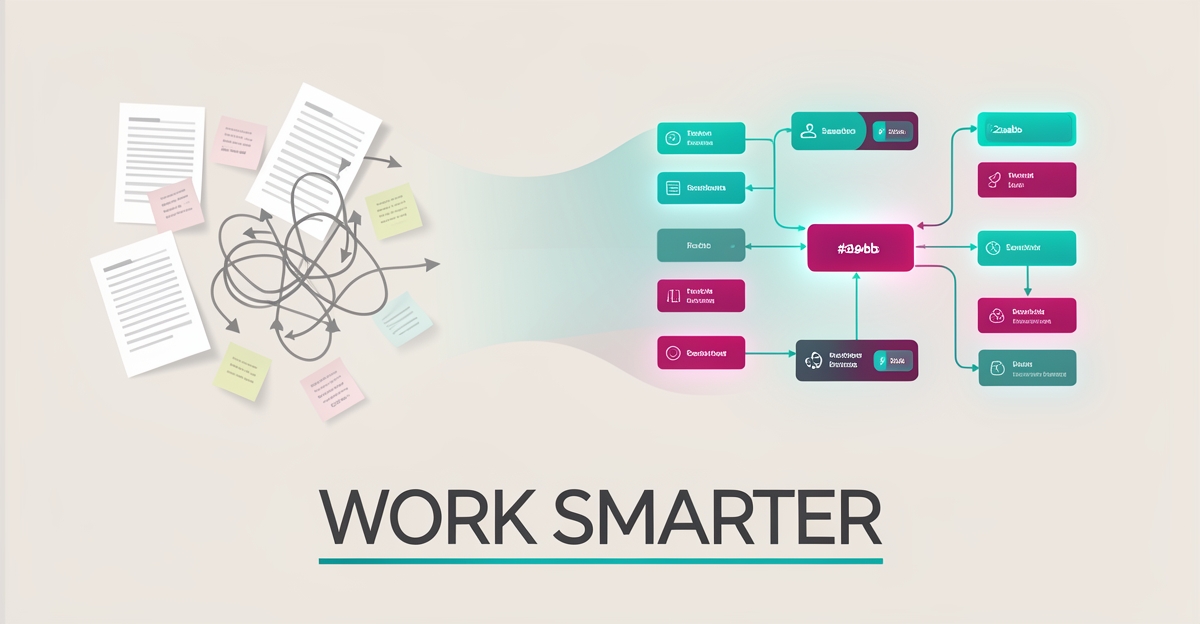
AIQ Labs avoids this trap by using process mining to map current workflows before writing a single line of code. We identify the specific bottlenecks in your design firm’s operations, whether it’s delayed client onboarding or redundant scheduling approvals. By visualizing the actual flow of work, we can distinguish between value-adding steps and pure waste.

This data-driven approach allows us to build custom AI systems that streamline operations by eliminating legacy steps entirely. For example, instead of automating a 23-day onboarding process, we can cut it to 3 days by removing unnecessary handoffs. This shift from manual to AI-driven workflows reduces project delays and frees up creative talent for high-value design work.

  • Map current workflows to identify hidden bottlenecks.
  • Question the necessity of each step in the chain.
  • Rebuild systems with AI-native rules from the ground up.

Transformation is not just a technical challenge; it is a governance failure when left solely to IT. The decision to rewire or rebuild requires joint ownership by the CEO, CFO, and business unit leaders. This ensures that AI strategy aligns with broader business goals rather than isolated IT initiatives.

Furthermore, workforce transition must be a strategic priority. In successful transformations, staff exposed to automation are redeployed into quality assurance and strategic oversight rather than made redundant. This leverages institutional knowledge that AI cannot replicate, ensuring that human judgment remains central to high-stakes design decisions.

  • Joint Governance prevents unilateral decisions by IT or consultants.
  • Redeployment turns automation threats into strategic advantages.
  • Human-in-the-Loop ensures quality in creative, high-stakes outputs.

AIQ Labs helps design firms move beyond simple automation to achieve structural transformation. By combining process mining with custom AI development, we turn operational bottlenecks into competitive moats.

Implementation: Process Mining and First-Principles Design

Most design firms fall into the "rewiring" trap, using AI to simply speed up broken manual processes. This approach yields only bounded efficiency gains of 10–25% and fails to address root operational inefficiencies. Instead, firms must choose to "rebuild" their operating models from first principles to achieve structural cost reductions of 30–60%.

As CIO.com analysis reveals, organizations that merely patch legacy systems miss the opportunity for true transformation. AI plugged into a broken process just produces faster, better-documented brokenness. Instead, leaders should question whether existing steps even need to exist.

Before building any system, you must understand exactly how work flows through your firm. Process mining allows you to visualize current operations, identifying bottlenecks and non-value-added steps that manual audits often miss. This data-driven approach eliminates guesswork and focuses automation efforts where they matter most.

At AIQ Labs, we begin every engagement with deep business process analysis. We map your current workflows to identify where time and money are leaking. This discovery phase ensures we don’t automate inefficiencies but rather eliminate them entirely.

Key steps in our process mining approach include:

  • Visualizing End-to-End Workflows: Mapping every touchpoint from client inquiry to project delivery.
  • Identifying Non-Value-Added Steps: Flagging redundant approvals, manual data entry, and duplicate tasks.
  • Quantifying Bottlenecks: Measuring exact time delays in each stage of the project lifecycle.
  • Prioritizing Automation Targets: Focusing on high-volume, high-friction areas first.

Once you understand your current state, the next step is architectural redesign. This involves building systems "ground up with the right rules in place" rather than trying to force AI into legacy software. The goal is to create a seamless, AI-native workflow that feels effortless to your team.

We challenge every step in your process. If a process consists of steps A, B, and C, we ask if step B is even necessary. This rigorous questioning ensures that the final system is not just an automated version of the old way, but a superior new way of working.

The benefits of this first-principles approach include:

  • Eliminating Legacy Friction: Removing steps that existed only because of previous software limitations.
  • Creating Owned Digital Assets: Building custom systems you own, avoiding vendor lock-in.
  • Ensuring Scalability: Designing infrastructure that grows with your firm without subscription caps.
  • Integrating AI Natively: Embedding intelligence into the core workflow, not as an add-on.

Unlike subscription software that evolves on a vendor’s timeline, AIQ Labs builds custom systems that belong to you. We architect production-ready applications using advanced frameworks like LangGraph and ReAct, ensuring your workflow is optimized for your specific design needs.

This ownership model provides long-term security and flexibility. You are not renting a solution; you are acquiring a competitive asset. Our systems integrate deeply with your existing tools, creating a unified operational powerhouse that eliminates the chaos of disconnected software.

When you choose custom development, you gain:

  • True Ownership: Full control over your code, data, and future development.
  • No Vendor Lock-In: Freedom to evolve your technology stack without penalty.
  • Personalized Functionality: Features built specifically for your firm’s unique processes.
  • Long-Term ROI: One-time investment costs versus recurring, escalating subscription fees.

By combining process mining with first-principles design, you move beyond simple automation to true business transformation. This strategy not only reduces costs but also creates a durable competitive advantage that subscription tools cannot match.

Governance and the Human Edge: Preserving Trust and Creativity

Transforming a design firm through AI requires more than just software; it demands a fundamental shift in organizational culture and leadership structure. Many firms fail because they treat AI as an IT project rather than a strategic business overhaul.

Successful transformation requires joint executive governance across all C-suite levels, not just the technology department. When leadership aligns on the vision, the firm can navigate the complex transition from manual workflows to intelligent automation without losing its creative soul.

The most common governance failure is letting the CIO or an external consultancy own the AI strategy unilaterally. This siloed approach often leads to solutions that don’t align with broader business goals or creative workflows.

According to industry analysis, the decision requires joint ownership by the CEO, CFO, CHRO, CIO, and business unit leaders. This ensures that AI initiatives support both financial targets and creative excellence.

Effective governance frameworks must address three critical areas:

  • Strategic Alignment: Ensuring AI tools enhance, rather than replace, core design value propositions.
  • Risk Management: Establishing clear protocols for data privacy and intellectual property protection.
  • Workforce Transition: Planning for role evolution rather than simple job elimination.

Without this cross-functional oversight, firms risk implementing fragmented tools that create more complexity than they solve.

As AI handles repetitive tasks like client onboarding and scheduling, the designer’s role shifts from operator to strategist. This evolution is not about losing relevance but gaining higher-value influence.

Research indicates that as the marginal cost of intelligence drops, human roles evolve toward "checkers, prompters, and architects." Designers become the guardians of quality, ensuring that automated outputs meet high creative standards.

Consider the shift in a mid-sized architecture firm where AI automation reduced manual intake time significantly. Staff were not made redundant but redeployed into quality assurance and complex client consultation. This leveraged their institutional knowledge in ways AI could not replicate.

In this new model, human judgment remains non-negotiable for high-stakes decisions. While AI can generate thousands of layout variations, the final strategic approval requires human conviction and contextual understanding.

Efficiency should never come at the cost of client trust. In fact, AI can enhance the client experience if deployed thoughtfully.

Surveys reveal that while 57% of affluent investors use AI for financial tasks, only 7% cite AI as the most influential factor in their last major decision. Meanwhile, 59% cited financial professionals as the most influential factor.

This data highlights a crucial insight for design firms: clients rely on human professionals for strategic expertise. Even in an AI-driven workflow, the human touch remains paramount for building lasting relationships and delivering bespoke creative solutions.

By balancing automated efficiency with human-centric service, design firms can create a competitive moat that pure automation cannot breach. The goal is not to remove the human from the loop, but to elevate it.

AI Development

Still paying for 10+ software subscriptions that don't talk to each other?

We build custom AI systems you own. No vendor lock-in. Full control. Starting at $2,000.

Frequently Asked Questions

Should my design firm just automate our current workflows, or do we need a complete rebuild?
You should start by "rewiring" high-volume manual tasks like client onboarding to achieve 10–25% efficiency gains and ROI within 3–12 months. Use these quick wins to fund a later "rebuild" phase, which eliminates legacy steps entirely for 30–60% structural cost reductions over 18–48 months.
Will using AI make our design work feel less personal or hurt client trust?
No, efficiency and customer experience are not mutually exclusive; AI handles operational tasks while you retain human judgment for high-stakes strategic decisions. Research shows that while AI democratizes information, clients still rely on human professionals for expertise, with 59% citing human advisors as the most influential factor in their decisions.
How do we handle staff anxiety when AI takes over repetitive tasks like scheduling?
Treat workforce transition as a strategic priority from day one by redeploying staff into roles that leverage institutional knowledge, such as quality assurance and complex client consultation. This approach leverages human judgment for high-stakes decisions while AI handles the operational heavy lifting, preventing redundant layoffs.
Who needs to be involved in deciding how we adopt AI in our firm?
The decision requires joint ownership by the CEO, CFO, CHRO, CIO, and business unit leaders, rather than being decided unilaterally by IT. The most common governance failure is letting a CIO or external consultancy own the AI path alone, which often leads to misaligned solutions.
Can AI really replace the manual data entry and onboarding steps we do now?
AI can cut operator listing time by 70% and eliminate backlogs, such as reducing a 23-day onboarding process to just 3 days by removing unnecessary handoffs. However, you must first use process mining to question if those steps are necessary at all, rather than just automating broken processes.
What are the typical costs and timelines for an AI transformation in a design firm?
Targeted "rewiring" of specific workflows can start at $2,000 and deliver ROI within 3–12 months, while comprehensive systems range from $15,000 to $50,000. Managed AI employees for roles like receptionists cost $599–$1,500 monthly, offering 75–85% savings compared to human employee costs.

From Tactical Wins to Structural Advantage: Your AI Roadmap

Choosing between rewiring existing workflows and rebuilding them from scratch is not just a technical decision—it’s a strategic one that defines your firm’s competitive moat. As demonstrated, rewiring delivers rapid ROI within 3–12 months by targeting high-volume tasks like client onboarding and scheduling, often yielding 10–25% efficiency gains with lower risk. However, true transformation requires more than quick fixes; it demands a comprehensive, owned infrastructure that scales with your ambition. At AIQ Labs, we bridge this gap by offering end-to-end AI transformation services tailored for SMBs. We don’t just provide software; we architect custom, production-ready AI systems and deploy managed AI Employees that you fully own, eliminating vendor lock-in and subscription chaos. Whether you need a targeted AI Workflow Fix or a complete Business AI System, our lifecycle partnership ensures your automation strategy evolves from tactical wins to long-term structural advantage. Stop letting manual bottlenecks drain your creative energy. Book a Free AI Audit & Strategy Session today, and let us help you map the path from manual processes to intelligent, automated growth.

AI Transformation Partner

Ready to make AI your competitive advantage—not just another tool?

Strategic consulting + implementation + ongoing optimization. One partner. Complete AI transformation.

Join The Newsletter

Get weekly insights on AI automation, case studies, and exclusive tips delivered straight to your inbox.

Ready to Increase Your ROI & Save Time?

Book a free 15-minute AI strategy call. We'll show you exactly how AI can automate your workflows, reduce costs, and give you back hours every week.

P.S. Still skeptical? Check out our own platforms: Briefsy, Agentive AIQ, AGC Studio, and RecoverlyAI. We build what we preach.