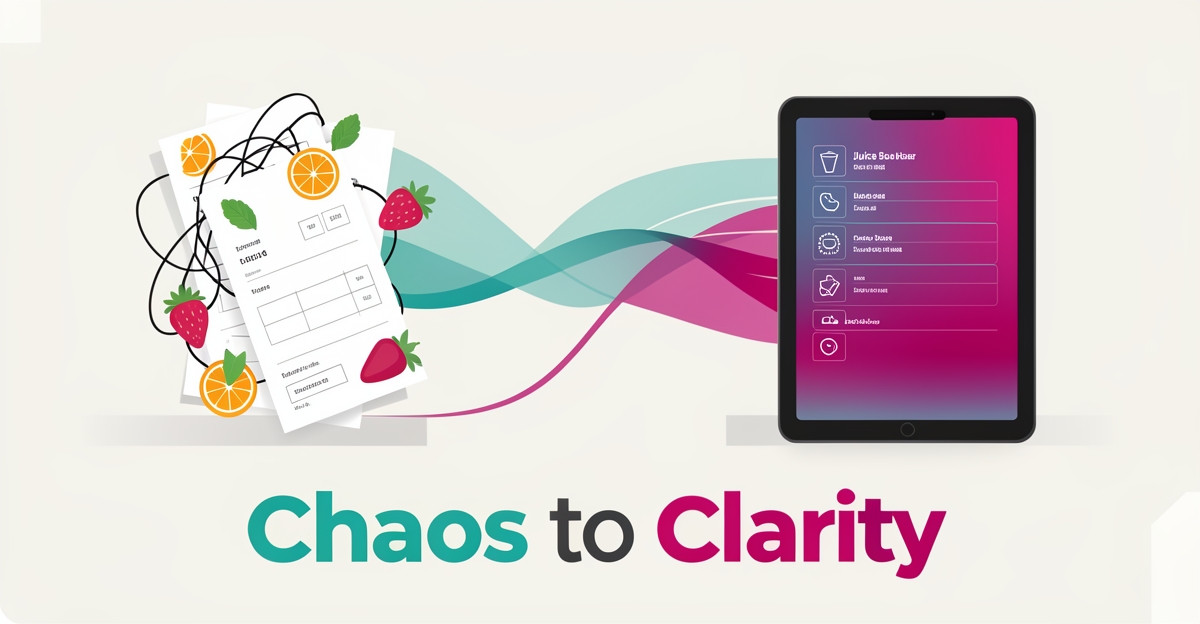
From Manual to AI: Transforming Drink Ordering Workflows in Juice Bars
Key Facts
- Manual order entry is one of the most error-prone workflows in food service, every retyped ticket is a chance for a wrong drink, a lost order, or an inventory mismatch
- AI-driven workflows use OCR and NLP to extract order data from handwritten notes, emails, texts, and PDFs automatically
- Validation layers check extracted orders against live catalogs, pricing, and stock before anything reaches the kitchen
- Businesses adopting AI for process automation typically report returns within the first year or two of deployment
- Staff generally report higher job satisfaction when AI removes repetitive data entry from their day
- AIQ Labs has deployed 200+ multi-agent systems and runs 4 live SaaS products daily, the same production discipline applies to order workflows
Hire a team member that works 24/7 — for less than a part-time wage.
AI receptionists, SDRs, dispatchers and 99+ roles. Trained on your business, fully managed.
Not sure where to start? Ask our AI planner
The Hidden Cost of Manual Order Entry in Juice Bars
The juice bar rush hour reveals a hidden cost in every handwritten ticket and manual keystroke. Behind the counter, staff juggle multiple order formats, scribbled notes, phone calls, and digital forms, while trying to maintain speed and accuracy. This constant context switching creates friction that directly impacts both customer experience and operational profitability.
Manual order entry is costly because of its error rate and labor intensity. Industry research has repeatedly flagged manual data entry as one of the most expensive failure points in order-heavy businesses, and the pattern scales down to small juice bars handling dozens of daily transactions. Each mistake requires time-consuming corrections, delays fulfillment, and risks customer dissatisfaction when drinks are made incorrectly or orders are lost entirely.
The financial impact extends beyond immediate errors to processing delays and labor inefficiencies. Case studies of AI-powered order automation in distribution and food service consistently report major reductions in order processing time once manual data entry is eliminated. For juice bars, this translates directly to faster service during peak hours and lower labor costs tied to order handling.
These inefficiencies create operational bottlenecks that hinder growth and customer satisfaction. Staff spend valuable time on repetitive data entry instead of engaging with customers or preparing drinks, while errors compound through the system, affecting inventory accuracy, waste levels, and ultimately, profit margins. As order volumes increase and customer expectations for speed and precision rise, traditional manual methods struggle to keep pace, creating a competitive disadvantage for juice bars relying on outdated workflows.
AIQ Labs helps juice bars identify these specific pain points through a two-minute Fit Check, targeting the exact workflow where automation delivers the highest return. By focusing on eliminating manual bottlenecks, juice bars can redirect staff efforts toward value-adding activities that directly enhance the customer experience and bottom line.
How AI Transforms Order Processing from Chaos to Clarity
Manual order entry in juice bars creates a bottleneck that slows service and erodes margins. AI changes that by turning messy, multi-format orders into clean, validated data that flows straight to POS and inventory.
OCR reads printed and handwritten notes, emails, PDFs, and takeout forms to pull product names, quantities, customer details and delivery instructions. NLP interprets free-text requests, clarifies ambiguous items, and normalizes variations like “large cold-pressed” versus “L CP”. Machine learning then validates those extractions against catalogs, pricing and stock levels, learns from corrections, and routes the order to the right system.
The impact is measurable. Businesses that automate order intake with AI consistently report fewer entry errors, faster processing, and lower handling costs, benefits that compound for juice bars where orders move from inbox to POS without anyone retyping them.
Accuracy and speed compound over time. Analysts across the industry, including major consultancies, project substantial productivity gains from AI over the coming years, with frontline operations like order intake among the earliest places businesses capture value. Companies adopting AI for process automation typically see returns within the first year or two of deployment.
Core capabilities that create clarity include:
- Data extraction from texts, emails, PDFs and handwritten notes using OCR and NLP
- Automated validation against product catalogs, pricing and real-time inventory
- Intelligent categorization and routing to POS, inventory and fulfillment workflows
- Continuous learning that improves accuracy as order formats evolve
This is AI Workflow Builds in practice. Instead of staff chasing typos and missing items, the system confirms orders, triggers confirmations, and updates stock automatically. AIQ Labs rebuilds the one workflow that costs you the most, at a fixed price, in phases, replacing manual entry with owned systems that sync order intake to POS and inventory.
The result is faster throughput with fewer errors and staff freed from repetitive data entry. Teams generally report higher job satisfaction when repetitive tasks decline, and operations scale without adding headcount.
Building Your AI-Powered Order Workflow: Key Components
Think of an AI-powered order workflow as a relay race where each runner hands off cleanly, if one stumbles, the whole order falls apart. The difference between a brittle automation script and a resilient, agentic system comes down to how well four architectural layers work together.
First, intelligent data extraction forms the entry point. Modern AI leverages OCR, NLP, and machine learning to parse orders whether they arrive as PDFs, emails, spreadsheets, or even handwritten notes. Organizations implementing these systems typically report significant reductions in manual processing costs, a critical shift for juice bars handling high-volume, variable orders.
The second layer, validation, prevents errors from reaching your kitchen. Here, the AI cross-references extracted data against your live inventory levels, pricing databases, and product catalogs. If a customer orders a seasonal smoothie that’s out of stock, or a bulk order exceeds current inventory, the system flags it instantly rather than creating a fulfillment nightmare. This validation layer transforms the AI from a simple transcriber into an active quality controller.
Third, seamless integration connects these intelligence layers to your operational backbone. Rather than forcing staff to toggle between screens, the system pushes validated orders directly into your POS and ERP via deep API integrations. This creates a single source of truth where sales data automatically updates inventory counts and triggers reorder points. AIQ Labs specializes in building these production-ready integrations that businesses own outright, eliminating the vendor lock-in common with subscription-based middleware.
Finally, workflow automation triggers the downstream actions that keep customers informed. Once an order clears validation, the system can automatically send confirmation emails, update kitchen display systems, and adjust inventory forecasts. This moves you beyond simple task automation toward agentic AI, systems that learn from order patterns, adapt to seasonal menu changes, and proactively suggest inventory adjustments before stockouts occur.
When these components work in concert, returns typically materialize within the first year or two, while staff often report higher job satisfaction as repetitive data entry disappears. For juice bars ready to make this shift, starting with a two-minute Fit Check can identify which component will deliver the fastest operational win.
Implementation Roadmap: From Pilot to Full Deployment
Manual order entry is the quiet bottleneck that slows juice bars down, creates errors, and frustrates staff. Moving to AI-driven workflows works best when it is phased, practical, and grounded in real order examples.
Start by mapping the current workflow end to end. Document how orders arrive, who touches them, and which systems they hit. This baseline exposes repetitive tasks and error points before any technology is introduced. A clear map also defines success metrics for the pilot.
Collect a representative sample of past orders in every format you receive. PDFs, spreadsheets, emails, handwritten notes, and online forms all behave differently. Training AI on real examples teaches it to recognize product names, quantities, customer details, and delivery instructions with the context your bar actually uses.
Train the model and validate against your catalog and inventory. Data extraction is only useful when the AI verifies items against pricing and stock levels before passing data to POS and inventory systems. Data quality drives accuracy, so clean, consistent examples reduce rework later.
Pilot with a limited customer group and measure rigorously. Test accuracy on new orders, track processing time, and log exceptions for review. Case studies across distribution and food service consistently show major speed gains once extraction and validation are automated, and the error risk inherent in manual entry drops sharply when a validation layer is in place.
Common challenges surface early in a pilot and can be addressed with deliberate tactics:
- Data quality: standardize formats and create a feedback loop for corrections to improve the model over time
- System integration: use APIs or RPA to connect AI outputs to existing POS and inventory tools without replacing them
- Staff adaptation: involve frontline team members in testing so workflows reflect how orders are really handled
Gradual rollout builds confidence and operational stability. Expand from a small group to more channels once accuracy targets are met, then add workflow automation such as confirmation emails and inventory updates. Businesses using AI for process automation typically see returns within the first year or two, which aligns with a milestone-based investment approach.
AIQ Labs supports this roadmap through AI Workflow Builds, fixed-price, phased builds of the one workflow that costs you the most, owned outright when complete. The approach mirrors the broader market trend toward AI-driven productivity gains across frontline operations. With staff generally reporting higher job satisfaction when repetitive tasks are reduced, the transformation supports both efficiency and team experience.
Still paying for 10+ subscriptions that don’t talk to each other?
We build custom AI systems you own outright. No vendor lock-in. Full control.
Not sure where to start? Ask our AI planner
Frequently Asked Questions
How much does manual order entry actually cost a juice bar?
Can AI really handle handwritten notes and messy order formats?
Will automating orders make my staff redundant?
How fast can I see a return on AI order automation?
What cost savings should I expect from AI order entry?
Is this just for big chains or can small juice bars use it?
From Bottleneck to Competitive Edge
Manual order entry is quietly draining juice bars during rush hour, errors, retyping, and context switching create slower service, waste, and lost margin. AI changes that by turning messy notes, emails, PDFs and handwritten forms into clean, validated data that flows straight to POS and inventory, with OCR, NLP and machine learning handling extraction, validation against catalogs and stock, and intelligent routing. When built as a resilient workflow with data extraction, validation, integration and agentic automation, juice bars see faster throughput, fewer errors, and staff freed for customer-facing work. The shift works best as a phased roadmap: map the current intake, train on real order samples, pilot with a limited group, and expand once accuracy targets are met. Businesses using AI for process automation typically see returns within the first year or two. AIQ Labs builds production-ready, owned order workflows for juice bars through fixed-price, milestone-based builds, with 200+ multi-agent systems deployed and 4 live SaaS products run daily, the rollout comes with real production discipline. Start with a two-minute Fit Check, then book a free 30-minute strategy call to map your biggest bottleneck and identify the highest-ROI automation opportunity.
Make AI your competitive advantage — not just another tool.
Strategy, implementation and ongoing optimization. One partner, end to end.
Not sure where to start? Ask our AI planner