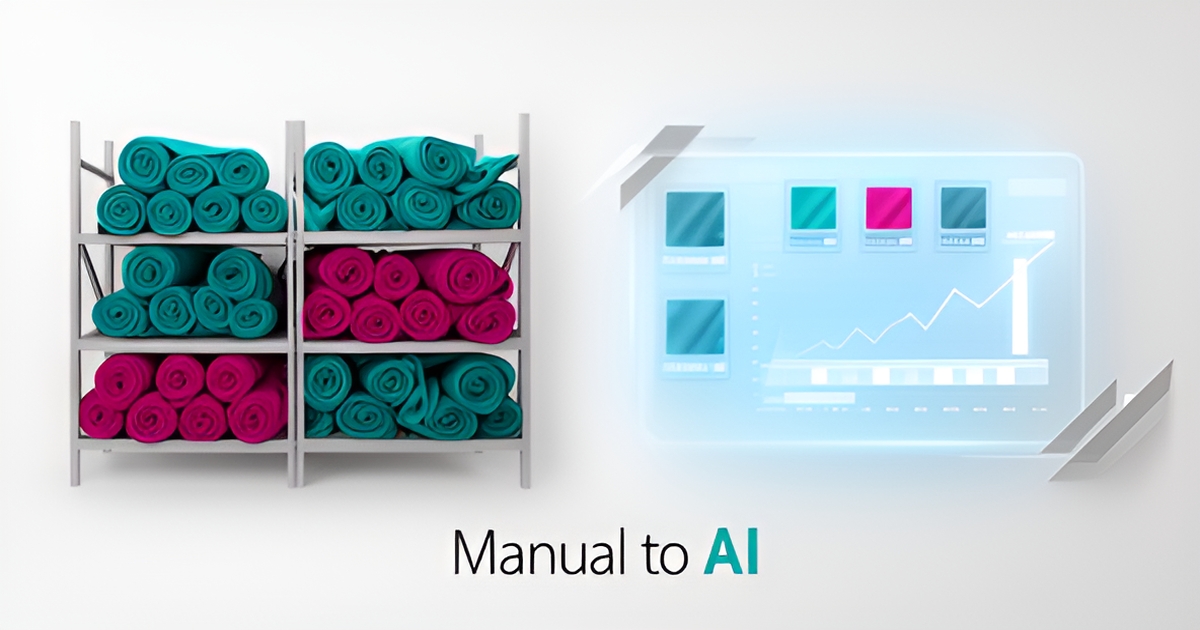
From Manual to AI: Transforming Fabric Inventory Management in Auto Upholstery
Key Facts
- Manual fabric tracking commonly produces waste in the 5-8% range; AI-optimized cutting and tracking can push that meaningfully lower.
- Industry analyses of machine learning inventory optimization commonly report inventory cost reductions in the 20-35% range across automotive operations.
- Inventory carrying costs typically consume 15-25% of total supply chain expenses—cash that sits in rolls on a shelf.
- AI-driven forecasting and reorder alerts can cut safety stock requirements without increasing stockout risk.
- Shops that automate fabric tracking typically recover the time spent on daily stock walks, physical counts, and reconciliation.
Hire a team member that works 24/7 — for less than a part-time wage.
AI receptionists, SDRs, dispatchers and 99+ roles. Trained on your business, fully managed.
Not sure where to start? Ask our AI planner
The Hidden Cost of Manual Fabric Tracking in Upholstery Shops
Every yard of fabric that sits untracked on your shop's shelf is money quietly leaking out of your business. For most auto upholstery shops, manual inventory management isn't just inefficient—it's an invisible tax on every job that comes through the door.
The problem starts with estimation. When yardage is calculated by eye or experience alone, shops routinely over-order to avoid the embarrassment of running short mid-project. Purpose-built AI systems are designed to close that gap with precise, data-backed yardage estimates instead of the rough guesses that drive traditional ordering—a difference that translates directly into wasted fabric and lost margin.
The financial weight of carrying that excess inventory is heavier than most owners realize. Inventory carrying costs typically consume 15-25% of total supply chain expenses, and those costs have climbed sharply across the broader automotive industry since 2019 as material prices and freight have risen. Small shops feel this squeeze just as sharply as large manufacturers, just in smaller dollar amounts.
Manual tracking also creates operational drag that compounds daily. Consider what a typical week looks like without a real system:
- Staff walking the shop each morning to figure out which fabric to pull for which job
- Stockouts discovered mid-project, forcing rush orders and delayed deliveries
- Physical counts and reconciliation eating hours that could go toward billable work
- Over-ordering "just in case," tying up cash in rolls that sit for months
These aren't small inconveniences. Many shop owners describe spending an hour or more every morning simply figuring out what fabric to pull—before any actual work begins. Multiply that across a team and a week, and manual tracking quietly steals a full workday or more.
The cost of inaccuracy shows up in the numbers. Shops using manual methods commonly report fabric waste in the 5-8% range, while AI-optimized cutting and tracking can push that meaningfully lower. Industry analyses of machine learning–driven inventory optimization commonly report inventory cost reductions in the 20-35% range, along with lower safety stock requirements—meaning shops can hold less material without increasing stockout risk.
The good news is that this is a solvable problem, and the economics favor acting sooner rather than later. This is precisely the kind of workflow that AI Workflow Builds addresses—real-time tracking, predictive forecasting, and automated low-stock alerts that integrate with the tools you already use, rebuilt one workflow at a time at a fixed price.
Manual tracking worked when shops were smaller and fabric was cheaper. Neither is true anymore, and the shops that recognize that first will be the ones quoting faster, wasting less, and keeping more of every job's revenue.
How AI-Powered Systems Solve Core Inventory Challenges
AI-powered inventory systems are solving the core challenges that have long plagued auto upholstery shops by replacing guesswork with precision. Manual tracking often leads to over-ordering, material waste, and project delays, but modern AI platforms introduce real-time visibility and predictive intelligence that transform how fabric is managed from intake to final cut.
These systems enable real-time inventory tracking, capturing continuous data on fabric quantities, yardage remaining, and project allocation to eliminate data silos and manual logging errors. Automated alerts trigger when stock levels fall below predefined thresholds, ensuring timely reordering without the need for constant monitoring. This proactive approach typically reduces safety stock requirements while improving inventory turnover—directly lowering carrying costs and freeing up capital.
AI-driven forecasting analyzes historical usage, seasonal trends, and project pipelines to predict future fabric needs with far greater accuracy than manual estimates, significantly reducing over- and under-ordering. That accuracy supports smarter cutting layouts, which AI optimizes to minimize waste—less material in the bin, more of every roll on the car.
Beyond tracking and prediction, AI platforms enhance operational flow through smart scheduling and AI-guided pattern matching. By analyzing project complexity, deadlines, and fabric availability, the system recommends optimal work sequences that reduce bottlenecks. Pattern alignment tools ensure visual consistency across stripes, florals, and repeats, improving quality control and customer satisfaction. Together, these capabilities let shops take on more work without adding labor or floor space.
For auto upholstery businesses seeking to integrate such capabilities without disrupting existing workflows, AIQ Labs builds tailored inventory management solutions through its Workflow Builds service. These systems connect with current tools—such as estimating software, CRM platforms, and accounting systems—through API integrations, creating a unified operational hub. Rather than replacing familiar processes, AI enhances them with automation, intelligence, and real-time insights that scale with the business.
As shops adopt these technologies, they shift from reactive inventory management to a proactive, data-driven model where every roll of fabric is accounted for, every cut is optimized, and every project stays on schedule. The result is not only lower material costs and reduced waste but also faster delivery, higher accuracy, and a stronger competitive position in a market where efficiency and precision define success.
Implementing AI Inventory Management: From Assessment to Optimization
Transitioning from manual fabric tracking to AI-powered inventory management requires a structured approach that minimizes disruption while maximizing value. Auto upholstery shops can begin by assessing current workflows to identify specific pain points such as overstocking, stockouts, or time spent on manual counts. This evaluation sets the foundation for a tailored AI solution that addresses real operational challenges without unnecessary complexity.
The implementation follows a milestone-based progression aligned with AIQ Labs' Build in Milestones model, allowing shops to validate each phase before moving forward. First, centralize all fabric data—yardage, cost, supplier details, and project allocation—into a single system to eliminate silos and ensure accuracy. Next, deploy real-time tracking that updates inventory levels automatically as materials are used or received, providing instant visibility into stock levels. Then configure automated reorder alerts based on predictive thresholds to prevent both shortages and excess carrying costs, which industry analyses commonly place at 15-25% of total supply chain expenses.
- Integrate the AI system with existing tools like estimating software or CRM platforms to create seamless data flow across operations
- Train staff through hands-on sessions focused on daily tasks such as logging fabric cuts, checking availability, and responding to alerts
- Establish a feedback loop where team members report usability issues or suggest improvements based on real-world use
Optimization is an ongoing process. After initial deployment, analyze system performance using built-in analytics to refine forecasting models and adjust safety stock levels. Regularly review key metrics like inventory turnover and fabric waste to quantify savings. This iterative approach ensures the system evolves with the shop's needs, delivering sustained efficiency gains without requiring a large upfront investment—each milestone is priced up front, and you decide whether to continue to the next one.
The Shops That Win Tomorrow Are Measuring Today
The gap between manual tracking and AI-powered inventory isn't just operational—it's financial. Every week of guesswork is another week of over-ordered rolls, mid-project stockouts, and morning stock walks that eat billable hours. The transition doesn't require ripping out your entire operation. Start with one workflow—fabric tracking, reorder alerts, or yardage forecasting—and prove the value in your own shop. AIQ Labs builds custom inventory systems that integrate with the tools you already use, delivered through milestone-based phases so you see results before committing further. If you're ready to stop guessing at yardage and start optimizing every roll, start with the two-minute Fit Check to map your highest-ROI opportunity, or book a free 30-minute strategy call to talk through your specific workflow with an AI engineer.
Make AI your competitive advantage — not just another tool.
Strategy, implementation and ongoing optimization. One partner, end to end.
Not sure where to start? Ask our AI planner