From Manual to AI: Transforming Feed Order Processing for Agribusinesses
Key Facts
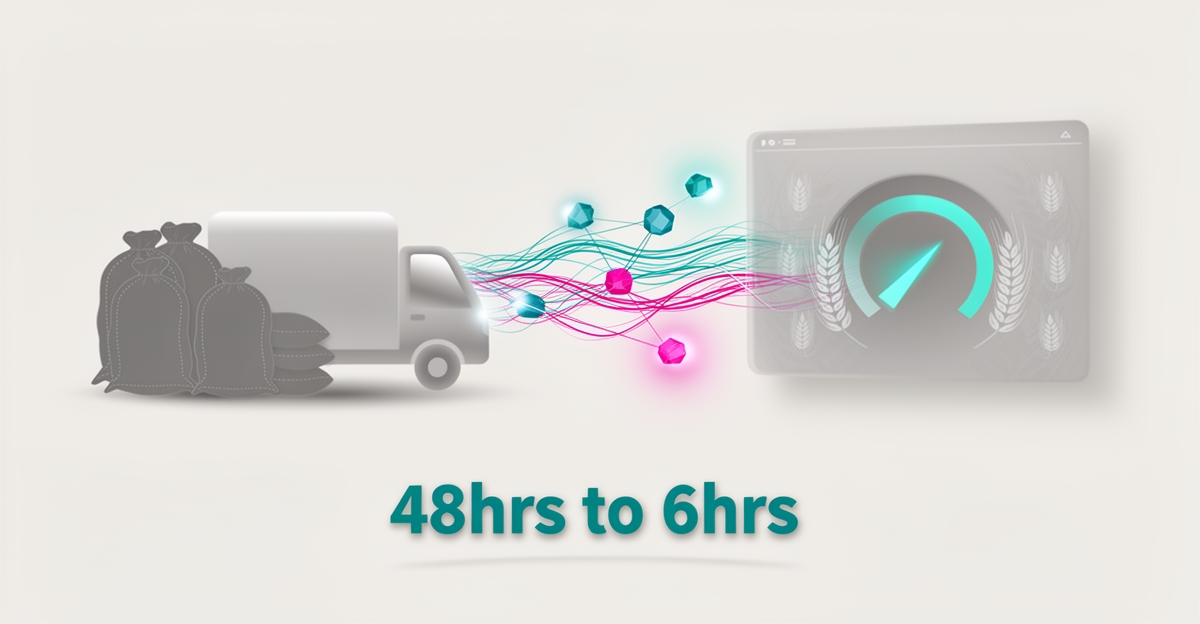
- A global agriculture enterprise reported reducing order cycle time from 48 hours to 6 hours with AI-powered order processing automation
- AI order management systems have been reported to deliver up to 95% improvement in order accuracy rates according to industry analysis
- Manual order processing can stretch to 48 hours from receipt to fulfillment readiness, creating costly bottlenecks for feed suppliers
- Order management platforms have reported 70% touchless order processing with 94.9% data field accuracy in production deployments
- Most B2B fulfillment errors originate during order capture when staff misread PDFs or copy incorrect quantities according to AI order processing research
- One agriculture leader processing 120,000+ annual orders reported an 85% reduction in manual workload with agentic AI systems
- Intelligent order automation platforms integrate with 40+ ERP systems and process large volumes of line items annually with pre-built native integrations
Hire a team member that works 24/7 — for less than a part-time wage.
AI receptionists, SDRs, dispatchers and 99+ roles. Trained on your business, fully managed.
Not sure where to start? Ask our AI planner
The Hidden Cost of Manual Feed Order Processing
Manual feed order processing creates hidden costs that ripple through agribusiness operations, often going unnoticed until they hit customer satisfaction and profitability. When orders arrive via email, fax, or phone, staff must manually enter data into ERP systems—a process prone to transcription errors, misinterpreted handwriting, and delayed validation. These inefficiencies compound when inventory checks require switching between disconnected systems, forcing employees to verify stock levels by hand before confirming fulfillment capability. According to industry research, most B2B fulfillment errors originate during order capture, where simple mistakes like misreading a PDF or copying an incorrect quantity trigger costly downstream corrections.
The fragmentation intensifies with delivery scheduling, which frequently operates in silos separate from order entry and inventory updates. Teams juggle spreadsheets, whiteboards, or legacy scheduling tools that don't sync with real-time order or stock data, leading to overpromised delivery windows or underutilized truck capacity. This disconnect means a feed supplier might confirm an order only to discover hours later that inventory is unavailable or that no driver is scheduled for the requested route. Manual processing cycles for feed orders can stretch to 48 hours from receipt to fulfillment readiness, creating bottlenecks that frustrate customers and strain supplier relationships. During peak seasons, these delays amplify as order volumes surge, turning manageable backlogs into systemic fulfillment failures.
- Manual order entry introduces avoidable errors that surface later in the fulfillment cycle, increasing correction costs.
- Disconnected inventory checks force reactive decision-making, often resulting in stockouts or excess carrying costs.
- Fragmented delivery scheduling reduces fleet utilization and increases the likelihood of missed delivery commitments.
These manual workflows not only consume valuable staff time but also obscure opportunities for process improvement. Employees spend hours on repetitive data entry and cross-system validation instead of focusing on exception handling or customer engagement. The lack of real-time visibility into order status prevents proactive communication with clients about delays or substitutions, eroding trust in an industry where timing directly affects livestock health and productivity. For agribusinesses operating on thin margins, the cumulative effect of these hidden costs—labor inefficiencies, error-related waste, and delayed revenue recognition—can significantly undermine competitiveness. Addressing these bottlenecks requires integrating order capture, inventory validation, and delivery scheduling into a unified, automated flow that eliminates manual handoffs and provides end-to-end traceability. AIQ Labs builds exactly this kind of connected automation—whether as a single rebuilt workflow through AI Workflow Builds or a full connected operating layer—while working within your existing ERP infrastructure.
How AI Agents Automate the Order-to-Delivery Lifecycle
Feed order processing breaks down the moment a customer sends an order in a different format than yesterday. AI agents remove that friction by treating every incoming request as structured data, regardless of how it arrives.
An intelligent capture layer ingests orders from email, PDF, Excel, CSV, handwritten notes and images, then extracts and normalizes fields before they touch ERP. Intelligent order automation reads orders "as-is" and fixes errors before ERP, while order automation AI workflows automatically capture orders, validate essential data points, and synchronize with inventory and shipping systems.
Validation happens in real time against live ERP data. Agents check customer info, pricing, SKU validity and quantity limits, then flag mismatches upstream where fixes cost less. AI order processing eliminates re-keying and validates orders against inventory and pricing rules in real time, catching the data mistakes that most often start fulfillment errors.
Once validated, a routing agent orchestrates fulfillment. Orders are prioritized by urgency, location and inventory availability, then pushed to warehouse, third-party supplier or credit review queues. AI-driven order management provides multi-channel capture and automated routing and prioritization based on urgency or fulfillment location.
Delivery scheduling closes the loop. Agents coordinate with WMS and carrier systems, propose delivery windows based on route density and feed type, and update customers automatically. The result is a self-learning system that anticipates demand and prevents errors before they occur.
Multi-agent architectures make this practical at scale:
- Capture agent extracts structured data from any format with high accuracy
- Validation agent checks ERP master data and business rules in real time
- Routing agent intelligently assigns orders to fulfillment paths and schedules deliveries
- Exception agent flags problematic orders for human review while processing standard orders seamlessly
Production systems demonstrate the impact. Order management platforms have reported 70% touchless order processing and 94.9% of data fields on orders accurately captured by the AI engine. AI order management analysis points to up to a 95% improvement in order accuracy rates and processing time reduced from hours to seconds.
For feed suppliers, this means faster order-to-delivery cycles with fewer manual touches. AIQ Labs has deployed 200+ multi-agent systems of exactly this kind—production-ready AI that integrates with your existing ERP tools, cutting processing time and minimizing errors across order entry, inventory checks and delivery scheduling.
Proven Results: Speed, Accuracy, and Scale in Agribusiness
Transformation isn't theoretical. Across agriculture, AI order automation has already delivered measurable operational shifts.
One global agriculture enterprise processing more than 120,000 annual purchase and sales orders across North America, Europe, and APAC replaced manual verification and siloed workflows with an AI-driven order processing system. According to a published case study on AI-powered order processing, the reported results were substantial:
- 85% reduction in manual order processing workload
- Order cycle time reduced from 48 hours to 6 hours
- 30% faster fulfillment velocity across regions
The system integrated directly with legacy ERP and supply chain platforms, providing real-time visibility into order status. Automated validation and exception handling reduced the errors that previously slowed fulfillment and limited responsiveness in volatile agricultural markets.
Speed alone isn't the differentiator. Accuracy drives margin protection. Industry analysis on AI order management suggests implementations can deliver up to a 95% improvement in order accuracy rates, alongside reported 35–45% cost reductions and 30–40% increases in customer satisfaction within the first year. Treat these figures as directional benchmarks, not guarantees—your results depend on order volume, format mix, and ERP maturity.
Error reduction happens upstream. As noted in analysis of AI order processing systems, most B2B fulfillment errors originate during order capture—misread PDFs, incorrect quantities, or pricing discrepancies. AI systems flag these issues before they reach fulfillment, where corrections become costly and disruptive.
Scale matters in agribusiness. Platforms built for intelligent order automation now process massive volumes efficiently. One provider reports handling more than 1 billion line items annually, while integrating with 40+ ERP systems and reducing processing time to seconds.
For feed suppliers, this translates into practical outcomes: orders captured automatically from email or PDF, validated against live inventory, routed for delivery scheduling, and synced directly into the ERP—without manual re-entry. That is the architecture AIQ Labs builds: production-ready multi-agent systems that integrate with your existing ERP to eliminate bottlenecks while you keep ownership of everything.
The pattern is consistent. When AI handles order entry, validation, and orchestration, cycle times shrink, accuracy improves, and teams shift from administrative correction to strategic oversight. In a sector where timing and precision directly affect livestock operations and customer trust, those gains compound quickly.
Implementation Roadmap: Integrating AI with Your Existing ERP
Feed order teams are stuck between manual spreadsheets and ERP systems that weren't built for speed. A phased AI rollout lets you automate order entry, inventory checks, and delivery scheduling without ripping out the tools you already use.
Most agribusinesses start with a focused discovery and architecture phase that maps current order flows, ERP data models, and exception rules. This sets the integration points and defines which orders can be automated first, which is critical when you manage high volumes across regions. Platform benchmarks for agribusiness deployments typically cite implementation timelines of around 30 days for intelligent order automation, making it practical to see results within a single quarter.
Integration is the foundation. Pre-built native connectors make it possible to connect AI agents to existing ERP, WMS, and shipping systems without custom development or ERP changes. One order automation provider integrates with 40+ ERP systems with pre-built native integrations that require no ERP changes, enabling consistent data flow from email, PDF, Excel, and EDI into a single processing layer. AIQ Labs takes a similar philosophy: we build in milestones, at a fixed price, and you own the system outright—no lock-in, no rented infrastructure. See how the phases work at aiqlabs.ai/pricing.
Maturity is matched to readiness through three automation levels that let teams adopt at their own speed:
- AI Co-Pilot with human-in-the-loop for validation and learning
- Dynamic AI with configurable automation for routine orders
- AI Autopilot for full automation of validated, high-volume flows
This tiered approach mirrors how AI with control lets you adopt automation at your own speed while fixing errors before they reach the ERP. Early wins typically come from order capture and validation, where AI extracts structured data from varied formats and flags mismatched SKUs, quantity limits, and pricing anomalies upstream.
Real-world agribusiness deployments show the impact. A global agriculture enterprise processing 120,000+ annual purchase and sales orders reported accelerating order cycles from 48 hours to 6 hours after implementing agentic order processing intelligence, with an 85% reduction in manual order processing workload and 30% faster fulfillment velocity across regions. Similar programs report processing time reduced from hours to seconds and up to 95% improvement in order accuracy rates with AI order management platforms.
The roadmap moves from pilot to scale: connect one ERP and one order channel, automate validation and routing, add exception handling and delivery scheduling, then expand to additional channels and regions. Continuous monitoring ensures the system learns business rules and adapts to seasonality without manual reconfiguration.
Choosing the Right AI Partner for Feed Supply Operations
The stakes are high when a single misread PDF cascades into delayed shipments, inventory mismatches, and frustrated growers. Selecting an AI partner for feed supply operations means finding a team that understands the difference between a prototype and a production system running 120,000+ annual orders across multiple regions.
Look for vendors who build on production-grade multi-agent frameworks rather than stitching together no-code tools. A global agriculture leader reportedly cut order cycle turnaround from 48 hours to 6 hours using an agentic system that integrates with legacy ERP and supply chain infrastructure. That kind of result requires deep engineering, not configuration.
- True code ownership so you never face vendor lock-in
- A partner who runs their own AI products daily, not a reseller
- Fixed-price, milestone-based builds so you know what you're paying for
- Native integrations with major ERP systems for seamless deployment
AIQ Labs has deployed 200+ multi-agent systems and runs 4 live SaaS products of our own every day—so we build from daily operational experience, not theory. We bring that same owned-infrastructure approach to every client build, and you own the result outright. Start with the 2-minute Fit Check at aiqlabs.ai/apply, then book a free 30-minute strategy call at aiqlabs.ai/book to map your highest-ROI automation opportunity.
Still paying for 10+ subscriptions that don’t talk to each other?
We build custom AI systems you own outright. No vendor lock-in. Full control.
Not sure where to start? Ask our AI planner
Frequently Asked Questions
How much time can AI automation save in feed order processing compared to manual methods?
What specific errors does AI catch during order entry that cause downstream fulfillment problems?
Can AI order processing integrate with my existing ERP system without requiring custom development?
What level of order accuracy improvement can agribusinesses expect from implementing AI order management?
How long does it typically take to implement an AI order automation system for feed suppliers?
What are the risks of continuing with manual feed order processing during peak seasons?
From Bottlenecks to Competitive Advantage
Manual feed order processing hides costs in errors, delayed validation, and fragmented scheduling that erode margins and customer trust. AI changes the equation by treating every order — email, PDF, Excel or handwritten — as structured data, validating it in real time against live ERP inventory and pricing, and orchestrating routing and delivery without manual handoffs. The result is faster order-to-delivery cycles, fewer downstream corrections, and teams freed to handle exceptions instead of re-keying. Published deployments report cycle times dropping from 48 hours to 6 hours with 85% less manual workload, and industry analysis points to up to a 95% improvement in order accuracy rates with AI order management platforms. For feed suppliers, the next step is mapping your current capture, validation and scheduling flows and piloting automation where errors cost the most. Start the 2-minute Fit Check at aiqlabs.ai/apply, then book a free 30-minute strategy call at aiqlabs.ai/book to identify your highest-ROI automation opportunity. Prefer email? Reach the team at [email protected].
Make AI your competitive advantage — not just another tool.
Strategy, implementation and ongoing optimization. One partner, end to end.
Not sure where to start? Ask our AI planner