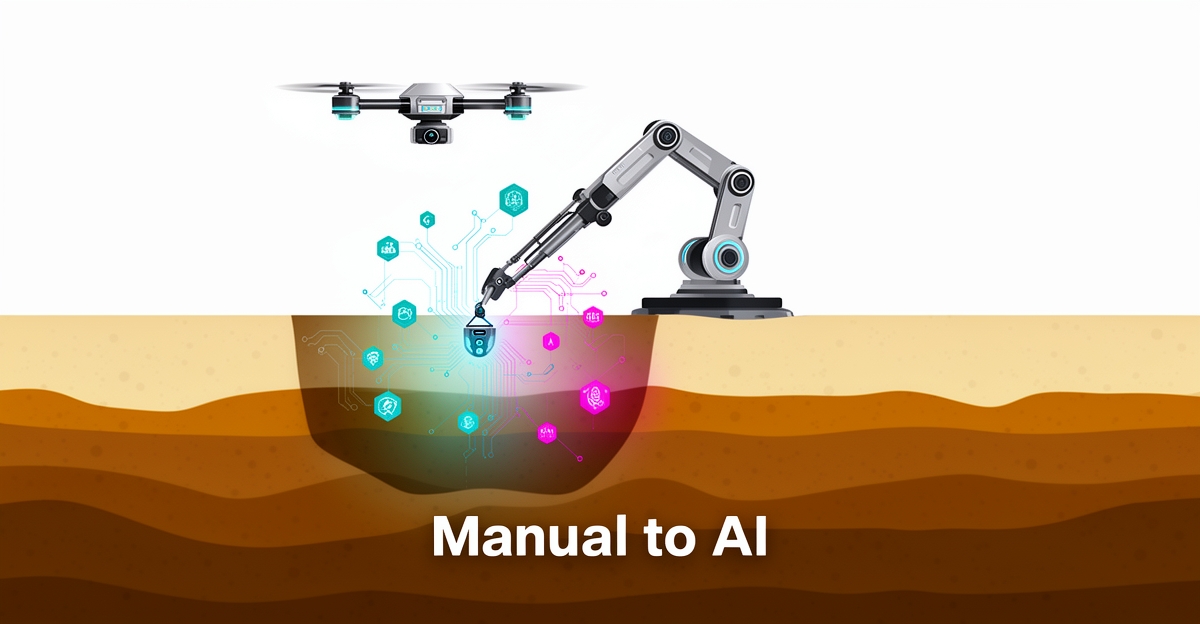
From Manual to AI: Transforming Geotechnical Site Inspections with Automation
Key Facts
- Construction robotics has attracted significant venture investment in recent years, with inspection among its fastest-growing applications as of late 2026
- AI-powered inspection tools reduce redundant checks by focusing effort on high-risk zones using historical failure patterns
- Process mining identifies bottlenecks by analyzing time-stamped inspection logs and movement data
- AI optimizes inspection sequences by balancing travel time with inspection value based on historical data
- AI-powered tools generate real-time performance data that standardizes quality and reduces waste in geotechnical inspections
- The construction industry faces a persistent worker shortage, contributing to project delays and higher costs
Hire a team member that works 24/7 — for less than a part-time wage.
AI receptionists, SDRs, dispatchers and 99+ roles. Trained on your business, fully managed.
Not sure where to start? Ask our AI planner
The Manual Inspection Bottleneck Costing Projects Time
Every day a geotechnical inspection waits, a project bleeds money, and the construction industry is running out of people to perform them. Industry observers, including robotics standards leaders like Aaron Prather, have repeatedly flagged a severe worker shortage that contributes directly to project delays and higher costs. That shortage lands hardest on inspection teams, where experienced geotechnical professionals are scarce and their time is stretched across multiple sites.
Manual inspections were designed for a world with abundant labor and generous schedules. Neither exists anymore. When a single qualified inspector must cover expansive terrain, the sequence of checks becomes a matter of guesswork rather than strategy, and guesswork is expensive.
The costs of the manual approach show up in three predictable ways:
- Redundant checks that consume inspector hours on areas already verified, while unexamined zones go untouched.
- Missed critical areas, because without a data-driven method for prioritization, the most risk-prone parts of a site are not always inspected first.
- Scheduling bottlenecks that cascade into downstream delays, as crews wait on clearance before excavation or foundation work can proceed.
What makes this bottleneck especially frustrating is that the solution already exists in a project's own history. Every past inspection generated data, patterns of where problems recur, which areas demand repeat visits, and how sequences could be reordered for better coverage. Yet most firms leave this historical record untapped, stored in reports and files no one analyzes systematically.
Machine learning changes that equation. As of late 2026, inspection is among the fastest-growing applications in construction robotics, a sector that has drawn sustained venture investment as investors bet on exactly this problem: too much inspection work, too few qualified people.
The broader trend supports the shift. Automated systems don't just move faster, they standardize quality, reduce waste, and generate performance data in real time. For geotechnical work, that standardization means inspections become repeatable and comparable across sites, not dependent on one individual's judgment on a given day.
This is where process mining enters the picture. By analyzing historical inspection workflows, AI can pinpoint where sequences stall, which checks duplicate effort, and which critical zones get skipped under time pressure. It's the approach AIQ Labs applies when rebuilding a high-cost workflow through [AI Workflow Builds](/workflow-builds), mapping the actual process as performed, not as documented, then rebuilding it to eliminate redundancy and improve site coverage.
The manual bottleneck isn't a people problem. It's a process problem, and processes, unlike people, can be optimized.
How Process Mining and AI Optimize Inspection Sequences
Manual inspection routes are built on memory and checklists, and that creates blind spots that compound across a site. AI changes the sequence from reactive to predictive by reading historical patterns and reordering work in real time.
Process mining turns raw inspection logs into a visible workflow map. The system traces how inspectors move, where they pause, and which checks get repeated or skipped. From that map, AI identifies bottlenecks and redundant steps that inflate cycle time without adding coverage. This is intelligent workflow optimization applied to the field.
Construction robotics is scaling the physical layer that AI directs. As of late 2026, the sector continues to attract significant venture funding, with robotics handling layout, material handling, inspection and 3D printing, while AI decides when and where those assets are deployed.
AI-powered inspection tools use machine learning to analyze historical inspection data and identify patterns and trends. The models learn which site zones fail most often, which conditions precede defects, and which inspection steps consistently deliver value. That history becomes a priority score for every future visit.
The result is an inspection sequence that concentrates effort where risk is highest. Instead of fixed routes, crews follow dynamic plans that adapt to weather, schedule changes, and prior findings. Coverage improves while redundant checks decline.
Process mining supports this by surfacing specific workflow improvements:
- Bottleneck detection from time-stamped inspection logs and movement data
- Redundancy elimination by flagging repeated checks with low variance outcomes
- Critical area prioritization based on historical failure rates and risk signals
- Sequence optimization that balances travel time with inspection value
AIQ Labs applies this approach through its workflow builds, creating intelligent systems that reduce redundant checks and improve site coverage. The focus is bounded, high-utilization tasks that run often and plug into existing field workflows, a principle echoed by practitioners who note that winners do a narrow job extremely well.
Robots don't just move faster. They standardize quality, reduce waste, and generate performance data in real time. When that real-time data feeds process mining, each inspection makes the next one smarter. With the industry's worker shortage still driving delays and higher costs, efficiency gains from automation are especially critical.
With historical patterns continuously ingested, the system learns and improves without manual reconfiguration. Inspection becomes a closed loop of data capture, analysis, and optimized action.
From Data to Field Action: Building an Automated Inspection Workflow
Geotechnical site inspections generate vast amounts of data, yet much of it remains underutilized in daily field operations. AIQ Labs applies process mining to transform this historical data into actionable workflows that guide inspectors to the most critical zones first. By analyzing patterns in past inspections, AI identifies recurring issues, seasonal vulnerabilities, and high-risk sequences that manual reviews often miss. This data-driven foundation enables teams to shift from reactive checks to proactive, optimized field actions.
The implementation begins with mapping historical inspection records to pinpoint where failures or delays consistently occur. Process mining reveals bottlenecks, such as redundant checks in low-risk areas or delayed responses in high-risk zones, that inflate time and cost without improving safety. AIQ Labs uses these insights to redesign inspection sequences, prioritizing zones with the highest historical incidence of soil instability, water intrusion, or load-bearing concerns. This approach ensures limited field time is spent where it matters most, directly addressing the inefficiencies driving construction's automation push.
- Identify critical zones using historical failure patterns and geotechnical risk indicators
- Analyze inspection sequences to eliminate redundant or low-value checks
- Optimize routing based on site accessibility, weather patterns, and equipment availability
- Deploy machine learning models to continuously refine sequences as new data flows in
- Integrate AI-driven alerts for real-time adjustments during field operations
Once the optimized sequence is defined, AI-powered tools guide inspectors through each step, reducing cognitive load and ensuring consistency. Machine learning models continuously learn from new inspection outcomes, adjusting priorities when emerging patterns, like increased cracking after heavy rainfall, are detected. This creates a feedback loop where each inspection improves the next, turning static checklists into adaptive field intelligence. Winning AI applications focus on bounded, high-utilization tasks that plug into existing workflows, delivering standardization and real-time performance data without disrupting team routines.
The result is a field inspection process that is faster, more thorough, and inherently improving over time. Teams spend less time walking low-risk areas and more time diagnosing potential issues before they escalate. With construction robotics continuing to attract venture investment through 2025 and into 2026, the momentum behind AI-driven site intelligence is clear. AIQ Labs' approach ensures geotechnical inspections evolve from manual routines into precision operations grounded in data, delivering measurable gains in both safety and efficiency.
Why Bounded AI Wins in Geotechnical Operations
The shift from manual to AI-enhanced geotechnical inspections isn't about replacing engineers with machines, it's about focusing automation where it delivers the most consistent value. As practitioners like Vivin Hegde have noted, the most successful implementations target bounded, high-utilization tasks that perform a narrow function exceptionally well, run frequently, and integrate smoothly into existing workflows. This approach avoids the pitfalls of overambitious automation projects that struggle with complexity and low adoption.
Real-world performance data underscores why this focused strategy works. Automated systems don't just accelerate tasks, they standardize quality, reduce waste, and generate continuous performance data in real time. In geotechnical contexts, this means inspection protocols become more repeatable, minimizing human variability while producing actionable insights that improve decision-making across project phases. Such systems thrive when built on high-quality historical data, which enables AI to detect patterns and prioritize critical inspection zones effectively.
However, deploying AI safely in the field demands rigorous attention to data quality and team readiness. Without clean, relevant input data, even advanced models can produce misleading outputs, undermining trust and safety. Equally important is training field teams to interpret AI-generated recommendations and intervene when necessary, ensuring technology augments rather than replaces expert judgment. AIQ Labs supports this balance by building AI systems that plug into current inspection workflows, using process mining to eliminate redundant checks and optimize coverage based on actual site conditions. For teams that want inspection intelligence connected to scheduling, reporting, and dispatch, a phased [AI Operating System](/ai-operating-systems) ties those pieces into one owned layer.
By concentrating on well-defined, repeatable inspection tasks, such as identifying soil instability trends or tracking moisture changes over time, geotechnical teams gain measurable efficiency without overhauling their entire operation. This bounded approach ensures AI delivers reliable, high-utilization value where it's needed most: at the point of inspection, where data quality and timely action directly impact project safety and schedule. The result is not just faster inspections, but smarter, more resilient geotechnical practices grounded in both expertise and automation.
Still paying for 10+ subscriptions that don’t talk to each other?
We build custom AI systems you own outright. No vendor lock-in. Full control.
Not sure where to start? Ask our AI planner
Frequently Asked Questions
How does the worker shortage actually hurt geotechnical inspections?
Can AI really reduce redundant site checks?
What's driving investment in construction robotics for inspections?
Do robots just move faster, or is there a bigger benefit?
What kind of AI projects actually work in geotechnical operations?
How do I start optimizing inspection sequences without overhauling everything?
Smarter Inspections Start With Smarter Processes
Manual geotechnical inspections were built for a world with more people and more time, neither of which the industry has today. The bottleneck isn't effort, it's process: redundant checks, missed high-risk zones, and scheduling delays that cascade into costly project holdups. Process mining changes that by turning historical inspection logs into visible workflows, revealing where effort stalls, repeats, or gets skipped, and allowing AI to reorder work in real time toward the zones that matter most. When inspection sequences become data-driven and bounded to high-utilization tasks, teams cover more ground with less waste, standardize quality across sites, and build a continuous feedback loop where each visit makes the next one smarter. AIQ Labs applies this process mining approach through focused [AI Workflow Builds](/workflow-builds) that reduce redundancy and improve site coverage without overhauling field routines. If you're mapping where inspections slow down or where risk is consistently under-prioritized, start with a focused fit check. Complete the 2-minute [Fit Check](/apply) for a free 30-minute strategy call to map your biggest bottleneck and identify high-ROI automation opportunities, with no obligation, just clarity on whether there's a clear win. Construction automation investment keeps accelerating, and the teams that move first will define the new standard for inspection.
Make AI your competitive advantage — not just another tool.
Strategy, implementation and ongoing optimization. One partner, end to end.
Not sure where to start? Ask our AI planner