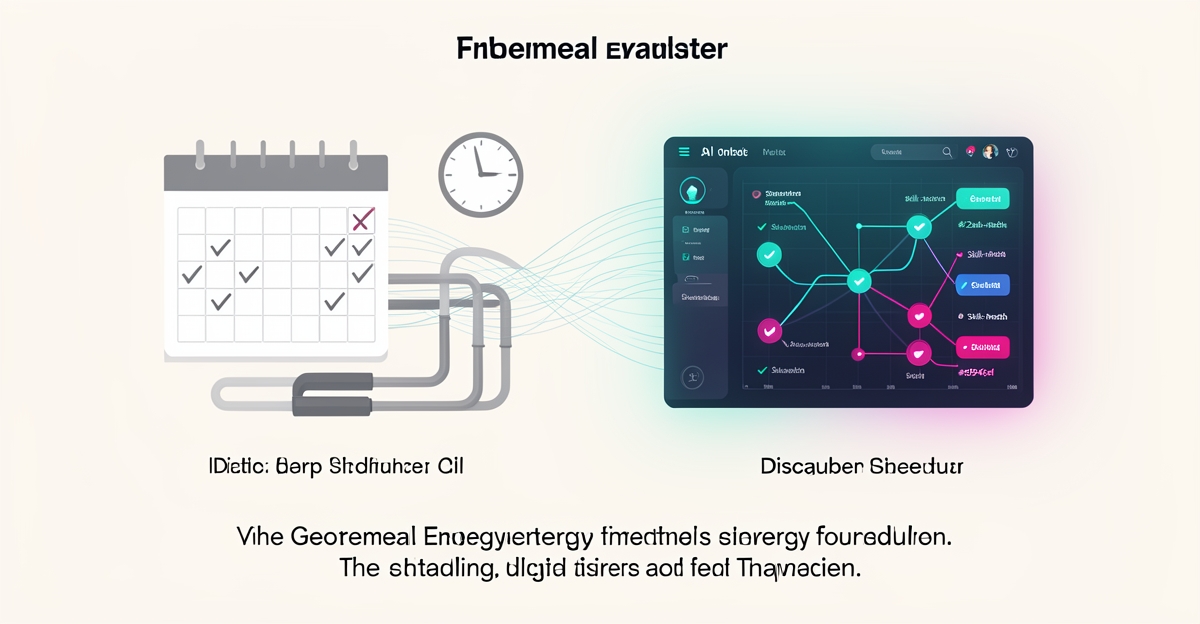
# From Manual to AI: Transforming Geothermal Job Scheduling with Smart Automation
**Quick Answer:** Geothermal companies can meaningfully cut technician idle time and improve on-time performance with AI-driven dispatch systems that optimize scheduling using real-time data and skill-based matching. AIQ Labs builds production-ready workflows that integrate with your existing tools, and you own the system outright. Start with a free 2-minute Fit Check to map bottlenecks and unlock ROI.
## Key Facts
- Advanced geothermal systems could supply a meaningful share of the world's electricity by 2050, according to Project Drawdown
- Drilling rates in hot rock have increased by 300–500% in recent years, as noted by Project Drawdown
- AI-driven dispatch typically reduces technician idle time significantly by optimizing schedules with real-time data and skill-based matching
- Most of AI transformation has nothing to do with AI, only 1 of 10 steps is AI, per Alex Lieberman
- Mapping workflows alone improves efficiency even before AI is introduced, per Alex Lieberman
## Table of Contents
1. [The Hidden Cost of Manual Scheduling in Geothermal Operations](#the-hidden-cost-of-manual-scheduling-in-geothermal-operations)
2. [How AI-Driven Dispatch Systems Solve Geothermal Scheduling Challenges](#how-ai-driven-dispatch-systems-solve-geothermal-scheduling-challenges)
3. [Implementing AI Scheduling: A Step-by-Step Roadmap for Geothermal Companies](#implementing-ai-scheduling-a-step-by-step-roadmap-for-geothermal-companies)
## The Hidden Cost of Manual Scheduling in Geothermal Operations
Manual scheduling in geothermal operations looks functional until the costs surface in missed windows and idle crews. The pain is rarely the calendar tool; it's the fragmented workflow underneath it.
Traditional dispatch relies on phone calls, spreadsheets, and tribal knowledge. Technicians wait for assignments while service windows close, and dispatchers make reactive choices with incomplete visibility. That reactive loop creates **technician idle time**, late arrivals, and overtime that erodes margins.
Research on AI transformation shows the problem is foundational, not technological. As noted by Alex Lieberman, "most of AI transformation has nothing to do with AI. There are 10 steps in the sequence of making an internal process or external product AI-native. Only 1 step is AI, and ironically, the other 9 steps are the far harder part."
Companies that skip workflow mapping first pay for it later. Manual scheduling hides three compounding inefficiencies:
- Idle capacity from poor route planning and last-minute changes
- Missed service windows due to delayed updates and siloed communication
- Reactive decision-making that replaces optimization with firefighting
The impact multiplies in advanced geothermal systems. Project Drawdown notes drilling rates in hot rock have increased by 300–500% in recent years, raising operational tempo and the cost of downtime.
Mapping the process alone creates value. Lieberman observes, "your company becomes more efficient just by mapping out your processes even if you don't introduce AI." Without that map, AI-driven dispatch cannot learn real constraints, technician skills, or site access rules.
Data fragmentation also fuels the hidden cost. Dispatchers juggle multiple tools with no single source of truth, so decisions rely on anecdotes rather than real-time analytics. That limits scalability and makes on-time performance inconsistent across crews.
This is why AI transformation starts with the workflow, not the model. AIQ Labs has deployed 200+ multi-agent systems and runs four live SaaS products daily. For geothermal companies, the fastest entry points are AI Employees, managed AI dispatchers and coordinators that cost roughly 80% less than a human hire, or a focused
AI Employees
Hire a team member that works 24/7 — for less than a part-time wage.
AI receptionists, SDRs, dispatchers and 99+ roles. Trained on your business, fully managed.
See If You’re a Fit — AI Employees from $700/mo
Not sure where to start? Ask our AI planner
tion-colors" href="https://aiqlabs.ai/workflow-builds">AI Workflow Build that rebuilds the one scheduling workflow that costs you the most, at a fixed price.
When foundational steps are missed, even advanced technology stalls at pilot stage. A systematic approach, identify the problem, understand the workflow, collect data, then prototype, turns scheduling from a cost center into a competitive advantage.
## How AI-Driven Dispatch Systems Solve Geothermal Scheduling Challenges
Geothermal job scheduling faces unique complexity due to the advanced systems used in modern geothermal operations, which require precise coordination of technicians, equipment, and site access. Traditional manual scheduling often leads to reactive adjustments, idle time, and missed service windows, especially when dealing with directional drilling and hydraulic fracturing workflows that demand real-time responsiveness. AI-driven dispatch systems solve these challenges by shifting from reactive fixes to predictive, data-informed automation that optimizes technician availability and reduces downtime.
These systems analyze historical job data, technician skills, location proximity, and real-time site conditions to generate dynamic schedules that minimize travel time and maximize on-time performance. By integrating live data from field tools, weather feeds, and equipment sensors, AI dispatch platforms continuously refine schedules as conditions change, ensuring crews are deployed where they're needed most. This proactive approach contrasts sharply with manual methods, which rely on static schedules and delayed communication, often resulting in underutilized labor and costly delays.
AIQ Labs builds production-ready AI workflows tailored for geothermal operations, ensuring seamless integration with existing dispatch and scheduling tools while maintaining full client ownership. Our AI Employees, including AI Dispatchers, operate 24/7 to manage job assignments, route optimization, and status updates, reducing administrative burden and enabling faster response times. With proven capabilities in multi-agent orchestration and real-time data processing, these systems scale with operational growth without requiring proportional increases in headcount.
**Advanced geothermal systems are projected to play a much larger role in the global electricity mix by 2050**, according to Project Drawdown, highlighting the sector's growing importance and the need for efficient operational scaling. As drilling rates in hot rock increase by 300–500%, geothermal companies face rising complexity in coordinating specialized crews across multiple sites, making intelligent dispatch not just beneficial, but essential. AI-driven systems directly address this by reducing idle time through better technician utilization and improving on-time arrival rates through predictive routing.
- Continuous learning from job completion data to refine future scheduling decisions
- Real-time adjustments for weather delays, equipment issues, or urgent service requests
- Skill-based matching to ensure the right technician is assigned to each geothermal task
- Integration with CRM and inventory systems for end-to-end workflow visibility
- Automated notifications to customers and field teams reducing miscommunication
By leveraging AI to transform scheduling from a manual bottleneck into a strategic advantage, geothermal companies can improve service reliability while controlling operational costs, turning scheduling complexity into a competitive edge in a rapidly expanding energy market.
## Implementing AI Scheduling: A Step-by-Step Roadmap for Geothermal Companies
Geothermal field operations face complex scheduling challenges where technician availability, equipment readiness, and site conditions must align precisely, yet many still rely on manual spreadsheets and phone calls. This reactive approach creates idle time, missed appointments, and inefficient resource use, directly impacting project timelines and costs. AI-driven dispatch transforms this by using real-time data to predict optimal job sequences, cutting technician idle time and improving on-time performance through predictive routing.
The implementation follows a proven 10-step framework tailored for geothermal workflows. First, identify pain points by mapping current scheduling processes, tracking how jobs move from request to completion and where delays commonly occur. Next, understand the actual workflow by creating detailed flowcharts that capture technician skills, equipment constraints, and site access limitations, not just idealized procedures. Then, collect critical data including historical job durations, travel times between sites, weather impacts, and technician certification records to train accurate models.
**Build a prototype** using sample data to test scheduling hypotheses, such as whether grouping jobs by geographic proximity reduces travel time, without worrying about production scalability initially. Test and iterate extensively with field supervisors and dispatchers, incorporating edge cases like emergency service calls or equipment failures. Only after validation should you integrate with live systems such as your CRM, GPS tracking, and work order platforms to enable real-time data flow for dynamic rescheduling.
Roll out the system with hands-on training for dispatchers and technicians, focusing on how the AI recommends assignments and why certain overrides may be necessary. Drive adoption by tracking metrics like reduced idle time a
AI Development
Still paying for 10+ subscriptions that don’t talk to each other?
We build custom AI systems you own outright. No vendor lock-in. Full control.
See If You’re a Fit — AI Employees from $700/mo
Not sure where to start? Ask our AI planner
nd improved first-time fix rates, celebrating teams that consistently achieve high on-time performance. Empower contribution by treating the scheduling system as an evolving tool where field staff can suggest improvements based on daily experience. Finally, measure and capture value by comparing pre- and post-implementation metrics on technician utilization, fuel costs, and customer satisfaction, ensuring the AI transformation delivers measurable operational efficiency rather than just technological novelty.
If you'd rather not build it yourself, AIQ Labs can handle the build for you, through a fixed-price AI Workflow Build, a managed AI Employee dispatcher, or a phased AI Operating System you own outright. Schedule your free 30-minute strategy call to map your specific geothermal scheduling bottlenecks and identify high-ROI automation opportunities.
## Frequently Asked Questions
**Why does manual scheduling cost geothermal operations more than it looks?**
The cost hides in fragmented workflows, not the calendar tool. Phone calls, spreadsheets and tribal knowledge create technician idle time, missed service windows and reactive firefighting that erodes margins.
**Do I really need to map our process before adding AI?**
Yes. As Alex Lieberman notes, "your company becomes more efficient just by mapping out your processes even if you don't introduce AI." Mapping first is required so AI can learn real constraints, skills and site access rules.
**How many steps are involved in an AI-driven scheduling transformation?**
AI transformation has 10 steps, with only 1 being AI. The sequence starts with identifying the problem and understanding the workflow, then collecting data, prototyping, testing and integrating before rollout and measurement. The full 10-step framework is essential for geothermal dispatch.
**Is advanced geothermal really growing fast enough to need smarter dispatch?**
Yes. Project Drawdown projects advanced geothermal systems will play a significantly larger role in the world's electricity supply by 2050, with drilling rates in hot rock increasing by 300–500% in recent years. The higher operational tempo raises the cost of downtime and crew coordination.
**What does an AI-driven dispatch system actually do day-to-day?**
It analyzes historical jobs, technician skills, proximity and real-time site conditions to generate dynamic schedules, then continuously refines them with live data from field tools, weather and sensors. AIQ Labs builds production-ready workflows that integrate with existing tools while you own the system outright.
**Can we keep ownership and integrate with our current CRM and tools?**
Yes. AIQ Labs builds production-ready AI systems specifically for geothermal companies with seamless integration to existing dispatch, CRM, GPS and work order platforms. With the Own It Outright model, clients own the systems with no vendor lock-in.
## Turning Scheduling Chaos into Geothermal Growth
The journey from manual to AI-driven scheduling isn't about replacing people with algorithms, it's about removing the friction that keeps geothermal teams from doing their best work. By mapping workflows, collecting real operational data, and building systems that adapt to changing conditions, companies can cut idle time, hit more service windows, and scale without adding headcount. This isn't just efficiency for efficiency's sake; it's about freeing up skilled technicians to focus on what they do best while ensuring every job contributes to the bottom line. As advanced geothermal systems expand their role in the global energy mix, the companies that optimize their operations today will be best positioned to meet tomorrow's demand. To see how this applies to your specific scheduling challenges, start with the free two-minute Fit Check that leads to a no-obligation strategy call, where we'll map your bottlenecks and highlight where AI-driven automation delivers the highest return.
AI Transformation Partner
Make AI your competitive advantage — not just another tool.
Strategy, implementation and ongoing optimization. One partner, end to end.
See If You’re a Fit — AI Employees from $700/mo
Not sure where to start? Ask our AI planner