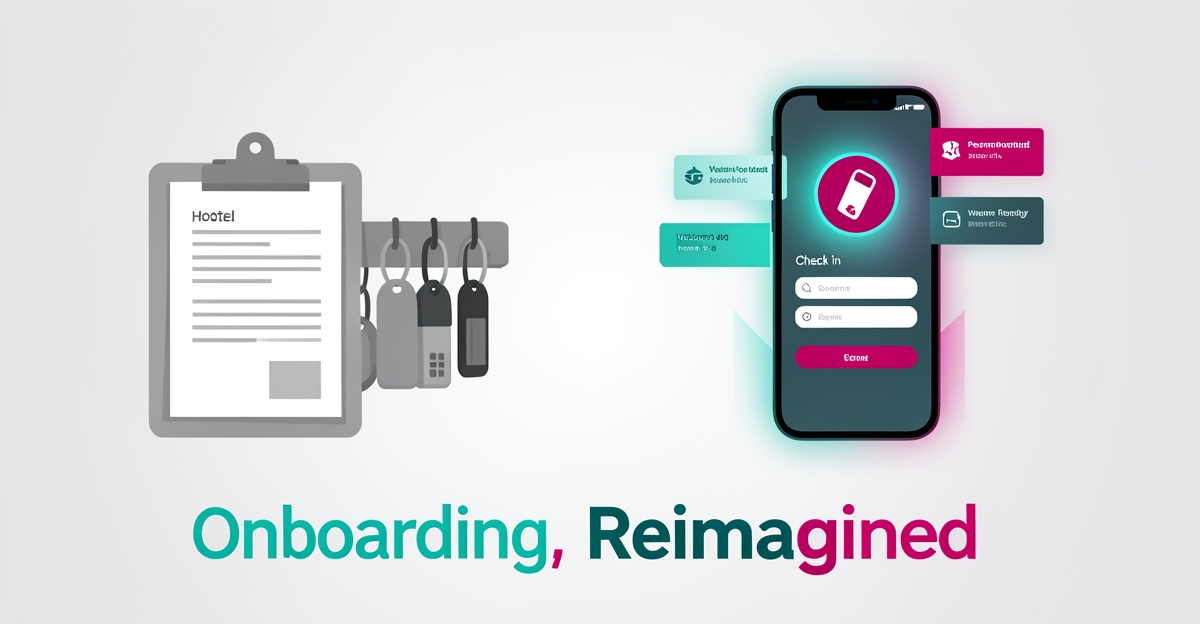
From Manual to AI: Transforming Guest Onboarding in Extended Stay Hotels
Key Facts
- A large share of tech investment in global travel and mobility in recent years has targeted AI and machine learning, according to Statista
- AI adoption among accommodation businesses in Europe has been growing steadily since 2023 per Statista data
- A majority of younger North American leisure travelers now use AI for travel inspiration and planning, based on Statista surveys
- Younger U.S. consumers broadly support brands using AI for customer service per Statista research
- AI-powered onboarding reduces administrative burden while improving first-time guest experiences per industry research
- Automated service requests via AI chatbots provide instant responses at any hour
- AI enables contactless digital check-in and keyless entry for faster guest arrivals
Hire a team member that works 24/7 — for less than a part-time wage.
AI receptionists, SDRs, dispatchers and 99+ roles. Trained on your business, fully managed.
Not sure where to start? Ask our AI planner
The Hidden Cost of Manual Guest Onboarding in Extended Stay Hotels
Manual onboarding in extended stay hotels creates friction the moment a guest arrives. Front desk teams juggle paper forms, phone calls, and ad-hoc requests while guests wait for keys, Wi-Fi codes, and basic information.
The process is labor-intensive by design. Staff manually verify reservations, input personal data, explain amenities, and log service requests. That repetition consumes hours each day and pulls teams away from high-value guest interactions. Delayed service requests are common when requests are written down, handed off, or lost between shifts.
Guest experience gaps appear quickly. First impressions form during check-in, yet manual workflows limit personalization to what a busy agent can recall. Guests receive generic welcome information instead of tailored guidance relevant to their stay length, preferences, or purpose of visit. This limits connection and satisfaction from day one.
Revenue impact follows. Extended stay properties rely on repeat occupancy and referrals, both of which suffer when onboarding feels impersonal or slow. Operational inefficiencies also increase error rates in billing, room assignments, and amenity delivery.
Typical pain points of manual onboarding include:
- Staff time spent on repetitive data entry and form processing
- Slow response to service requests due to manual handoffs
- Inconsistent welcome messaging across front desk shifts
- Missed opportunities to personalize offers for longer stays
Industry data underscores the shift underway. Industry research indicates that a majority of tech investment in the global travel and mobility sectors in recent years has gone toward AI and machine learning. Adoption is already visible in accommodation, with Statista data showing a growing share of accommodation businesses in Europe using AI as of the mid-2020s.
Guest expectations are moving in parallel. Recent travel surveys suggest that a majority of North American leisure travelers under 45 now use AI for travel inspiration and planning. That same audience expects seamless, responsive service once they arrive.
AI Customer Relationship Management and Customer Success Automation approaches address these gaps by streamlining guest onboarding with personalized welcome messages, digital check-ins, and automated service requests. AIQ Labs builds these systems through AI Employees, managed AI staff that handle front-desk intake, service requests, and guest communication around the clock at a fraction of the cost of an additional human hire, and through AI Workflow Builds that rebuild the one workflow costing your property the most.
The hidden cost is not only labor hours. It is lost personalization at the moment that matters most, and the compounding effect on satisfaction and retention over a multi-week stay.
How AI Transforms Guest Onboarding: Personalization, Automation, and Integration
Imagine a guest arriving after a long journey, expecting a seamless check-in and a personalized welcome, AI makes this not just possible, but standard. Statista reports that a large share of tech investment in global travel and mobility in recent years has targeted AI and machine learning, signaling a major industry shift.
AI-driven onboarding replaces tedious paperwork with digital check-ins, allowing guests to bypass the front desk and settle in faster. Automated welcome messages, tailored to each guest's preferences, create a memorable first impression while freeing staff to focus on higher-value interactions.
Automated service requests further streamline the experience. Guests can request amenities, report issues, or ask questions via AI-powered chatbots, receiving instant responses at any hour. This not only boosts satisfaction but also reduces the administrative burden on hotel teams.
- Personalized welcome messages based on guest profiles
- Contactless digital check-in and keyless entry
- Automated service request handling via chatbots
- Integration with property management systems for real-time updates
The impact is clear: improved efficiency, higher guest satisfaction, and new revenue opportunities. Research shows broad support for AI-powered customer service among younger U.S. consumers, and most North American travelers under 45 already use AI for travel planning.
However, successful AI adoption requires more than just plugging in new tools. Data quality, seamless integration with existing systems, and maintaining a human touch are essential. AIQ Labs builds custom AI solutions that address these challenges, ensuring onboarding automation enhances, not replaces, the guest relationship.
As AI adoption accelerates, extended stay hotels that embrace intelligent onboarding will stand out in a crowded market. The right systems don't just automate tasks, they create a foundation for lasting guest loyalty and operational excellence.
Implementing AI Guest Onboarding: A Practical Roadmap for Extended Stay Hotels
Extended stay hotels face mounting pressure to modernize guest onboarding while preserving the personal touch that defines their experience. Manual check-in processes consume valuable staff time and create friction for guests seeking seamless arrivals. AI-powered solutions now offer a practical path forward, transforming routine tasks into opportunities for engagement and efficiency.
According to industry research, a large share of tech investment in global travel and mobility has targeted AI and machine learning in recent years, signaling strong momentum for hospitality innovation. Extended stay properties can leverage this trend by implementing AI-driven welcome systems that personalize initial interactions while reducing administrative burden.
A successful implementation begins with assessing current workflows and identifying specific pain points in the guest journey. Hotels should map each touchpoint, from pre-arrival communication to key handover, and determine where automation can add value without compromising hospitality. This foundational step ensures AI solutions address real operational challenges rather than introducing unnecessary complexity.
The next phase involves selecting and configuring AI tools that align with existing property management systems and communication channels. Critical considerations include data quality for personalization accuracy, seamless integration with PMS platforms, and maintaining brand-consistent messaging across automated touchpoints. Properties must also establish clear escalation protocols for situations requiring human intervention.
Staff training represents a crucial investment that directly impacts adoption success. Teams need hands-on experience with new systems, understanding not just how to operate the technology but how to complement it with their unique hospitality skills. Role-specific training ensures front desk agents, housekeeping leads, and maintenance coordinators all understand their evolving responsibilities in an AI-enhanced environment.
- Conduct workflow analysis to identify automation opportunities
- Start with AI Employees for front-desk and service-request coverage
- Develop role-specific training programs for staff
- Establish performance metrics and feedback loops
- Plan phased rollout with clear success criteria
Ongoing monitoring and optimization complete the implementation cycle. Hotels should track key metrics including check-in time reduction, guest satisfaction scores, and staff workload changes. Regular review of AI performance data allows for continuous refinement, ensuring the system evolves with changing guest expectations and operational needs. For properties ready to go further, an AI Operating System connects onboarding with housekeeping, maintenance, and billing into one operating layer, built in phases and owned outright, so the property keeps the asset it paid for.
Still paying for 10+ subscriptions that don’t talk to each other?
We build custom AI systems you own outright. No vendor lock-in. Full control.
Not sure where to start? Ask our AI planner
Frequently Asked Questions
What are the main problems with manual guest onboarding in extended stay hotels?
How does AI improve the guest onboarding experience in extended stay hotels?
Is the travel industry actually investing in AI?
Do guests actually expect AI-powered service when they arrive at a hotel?
Will using AI for onboarding remove the human touch that extended stay hotels are known for?
What steps should extended stay hotels take to implement AI guest onboarding successfully?
Turning First Impressions into Lasting Loyalty
Manual guest onboarding in extended stay hotels creates avoidable friction, wasting staff time, delaying service, and weakening the personal connection that drives repeat stays and referrals. AI-powered onboarding transforms this critical first touchpoint by enabling digital check-ins, personalized welcome messages, and automated service requests that free teams to focus on meaningful guest interactions. With a large share of travel-sector tech investment now flowing into AI and machine learning, extended stay properties that act today can turn onboarding from a cost center into a competitive advantage. The path forward starts with assessing your current workflow, identifying where automation adds value without losing the human touch, and choosing a partner who builds owned, integrated systems, not just point solutions. To explore how AI can streamline your guest onboarding while strengthening relationships, take the 2-minute Fit Check and book a free 30-minute strategy call to map your biggest bottleneck, no obligation, just clarity on your next step.
Make AI your competitive advantage — not just another tool.
Strategy, implementation and ongoing optimization. One partner, end to end.
Not sure where to start? Ask our AI planner