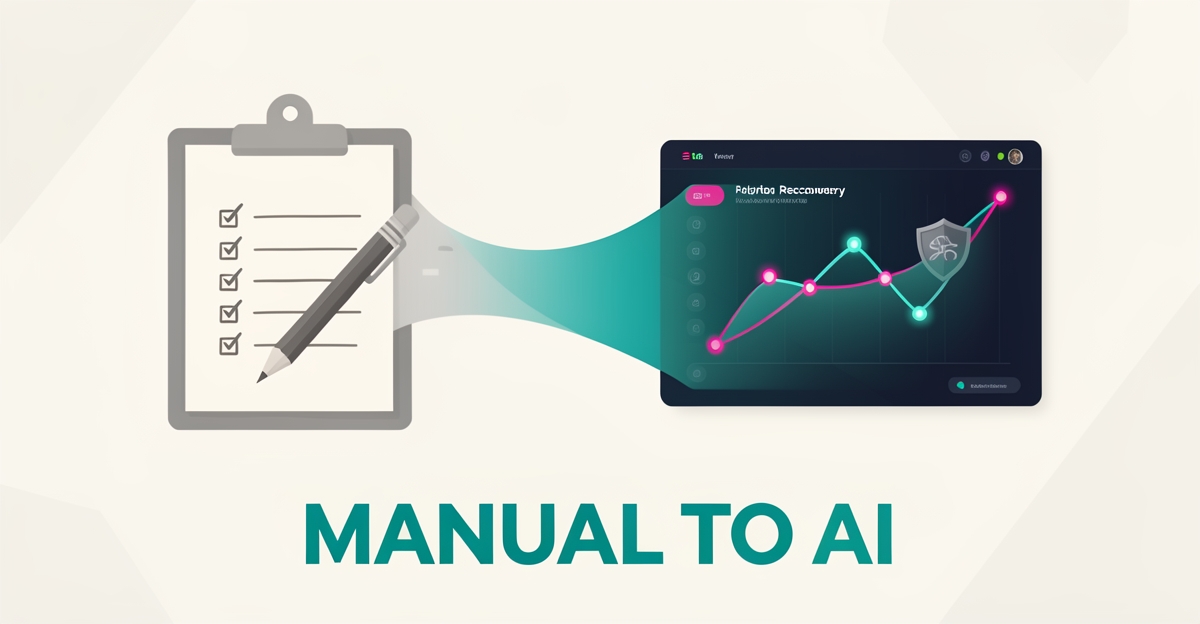
From Manual to AI: Transforming Injury Recovery Tracking in Athletic Training
Quick Answer: AI transforms injury recovery tracking from manual, error-prone logs into real-time, automated monitoring, reducing documentation workload and lowering re-injury risk. AIQ Labs builds systems that sync with EHRs, flag risks early, and help athletes return to play safer and faster. Start with the free Fit Check today.
Key Facts
- Automated progress tracking can meaningfully reduce documentation time compared with manual logs, freeing athletic trainers for hands-on care.
- AI-powered predictive analytics platforms rank among the leading injury recovery tools as of late 2026, enabling real-time monitoring and personalized treatment plans.
- Smart motion analysis uses AI and wearable sensors to detect problems with posture, balance, and joint movement that traditional observation might miss.
- Integrating AI with existing EHR systems can sharply reduce data entry errors while eliminating duplicate manual entry.
- Tele-rehabilitation with AI enables athletes to recover at home while maintaining consistent communication with trainers through automated progress reports and real-time alerts.
- Manual recovery tracking creates dangerous blind spots because it relies on athletes remembering to report symptoms days after they occur, missing the window for early intervention.
Hire a team member that works 24/7 — for less than a part-time wage.
AI receptionists, SDRs, dispatchers and 99+ roles. Trained on your business, fully managed.
Not sure where to start? Ask our AI planner
Table of Contents
- The Hidden Cost of Manual Recovery Tracking
- How AI Automates the Recovery Workflow End-to-End
- From Data to Decisions: Real-Time Progress Monitoring
- Implementation Roadmap: Deploying AI Without Disruption
The Hidden Cost of Manual Recovery Tracking
When a star athlete reports feeling "fine" at practice, but their paper log from last week still shows unresolved soreness, which version does the athletic trainer trust? This gap between memory and record is where manual recovery tracking quietly breaks down.
Paper-based logs and scattered spreadsheets create dangerous blind spots in athlete care. Unlike AI systems that monitor progress in real time, manual tracking relies on athletes remembering to report symptoms days after they occur. By the time a trainer notices a pattern of declining mobility, the window for early intervention has often closed.
Disconnected electronic health records compound the problem. When rehabilitation notes live in one system and training logs in another, inconsistent follow-ups become inevitable. AI-powered platforms address this by automating progress reports and identifying issues between sessions, ensuring no athlete slips through the cracks simply because a staff member forgot to send a check-in message.
The administrative burden crushes staff morale. Athletic trainers spend hours each week transcribing handwritten notes, chasing down incomplete forms, and manually updating return-to-play timelines. This clerical overload contributes directly to burnout, pulling skilled clinicians away from the hands-on care that actually accelerates recovery.
Manual workflows typically fail in predictable ways:
- Paper logs lost or damaged between facilities and training rooms
- Delayed data entry that misses real-time changes in pain levels or range of motion
- Inconsistent follow-up schedules that vary by staff workload and memory
- EHR silos that prevent coaches and medical staff from seeing the full recovery picture
Traditional methods simply cannot match the speed of modern recovery science. While manual tracking often lacks real-time data and personalized treatment plans, AI-driven systems analyze movement patterns and healing progress continuously. This delay forces trainers to make return-to-play decisions based on outdated information, increasing re-injury risk.
AIQ Labs builds custom automation systems that sync directly with EHRs and send automated alerts to both staff and athletes, replacing these error-prone manual chains with reliable, hands-off monitoring. The result is fewer missed warning signs, reduced administrative drag, and faster, safer returns to competition.
How AI Automates the Recovery Workflow End-to-End
The shift from reactive charting to proactive monitoring begins the moment an athlete logs their first exercise. AI-driven platforms now capture movement data in real time, replacing end-of-day documentation with continuous insight that flags compensation patterns before they become setbacks. As of late 2026, predictive analytics platforms and personalized recovery monitoring systems rank among the top AI tools for injury recovery, giving clinicians a live view of adherence and load progression.
Wearable sensors feed joint angles, muscle activity, and range-of-motion metrics directly into the recovery dashboard, creating a dynamic feedback loop between patient and provider. Smart motion analysis uses AI and sensors to study how the body moves, detecting problems with posture, balance, or joint movement and providing accurate data for better treatment plans. This continuous stream enables therapists to adapt treatment on the go rather than waiting for the next in-person session.
- Automated exercise logs that sync with EHR systems eliminate duplicate entry
- Predictive analytics forecast recovery timelines and adjust prescriptions accordingly
- Virtual rehabilitation assistants guide patients through home programs with real-time form correction
- Automated check-ins trigger alerts when adherence drops or pain scores spike
- Tele-rehabilitation platforms maintain consistent communication between visits
AIQ Labs builds workflow automation that connects these data streams, wearable inputs, exercise completion, patient-reported outcomes, into a single source of truth that surfaces risk signals before they escalate. The system learns each athlete's baseline, then applies predictive analytics to identify deviations that correlate with re-injury patterns documented in the literature. When a metric crosses a personalized threshold, the platform routes an alert to the athletic trainer and nudges the patient with a modified protocol, all without manual chart review.
Tele-rehabilitation and virtual physiotherapy enable patients to recover at home while maintaining consistent communication with their therapists, with AI adding an extra layer by automating progress reports, identifying issues between sessions, and offering interactive rehab experiences. This end-to-end loop, sensor capture, AI analysis, clinical alert, patient nudge, EHR documentation, compresses what used to be a weekly review cycle into a daily, sometimes hourly, intervention window. The result is a recovery process that stays ahead of compensation rather than chasing it.
From Data to Decisions: Real-Time Progress Monitoring
Smart motion analysis transforms how athletic trainers monitor recovery by capturing real-time biomechanical data through wearable sensors and AI-powered platforms. This technology detects subtle changes in joint angles, muscle activation, and movement symmetry that traditional observation might miss. By continuously tracking these metrics, trainers gain immediate visibility into healing trajectories, allowing them to identify deviations from expected progress before they become setbacks.
Dynamic rehabilitation adjustments powered by AI turn raw movement data into actionable clinical insights. As patients perform prescribed exercises, algorithms analyze performance patterns to automatically modify exercise intensity, range-of-motion targets, or repetition schemes based on real-time fatigue and compensation signals. This creates a closed-loop system where the rehabilitation plan evolves with the patient's healing speed, reducing guesswork and ensuring optimal stimulus at each stage of recovery. Several platforms as of late 2026 use AI to offer customized rehabilitation programs, including assessment of patient capabilities, dynamic adjustments as the patient progresses, and telehealth capabilities for remote monitoring and consultations.
Tele-rehabilitation capabilities extend this monitoring beyond the clinic, enabling consistent progress tracking between in-person sessions. Patients perform guided exercises at home while wearable sensors stream data to the trainer's dashboard, where AI flags asymmetries, pain indicators, or stalled improvement for immediate review. Automated progress reports summarize trends in range of motion and strength gains, reducing administrative burden while maintaining clinical oversight.
- Real-time biomechanical feedback reduces reliance on subjective pain scales
- Dynamic exercise adjustments prevent overloading healing tissues
- Remote monitoring maintains continuity of care between visits
- Automated progress tracking typically cuts documentation time significantly
For athletic training facilities, integrating these capabilities into AI-driven workflows ensures that recovery data flows seamlessly from sensor to decision point. AIQ Labs builds custom systems that synchronize motion analysis outputs with electronic health records, triggering automated alerts when progress deviates from expected trajectories. This turns continuous monitoring into proactive intervention, where data doesn't just record recovery, it actively guides it. Confidence in AI's ability to improve operational workflows like injury recovery tracking continues to grow across industries, and athletic training is no exception.
Implementation Roadmap: Deploying AI Without Disruption
Implementing AI in athletic training facilities doesn't require a complete overhaul of existing systems. Instead, a phased approach ensures smooth integration, minimizes disruption, and maximizes the benefits of AI-driven recovery tracking.
Begin by identifying the single workflow that costs you the most, often recovery tracking or exercise logs. AI-powered rehabilitation platforms can assess patient capabilities, dynamically adjust rehabilitation programs, and offer telehealth capabilities. By targeting one critical area, you can demonstrate quick wins and build momentum for broader AI adoption. This is exactly how AIQ Labs' Workflow Builds work: one workflow, a fixed price, delivered in phases.
Next, connect your AI solution to existing Electronic Health Record (EHR) and scheduling tools. This integration allows for seamless data flow and eliminates manual data entry, which can sharply reduce errors. By leveraging APIs and custom integrations, you can create a unified system that enhances rather than disrupts current processes.
Training staff to work alongside managed AI team members is crucial for successful implementation. AI staff can handle tasks like appointment scheduling, patient follow-ups, and data entry, freeing up human staff for more complex responsibilities. AIQ Labs offers AI Employees that work alongside human teams at a fraction of the cost of a human hire, learning and improving over time. This collaborative approach ensures that AI enhances rather than replaces human expertise.
As you scale toward a fully connected operation, consider implementing AI-driven predictive analytics. These tools can forecast recovery timelines and adjust treatment plans accordingly. By leveraging AI's ability to analyze vast amounts of data quickly, you can provide more personalized and effective care to athletes. Facilities that go further can move to an AI Operating System, one connected layer across the whole operation, built in phases and owned outright.
To ensure a smooth transition, follow these best practices:
- Start with a pilot program to test AI integration in a controlled environment
- Provide comprehensive training for staff on new AI tools and workflows
- Establish clear protocols for data privacy and security, following applicable healthcare industry guidelines
- Regularly assess and optimize AI systems to ensure they meet evolving needs
By following this phased approach, athletic training facilities can harness AI to transform injury recovery tracking without disrupting existing operations. The result is a more efficient, data-driven approach to athlete care that improves outcomes and streamlines workflows.
Still paying for 10+ subscriptions that don’t talk to each other?
We build custom AI systems you own outright. No vendor lock-in. Full control.
Not sure where to start? Ask our AI planner
Frequently Asked Questions
Why is manual injury recovery tracking risky for athletes?
Paper logs and scattered spreadsheets create blind spots because reporting relies on memory days after symptoms occur. By the time a trainer notices declining mobility, the window for early intervention has often closed.
How does AI make recovery monitoring real-time instead of reactive?
Wearable sensors feed joint angles, muscle activity and range-of-motion metrics directly into a dashboard, while smart motion analysis uses AI and sensors to study how the body moves and detect problems with posture, balance or joint movement. This enables therapists to adapt treatment on the go rather than waiting for the next in-person session.
What AI tools are actually leading injury recovery in 2026?
As of late 2026, predictive analytics platforms, virtual rehabilitation assistants, AI-driven physical therapy applications, and personalized recovery monitoring systems rank among the top AI tools for injury recovery.
Can AI really personalize rehab plans for each athlete?
Yes. AI-powered physiotherapy customizes rehabilitation programs based on individual data such as movement patterns, injury history, and healing speed, with predictive analytics forecasting recovery timelines and adjusting exercises accordingly.
Will AI replace athletic trainers or just help them?
AI automates progress reports and identifies issues between sessions so trainers can focus on hands-on care. Traditional methods are still effective but often lack the real-time data and personalized treatment plans that AI provides.
What's the first step to adopt AI without disrupting our current EHR?
Start with a single workflow like recovery tracking or exercise logs and connect the AI solution to existing EHR and scheduling tools via APIs for seamless data flow. AIQ Labs builds custom automation that syncs directly with EHRs and sends automated alerts to staff and athletes.
The Future of Athlete Care is Automated
The transition from paper logs to AI-driven monitoring represents more than a technological upgrade, it is a fundamental shift toward proactive athlete care. By replacing manual data entry with real-time biomechanical tracking, predictive analytics, and automated EHR integration, athletic trainers can finally close the gap between subjective reporting and objective recovery data. This evolution eliminates the administrative bottlenecks that lead to burnout while ensuring no warning sign goes unnoticed between sessions. AIQ Labs specializes in building these systems, creating unified workflows that connect wearable sensors, exercise logs, and clinical alerts into a single source of truth, with 200+ multi-agent systems deployed and four live SaaS products the company runs daily. For facilities ready to move beyond reactive charting, the path forward begins with identifying one critical workflow to automate. Whether you need to sync recovery data with existing health records or deploy intelligent monitoring that flags compensation patterns before they become setbacks, the right AI infrastructure turns injury management from a paperwork burden into a competitive advantage. Take the two-minute Fit Check today to map your facility's highest-ROI automation opportunity, or book a free 30-minute strategy call to talk it through.
Questions? Contact the team at [email protected].
Make AI your competitive advantage — not just another tool.
Strategy, implementation and ongoing optimization. One partner, end to end.
Not sure where to start? Ask our AI planner