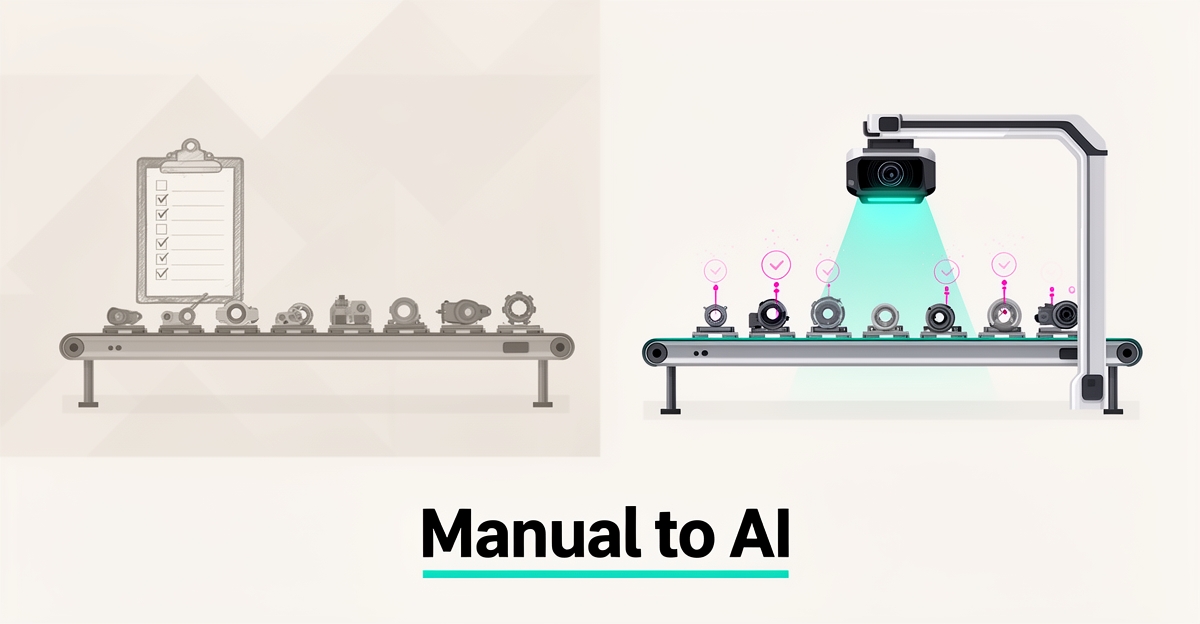
From Manual to AI: Transforming Inspection Workflows in Small-Scale Stations
Key Facts
- Human attention fluctuates across a shift, so manual inspection results vary from inspector to inspector and hour to hour.
- AI vision systems apply the same standard to every part, delivering consistent defect detection without fatigue.
- Automated data capture eliminates manual entry errors and surfaces defect trends that paper-based processes miss.
- AIQ Labs has deployed 200+ multi-agent systems and runs 4 live SaaS products daily.
- Engagements are structured as Start Monthly, Build in Milestones, or Own It Outright—no forced subscriptions.
Hire a team member that works 24/7 — for less than a part-time wage.
AI receptionists, SDRs, dispatchers and 99+ roles. Trained on your business, fully managed.
Not sure where to start? Ask our AI planner
The Manual Inspection Bottleneck Small Stations Can't Scale
Every growing inspection station eventually hits the same wall: the harder the team works, the more the work multiplies. Manual inspection feels manageable at small scale, but the numbers tell a different story—one of hidden errors, slow throughput, and labor costs that quietly compound month after month.
The core problem is consistency. Human attention fluctuates across a shift, so results vary from inspector to inspector and hour to hour. Defects that slip through a manual process typically surface later—as customer complaints, warranty claims, or rework—when they cost the most to fix.
Fatigue makes it worse. Unlike machines, human inspectors can't apply identical judgment to the 10,000th part as they did to the first. AI-powered inspection, by contrast, delivers the same standard every time, at a pace no manual team can sustain across a full shift.
Speed is the second bottleneck. Manual inspection throughput is limited by how many trained eyes you can put on the line. For small stations, this translates directly into longer cycle times, delayed shipments, and a hard ceiling on how much volume the business can accept without hiring.
Then there's cost. Labor is usually the largest line item in a manual inspection operation, and it scales linearly with volume. Manual workflows also carry costs that don't show up on a timesheet: rework, escapes, and the opportunity cost of skilled staff spending their days on repetitive checks.
The hidden inefficiencies often matter as much as the visible ones:
- Manual data entry and report generation consume hours that could go to higher-value work
- Inconsistent inspection criteria create unpredictable quality outcomes
- Limited data capture means defect trends and supplier issues go unnoticed
- Scaling output requires proportional headcount, capping margin growth
The encouraging part is that these bottlenecks are mappable. Before any technology decision, the practical first step is to pinpoint the most time-consuming and error-prone tasks in the current workflow and document exactly how work moves through the station. That's the approach AIQ Labs takes with [AI Workflow Builds](/workflow-builds)—rebuilding the one workflow that costs the most, at a fixed price and in phases, rather than layering technology onto an unexamined process.
Manual inspection isn't failing because inspectors aren't good at their jobs. It's failing because the economics of scale have moved past what human-only processes can support—and the accuracy, speed, and cost gaps are now measurable, which makes them fixable.
How AI Vision and Process Automation Map and Optimize Inspection
Modern inspection workflows face persistent bottlenecks from human error and inconsistent speed, especially when scaling operations. AI vision systems work continuously without fatigue, applying the same detection standard to every part. That consistency frees human staff for higher-value tasks—exception handling, process improvement, supplier collaboration—instead of repetitive visual checks.
By combining computer vision with business process automation, AI doesn't just detect defects—it maps and optimizes the entire inspection lifecycle. Machine learning models analyze visual data to identify surface flaws and cracks with a consistency manual checks can't match, while automated data capture eliminates manual entry errors and feeds real-time insights into supplier quality and production trends.
This integrated approach transforms inspection from a reactive checkpoint into a proactive optimization engine. Automated logging highlights recurring defect patterns and workflow inefficiencies, and those insights compound over time: the longer the system runs, the better it gets at catching the issues that actually cost you money. For small-scale operations seeking sustainable efficiency, this convergence of vision intelligence and process automation provides a clear path from manual limitations to scalable, insight-led quality control.
A Practical Roadmap From Current Workflow to AI-Driven Operations
Transforming inspection workflows from manual to AI-driven requires a clear, step-by-step approach. Small-scale stations often begin by identifying repetitive, error-prone tasks such as visual defect checks or manual data entry, which are prime candidates for automation. Mapping the current workflow reveals bottlenecks and highlights where AI can deliver the greatest impact, especially when accuracy and speed are critical.
AIQ Labs supports this transition through a phased implementation model that starts with mapping the current process to uncover inefficiencies. By analyzing how tasks flow across systems and teams, businesses gain a data-driven foundation for redesigning operations. This approach ensures AI solutions are built around real processes, not assumptions, increasing the likelihood of successful adoption and measurable results.
The next steps involve gathering high-quality training data—such as labeled images of defects or historical inspection reports—to train AI models effectively. Piloting the solution on a small scale allows teams to test performance, gather feedback, and refine the system before broader rollout. Iterative testing helps address integration challenges early and builds confidence in the AI's reliability.
Once validated, the AI system integrates with existing ERP or CRM platforms to enable seamless data flow and end-to-end automation. This connection ensures inspection results trigger appropriate actions, such as updating inventory records or generating quality reports, without manual intervention. Finally, staff training focuses on interpreting AI-driven insights and managing exceptions, empowering employees to work alongside AI as a collaborative tool rather than a replacement. Through this structured path, small inspection stations can achieve consistent, fatigue-free defect detection and dramatically shorter cycle times. AIQ Labs' workflow builds follow exactly this pattern: fixed price, phased delivery, and a system you own at the end.
- Identify error-prone tasks in the current workflow
- Map the process to uncover inefficiencies
- Gather and label training data for AI models
- Pilot, test, and iterate the AI solution
- Integrate with ERP/CRM and train staff on AI-assisted workflows
This roadmap guides stations from manual reliance to intelligent, continuously improving inspection operations—one phase at a time, with value proven before the next step begins.
Building Owned AI Workflows That Deliver Long-Term Value
Small inspection stations face a critical bottleneck: manual workflows that drain time and amplify errors. AIQ Labs transforms these processes by mapping current operations, identifying inefficiencies, and designing custom AI systems that eliminate repetitive tasks while putting full ownership in your hands. This isn't about renting tools—it's about building an asset you control, tailored to your station's unique workflow from the ground up.
AI-driven business process automation delivers measurable gains for inspection workflows: consistent defect detection that doesn't degrade across a shift, automated data capture that eliminates entry errors, and reporting that runs itself. These improvements translate directly to operational savings by removing repetitive data entry, scheduling, and report generation from your team's day—and the savings compound as the system learns your defect patterns over time.
True ownership of your AI system means no vendor lock-in, no rising subscription fees, and the freedom to evolve the technology as your inspection station grows. AIQ Labs structures every engagement around three payment models—Start Monthly, Build in Milestones, or Own It Outright—so you can begin with a single workflow fix, expand department-by-department, or invest in a complete [AI Operating System](/ai-operating-systems) that connects your entire operation. Every phase delivers immediate value while building toward long-term competitive advantage. By anchoring AI in your owned infrastructure, you transform inspection from a cost center into a scalable, data-driven asset that continuously improves accuracy, uncovers defect trends, and frees skilled technicians for higher-value analysis.
- Map your current inspection workflow to pinpoint time-consuming manual steps
- Identify high-ROI automation targets using an AI readiness assessment
- Build or refine custom AI models with your inspection data
- Pilot the solution, integrate with existing tools, and train your team
- Monitor performance and scale AI across departments as value proves out
The journey from manual to owned AI isn't a leap—it's a series of deliberate steps where each milestone reduces errors, accelerates throughput, and deepens your operational insight. AIQ Labs partners with you through every phase, from initial workflow mapping to ongoing optimization, ensuring your AI system doesn't just automate inspection—it becomes a foundation for smarter decisions, consistent quality, and sustainable growth in a competitive market.
Still paying for 10+ subscriptions that don’t talk to each other?
We build custom AI systems you own outright. No vendor lock-in. Full control.
Not sure where to start? Ask our AI planner
Frequently Asked Questions
How accurate is AI vision compared to manual inspection?
Can AI inspection systems really inspect faster than humans?
What kind of ROI can a small inspection station expect from AI automation?
How does AI reduce inspection time and labor costs?
What are the first steps to transition from manual to AI-driven inspection?
Do I need to replace my entire team with AI?
Turning Inspection Bottlenecks into Competitive Advantage
The journey from manual to AI-driven inspection isn't about replacing skilled technicians—it's about freeing them from repetitive tasks so they can focus on higher-value work like process improvement and supplier collaboration. By mapping workflows, targeting high-ROI automation, and building owned AI systems, small inspection stations can achieve consistent defect detection, shorter cycle times, and labor costs that no longer scale linearly with volume. The path forward starts with a clear assessment of where your team spends the most time catching defects or entering data. AIQ Labs helps you take that first step with a free 30-minute strategy call to identify your biggest bottleneck and map a practical, phased approach—no obligation, just clarity on where the real wins are for your station. Start with the 2-minute Fit Check at [aiqlabs.ai/apply](/apply), or reach the team directly at [email protected].
Make AI your competitive advantage — not just another tool.
Strategy, implementation and ongoing optimization. One partner, end to end.
Not sure where to start? Ask our AI planner