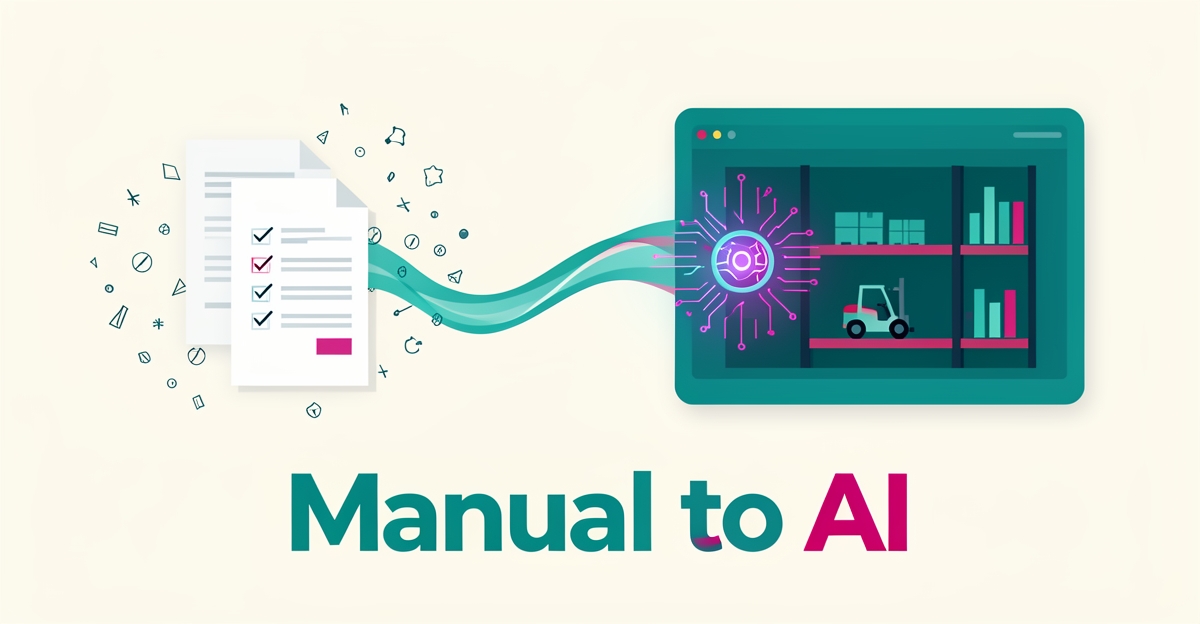
From Manual to AI: Transforming Order Entry and Inventory Tracking for Equipment Distributors
Key Facts
- Manual data entry is a leading source of order errors—wrong quantities, wrong SKUs, and delayed fulfillment that compound into stockouts and returns
- AI document processing can extract order details from emails, forms, and invoices and push them directly into your ERP or inventory system
- Real-time inventory synchronization eliminates the lag between order receipt and stock updates, preventing overselling and stockouts
- Most AI adoption in back-office operations blends automation (AI handles repetitive capture) with augmentation (humans oversee exceptions and complex decisions)
- AIQ Labs has deployed 200+ multi-agent systems and runs 4 live SaaS products daily—this is proven infrastructure, not experimental technology
Hire a team member that works 24/7 — for less than a part-time wage.
AI receptionists, SDRs, dispatchers and 99+ roles. Trained on your business, fully managed.
Not sure where to start? Ask our AI planner
The Cost of Manual Order Entry in Equipment Distribution
Manual order entry systems in equipment distribution create costly inefficiencies that directly impact fulfillment speed and inventory accuracy. Paper-based workflows and manual data entry are prone to human error, leading to incorrect order details, delayed processing, and mismatched stock levels. These issues compound across operations, increasing labor costs and reducing customer satisfaction as distributors struggle to maintain real-time visibility into inventory and order status.
For equipment distributors still relying on manual order entry, every hour spent on data entry, error correction, or inventory reconciliation is time not spent on strategic activities like supplier negotiation or customer engagement. As AI adoption accelerates across logistics and distribution, this represents a growing opportunity cost. The cumulative effect is a drag on operational agility that scales with order volume—the more orders you take, the more the manual process costs you.
Common pain points include duplicated entries, illegible handwriting on paper forms, and delayed updates to inventory systems when orders are processed hours or even days after receipt. These delays can trigger stockouts or overstocking, especially for high-turnover equipment where demand fluctuates rapidly. Without real-time synchronization between order entry and inventory tracking, distributors lack the data needed to make informed replenishment decisions, increasing carrying costs and risking lost sales.
- Data entry errors from manual input lead to incorrect shipments and returns
- Delayed order processing extends fulfillment timelines and frustrates customers
- Inventory inaccuracies cause stockouts or excess stock, tying up working capital
- Labor-intensive workflows divert staff from higher-value activities
- Lack of real-time visibility hinders responsive demand planning
These inefficiencies are not just operational—they translate directly into financial strain. Manual processes consume valuable employee time that could be redirected toward revenue-generating tasks, while errors increase costs through expedited shipping, restocking fees, and customer churn. Equipment distributors that continue with manual systems risk falling behind competitors who leverage automation for faster, more accurate order processing. Transitioning to AI-driven workflows isn't just about technology—it's about eliminating preventable losses and building a foundation for scalable, resilient operations.
How AI Automates Order Extraction and Inventory Updates
Manual order entry systems often drown distributors in paperwork and delays. AI transforms this bottleneck by extracting structured data from unstructured sources like emails, forms, and invoices through intelligent document processing. This automation reduces the manual effort required to capture order details, enabling faster processing and fewer transcription errors. As a result, teams can shift focus from data entry to higher-value tasks like customer engagement and strategic planning.
AI-powered document extraction uses multi-agent workflows to validate and normalize order information before it reaches inventory systems. In practice, most back-office AI blends two modes: automation, where AI completes repetitive data capture with little human involvement, and augmentation, where workers use AI as a collaborator and oversee exceptions and complex decisions. This blended approach lets AI handle the high-volume capture work while humans stay in control of the orders that actually need judgment. The result is a more accurate, resilient order intake process that scales with demand.
Once order data is extracted, AI synchronizes inventory levels in real time across connected systems. This eliminates lag between order receipt and stock updates, preventing overselling and stockouts. Distributors can rely on these systems to maintain accurate inventory visibility without constant manual reconciliation. AIQ Labs builds these systems through AI Workflow Builds—rebuilding the one workflow that costs you the most, at a fixed price and in phases—so the system integrates directly with your existing ERP and inventory platforms and the data flows seamlessly from order capture to fulfillment. For distributors ready to go further, an AI Operating System connects order entry, inventory, and the rest of the business into one operating layer you own outright. By reducing manual touchpoints and enabling real-time synchronization, AI turns order entry and inventory tracking into a streamlined, error-resistant workflow.
Implementing AI Order Processing: A Step-by-Step Guide for Distributors
Transitioning from manual order entry to AI-driven systems begins with a clear assessment of your current workflows to pinpoint where automation can deliver the greatest impact. Distributors often find that repetitive tasks like extracting order details from emails, forms, and invoices are prime candidates for AI intervention, as these processes are error-prone and labor-intensive when handled manually. Automation—AI completing tasks with little human involvement—is ideal for streamlining high-volume order entry. By identifying these bottlenecks early, you can focus your AI implementation on areas that will reduce errors and accelerate fulfillment the most.
Next, develop a clear strategy aligned with your business goals, such as improving order accuracy, reducing processing time, or freeing up staff for higher-value customer interactions. Start small with a pilot project targeting a single workflow—like processing purchase orders from a key supplier—to test the AI system's ability to extract data, validate it against inventory levels, and update your ERP or accounting software in real time. This phased approach mirrors AIQ Labs' milestone-based build model: you validate results at each stage, refine the system, and build confidence before scaling across departments. It also ensures the solution integrates securely with existing tools and complies with data protection standards from day one.
Invest in employee training to prepare your team for this shift, emphasizing how AI will augment their roles rather than replace them. Workers should understand how to interact with the AI system—such as reviewing flagged orders for exceptions or managing edge cases in the workflow—so they remain in control of critical decisions. Provide hands-on sessions that simulate real order scenarios, and establish feedback loops to address concerns early. Finally, monitor key metrics like order processing time, error rates, and inventory accuracy post-implementation, using these insights to optimize the system and expand AI to additional workflows as confidence and capability grow.
Still paying for 10+ subscriptions that don’t talk to each other?
We build custom AI systems you own outright. No vendor lock-in. Full control.
Not sure where to start? Ask our AI planner
Frequently Asked Questions
How does AI reduce errors in order entry for equipment distributors?
Will AI replace human workers in order processing, or will it work alongside them?
How does AI improve inventory tracking in real time for distributors?
What are the first steps a distributor should take when implementing AI for order processing?
What financial risks do manual order entry systems create for equipment distributors?
How does AIQ Labs price and deliver this kind of system?
From Bottleneck to Breakthrough: Your AI-Powered Order Entry Starts Here
Manual order entry isn't just slow—it's a silent drain on your equipment distribution business, causing errors, delays, and missed opportunities that add up fast. By shifting to AI-driven workflows, you eliminate data entry bottlenecks, gain real-time inventory accuracy, and free your team to focus on what actually moves the needle: customer relationships and strategic growth. AIQ Labs has deployed 200+ multi-agent systems and runs 4 live SaaS products every day—this is proven infrastructure, not a science project. Start with the free, 2-minute Fit Check to uncover your highest-impact automation opportunity, then map out your transformation on a free 30-minute strategy call. See where AI can make the biggest difference in your operations today.
Make AI your competitive advantage — not just another tool.
Strategy, implementation and ongoing optimization. One partner, end to end.
Not sure where to start? Ask our AI planner