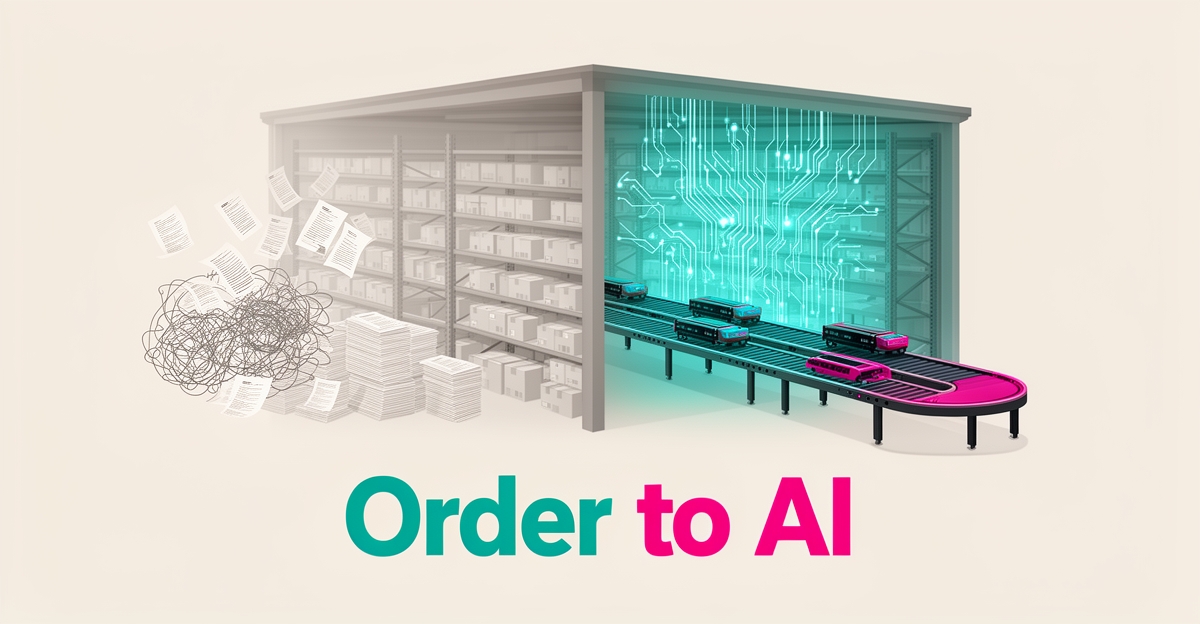
From Manual to AI: Transforming Order Fulfillment in Industrial Supply Distributors
Key Facts
- AI-powered order management is widely reported to improve order accuracy substantially compared to manual entry
- Industry analyses suggest automation can reduce procurement-related costs significantly—often cited in the range of 35-45%
- AI implementation is commonly reported to cut manual work in order processing by roughly 30%
- Order triage time typically drops sharply once AI handles intake and validation
- Most procurement executives now treat AI as a priority investment for staying competitive
- The biggest gains come from automating where orders slow down and repetitive work piles up
Hire a team member that works 24/7 — for less than a part-time wage.
AI receptionists, SDRs, dispatchers and 99+ roles. Trained on your business, fully managed.
Not sure where to start? Ask our AI planner
The Hidden Cost of Manual Order Processing
Many industrial supply distributors still rely on manual order entry and processing, creating significant operational drag. This approach not only slows down fulfillment but also introduces avoidable errors and hidden costs that erode profitability over time. Manual workflows often require staff to re-enter data across multiple systems, increasing the likelihood of transcription mistakes and delaying order confirmation.
Industry analyses of AI in procurement consistently point to substantial cost reductions—figures in the 35-45% range are commonly cited—along with roughly 30% less manual work when AI handles order processing tasks. These savings come from eliminating redundant steps, reducing rework, and minimizing the need for overtime labor during peak periods. Distributors clinging to manual methods are effectively paying a premium for inefficiency.
The financial impact extends beyond labor. Manual order processing is prone to high error rates, which trigger costly downstream consequences such as incorrect shipments, returns, and customer dissatisfaction. AI-powered order management is widely reported to deliver dramatic improvements in order accuracy compared to manual processes, where human error remains a persistent vulnerability. Each mistake not only incurs direct correction costs but also risks damaging long-term customer relationships.
- Increased labor hours due to repetitive data entry and verification
- Higher error rates leading to returns, reshipments, and service recovery
- Delayed order cycles that slow cash flow and inventory turnover
- Missed opportunities to upsell or cross-sell during order entry
- Limited scalability without proportional headcount increases
These inefficiencies compound over time, turning what seems like a manageable process into a systemic bottleneck. For industrial supply distributors operating in competitive markets, the hidden cost of manual order fulfillment isn't just an operational issue—it's a strategic liability that prevents agility and growth. Addressing it requires more than incremental tweaks; it demands a fundamental shift toward intelligent automation. AIQ Labs helps distributors identify and replace these high-friction workflows through AI Workflow Builds—rebuilding the one workflow that costs the most, at a fixed price and in phases, without requiring a complete overhaul of existing operations.
How AI Delivers Measurable Improvements in Order Accuracy and Speed
The gains behind AI-powered order fulfillment aren't incremental—they change the cost structure. Distributors that replace manual order entry with intelligent automation are seeing results that reshape their competitive position.
Consider accuracy first. AI order management systems are widely reported to deliver major improvements in order accuracy rates compared to manual processing. For industrial supply distributors, where a single mispicked SKU or wrong quantity can cascade into returns, freight costs, and frustrated contractors, that level of precision changes the customer relationship entirely.
The financial impact is equally compelling. Industry research on AI in order management commonly cites average cost reductions in the 35-45% range across order management operations. These savings come from eliminating repetitive manual work—data entry, order verification, status updates—that consumes staff hours without adding strategic value.
Speed improvements show up at every stage of the order lifecycle:
- Order triage gets dramatically faster, moving orders into fulfillment sooner
- Quote and RFP evaluation compresses from weeks to days
- Contracting and documentation efficiency improves substantially
- Manual work decreases by roughly 30% across procurement operations, per common industry estimates
Practical guidance on AI order processing makes the same point: the biggest gains come from applying automation where orders slow down, repetitive work piles up, and selling time is lost. That's exactly the pattern in industrial distribution: high-volume purchase orders arriving by email, phone, and fax, each one requiring manual transcription into an ERP system.
This is where purpose-built automation matters. AIQ Labs approaches these workflows by rebuilding them as production-grade AI systems—agents that read incoming orders, validate them against inventory and pricing logic, and push clean data into existing ERP and CRM tools, with human-in-the-loop guardrails for exceptions. The result is a workflow where routine orders flow straight through and staff attention shifts to the exceptions and relationships that actually require human judgment. For distributors ready to go further, an AI Operating System connects order intake, inventory, and fulfillment into one operating layer the business owns outright.
The market isn't waiting. With most procurement executives now treating AI as a priority investment for market survival, distributors that automate order fulfillment now are positioning themselves ahead of a shift that's already underway. The question is no longer whether AI improves order accuracy and speed—the evidence settles that—but how quickly distributors can move from manual processes to intelligent, automated workflows they own outright.
Practical Steps to Implement AI in Order Fulfillment Without Disruption
Starting the journey toward AI-powered order fulfillment doesn't require a full system overhaul—it begins with smart, low-risk steps that build momentum and confidence. Industrial supply distributors can transform their operations by focusing first on high-friction, high-volume tasks where manual processes create the most delays and errors. This targeted approach aligns with AIQ Labs' phased deployment methodology: Start Monthly, Build in Milestones, or Own It Outright—ensuring minimal disruption while delivering measurable gains.
The first step is assessing data readiness—ensuring order details, customer information, and inventory levels are accurate, accessible, and structured for AI consumption. Poor data quality remains a top barrier to AI performance, as incomplete or inconsistent inputs directly impact automation reliability. Once data foundations are solid, distributors should map existing workflows to pinpoint bottlenecks, such as manual order entry, invoice matching, or inventory allocation—tasks that slow down fulfillment and consume valuable employee time. Starting here allows AI to tackle repetitive work where it delivers the fastest ROI, freeing staff for higher-value activities like customer engagement and exception handling.
A phased rollout reduces risk and builds organizational buy-in. Begin with a single workflow—like automating order intake from email or web forms—then integrate AI with core systems such as ERP or CRM platforms using secure APIs. Throughout this process, maintain human-in-the-loop controls for validation and exception handling, especially during early stages. This safeguard ensures accuracy while allowing the AI to learn from human feedback. As confidence grows, expand automation to adjacent tasks like real-time order tracking or predictive reorder triggers, gradually scaling toward a fully intelligent fulfillment ecosystem.
- Start with high-volume, high-friction tasks like order entry or invoice processing
- Ensure data is clean, structured, and accessible before AI deployment
- Integrate AI with existing ERP/CRM systems using secure, two-way APIs
- Maintain human-in-the-loop guardrails for validation and continuous improvement
- Scale gradually—prove value in one workflow before expanding to others
By following this structured, low-risk path, industrial supply distributors can capture the cost reductions and accuracy gains widely reported in industry research—without disrupting daily operations. Each phase builds on the last, transforming manual bottlenecks into streamlined, AI-augmented processes that scale with business growth.
To begin your transformation, start with the 2-minute Fit Check to identify your highest-impact automation opportunities. AIQ Labs helps businesses map their order fulfillment workflows, assess readiness, and design a phased implementation plan that delivers real results—no vendor lock-in, no guesswork, just measurable progress toward intelligent operations.
Schedule your free 30-minute strategy call to see how targeted AI workflow fixes can eliminate manual inefficiencies and set the foundation for end-to-end transformation.
Still paying for 10+ subscriptions that don’t talk to each other?
We build custom AI systems you own outright. No vendor lock-in. Full control.
Not sure where to start? Ask our AI planner
Frequently Asked Questions
How much can AI actually reduce order processing costs for industrial distributors?
Will AI order processing really improve accuracy, or is that just vendor hype?
What's the biggest risk when implementing AI for order fulfillment?
How long does it take to see ROI from automating order entry?
Do I need to replace my ERP system to use AI for order fulfillment?
What happens to my staff when AI takes over order processing?
From Bottleneck to Competitive Edge
Manual order processing in industrial supply is more than an operational habit — it's a compounding drag on labor, accuracy, cash flow and growth. Replacing repetitive data entry and verification with intelligent automation changes that equation, delivering major accuracy improvements and commonly cited cost reductions in the 35-45% range while freeing staff for exceptions and customer relationships that actually need human judgment. The shift doesn't require a rip-and-replace overhaul. It starts with clean data, mapping high-friction workflows like email and web order intake, and a phased rollout with human-in-the-loop guardrails that prove value before scaling. AIQ Labs helps distributors rebuild those workflows as production-grade AI systems that integrate with existing ERP and CRM tools and that the business owns outright. Start the 2-minute Fit Check at https://aiqlabs.ai/apply, then book a free 30-minute strategy call at https://aiqlabs.ai/book to map your highest-impact automation opportunities and design a low-risk implementation plan.
Make AI your competitive advantage — not just another tool.
Strategy, implementation and ongoing optimization. One partner, end to end.
Not sure where to start? Ask our AI planner