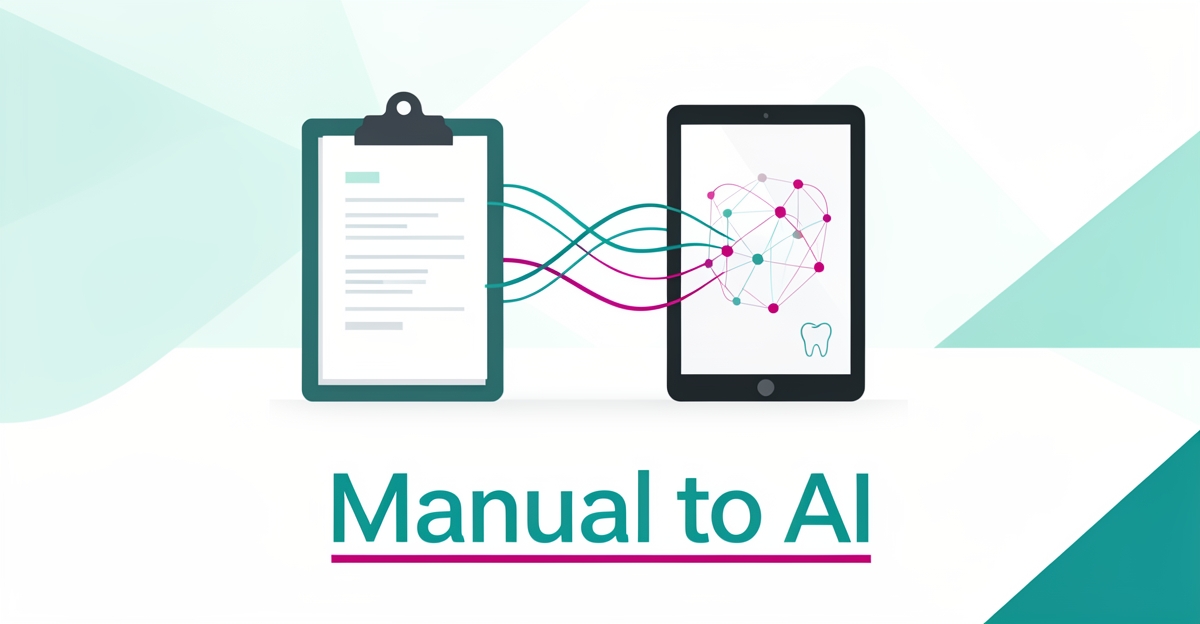
From Manual to AI: Transforming Patient Intake in Endodontic Practices
Key Facts
- AI-assisted patient intake typically reduces manual review time substantially and shortens follow-up loops by flagging incomplete packets before they reach a human reviewer.
- Adoption of AI in document-heavy administrative workflows remains uneven across industries as of late 2026, leaving a wide opportunity gap for practices that move first.
- AI can automate healthcare administrative tasks to free clinical staff for higher-value responsibilities, a shift that matters most in specialty practices where chair time is revenue.
- AIQ Labs builds custom intake systems that classify, validate, and route patient data end-to-end with human-in-the-loop controls, and the practice owns the system outright.
- Manual intake forces staff to open every file, classify documents, write follow-ups from scratch, and make ad-hoc routing decisions.
- AIQ Labs delivers production-grade AI Employees for roles like Patient Coordinator and Intake Specialist, typically at a fraction of the cost of a human hire.
Hire a team member that works 24/7 — for less than a part-time wage.
AI receptionists, SDRs, dispatchers and 99+ roles. Trained on your business, fully managed.
Not sure where to start? Ask our AI planner
The Intake Bottleneck in Endodontic Practices
The first few minutes of an endodontic visit set the tone for care, yet intake is where delays quietly accumulate. Paper forms, phone tag, and manual data entry create friction for patients and repetitive work for staff, directly impacting clinic efficiency and care delivery.
Manual intake forces front desk teams to open and classify each file by hand, manually review every submission for completeness, and write repeated follow-up messages from scratch. Staff then decide routing case by case, which introduces inconsistency and bottlenecks. Practices that have moved to AI-assisted intake typically report meaningful reductions in manual review time and follow-up loops, freeing capacity for higher-value clinical support.
This repetitive burden shows up as delays and patient friction. Forms arrive incomplete, insurance details are missing, and routing decisions wait on staff availability. Healthcare design analysis consistently notes that AI can help automate healthcare administrative tasks to free clinical staff to focus on higher-value responsibilities, a shift that matters in specialty practices where chair time is revenue.
The cost is not only time. Inconsistent routing means some cases sit while others are rushed, and patients experience repeated requests for the same information. The manual loop also scales poorly with volume, because each new referral adds linear work to the team.
Common friction points in paper-based and manual intake include:
- Staff manually review every submission and open each file to classify it
- Repeated manual follow-ups written without standardized templates
- Ad-hoc routing decisions that vary by staff member and shift
- Delayed care starts due to incomplete documentation and back-and-forth
Across industries, adoption remains uneven as of late 2026. Many organizations still run document-heavy workflows entirely by hand, illustrating how manual processes persist even where automation is available.
For endodontic practices moving from paper to digital, the bottleneck is less about technology appetite and more about workflow design. A targeted AI Workflow Build can capture, validate, and route patient data efficiently, replacing repetitive checks with rules-based suggestions and template-driven follow-ups. AIQ Labs builds custom systems that target these exact intake pain points, reducing errors while improving clinic efficiency.
How AI-Assisted Intake Reduces Review Time and Errors
Every referral packet that lands in an endodontic office triggers the same routine: someone opens each file, figures out what it is, checks whether anything is missing, and decides who needs to see it. Multiply that by dozens of patients a week, and intake becomes a bottleneck that slows care and burns out front-desk staff.
AI-assisted intake changes the math. Practices comparing manual and AI-assisted workflows typically report substantial reductions in manual review time and follow-up loops. Those gains come from five specific capabilities that map directly to the daily grind of endodontic intake.
- Document classification: instead of staff opening and sorting each file, AI classifies documents, referrals, radiographs, insurance forms, and extracts key details automatically.
- Completeness checks: AI flags missing or inconsistent information the moment a packet arrives, before it reaches a clinical reviewer.
- Intake summaries: staff receive a concise, structured summary rather than raw, unorganized submissions.
- Routing suggestions: AI recommends where each case should go based on predefined rules, removing guesswork from triage.
- Follow-up drafts: AI generates administrative follow-up messages from approved templates, ending the cycle of writing the same request-for-records email over and over.
The standardization piece matters more than it first appears. When administrative messages follow approved templates and workflow rules, communication becomes consistent regardless of who is on shift, fewer errors, fewer repeated exchanges, and a smoother experience for referring dentists and patients alike. Fewer follow-up loops also means fewer delays in getting patients scheduled for treatment.
The broader healthcare industry is moving the same direction. Healthcare AI specialists consistently note that AI can automate administrative tasks to free clinical staff to focus on higher-value responsibilities. Yet adoption lags: as of late 2026, many organizations still run document-heavy workflows manually, with teams spending significant labor hours per response and missing deadlines as a result. Endodontic practices face the same pattern of manual effort and missed timelines in their intake pipelines.
This is where custom implementation matters. Off-the-shelf tools rarely fit the specific referral formats, routing rules, and templates of a specialty practice, which is why AIQ Labs builds tailored intake systems that classify, validate, and route patient data end-to-end, systems the practice owns outright, with human-in-the-loop controls for clinical oversight. The result is intake that runs quietly in the background while your team focuses on patients, not paperwork.
Implementation Roadmap for Endodontic Clinics
Manual intake creates bottlenecks at the exact moment patients expect care to begin. Endodontic clinics that move from paper-based forms to AI-assisted intake can reduce friction, standardize routing, and free clinical staff for higher-value responsibilities.
A phased roadmap keeps adoption practical and measurable. Start by mapping the current intake journey and identifying where delays, rework, and errors accumulate. Define clear, measurable objectives for the pilot, such as reducing manual review time and shortening follow-up loops. AI-assisted patient intake typically delivers its biggest early wins exactly there, which directly improves staff productivity and patient experience.
Data infrastructure determines success. Assess how forms, imaging, insurance verification, and scheduling data flow today and where silos block automation. High-quality, accessible data is essential for effectiveness, and a review of current systems reveals integration points for conversational intake and natural language processing. AI can help automate healthcare administrative tasks to free clinical staff to focus on higher-value responsibilities, as healthcare product design research consistently notes.
Tool selection should match workflow pain points. For endodontic practices, common starting points include:
- Conversational intake for pre-visit screening and document collection
- Natural language processing for document classification and completeness checks
- Machine learning for intake summaries and routing suggestions
- Template-driven drafting for administrative follow-up
Staff training and change management run in parallel with technology. Involve practitioners early to address workflow disruption and resistance, and provide ongoing training for new technologies. Regulatory uncertainty is real in healthcare, so involve experts in privacy regulations and establish governance for data handling and human-in-the-loop controls.
Implementation benefits compound when the system is owned and integrated. AIQ Labs builds custom systems that capture, validate, and route patient data efficiently, reducing errors and improving clinic efficiency. A custom approach avoids vendor lock-in and aligns the intake flow with existing practice management systems. For practices that want intake connected to scheduling, billing, and follow-up in one layer, an AI Operating System approach builds that connected layer in phases.
Adoption is still early across industries as of late 2026, highlighting the opportunity gap for clinics that move first. The roadmap ends with measurement, optimization, and scaling from pilot to standard practice across scheduling, insurance verification, and post-visit follow-up.
Manual vs AI-Assisted Intake: What Changes Day-to-Day
Patient intake is where delays start and staff burnout builds. In endodontic practices, the moment a referral arrives sets the tone for speed, accuracy, and patient trust.
Manual intake forces staff to open every submission and decide what is missing. Staff manually review every submission, open and classify each file, write repeated follow-up messages manually, and decide where each case goes. The work is repetitive, error-prone, and pulls clinicians away from care.
AI-assisted intake shifts the burden from people to process. AI flags missing or inconsistent information, classifies documents and extracts key details, drafts follow-ups from approved templates, and suggests routing based on predefined rules. Practices that make this switch typically report large reductions in manual review time and follow-up loops.
For staff, the day changes from chasing paperwork to overseeing exceptions. Review becomes targeted instead of exhaustive. Document handling moves from manual sorting to automated classification with extracted data ready for the chart. Follow-up is standardized using approved templates and workflow rules, making communication more consistent. Routing is suggested by the system, reducing handoff delays.
Patients feel the difference immediately. Forms are checked for completeness at arrival, missing items are requested once with clear instructions, and confirmations are sent without staff retyping. Healthcare automation guidance consistently notes that AI can free clinical staff to focus on higher-value responsibilities.
The practical shifts day-to-day include:
- Review: from staff manually reviewing every submission to AI flagging missing or inconsistent information
- Document handling: from staff opening and classifying each file to AI classifying documents and extracting key details
- Follow-up: from staff writing repeated messages manually to AI drafting follow-ups from approved templates
- Routing: from staff deciding where each case goes to AI suggesting routing based on predefined rules
This is not a subscription widget. AIQ Labs builds custom systems that capture, validate, and route patient data efficiently within the practice's existing tools, with ownership retained by the clinic. True ownership means no vendor lock-in and the ability to evolve the workflow as the practice grows.
Adoption remains uneven as of late 2026. Many organizations still run document-heavy administrative workflows entirely by hand, a proxy for how slowly administrative automation spreads in professional services. In endodontics, the gap shows up as delayed starts and repeated calls.
With a custom build approach, intake becomes an integrated system rather than a patchwork of forms and messages. Staff spend less time on repetitive checks and more time on patient care, while patients experience faster confirmations and fewer requests for the same information.
Still paying for 10+ subscriptions that don’t talk to each other?
We build custom AI systems you own outright. No vendor lock-in. Full control.
Not sure where to start? Ask our AI planner
Frequently Asked Questions
How much time can AI-assisted intake save in endodontic practices?
What specific tasks does AI handle in patient intake for endodontic clinics?
Will using AI for intake mean losing control over our clinic's workflows?
Is our data ready for AI-powered intake automation?
Why haven't more healthcare practices adopted AI for intake if it's so effective?
What's the first step to implementing AI-assisted intake in our endodontic practice?
The Path to Smarter Patient Intake
The shift from manual to AI-assisted patient intake is not just a technological upgrade, it's a strategic move to reclaim time, reduce errors, and elevate patient care. By automating document classification, completeness checks, and follow-up drafts, endodontic practices can cut manual review time and follow-up loops substantially, freeing staff to focus on higher-value responsibilities. The real win lies in consistency: AI ensures every patient receives the same clear communication, every referral is routed correctly, and no detail slips through the cracks. For practices ready to move beyond paper, the next step is clear: assess your current intake workflow, identify bottlenecks, and explore how a custom AI system can integrate seamlessly with your existing tools. AIQ Labs specializes in building tailored intake solutions that practices own outright, no vendor lock-in, just measurable efficiency gains. Ready to transform your intake process? Start with a 2-minute Fit Check, then book a free 30-minute strategy call to map your biggest opportunities.
Make AI your competitive advantage — not just another tool.
Strategy, implementation and ongoing optimization. One partner, end to end.
Not sure where to start? Ask our AI planner