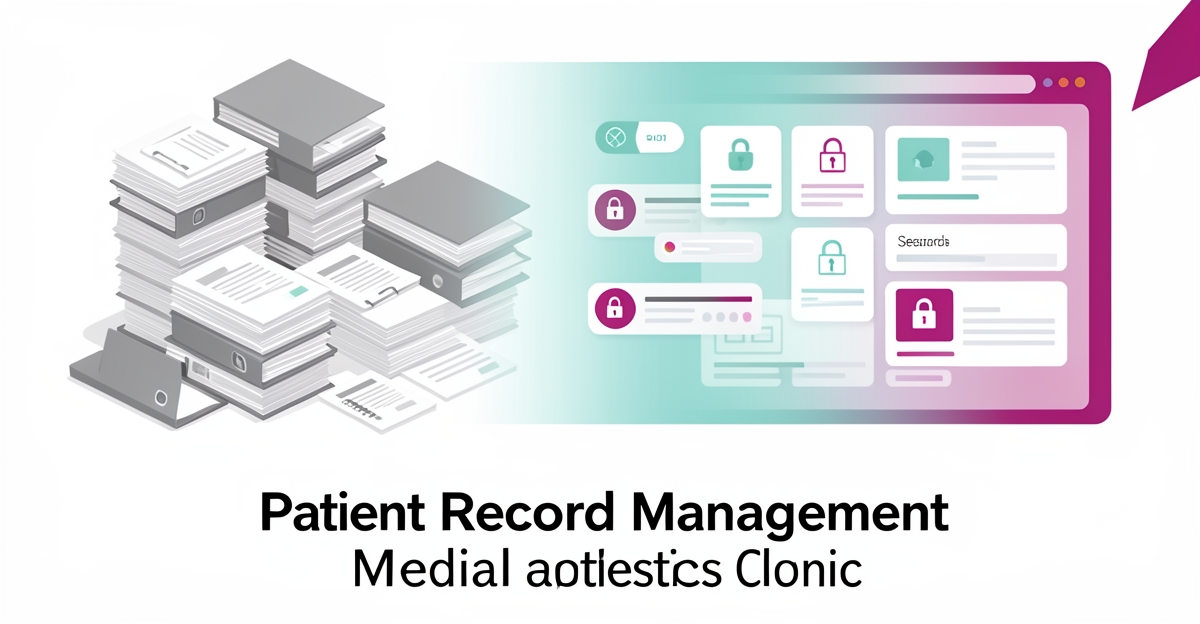
From Manual to AI: Transforming Patient Record Management in Filler Clinics
Key Facts
- Clinicians typically spend one to two hours per day on documentation tasks that AI can automate
- AI document processing digitizes intake forms, consent documents, and treatment histories into structured, searchable data
- AI-powered record systems enable near-instant retrieval of patient records via natural language search, improving clinical decision speed
- Secure digital archiving reduces physical storage needs and the overhead costs that come with them
- Custom AI workflows embed security and accountability into every step of record management, supporting HIPAA and PIPEDA compliance
- AI minimizes manual entry mistakes that can compromise patient safety or compliance
Hire a team member that works 24/7 — for less than a part-time wage.
AI receptionists, SDRs, dispatchers and 99+ roles. Trained on your business, fully managed.
Not sure where to start? Ask our AI planner
The Hidden Cost of Paper Charts: Why Manual Records Are Holding Filler Clinics Back
The hidden cost of paper charts in filler clinics extends far beyond physical storage. Manual record systems create daily friction through misfiled consent forms, incomplete treatment histories, and endless hours spent searching for information, all of which directly impact patient safety and clinic efficiency. Clinicians commonly lose one to two hours per day to documentation alone, time that could be redirected toward patient care or clinical decision-making. As demand for aesthetic services grows and skilled staff remain hard to hire, manual processes become harder to sustain.
- Misfiled or lost consent forms create legal and compliance risks
- Incomplete treatment histories lead to duplicate procedures or adverse reactions
- Physical storage requires ongoing costs for space, supplies, and security
- Staff spend excessive time on administrative tasks instead of patient interaction
- Paper records are vulnerable to damage, theft, or unauthorized access
These inefficiencies compound over time, increasing operational costs while reducing the capacity to scale. AIQ Labs addresses this challenge through AI Workflow Builds, rebuilding the one record-management workflow that costs your clinic the most, at a fixed price and in phases. The shift from paper to intelligent automation isn't just about convenience; it's a necessary evolution for clinics aiming to deliver safe, efficient, and scalable aesthetic care.
What AI Document Processing Actually Does for Patient Records
In filler clinics, managing patient records manually creates bottlenecks that slow down care and increase administrative burden. AI document processing transforms this workflow by digitizing intake forms, treatment histories, consent documents, and before/after photos into structured, searchable data. Using intelligent extraction and automated filing, these systems ensure records are accurately categorized and securely stored in line with healthcare regulations.
This automation delivers measurable efficiency gains, clinicians commonly reclaim one to two hours per day previously lost to documentation, freeing up time for direct patient care. Beyond individual time savings, automated record handling reduces errors, speeds up retrieval, and lowers storage costs. Clinics also benefit from improved data accuracy, as AI minimizes manual entry mistakes that can compromise patient safety or compliance.
- Automatically extracts key data from scanned forms and digital uploads
- Classifies documents by type (e.g., consent, treatment history) using contextual AI
- Routes files to secure, compliant storage with audit-ready metadata
- Enables near-instant retrieval of patient records via natural language search
- Reduces physical storage needs and associated overhead costs
AIQ Labs designs custom document processing workflows that align with clinical operations, ensuring seamless integration with existing practice management systems while maintaining strict adherence to data privacy standards. By replacing manual record handling with intelligent automation, filler clinics not only cut administrative overhead but also build a foundation for scalable, AI-enhanced patient care.
Compliance and Security: Automating Records Without Breaking Medical Regulations
Many clinics hesitate to adopt AI for patient records, fearing it will compromise compliance or expose them to regulatory risk. This concern is valid, manual errors in documentation contribute to avoidable clinical and administrative vulnerabilities. However, AI-driven document processing doesn't just avoid breaking regulations, it strengthens compliance by design.
Custom AI workflows embed security and accountability into every step of record management. Encrypted storage protects sensitive treatment histories and consent forms, while role-based access controls ensure only authorized staff can view or modify records. Every action is logged in immutable audit trails, creating a verifiable chain of custody for regulatory review. For critical documents like informed consent forms or treatment plans, human-in-the-loop validation adds a final checkpoint, AI handles extraction and categorization, but a licensed professional confirms accuracy before final storage.
This approach reduces the manual errors that often trigger compliance gaps. Documentation automation reclaims the hours clinicians typically spend on repetitive data entry, the very work where mistakes are most likely. By standardizing how records are digitized, categorized, and stored, AI eliminates inconsistencies that arise from human interpretation, such as varied naming conventions or missed fields in intake forms. These improvements don't just streamline operations; they create a foundation for consistent, auditable compliance.
AIQ Labs designs these systems with healthcare-specific regulations in mind, building workflows that align with HIPAA, PIPEDA, and other jurisdictional requirements from the outset. Rather than bolting on security after implementation, compliance is architected into the system's core, ensuring clinics gain efficiency without sacrificing trust or legal standing. The result is a record-keeping process that's not only faster and more accurate but inherently more resilient to scrutiny.
From Filing Cabinet to Intelligent System: A Practical Implementation Roadmap
Filler clinics face growing pressure to modernize record management while maintaining compliance and reducing staff burden. Transitioning from paper-based systems to intelligent AI solutions requires a structured, phased approach that prioritizes ownership and integration. This roadmap ensures clinics can transform workflows without vendor lock-in or subscription sprawl, starting with a clear assessment of current operations.
The first phase involves auditing existing records and workflows to identify inefficiencies and compliance gaps. Clinicians typically spend one to two hours per day on documentation tasks that could be automated, contributing to burnout and reduced patient interaction time. Clinics should map all touchpoints, intake forms, consent documents, treatment histories, and evaluate how long each step takes manually. This baseline reveals where AI can deliver the fastest return, particularly in high-volume extraction and categorization work.
Next, clinics digitize legacy files and extract structured data using AI-powered document processing. This step converts scanned PDFs, handwritten notes, and faxed forms into searchable, categorized records stored securely in a clinic-owned system. Modern AI models handle medical documentation with high accuracy in identifying treatment types, dates, and patient identifiers, eliminating manual data entry errors. By owning the extraction pipeline outright, clinics avoid ongoing fees and retain full control over data formatting and retention policies aligned with healthcare regulations.
The third phase integrates the AI record system with scheduling and treatment platforms via secure APIs. This creates a unified operational hub where patient histories automatically populate intake forms, appointment reminders pull from visit frequency, and consent status updates in real time. Integration reduces duplicate data entry and ensures clinicians have complete context before procedures. Clinics using this approach report fewer scheduling conflicts and improved follow-up rates, as administrative workflows are streamlined without disrupting clinical care.
Finally, clinics scale the system to adjacent workflows like digital intake kiosks and automated appointment reminders. AI Employees can handle patient check-ins, verify insurance details, and send personalized reminders via SMS or email, tasks that traditionally consume front-desk staff time, at a fraction of the cost of an additional hire. Because the core record system is already owned and integrated, adding these functions requires minimal new investment. Clinics retain the ability to pause, adjust, or expand capabilities without penalties, ensuring the AI evolution aligns with growth and changing needs. This phased, ownership-first model turns record management from a cost center into a strategic asset that supports scalability and patient satisfaction.
Measuring the Payoff: Efficiency, Error Reduction, and Patient Experience Gains
AI-powered patient record systems deliver measurable operational improvements for filler clinics, turning administrative burdens into strategic advantages. Clinics using AI for document processing typically see a substantial reduction in turnaround time for critical record retrieval, directly supporting faster clinical decisions and treatment continuity. This efficiency gain stems from AI's ability to instantly categorize and index patient histories, consent forms, and treatment logs, eliminating the delays inherent in manual file searches.
Beyond speed, AI significantly reduces errors that compromise patient safety and compliance. Documentation automation commonly saves clinicians one to two hours per day by minimizing manual data entry and the inaccuracies that come with it. For filler clinics, this translates to fewer incorrect treatment records, reduced risk of consent form mismanagement, and more reliable audit trails, all critical for maintaining regulatory adherence and patient trust. The technology ensures records are not only accurate but also consistently formatted and securely stored, addressing gaps that paper-based or fragmented digital systems often overlook.
These efficiencies free up substantial staff capacity, allowing clinical teams to redirect time previously spent on paperwork toward direct patient engagement and care coordination. AIQ Labs supports this shift by designing custom document processing workflows that integrate seamlessly with existing clinic systems, ensuring records are digitized, searchable, and compliant with healthcare regulations without disrupting daily operations. The result is a leaner, more responsive administrative function that enhances both internal workflows and the patient experience.
- Reduced manual errors in record entry and retrieval
- Reclaimed staff hours redirected to patient care
- Lower physical storage costs through secure digital archiving
- Faster record retrieval supporting treatment continuity
- Improved compliance with medical data protection standards
By establishing a foundation of accurate, accessible patient records, AI enables broader automation opportunities, from intelligent scheduling to predictive treatment planning, positioning filler clinics to scale innovation without increasing overhead. For clinics ready to connect records, scheduling, and communications into one owned operating layer, AI Operating Systems provide a phased path to a single connected system. To explore how these gains apply to your clinic's specific workflows, start with the Fit Check to identify your highest-impact automation opportunity, then schedule a free 30-minute strategy call with our team to map a practical path forward.
Still paying for 10+ subscriptions that don’t talk to each other?
We build custom AI systems you own outright. No vendor lock-in. Full control.
Not sure where to start? Ask our AI planner
Frequently Asked Questions
Is manual paper charting really costing my filler clinic that much?
What does AI document processing actually do for patient records?
Will AI make my clinic non-compliant with HIPAA or medical regulations?
How much time or money can AI really save?
Do I have to replace my whole system to start?
How do I know if AI record automation is right for my clinic?
From Paper Piles to Patient Care
Moving from manual charts to intelligent record management is less about digitizing paper and more about reclaiming capacity for safe, scalable aesthetic care. Filler clinics that automate intake forms, consent documents, and treatment histories cut misfiling risk, reduce duplicate procedures, and free clinicians from the one to two hours per day typically lost to documentation. With compliant, searchable archives and audit-ready metadata, teams spend less time hunting files and more time with patients. AIQ Labs designs custom document processing workflows that align with clinical operations and existing practice systems, embedding HIPAA/PIPEDA-grade security and human-in-the-loop validation from the start. Start with a focused assessment of your current intake and consent touchpoints, digitize legacy records with structured extraction, then integrate retrieval into scheduling and treatment platforms. Ready to map your highest-impact workflow? Start the Fit Check at https://aiqlabs.ai/apply for a free 30-minute strategy call to identify a practical path forward.
Make AI your competitive advantage — not just another tool.
Strategy, implementation and ongoing optimization. One partner, end to end.
Not sure where to start? Ask our AI planner