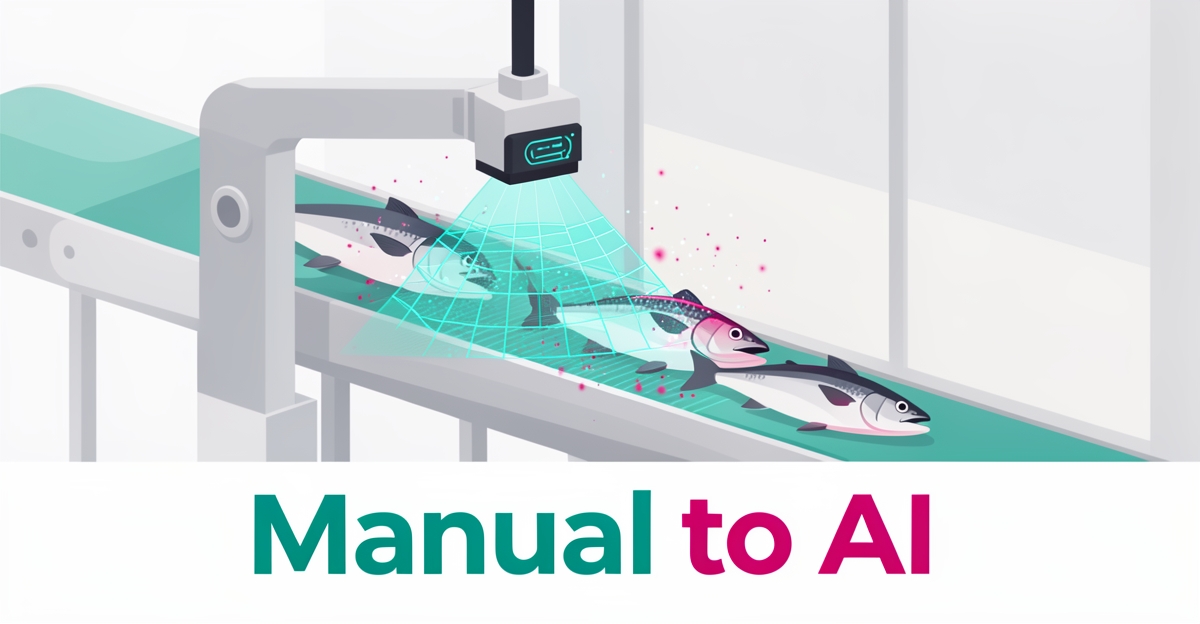
From Manual to AI: Transforming Quality Control in Seafood Processing Plants
Key Facts
- Computer vision systems can typically detect defects at accuracy levels manual sampling cannot match, at full production speed
- Plants that move defect detection earlier in the line typically report meaningful reductions in waste and rework
- Convolutional Neural Networks analyze high-resolution images to catch defects invisible to human inspectors at full line speed
- Predictive analytics identify potential quality issues before they manifest by analyzing temperature and processing patterns
- AI quality control transforms reactive sorting into proactive prevention through continuous real-time monitoring
- Plants using AI systems maintain consistent quality standards across all production lines and shifts without variability
- Automated logging of temperature, grading and inspection data reduces transcription errors and audit exposure
Hire a team member that works 24/7 — for less than a part-time wage.
AI receptionists, SDRs, dispatchers and 99+ roles. Trained on your business, fully managed.
Not sure where to start? Ask our AI planner
Why Manual Inspection Is Failing Seafood Processing Plants
Seafood processing plants are being pushed to deliver flawless quality at speeds manual teams cannot sustain. Rising demand for precision, consistency and scale exposes the limits of human-led inspection.
Traditional inspection relies on human inspectors, random sampling and manual checklists. These methods are increasingly inadequate for modern expectations of precision, consistency, and scale. Variability between shifts, fatigue and subjective judgment create gaps that compliance auditors and customers notice.
Random sampling means defects can pass through undetected until a batch is rejected. Manual checklists slow the line and still depend on interpretation. The result is reactive identification rather than prevention, with quality assurance lagging behind production speed.
The pressure is compounded by food safety regulations and traceability requirements. Temperature logs, visual grading and contamination checks are recorded by hand, creating delays, transcription errors and audit risk. When issues are found, they are often discovered too late to prevent waste.
Human-led quality control also struggles with subtle and microscopic defects. AI-driven vision systems can typically detect flaws at accuracy levels that are difficult to replicate with manual inspection across multiple lines and shifts, and they do it at full line speed rather than at sampling intervals.
Speed and waste are the most visible costs. Industry implementations across food and manufacturing have reported substantial reductions in waste and materially faster inspection cycles when detection moves from sampling to continuous monitoring. Manual processes cannot match that pace without adding headcount and increasing error rates.
The shift from reactive inspection to proactive intelligence changes the role of quality teams. Instead of sorting bad product after it is made, plants can flag anomalies in real time and adjust parameters before defects multiply. This requires continuous monitoring, not spot checks.
Manual inspection creates specific operational risks in seafood processing:
- Variability in grading and defect detection between inspectors and shifts
- Delays from manual logging of temperature, pH and visual checks
- Compliance risk from incomplete or inconsistent checklists and audit trails
- Waste and rework when defects are identified after packaging
AI-powered workflow automation is increasingly used to streamline quality inspections, temperature logs and compliance tracking in seafood processing. AIQ Labs builds custom systems that ensure consistency, reduce delays and meet food safety regulations without replacing human oversight. The focus is on augmenting inspectors with proactive intelligence that supports decisions and documents them automatically.
The industry is moving from sampling to continuous, data-driven assurance. Plants that remain reliant on manual inspection face growing variability, slower throughput and higher compliance exposure.
How AI-Powered Quality Control Works on the Production Line
Modern seafood processing plants are replacing manual inspection with AI-powered systems that combine computer vision, predictive analytics, and real-time sensor data to transform quality control from a reactive checkpoint into a continuous, intelligent workflow. At the core of this transformation are Convolutional Neural Networks (CNNs) that analyze high-resolution images from production-line cameras to detect defects, such as discoloration, texture irregularities, or foreign material, at full line speed. This level of precision ensures that even subtle quality deviations are caught before products advance further in the process, reducing the risk of recalls or customer complaints.
Machine learning models trained on historical production data enable predictive analytics that anticipate potential quality issues before they manifest. By identifying patterns in temperature fluctuations, processing times, or equipment performance, these systems flag deviations that could lead to spoilage or texture changes, allowing operators to make preventive adjustments. Meanwhile, Industrial Internet of Things (IIoT) sensors continuously monitor critical parameters like ambient temperature, humidity, and conveyor speed, feeding real-time data into the AI system to maintain optimal processing conditions. When integrated, these technologies create a closed-loop system where inspection, analysis, and adjustment happen in seconds rather than minutes.
Robotics and automated sorting arms act on AI insights by physically separating defective items from the production stream without slowing throughput. This automation eliminates bottlenecks caused by manual sorting and ensures consistent handling of every product. Plants using these integrated systems typically report meaningful reductions in waste, because fewer defective products are discarded late in the process, and faster inspection cycles than traditional methods. The result is a more efficient, reliable quality control process that supports compliance with food safety standards while minimizing reliance on manual oversight, though human operators remain essential for validating AI outputs and managing edge cases.
For seafood processors seeking to modernize quality control without overhauling entire operations, AIQ Labs designs custom systems that integrate computer vision, predictive analytics, and IIoT monitoring into existing workflows. Through our AI Workflow Builds, we rebuild the one workflow that costs you the most, fixed price, delivered in phases. These solutions are built to align with specific quality goals, regulatory requirements, and production speeds, delivering consistent accuracy and traceability without replacing human judgment. By focusing on workflow automation for inspection logging, defect tracking, and compliance reporting, AIQ Labs helps plants achieve measurable improvements in efficiency and waste reduction while maintaining full ownership of their AI infrastructure. Book a free 30-minute strategy call to explore how AI-powered quality control can be tailored to your facility's unique challenges.
From Goals to Live System: A Proven Implementation Path
A clear implementation path turns AI quality control from concept to operational reality in seafood processing. It begins with defining specific quality goals, such as target defect rates for fillet texture or packaging integrity, that align with food safety regulations and customer expectations. These measurable targets guide the entire system design and ensure the AI focuses on what truly matters for product consistency and compliance.
Next, collecting and preparing labeled visual and sensor data is essential. High-resolution images from production-line cameras and readings from temperature or vibration sensors must be cleaned, annotated, and balanced to represent both acceptable and defective products accurately. The quality of this dataset directly determines the model's ability to detect subtle flaws reliably at full line speed.
Training and validating the model follows, where machine learning algorithms learn from examples of good and defective seafood products. Rigorous validation ensures the system achieves high precision without overwhelming operators with false alerts, a critical balance for maintaining trust in automated inspections. Once validated, integration with existing MES or SCADA platforms enables real-time monitoring, allowing the AI to trigger immediate alerts or automated sorting actions when deviations occur.
Finally, continuous monitoring and improvement sustain long-term performance. Tracking KPIs like detection accuracy, false positive rates, and system uptime reveals when retraining with fresh data is needed to adapt to seasonal variations in fish size or processing conditions. This ongoing refinement, combined with necessary human oversight for edge cases and model maintenance, transforms quality control from a manual bottleneck into a proactive, intelligent workflow that reduces waste and accelerates inspection cycles. AIQ Labs supports this journey through custom development and integration expertise, ensuring seafood processors deploy systems that are both technically sound and aligned with operational realities.
Building Owned AI Workflows for Seafood Compliance
AIQ Labs helps seafood processors build custom AI workflows that automate quality inspections, temperature monitoring, and compliance tracking while maintaining human oversight for critical decisions. These owned systems eliminate manual bottlenecks by using computer vision to detect defects at line speed, reducing waste and accelerating inspection cycles through real-time analytics. Unlike off-the-shelf tools, AIQ Labs develops production-ready multi-agent systems, 200+ deployed and proven across four live SaaS products we run daily, that integrate directly with existing MES or SCADA platforms, ensuring seamless data flow without disrupting operations. The approach transforms reactive sorting into proactive prevention by continuously analyzing process parameters to flag deviations before defects occur, supporting zero-defect production goals while meeting FDA and ISO food safety standards. Clients retain full intellectual property and control over their AI assets through flexible payment models, Start Monthly for ongoing managed support, Build in Milestones for phased department automation, or Own It Outright for complete system ownership, each designed to scale with business needs without vendor lock-in. By embedding human-in-the-loop controls and audit trails, these custom workflows ensure regulatory compliance while freeing staff to focus on exception handling and process optimization rather than repetitive manual checks. The result is a sustainable competitive advantage where quality consistency improves across all production lines, operational delays decrease, and food safety risks are minimized through intelligent, auditable automation that evolves with changing conditions. Start with a 2-minute Fit Check, then book a free 30-minute strategy call to explore how AIQ Labs can build your owned AI workflow for seafood compliance.
Still paying for 10+ subscriptions that don’t talk to each other?
We build custom AI systems you own outright. No vendor lock-in. Full control.
Not sure where to start? Ask our AI planner
Frequently Asked Questions
Why is manual inspection failing in seafood processing plants?
How accurate is AI at detecting defects on a production line?
Will AI replace our quality inspectors?
What kind of waste and speed improvements can we actually expect?
How does AI quality control work on the seafood line?
What does implementation look like for a seafood plant?
From Inspection to Intelligence: Your Path Forward in Seafood Quality Control
The shift from manual to AI-powered quality control in seafood processing isn't just about technology, it's about building resilience into your operations. By replacing reactive sampling with continuous, data-driven inspection, plants can detect defects at line speed, reduce waste, and accelerate inspection cycles, all while maintaining human oversight for critical decisions. This transformation supports compliance, minimizes waste, and turns quality teams into proactive problem solvers rather than reactive sorters. If you're ready to explore how a custom AI workflow can address your specific quality challenges without overhauling existing systems, the next step is simple: start with a 2-minute Fit Check and then book a free 30-minute strategy call to map your biggest bottleneck and identify where AI can deliver measurable ROI.
Make AI your competitive advantage — not just another tool.
Strategy, implementation and ongoing optimization. One partner, end to end.
Not sure where to start? Ask our AI planner