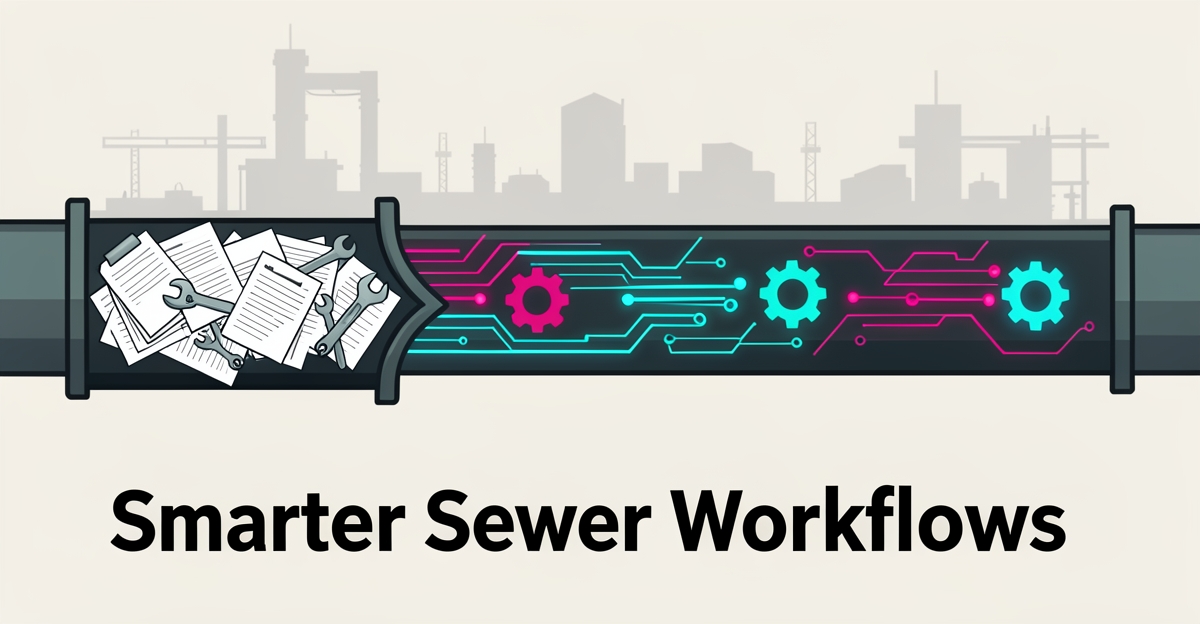
From Manual to AI: Transforming Sewer Repair Operations with Smart Workflows
Key Facts
- Predictive maintenance approaches typically reduce maintenance costs substantially compared to reactive, run-to-failure operations
- AI-driven monitoring commonly catches infrastructure degradation before failure, cutting unplanned emergency work
- Manual work order processing and phone-tag dispatch routinely delay crew response by hours or days
- Automating routine coordination, intake, scheduling, work orders, typically frees several hours per crew per week
- AI dispatchers handle inbound calls 24/7, qualify issues, create work orders, and assign the nearest qualified crew
- Organizations that anchor AI in observed process data tend to see measurable value faster than those overlaying generic software
Hire a team member that works 24/7 — for less than a part-time wage.
AI receptionists, SDRs, dispatchers and 99+ roles. Trained on your business, fully managed.
Not sure where to start? Ask our AI planner
The Hidden Cost of Manual Sewer Repair Workflows
When a sewer line fails unexpectedly, the costs cascade far beyond the immediate repair. Emergency crews command premium rates, collateral damage mounts, and service disruptions erode public trust, yet many municipalities and contractors still operate in reactive mode, waiting for infrastructure to fail before taking action.
This reactive approach carries a steep price tag. Industry research on predictive maintenance consistently shows that organizations relying on manual, reactive workflows face significantly higher operational costs than those using predictive approaches. Shifting to predictive maintenance can reduce maintenance costs by as much as 40% in well-run programs, and agencies deploying AI-driven monitoring typically report materially fewer unplanned failures.
The productivity drain extends beyond emergency premiums. Manual work order processing, paper-based dispatch systems, and phone-tag coordination create invisible bottlenecks that delay response times and frustrate crews. In field service operations, these inefficiencies compound daily, technicians spend hours on administrative tasks instead of repairs, while dispatchers struggle to optimize routes without real-time data.
Key operational inefficiencies plaguing manual sewer repair workflows include:
- Reactive maintenance cycles that address failures only after catastrophic damage occurs
- Manual work order processing that delays crew dispatch by hours or days
- Lack of real-time asset monitoring, leaving teams blind to developing infrastructure issues
- Inefficient resource allocation due to absence of predictive scheduling data
The contrast between reactive and proactive operations is stark. Organizations implementing AI-powered predictive maintenance routinely report large reductions in infrastructure failures and meaningfully longer asset lifespans. Meanwhile, teams stuck in manual workflows face the "emergency premium", paying overtime rates, expediting parts delivery, and managing collateral damage that planned maintenance would have prevented.
Process mining offers a diagnostic lens for these hidden costs. By analyzing event logs from existing systems, organizations can visualize exactly where work orders stall, which approval steps create bottlenecks, and how much time crews spend on non-productive administrative tasks. This visibility is the first step toward AI business process automation that actually addresses root causes rather than symptoms.
AIQ Labs specializes in this diagnostic approach, helping field service organizations map their current state before implementing solutions. Rather than overlaying generic software onto broken processes, the focus is on identifying specific friction points, whether that's dispatch delays, inventory mismanagement, or compliance documentation gaps, that drain profitability. For teams that want to fix the single most expensive workflow first, a fixed-price workflow build is often the fastest entry point.
The financial case for transformation becomes clear once the data is on the table. Intelligent workflow automation consistently improves task completion rates and accuracy. For sewer repair operations, this translates to more repairs completed per crew shift, reduced callback rates, and the ability to handle emergency calls without derailing scheduled maintenance.
The gap between manual operations and AI-enhanced workflows represents more than inefficiency, it represents strategic vulnerability in an industry where infrastructure failures carry public health implications and regulatory scrutiny.
How Process Mining and AI Identify and Fix Workflow Bottlenecks
Process mining reveals where sewer repair workflows stall, turning hidden friction into actionable insights. By mapping every step, from work order creation to field execution, AIQ Labs identifies high-effort tasks like manual data entry and scheduling delays that can consume a substantial share of technician time. These bottlenecks often go unnoticed until they cascade into missed appointments or reactive repairs, driving up costs and reducing system reliability.
AI-driven automation then targets these pain points with precision. When process data feeds predictive models, teams can anticipate infrastructure degradation before failure occurs, sharply reducing unplanned failures and extending asset lifespans. This shift from reactive to proactive maintenance isn't just about fewer emergencies, it creates predictable workflows where crews spend less time troubleshooting and more time executing planned interventions.
The impact extends beyond uptime. Organizations applying AI in maintenance typically report measurable value within months, as routine tasks like dispatch coordination and work order updates become automated. For sewer operations, this means faster response times, optimized crew routing, and real-time adjustments based on sensor data and weather conditions, all while preserving human expertise for complex diagnostics and customer interactions.
- Map current workflows to expose manual handoffs and delays
- Identify repetitive tasks ripe for AI automation (e.g., data entry, scheduling)
- Deploy predictive models that trigger maintenance before failure
- Continuously refine processes using real-time performance feedback
By anchoring AI in observed process reality, not assumptions, sewer repair teams build self-optimizing operations where every insight flows directly into improved service delivery. The result is a workflow that learns, adapts, and scales with the infrastructure it maintains.
From Insight to Action: Implementing AI-Powered Sewer Repair Automation
Moving from insight to action requires a structured implementation path that aligns AI capabilities with existing sewer repair workflows. Process mining first exposes hidden inefficiencies in dispatch, work order creation, and field response before automation is applied.
Assessing readiness begins with mapping current repair workflows and data sources. Teams identify routine, high-volume tasks that consume crew time and delay response. As of late 2026, a large share of organizations have implemented or are piloting AI in maintenance processes, yet success still depends on starting with clear business goals like reducing downtime and optimizing crew utilization.
Deploying managed AI Employees for dispatch and work order management replaces manual phone triage and spreadsheet scheduling. An AI Dispatcher handles inbound calls 24/7, qualifies the issue, creates a work order, and assigns the nearest qualified crew, at a fraction of the cost of an additional human hire. This mirrors field services patterns where AI-supported predictive maintenance programs intervene before breakdowns occur.
Integration with CMMS and GIS tools ensures the AI works inside existing operations. Real-time sensor data, asset history, and location data flow from field devices into the system, enabling automated recommendations. Real-time equipment monitoring is increasingly common across the industry and forms a natural foundation for predictive sewer repair.
Governance establishes trust and adoption. Clear protocols define when the AI acts autonomously and when it escalates to human supervisors. Human-in-the-loop controls, audit trails, and performance dashboards keep crews confident in the system.
A practical rollout follows the phased model AIQ Labs applies to process-driven operations:
- Readiness assessment using process mining to find the highest-impact bottlenecks in dispatch and work order flow
- Deploy managed AI Employees for dispatch, intake, and work order management that learn from crew feedback
- Integrate with CMMS and GIS for automated scheduling, parts lookup, and route optimization
- Establish governance with monitoring, escalation rules, and continuous improvement cycles
For operations that want more than point fixes, an AI Operating System connects dispatch, work orders, asset data, and reporting into one owned layer, built in phases. This approach treats AI as a collaborative partner rather than a replacement, automating routine coordination while preserving human judgment for complex repairs, and because you own the system outright, the capability compounds instead of renting.
The result is faster response, fewer repeat visits, and sustainable ROI. Predictive signals turn into scheduled interventions, crews spend more time on repairs, and customers receive proactive updates.
Still paying for 10+ subscriptions that don’t talk to each other?
We build custom AI systems you own outright. No vendor lock-in. Full control.
Not sure where to start? Ask our AI planner
Frequently Asked Questions
How much money can AI actually save on sewer repair operations?
Will AI replace my experienced sewer repair technicians?
What is process mining and why do I need it before implementing AI?
How long does it take to see results from AI-powered sewer repair automation?
Can AI really predict when a sewer line will fail before it happens?
What's the difference between buying dispatch software and getting an AI Employee?
Build a Sewer Operation That Repairs Before It Breaks
Moving from manual, reactive sewer repair to AI-enhanced workflows is less about replacing crews and more about removing the friction that keeps them from doing their best work. Process mining first exposes where work orders stall, dispatch delays accumulate, and administrative tasks consume technician time, then AI targets those specific pain points with predictive maintenance, automated intake, and smarter routing. The result is fewer unplanned failures, more planned interventions, and teams focused on repairs instead of paperwork. If you're ready to map your current state and prioritize the highest-impact automations, start with the two-minute Fit Check at aiqlabs.ai/apply for a free 30-minute strategy call to identify your biggest bottleneck and a practical path to AI-powered operations.
Make AI your competitive advantage — not just another tool.
Strategy, implementation and ongoing optimization. One partner, end to end.
Not sure where to start? Ask our AI planner