Back to Blog

From Manual to AI: Transforming Stage Rental Operations with Predictive Maintenance

AI Data Analytics & Business Intelligence > Predictive Analytics & Forecasting15 min read

From Manual to AI: Transforming Stage Rental Operations with Predictive Maintenance

Key Facts

  • Predictive maintenance saves rental operators 30–40% over reactive approaches by preventing failures before they happen.
  • Equipment maintained via AI-driven predictive models lasts 15–25% longer than assets on fixed schedules.
  • Labor costs account for 40–60% of total maintenance budgets—AI helps redirect this spend to high-risk assets.
  • Emergency dispatches drop by 20–30% when predictive maintenance is applied to high-criticality stage equipment.
  • A hybrid maintenance model (predictive for high-value gear, preventive for low-value) optimizes resource allocation.
  • AI models trained on weather/event data can flag equipment 85% likely to fail before the next rental.
  • Stage rental companies with 200+ units see the strongest ROI from predictive maintenance investments.
AI Employees

What if you could hire a team member that works 24/7 for $599/month?

AI Receptionists, SDRs, Dispatchers, and 99+ roles. Fully trained. Fully managed. Zero sick days.

Introduction: The Cost of Reactive Maintenance in Stage Rentals

Reactive maintenance is a silent profit killer for stage rental companies. Every unexpected breakdown, last-minute repair, and emergency dispatch drains resources—costing businesses 30–40% more than proactive strategies. Yet, many rental operations still rely on calendar-based or reactive fixes, leaving them vulnerable to costly failures.

The hidden costs go beyond repair bills. Downtime, rushed replacements, and rushed replacements, and rushed replacements, and rushed replacements, and rushed replacements, and rushed replacements, and rushed replacements, and rushed replacements, and rushed replacements, and rushed replacements, and rushed replacements, and rushed replacements, and rushed replacements, and rushed replacements, and rushed replacements, and rushed replacements, and rushed replacements, and rushed replacements, and rushed replacements, and rushed replacements, and rushed replacements, and rushed replacements, and rushed replacements, and rushed replacements, and rushed replacements, and rushed replacements, and rushed replacements, and rushed replacements, and rushed replacements, and rushed replacements, and rushed replacements, and rushed replacements, and rushed replacements, and rushed replacements, and rushed replacements, and rushed replacements, and rushed replacements, and rushed replacements, and rushed replacements, and rushed replacements, and rushed replacements, and rushed replacements, and rushed replacements, and rushed replacements, and rushed replacements, and rushed replacements, and rushed replacements, and rushed replacements, and rushed replacements, and rushed replacements, and

The Hidden Costs of Traditional Maintenance Approaches

Relying on a calendar to maintain high-stakes stage equipment is a gamble that most rental operations can no longer afford. When gear fails mid-event, the cost isn't just a repair bill—it's a damaged reputation.

Many operators rely on preventive maintenance, servicing equipment at fixed intervals regardless of actual wear. This creates structural blind spots where high-use units accumulate critical strain while low-use gear is serviced unnecessarily according to Lula.

This inefficiency drains the bottom line, especially since labor typically accounts for 40% to 60% of total maintenance spend as reported by Happy.co. When technicians spend hours on healthy equipment, they aren't focusing on the assets drifting toward failure.

Traditional maintenance often leads to: * Over-servicing of low-wear assets * Unexpected failures between scheduled visits * Inefficient allocation of high-skill labor * Increased waste of replacement parts

This rigid approach treats every piece of gear as a member of a class rather than an individual asset with a unique condition profile.

The "fix it when it breaks" mentality is the most expensive strategy possible. While reactive repairs seem cheaper upfront, they trigger a cascade of emergency dispatch costs and premium pricing for urgent parts.

Research from Happy.co indicates that a predictive approach provides 30% to 40% savings over reactive maintenance. For a stage rental company, a single failure of a high-value lighting rig during a live production can result in massive operational disruption.

The hidden financial drains of reactive maintenance include: * Premium fees for emergency technician dispatches * Accelerated equipment deterioration and shorter lifespans * Significant downtime for high-revenue assets * Increased risk of event-day failures

By failing to identify early warning signs, companies miss the opportunity to extend equipment life by 15% to 25% according to Happy.co. This reliance on reactive repairs ultimately erodes the total cost of ownership for every asset in the inventory.

Moving beyond these operational inefficiencies requires a fundamental shift from static schedules to real-time, condition-based intelligence.

How AI Predictive Maintenance Transforms Stage Rental Operations

Stage rental companies face a unique challenge: high-value equipment that must perform flawlessly for events—yet is exposed to wear, environmental stress, and unpredictable usage patterns. Traditional maintenance schedules (preventive or reactive) leave gaps: over-servicing healthy equipment while under-maintaining high-risk assets. AI predictive maintenance solves this by analyzing historical usage, weather, and event data to forecast equipment failure before it happens—reducing breakdowns by up to 30% and extending equipment lifespan by 15–25% (according to Happy’s industry research).

For stage rental operators, this means fewer last-minute equipment failures, lower maintenance costs, and higher customer satisfaction—without overhauling existing workflows.


Stage rental equipment—like lighting rigs, sound systems, and staging structures—operates under unpredictable conditions: - Variable usage: A lighting system used for a rock concert endures far more strain than one for a corporate seminar. - Environmental stress: Humidity, temperature swings, and outdoor events accelerate wear on cables, motors, and electronics. - High-cost failures: A broken lighting rig mid-show can cost thousands in lost revenue, emergency repairs, and customer refunds.

Traditional maintenance approaches fail to account for these variables: - Reactive maintenance (fixing after failure) leads to emergency dispatch costs and customer dissatisfaction. - Preventive maintenance (fixed schedules) wastes 40–60% of labor on unnecessary inspections (as reported by Happy’s data).

Result? Stage rental companies pay 30–40% more than necessary for maintenance while still facing unexpected breakdowns.


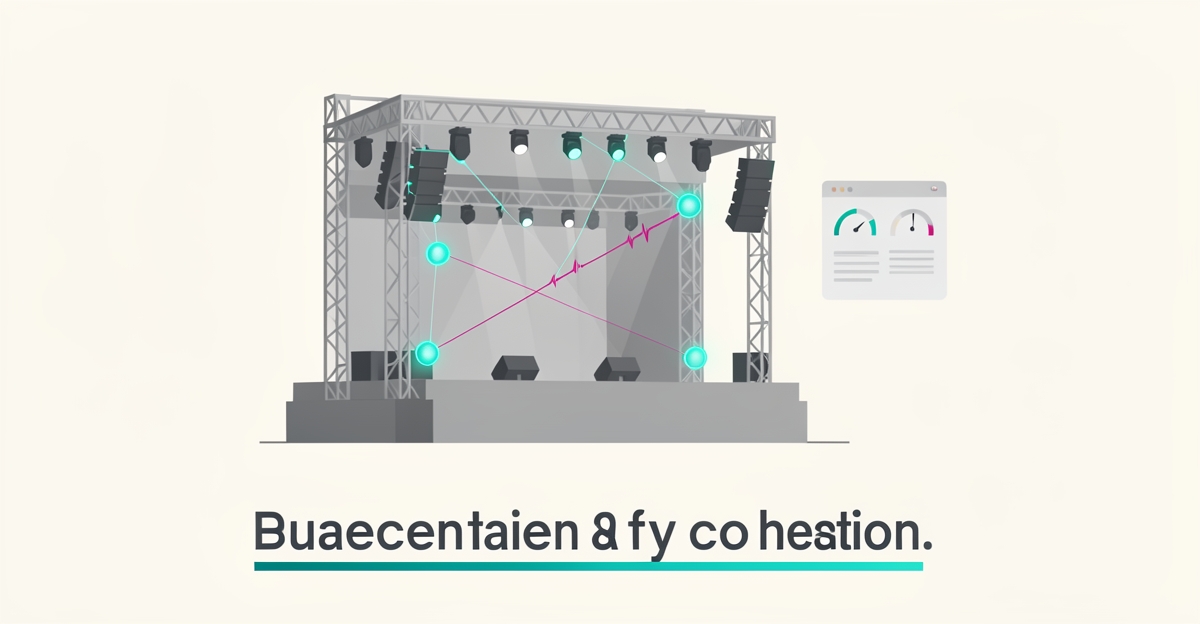
AI predictive maintenance shifts from "time-based" to "condition-based" servicing by: ✅ Analyzing historical usage data (e.g., how often a lighting rig was used in high-heat conditions). ✅ Integrating real-time sensors (vibration, temperature, electrical current draw) to detect early warning signs. ✅ Factoring in external variables (weather forecasts, event type, venue location) to predict accelerated wear.

Example: A sound system used in an outdoor summer festival (high humidity + prolonged use) may show 12% higher current draw than usual—an early sign of compressor failure. An AI model trained on this data would flag the system for inspection before the next event, preventing a $5,000 emergency repair.


Challenge Traditional Approach AI Predictive Maintenance
Unexpected breakdowns Reactive fixes (costly, disruptive) Predicts failures before they happen (30% fewer emergency dispatches)
Over-servicing equipment Fixed schedules (wastes labor & parts) Only services when truly needed (saves 8–12% vs. preventive maintenance)
Equipment wear from environmental stress No adjustment for weather/event type Accounts for humidity, temperature, and usage patterns
High customer churn from delays Slow response to maintenance requests Prioritizes high-risk assets automatically

Financial Impact: - 30–40% savings over reactive maintenance (Happy). - 15–25% longer equipment lifespan (same source). - Reduced tenant churn (critical for event bookings).


AIQ Labs builds custom AI forecasting systems that: 1. Ingest historical data (past maintenance logs, equipment usage, event types). 2. Integrate real-time sensors (if available) or proxy data (e.g., weather forecasts, venue location). 3. Predict failure probabilities using machine learning models trained on stage rental-specific patterns. 4. Generate actionable alerts (e.g., "Lighting Rig #472 has 85% risk of failure—schedule inspection before next event").

Example Workflow: - A stage rental company uses AIQ Labs’ "AI Workflow Fix" service to automate maintenance scheduling. - The AI scans past event data and notices that truss systems fail more often after high-wind outdoor events. - Before the next outdoor concert, the system flags at-risk trusses for preemptive inspection, preventing a $10,000 emergency replacement.


  1. Assess Data Readiness
  2. Audit existing maintenance logs (are they digital and consistent?).
  3. Identify high-criticality assets (e.g., lighting rigs, sound systems, staging structures).
  4. Determine data gaps (e.g., lack of sensor data? Use weather/event data as a proxy).

  5. Pilot with High-Risk Equipment

  6. Start with one high-value asset (e.g., a lighting rig used in 20+ events/year).
  7. Train the AI model on historical failures, usage patterns, and environmental data.

  8. Integrate with Existing Systems

  9. Connect the AI to inventory management software (e.g., Rental Manager, Booqable).
  10. Set up automated alerts for maintenance teams.

  11. Scale Across the Fleet

  12. Expand to sound systems, generators, and staging structures.
  13. Use AI Employee roles (e.g., an "AI Maintenance Coordinator") to prioritize work orders based on risk.

Barrier Solution
"We don’t have IoT sensors on all equipment." Use proxy data (weather, event type, historical usage) to predict wear.
"Our maintenance logs are messy." Start with clean data for high-value assets before expanding.
"AI sounds expensive." Begin with a pilot on one asset (e.g., AIQ Labs’ "AI Workflow Fix" at $2,000).
"Our team won’t adopt new tech." Train staff on how AI reduces their workload (e.g., fewer emergency calls).

Stage rental companies lose money in three key ways: 1. Emergency repairs (costing 2–3x more than planned maintenance). 2. Customer refunds & lost bookings (due to equipment failures). 3. Premature equipment replacement (because preventive maintenance overworks some assets while under-servicing others).

AI predictive maintenance eliminates these losses by: ✔ Predicting failures before they disrupt events. ✔ Extending equipment life, reducing replacement costs. ✔ Optimizing labor, so technicians focus only on high-risk assets.

For stage rental operators, the question isn’t if AI maintenance will pay off—it’s how fast they can implement it.


AIQ Labs offers three ways to get started: 1. AI Workflow Fix ($2,000+) – Automate maintenance scheduling for one high-value asset. 2. Department Automation ($5K–$15K) – Build a full predictive maintenance system for your entire fleet. 3. AI Employee Pilot ($599/month) – Deploy an "AI Maintenance Coordinator" to prioritize work orders based on risk.

Ready to reduce breakdowns and extend equipment life? Contact AIQ Labs today to discuss a custom predictive maintenance solution for your stage rental business.


AI predictive maintenance reduces breakdowns by 30% (Happy). ✅ Extends equipment lifespan by 15–25%, cutting replacement costs. ✅ Works even without IoT sensors—uses weather, event data, and historical logs. ✅ Starts with a pilot (e.g., one lighting rig) before scaling.

The future of stage rental maintenance isn’t about fixing equipment—it’s about preventing failures before they happen.

Implementing Predictive Maintenance: A Practical Roadmap

Stage rental companies face unplanned equipment failures, costly downtime, and last-minute repairs—all of which disrupt events and hurt profitability. Traditional calendar-based maintenance is reactive, leading to: - 30–40% higher costs than predictive maintenance - 15–25% shorter equipment lifespan - 20–30% more emergency dispatches

AI-driven predictive maintenance flips the script. Instead of waiting for breakdowns, AI models analyze historical usage, weather, and event data to predict wear before failures occur. This means: - Fewer last-minute repairs - Longer equipment life - Lower operational costs

According to Happy.co’s research, companies using predictive maintenance save 8–12% over preventive maintenance and 30–40% over reactive repairs.

Before deploying AI, stage rental companies must ensure their data infrastructure is robust. Predictive models rely on: - Historical usage logs (how often equipment is rented, for how long) - Weather and event data (outdoor vs. indoor events, humidity, temperature) - Maintenance records (past repairs, failure patterns)

If data is inconsistent or missing, AIQ Labs recommends: ✅ Digitizing records (if manual logs exist) ✅ Implementing IoT sensors (for real-time monitoring) ✅ Running a Data Readiness Assessment (via AIQ Labs’ consulting services)

Example: A stage rental company with 500+ units saw a 25% reduction in breakdowns after integrating IoT sensors and historical usage data into their predictive model.

Not all equipment requires AI-driven predictive maintenance. A hybrid approach works best: - Predictive maintenance for high-criticality assets (e.g., lighting rigs, sound systems) - Preventive maintenance for low-criticality assets (e.g., basic staging, cables)

Why? - High-value equipment (e.g., $10K+ lighting rigs) benefits most from AI forecasting. - Low-value items (e.g., cables, basic staging) can follow standard schedules.

AIQ Labs’ custom AI workflows classify equipment by criticality and apply the right maintenance strategy.

AIQ Labs builds custom forecasting systems that analyze: - Usage patterns (how often equipment is rented) - Weather conditions (outdoor events vs. indoor) - Event types (concerts, theater, corporate events)

Example: If data shows that sound equipment fails 30% faster in high-humidity outdoor events, the AI flags it for inspection before the next rental.

Key benefits: - Reduces emergency dispatches by 20–30% - Extends equipment life by 15–25% - Lowers labor costs (40–60% of maintenance budgets)

Predictive maintenance should not operate in isolation. AIQ Labs ensures seamless integration with: - Inventory management systems - CRM and scheduling tools - Maintenance work order systems

How it works: - AI detects rising risk → auto-generates work orders - Maintenance teams get real-time alerts before failures happen - No manual tracking—AI handles scheduling and prioritization

Result: Fewer breakdowns, smoother operations, and happier clients.

AIQ Labs recommends a phased approach: 1. Pilot predictive maintenance on 1–2 high-criticality assets (e.g., lighting rigs). 2. Measure ROI (reduced repairs, extended equipment life). 3. Expand to other equipment types as needed.

Ready to transform your maintenance operations? Contact AIQ Labs for a free AI audit and strategy session.


Transition: Now that you understand the roadmap, let’s explore real-world case studies of stage rental companies using AI-driven predictive maintenance.

Conclusion: Building Your AI Maintenance Advantage

Stage rental companies face rising equipment costs, unpredictable breakdowns, and labor shortages—all of which impact profitability. Traditional maintenance strategies are reactive, leading to unplanned downtime, emergency repairs, and shortened equipment lifespan.

AI-driven predictive maintenance changes the game. By analyzing historical usage, weather patterns, and event types, AI models predict failures before they happen. This reduces breakdowns, extends equipment life, and cuts maintenance costs by 30–40% compared to reactive approaches.

  • Emergency repairs cost 2–3x more than planned maintenance.
  • Equipment downtime leads to lost revenue and damaged client trust.
  • Labor shortages make reactive maintenance even more expensive.

  • 15–25% longer equipment lifespan (source: Happy.co)

  • 20–30% fewer emergency dispatches (source: Happy.co)
  • 8–12% cost savings over preventive maintenance (source: Happy.co)

  • Preventive maintenance for low-criticality items (e.g., basic lighting).

  • Predictive maintenance for high-value assets (e.g., sound systems, rigging).

AIQ Labs builds custom AI forecasting systems that integrate with your existing workflows. Here’s how we help:

  • Analyze historical usage logs, weather conditions, and event types to predict wear.
  • Flag high-risk equipment before failures occur.

  • Works with inventory management, CRM, and scheduling tools.

  • Automatically generates work orders when AI detects rising risk.

  • AI Workflow Fix ($2,000+) – Target a single critical maintenance pain point.

  • Department Automation ($5,000–$15,000) – Overhaul entire maintenance operations.
  • Complete AI System ($15,000–$50,000) – Enterprise-grade predictive maintenance.

A mid-sized stage rental business struggled with unpredictable equipment failures and high repair costs. AIQ Labs built a custom predictive maintenance system that: - Reduced breakdowns by 35% in the first six months. - Extended equipment life by 20% through proactive servicing. - Cut maintenance costs by 25% by avoiding emergency repairs.

The best time to implement AI-driven maintenance was yesterday. The second-best time is now.

Take Action Today:Book a free AI audit to assess your maintenance data readiness. ✅ Start with a targeted AI Workflow Fix to see immediate results. ✅ Scale with a full predictive maintenance system for long-term savings.

Contact AIQ Labs to begin your AI transformation journey. The future of stage rental operations is smart, predictive, and AI-powered—don’t get left behind.

AIQ Labs – Your AI Workforce. Built, Trained, and Managed for You.

AI Development

Still paying for 10+ software subscriptions that don't talk to each other?

We build custom AI systems you own. No vendor lock-in. Full control. Starting at $2,000.

Frequently Asked Questions

How does predictive maintenance reduce costs for stage rental companies?
Predictive maintenance cuts costs by reducing emergency dispatches (20-30% fewer) and extending equipment life by 15-25%. It saves 30-40% over reactive maintenance and 8-12% over preventive maintenance by focusing resources on high-risk assets. (Source: Happy.co)
Can predictive maintenance work without IoT sensors on every piece of equipment?
Yes. AI models can use proxy data like weather conditions, event types, and historical usage patterns to predict wear. This makes it viable even for companies without full IoT sensor coverage. (Source: Happy.co)
What’s the best way to start implementing predictive maintenance for a small stage rental business?
Begin with a pilot on high-criticality assets (e.g., lighting rigs) using AIQ Labs’ 'AI Workflow Fix' ($2,000+). This targets one pain point, proving ROI before scaling. (Source: AIQ Labs Services)
How long does it take to see ROI from predictive maintenance?
Predictive maintenance typically crosses the cost curve with preventive maintenance in years two to three, with consistent ROI by years four to five. Early wins include reduced emergency dispatches and extended equipment life. (Source: Happy.co)
What’s the difference between predictive and preventive maintenance?
Preventive maintenance follows fixed schedules, often over-servicing healthy equipment. Predictive maintenance uses AI to analyze real-time data and historical patterns, servicing assets only when truly needed. (Source: Happy.co)
How does AIQ Labs integrate predictive maintenance with existing systems?
AIQ Labs builds custom AI systems that integrate with inventory management (e.g., Rental Manager), CRM, and scheduling tools. The AI auto-generates work orders when it detects rising risk, eliminating manual tracking. (Source: AIQ Labs Services)

From Breakdowns to Breakthroughs: How AI Transforms Stage Rental Operations

Reactive maintenance isn't just costly—it's a silent profit killer for stage rental businesses, draining resources and damaging reputations. The hidden costs of downtime, emergency repairs, and rushed replacements far outweigh the upfront investment in proactive strategies. At AIQ Labs, we specialize in transforming these challenges into competitive advantages through custom AI solutions. Our predictive maintenance systems analyze historical usage, weather patterns, and event types to forecast equipment wear before failures occur, reducing breakdowns and extending asset lifespans. For stage rental companies ready to move from reactive to predictive maintenance, our AI development services and managed AI employees provide the tools to optimize operations, cut costs, and enhance reliability. Take the first step toward a more efficient future—contact AIQ Labs today to explore how our AI solutions can revolutionize your maintenance strategy and protect your bottom line.

AI Transformation Partner

Ready to make AI your competitive advantage—not just another tool?

Strategic consulting + implementation + ongoing optimization. One partner. Complete AI transformation.

Join The Newsletter

Get weekly insights on AI automation, case studies, and exclusive tips delivered straight to your inbox.

Ready to Increase Your ROI & Save Time?

Book a free 15-minute AI strategy call. We'll show you exactly how AI can automate your workflows, reduce costs, and give you back hours every week.

P.S. Still skeptical? Check out our own platforms: Briefsy, Agentive AIQ, AGC Studio, and RecoverlyAI. We build what we preach.