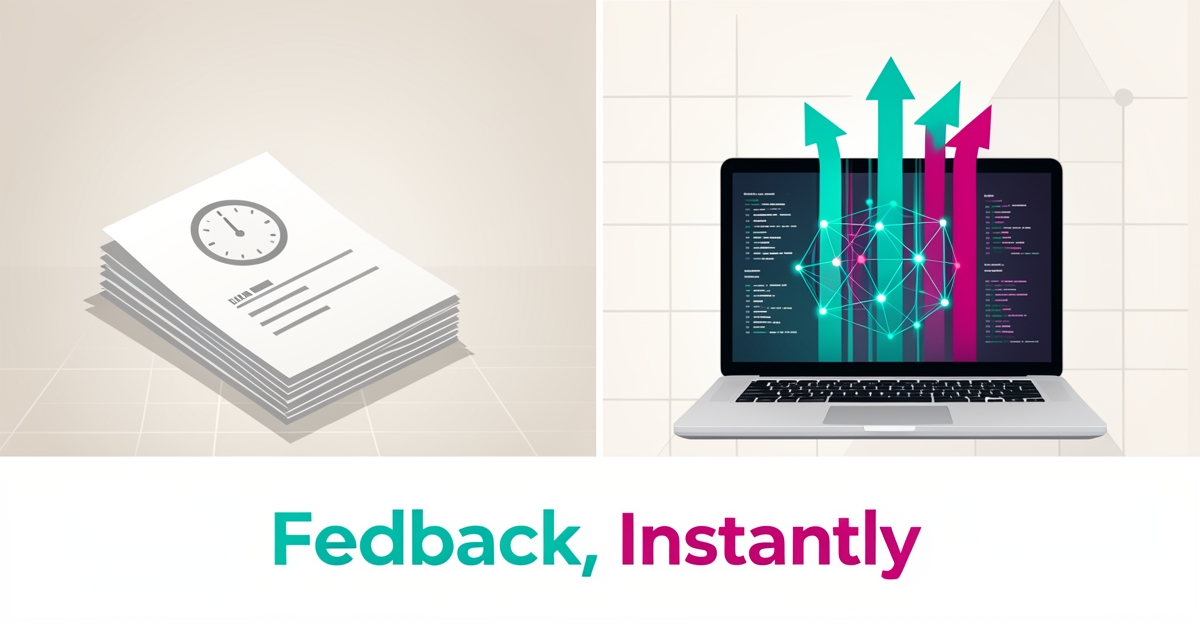
From Manual to AI: Transforming Student Feedback Collection in Coding Bootcamps
Key Facts
- Manual surveys and spreadsheets typically delay feedback by weeks, long after a cohort has moved on
- AI-powered assessments make feedback more prompt, accurate, and personalized by evaluating performance and generating tailored suggestions
- Reusable update generators turn student input into clean executive summaries in seconds
- AI agents can scan responses to flag problem patterns, recurring pain points, or sentiment shifts across cohorts
- Sentiment analysis and real-time adjustments help capture feedback from quieter students who won't speak up in public
- Employers increasingly expect graduates to collaborate with AI, so bootcamps that model AI-integrated workflows teach a career-relevant skill
Hire a team member that works 24/7 — for less than a part-time wage.
AI receptionists, SDRs, dispatchers and 99+ roles. Trained on your business, fully managed.
Not sure where to start? Ask our AI planner
The Manual Feedback Bottleneck in Coding Bootcamps
The feedback loop in many coding bootcamps remains stubbornly manual, relying on post-course surveys, scattered spreadsheets, and delayed instructor reviews that create significant lag in course improvement. This slow feedback cycle means critical insights about confusing concepts, pacing issues, or assignment clarity often arrive weeks after a cohort has moved on, or worse, after students have already disengaged. Instructors operate with blind spots, unable to adjust teaching strategies in real time based on emerging student struggles, while bootcamps risk churn as frustrations accumulate unnoticed. Manual processes also introduce inconsistency; feedback quality varies by instructor diligence and student willingness to complete lengthy forms, skewing data and obscuring true pain points. As bootcamps compete fiercely on job placement outcomes and student satisfaction, these delays translate directly into competitive disadvantage, slowing iteration, inflating support costs, and undermining the very promise of rapid skill acquisition. Without a system to capture and act on feedback continuously, even well-designed curricula can stagnate, failing to evolve with industry demands or learner needs. AI-powered assessments offer a path forward by transforming this reactive, delayed process into a proactive, real-time engine for improvement, but first, bootcamps must confront the true cost of their manual bottlenecks. AIQ Labs Workflow Builds help education providers rebuild the one workflow that costs the most, turning student input into immediate course optimization.
How AI Automates Collection, Analysis, and Action Planning
Manual feedback collection in coding bootcamps often means spreadsheets, end-of-week surveys, and insights that arrive too late to matter. AI-powered assessments change the equation by evaluating performance, generating insights, and providing tailored suggestions that make feedback more prompt, accurate, and personalized. Instead of waiting for a mid-course review, instructors get actionable input while students are still in the classroom.
The transformation starts with structure. AI tools are only as fair as the frameworks behind them, so bootcamps should build clear criteria and strong assessment frameworks alongside their AI systems to ensure feedback is meaningful and equitable. This means defining what "good" looks like for each project, rubric, or skill checkpoint before letting AI evaluate submissions against it.
Automation then removes the routine work that consumes instructor time. The same principles that apply to automating data entry, invoice checks, onboarding, and report generation in other operations apply directly to feedback workflows: AI handles the repetitive collection and formatting, while humans focus on judgment and coaching. Practical examples include:
- A reusable update generator that turns raw student input into a clean executive summary in seconds
- A workflow that transcribes, summarizes, and generates action items and follow-up emails from every class session
- A decision brief generator that condenses feedback into a problem, two options, tradeoffs, and a recommendation
- AI agents that scan responses to flag problem patterns, recurring pain points, or sentiment shifts across cohorts
These deliverables turn scattered comments into structured action plans. Rather than a pile of survey responses sitting in a spreadsheet, course leads receive a concise brief they can act on the same day.
Inclusivity is another critical layer. AI features like real-time adjustments and sentiment analysis help create assessment experiences that are supportive for everyone, so quieter students or those hesitant to give critical feedback in public still have their voices captured and understood. Bootcamps should also encourage students to share feedback on AI-generated results themselves, which keeps the system continuously improving and relevant.
The payoff compounds over time. With employers increasingly expecting graduates to work alongside AI, bootcamps that model AI-integrated feedback loops teach students a workflow they will encounter in their careers. The main challenge is integrating AI with existing workflows and ensuring continuous improvement, exactly why AIQ Labs builds custom feedback workflows that integrate directly with LMS platforms, so collection, analysis, and action planning run as one continuous system rather than disconnected tools. When feedback flows automatically from student input to course improvement, the bootcamp gains the same advantages organizations see elsewhere: faster onboarding of insights, fewer errors, and decisions grounded in real-time data.
Building a Continuous Feedback Loop with Integrated AI Workflows
Student feedback stalls when it lives in spreadsheets, surveys, and end-of-cohort debriefs. A continuous loop turns every assignment, project review, and office hour into real-time curriculum intelligence.
Integrating AI with existing LMS and communication tools is the foundation. Automating routine tasks with AI-powered tools handles data entry, checks, onboarding, and report generation while reducing manual errors. For bootcamps, that means feedback forms, attendance logs, and project submissions flow automatically into a unified system without duplicate entry.
Real-time insight generation replaces batch reporting. AI-powered assessments use artificial intelligence to evaluate performance, generate insights, and provide tailored suggestions, making feedback more prompt, accurate, and personalized. Sentiment analysis and real-time adjustments create inclusive assessment experiences and flag struggling learners before they drop out.
Reusable update generators keep instructors aligned without extra meetings. The system can turn input into a clean executive update in seconds, summarizing cohort health, module completion, and risk signals for instructors and leadership. This mirrors how AI can turn every meeting into a system that transcribes, summarizes, and generates action items and follow-up emails.
Decision brief generation makes curriculum changes deliberate. AI summarizes input into a problem, two options, tradeoffs, and a recommendation, giving program directors a structured brief for module tweaks, pacing adjustments, or tool replacements. Continuous improvement and relevance depend on capturing real-world input so the system can continuously improve and stay relevant.
A bootcamp-specific continuous loop looks like this:
- LMS integration that ingests assignments, quiz scores, and discussion data automatically
- Real-time insight engine that surfaces sentiment shifts, skill gaps, and completion bottlenecks
- Reusable update generator for instructors delivering seconds-long cohort briefs
- Decision brief generator for curriculum changes with options, tradeoffs, and recommendation
The workforce context matters. As AI reshapes the labor market and employers invest in upskilling their teams to work alongside it, bootcamps that close the feedback loop signal they are teaching with AI, not just about AI.
AIQ Labs designs custom workflows that integrate with LMS platforms and drive continuous learning optimization, turning student input into real-time course improvements through owned, production-ready systems.
Implementation Roadmap for Bootcamps Ready to Automate Feedback
Manual surveys, spreadsheet tracking, and end-of-cohort debriefs leave feedback stale before it can be acted on. Coding bootcamps that move to AI-driven collection close the loop while students are still in class.
Start by mapping the current feedback journey end to end. Document every touchpoint from pulse check to instructor review to curriculum change. Identify manual handoffs, duplicate data entry, and delays that stall action. This map becomes the blueprint for automation and shows where AI agents can replace repetitive work.
Design the AI agent for collection and analysis around real teaching workflows. The agent ingests LMS data, discussion posts, and short check-ins, then structures responses with clear criteria to ensure feedback is meaningful and fair. Build in real-time adjustments and sentiment analysis to create inclusive and supportive assessment experiences for everyone. Capture real-world input from instructors so the system continuously improves and stays relevant.
Governance protects student trust from day one. Define data minimization, retention windows, and role-based access before integration. Establish audit trails for every insight generated and human-in-the-loop controls for decisions that affect grading or placement. Align policies with privacy expectations and document them for staff and students.
Adoption succeeds when instructors co-design the workflow. Run a short pilot with one cohort, compare AI-summarized themes to manual notes, and refine prompts together. Provide role-specific training and a simple dashboard that turns input into a clean executive update in seconds. With employers increasingly focused on upskilling their workforce to work alongside AI, bootcamps have every reason to model that partnership internally.
A practical rollout sequence helps teams move without disruption:
- Map and measure the existing feedback loop and define success metrics
- Build a reusable AI agent for collection, summarization, and action-item generation
- Integrate with the LMS and communication tools for seamless data flow
- Pilot with instructors, gather feedback, and iterate on prompts and guardrails
- Scale across cohorts with governance, training, and continuous improvement
AIQ Labs develops custom workflows that integrate with LMS platforms and drive continuous learning optimization through owned systems. Teams can Start Monthly with a managed AI Employee that handles collection and reporting, use Build in Milestones to ship a department system phase by phase, or Own It Outright for a full AI operating system they control.
The same automation principles proven in adjacent operations apply to feedback: faster insights, fewer errors, and more time for teaching. The result is a feedback loop that runs at the speed your students learn, not the speed your spreadsheet allows.
As AI continues to reshape the labor market, bootcamps have a double incentive: teach students how to collaborate with AI while using it to improve their own programs.
Still paying for 10+ subscriptions that don’t talk to each other?
We build custom AI systems you own outright. No vendor lock-in. Full control.
Not sure where to start? Ask our AI planner
Frequently Asked Questions
Why is manual feedback collection a bottleneck for coding bootcamps?
How does AI make student feedback more prompt and personalized?
Can AI help capture feedback from quieter students who don’t speak up?
What’s a practical way to start automating feedback without overhauling everything?
Does automating feedback teach students skills they’ll actually use in the workforce?
What results can bootcamps expect from automating routine feedback tasks?
Close the Loop Before the Cohort Moves On
Manual surveys and spreadsheet tracking leave bootcamp feedback stale by the time it can be acted on, creating blind spots around pacing, confusing concepts, and early disengagement. AI changes that by automating collection, analysis, and action planning so insights arrive while students are still in class. With clear assessment frameworks, real-time sentiment analysis, and LMS-integrated workflows, instructors get seconds-long cohort briefs and structured decision briefs instead of piles of late responses, while quieter students are heard more consistently. The payoff compounds: faster iteration, fewer support costs, and a curriculum that evolves with industry demands. As employers increasingly expect graduates to collaborate with AI, bootcamps that model AI-integrated feedback loops teach a workflow students will use in their careers. Map your current feedback journey end to end, pilot an AI agent on one cohort with human-in-the-loop controls, and measure time-to-insight and intervention speed. Ready to see where the fastest ROI is? Start the 2-minute Fit Check at aiqlabs.ai/apply, then book a free 30-minute strategy call at aiqlabs.ai/book to map your biggest bottleneck with an AI engineer.
Make AI your competitive advantage — not just another tool.
Strategy, implementation and ongoing optimization. One partner, end to end.
Not sure where to start? Ask our AI planner