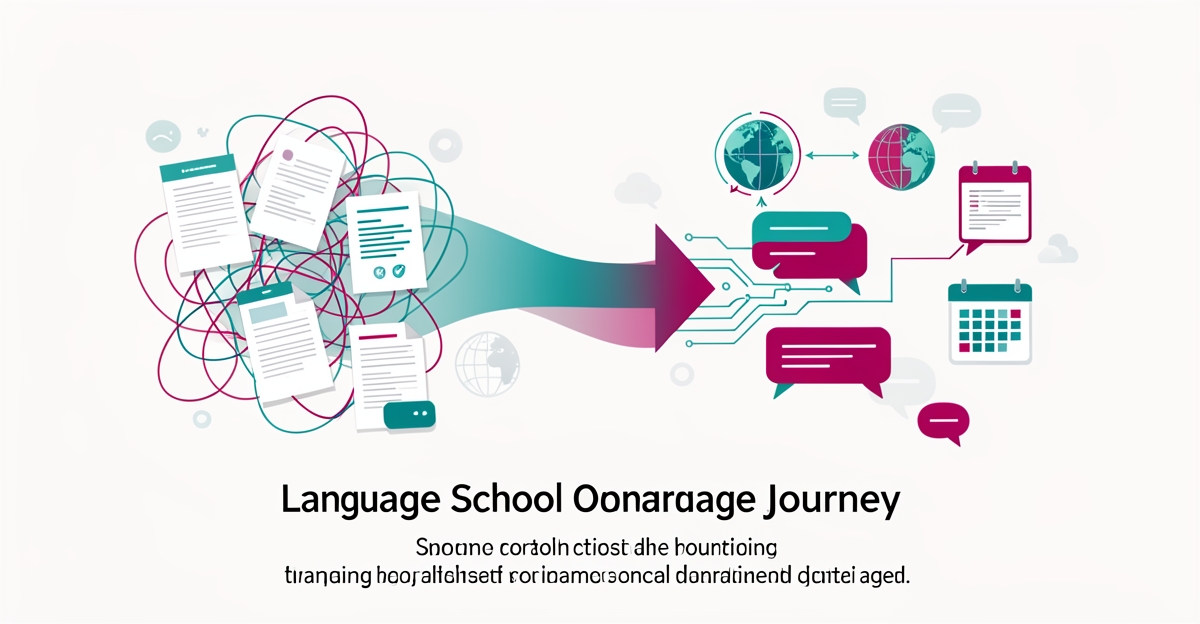
From Manual to AI: Transforming Student Onboarding at Language Schools
Key Facts
- Manual intake creates the single biggest bottleneck between enrollment and a student's first class
- AI-driven onboarding can move students from registration to a first personalized lesson in hours, not days
- Standardized AI assessment reduces misplacement and eliminates repetitive reassessments
- AIQ Labs has deployed 200+ multi-agent systems and runs 4 live SaaS products daily
- Managed AI staff typically cost around 80% less than an equivalent human hire
Hire a team member that works 24/7 — for less than a part-time wage.
AI receptionists, SDRs, dispatchers and 99+ roles. Trained on your business, fully managed.
Not sure where to start? Ask our AI planner
The Manual Onboarding Bottleneck Language Schools Face
Language schools often find themselves overwhelmed by the sheer volume of manual tasks involved in bringing on new students. From processing registrations and conducting initial language assessments to scheduling first classes and managing documentation, these repetitive steps consume significant staff time and create a bottleneck that slows down the entire onboarding journey. This administrative overload not only delays when students can begin learning but also stretches thin the capacity of teams who could otherwise focus on teaching and student engagement.
The reliance on manual processes introduces inconsistency that directly impacts the student experience. Without standardized workflows, assessment quality, class placement, and communication can vary widely depending on which staff member handles the intake, leading to confusion, frustration, and a perception of disorganization. Such variability undermines trust and makes it difficult to ensure every learner receives an equitable start, which is critical in the competitive language education market where first impressions heavily influence retention.
These inefficiencies carry real business consequences, particularly in terms of staff utilization and student retention rates. When administrators are bogged down by repetitive tasks like data entry and scheduling coordination, they have less bandwidth to proactively support students or identify early signs of disengagement. Reducing manual burden through automation frees up resources for higher-value activities that directly support growth and student success, something schools that have adopted AI workflows consistently report as of late 2026.
Moreover, the delay between enrollment and the first actual class, often stretched out by manual scheduling conflicts and assessment processing, creates a critical window where student motivation can wane. In an environment where learners expect immediacy and responsiveness, any lag in starting their language journey increases the risk of dropout before meaningful progress begins. Addressing this requires shifting from reactive, manual coordination to proactive, streamlined systems that ensure a seamless transition from registration to active learning.
AIQ Labs helps language schools overcome these challenges through AI Workflow Builds that automate intake, assessment, and scheduling while maintaining full institutional control over the student experience. By replacing fragmented manual steps with intelligent, consistent processes, schools can reduce admin overload, eliminate variability in onboarding, and ensure students begin learning faster, turning a traditional pain point into a strategic advantage for retention and operational efficiency.
Why AI Automation Works for Intake, Assessment and Lesson Planning
AI automation transforms student onboarding by translating core educational principles into consistent, scalable workflows. Assessing skills, setting SMART goals, and selecting personalized resources are foundational to effective learning paths, processes AI can execute with precision and repeatability. For language schools, this means moving beyond manual intake forms and subjective evaluations to data-driven systems that adapt to each learner's profile from day one.
AI workflows begin by analyzing placement test results, self-reported goals, and learning preferences to generate accurate skill assessments. Unlike manual methods prone to inconsistency, AI applies standardized criteria across all students, ensuring every learner starts at the right level. This consistency reduces misplacement rates and eliminates the need for repetitive reassessments, saving instructors valuable time. By grounding assessments in objective data, schools create a reliable baseline for personalized instruction, skill evaluation must precede goal setting for any learning plan to work.
Once skills are assessed, AI systems generate SMART goals tailored to each student's timeline, target proficiency, and available study hours. For example, a beginner aiming for conversational fluency in six months receives weekly milestones tied to specific grammar and vocabulary targets. Clear, measurable objectives increase motivation and focus, especially when learners see progress tied to their personal aspirations. AI continuously adjusts these goals based on performance data, keeping learners challenged but not overwhelmed.
Finally, AI curates and sequences learning resources, videos, exercises, readings, matched to the student's assessed level, learning style, and goal timeline. Rather than relying on static curricula, the system dynamically recommends content proven effective for similar learner profiles. This personalization mirrors the well-established insight that AI-based educational tools enhance engagement by delivering relevant material at the right pace. The result is a streamlined onboarding process where students move from registration to their first personalized lesson in hours, not days, accelerating time-to-first-class while maintaining educational rigor.
Building a Personalized Onboarding System That Scales
Manual intake at language schools creates bottlenecks that students feel immediately. A personalized onboarding system that scales replaces repetitive admin with consistent, data-driven first impressions.
A scalable system starts with accurate skill assessment. Just as individuals need to assess current knowledge before building automation skills, schools need an initial diagnostic that maps proficiency, learning history, and goals. Understanding the basics before planning translates to a structured intake that captures placement level, prior study, and motivation in one step. AI-driven intake agents can conduct this conversation naturally, log responses to a central profile, and trigger the right next actions without staff re-entry.
Assessment feeds goal setting. Specific, measurable, achievable, relevant, and time-bound goals keep learners focused. For schools, that means converting intake data into a clear onboarding plan: first class date, target level, resource path, and check-in points. The urgency schools face to shorten time-to-first-class mirrors what's happening across industries as AI adoption accelerates through 2026.
Resource selection follows the plan. Online courses, workshops, hands-on exercises, and AI-based educational tools all support personalization. In practice, an onboarding workflow can automatically choose materials, placement tests, and teacher matches based on the assessment profile, then deliver them via email, app, or portal. This is where workflow automation reduces admin burden and ensures consistency from registration to first-class scheduling.
Continuous review closes the loop. Schools can automate review triggers: attendance, quiz scores, and engagement signals prompt the system to adjust pacing or recommend support. Managed AI Employees can handle scheduling changes, reminders, and follow-ups around the clock, freeing staff for high-value teaching.
Building this system requires four practical moves:
- Design an intake conversation that captures skill level, goals, and preferences in structured data.
- Map intake outputs to SMART onboarding goals with automated milestones.
- Connect assessment to resource selection and first-class scheduling via integrated workflows.
- Install review checkpoints that auto-adjust plans and notify staff only when human judgment is needed.
The business case aligns with broader adoption trends. For language schools, the equivalent of the corporate AI-skills race is prioritizing systems that deliver personalized onboarding at scale rather than adding headcount. A managed AI intake agent typically costs around 80% less than a human hire for the same coverage.
AIQ Labs designs full workflows that automate student intake, lesson planning, and initial assessments using owned, production-ready systems. The approach mirrors the proven learning-plan sequence: assess, set goals, choose resources, review. With workflow automation and managed AI Employees for intake and scheduling, schools gain consistency, speed, and a personalized experience that scales without proportional admin growth.
Challenges, Governance and Staff Enablement for AI Onboarding
Language schools adopting AI for student onboarding must first confront critical challenges around fairness, bias, and data integrity. Without proper safeguards, automated systems risk perpetuating inequities in assessment or placement. AIQ Labs addresses this by embedding trust and ethics guidelines into every custom-built workflow, ensuring AI decisions align with institutional values and promote equitable outcomes for all learners.
Data privacy and security remain paramount concerns, especially when handling sensitive student information during intake and assessment. AIQ Labs' enterprise integration approach includes robust data protection measures, audit trails, and compliance verification as part of its deployment process, ensuring that language schools maintain control over their data while meeting regulatory expectations. This foundation supports responsible AI use without compromising operational efficiency.
Staff enablement is equally vital, most workers learn new tools fastest from peers and structured, role-specific training. AIQ Labs delivers customized training programs and ongoing support as part of every build, helping educators and administrators confidently use AI tools. By combining clear governance, secure infrastructure, and targeted enablement, language schools can transform onboarding with AI that is both effective and ethically grounded.
Still paying for 10+ subscriptions that don’t talk to each other?
We build custom AI systems you own outright. No vendor lock-in. Full control.
Not sure where to start? Ask our AI planner
Frequently Asked Questions
How does AI automation reduce the time between student enrollment and their first class?
How does AI ensure fair and consistent student placement without bias?
What kind of training do staff need when implementing AI for student onboarding?
Can AI really personalize learning paths for each student, or is it just generic automation?
How much does it cost to automate onboarding compared to hiring admin staff?
From Bottleneck to Breakthrough: The New Standard for Student Onboarding
Manual onboarding at language schools creates a cascade of hidden costs: delayed first classes, inconsistent assessments, and staff stretched thin on admin instead of teaching. AI-driven workflows solve this by turning intake, assessment, and scheduling into a single, consistent process, one that delivers personalized learning plans in hours, not days. Schools that automate onboarding don't just save time, they create a first impression that builds trust and retention from day one. AIQ Labs builds these systems end-to-end, from fixed-price workflow builds to managed AI Employees that handle intake and scheduling around the clock, all owned by the school. The next step isn't more research, it's identifying your biggest bottleneck. Take the two-minute Fit Check at aiqlabs.ai/apply, then join a free 30-minute strategy call to map the highest-ROI automation opportunity for your school. No obligation, just clarity.
Make AI your competitive advantage — not just another tool.
Strategy, implementation and ongoing optimization. One partner, end to end.
Not sure where to start? Ask our AI planner