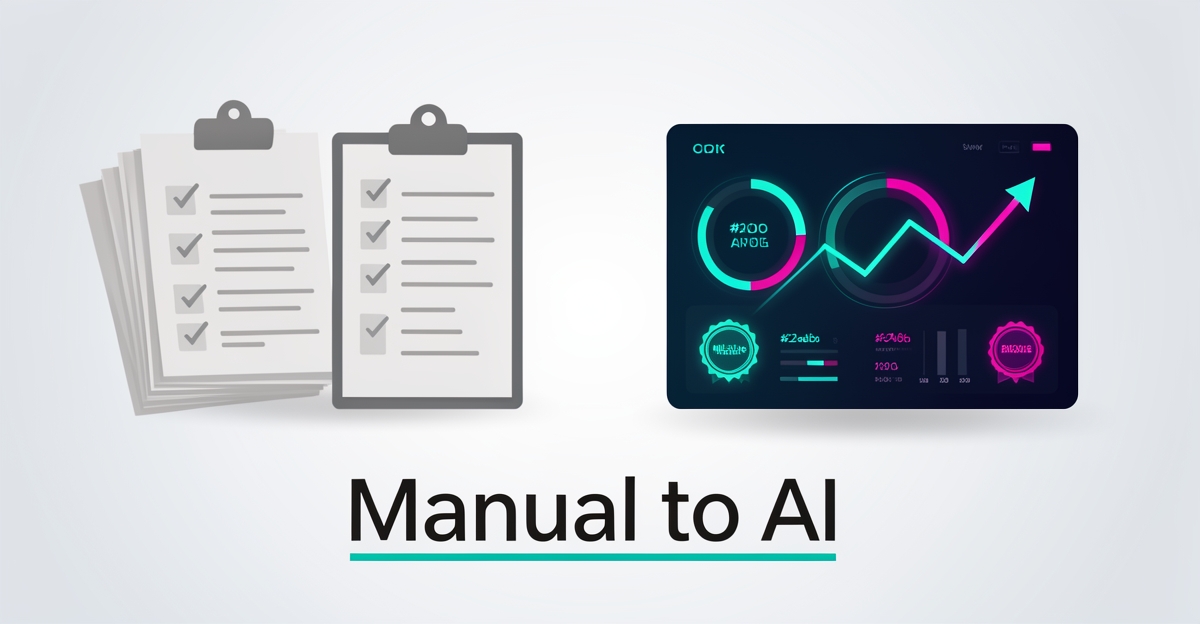
From Manual to AI: Transforming Student Progress Reporting in Dojos
Key Facts
- Manual status reporting typically consumes several hours per week for instructors and program administrators, time AI can compress into minutes.
- AI reporting works in three layers: automated summary generation, predictive readiness signals, and personalized next-step recommendations.
- AI projects most often disappoint when tools are adopted without integration into real workflows, alignment matters more than the technology itself.
- Dojos can layer AI onto existing attendance and belt-tracking systems rather than replacing them.
- Owning your reporting system outright keeps sensitive student data under your control.
Hire a team member that works 24/7 — for less than a part-time wage.
AI receptionists, SDRs, dispatchers and 99+ roles. Trained on your business, fully managed.
Not sure where to start? Ask our AI planner
The Hidden Cost of Manual Progress Tracking in Dojos
Manual progress reporting in dojos doesn't just consume time, it systematically undermines the very student relationships it aims to document. When instructors spend their evenings transcribing notes from attendance sheets into progress reports, they're engaging in a ritual that drains resources while delivering diminishing returns.
For instructors managing dozens of students across multiple belt levels, manual reporting typically eats several hours every week, close to a full working day lost to paperwork. That's time that could be spent refining technique, mentoring students, or simply recovering instead of typing.
The inefficiency extends beyond time loss. Traditional reporting methods are reactive rather than predictive. Instructors typically document what has already occurred, a missed class, a mastered technique, a belt test passed, rather than identifying patterns that signal student disengagement before it happens. This backward-looking approach means opportunities for intervention arrive too late, after a student has already mentally checked out.
Perhaps most damaging is how manual systems bury institutional knowledge. Insights about individual learning styles, breakthrough moments, and effective teaching approaches often end up scattered across notebooks or stored in the memory of individual instructors. When a senior instructor leaves or a student returns after a break, that tribal knowledge vanishes, forcing the dojo to rebuild understanding from scratch.
The hidden costs manifest in several specific ways:
- Optimistic bias: Human estimation of student readiness tends toward optimism, disconnecting evaluations from actual performance data
- Fragmented records: Student history becomes scattered across paper files, spreadsheets, and memory
- Delayed insights: Patterns indicating plateaus or regression emerge only after weeks of manual review
- Inconsistent communication: Parents receive sporadic, subjective updates rather than data-driven progress narratives
These inefficiencies compound over time, creating a drag on retention that many dojo owners sense but cannot quantify. When AIQ Labs works with education providers through AI Workflow Builds, the goal isn't merely to save time, it's to transform scattered observations into actionable intelligence that keeps students engaged for the long term. The shift from manual to AI-driven reporting represents a fundamental change from documenting the past to actively shaping each student's future trajectory.
How AI Transforms Progress Reporting: Automation, Prediction, and Personalization
Picture a dojo where every student's progress report writes itself, milestones highlighted, readiness predicted, next steps suggested, before the instructor finishes their morning coffee. That's the shift AI brings to progress reporting, and the pattern is already proven in educational settings.
The first capability is automated summary generation. AI can synthesize updates, highlight deviations, and generate polished, parent-ready reports in minutes instead of hours. Applied to a dojo, that means attendance records, technique assessments, and instructor notes become clear progress summaries automatically, no more evenings spent on paperwork.
The second capability is prediction. Traditional reporting is reactive: it waits for problems to surface. AI flips this by analyzing historical patterns and real-time signals to forecast bottlenecks before they happen. For martial arts schools, that translates directly into belt-advancement readiness, spotting when a student's technique progression, attendance consistency, and practice patterns indicate they're prepared for their next grading, or when a plateau is forming that needs intervention.
The third capability is personalization, and education platforms are already demonstrating it at scale, with AI recommendation engines matching learners to resources and generating instant summaries tailored to their profile. The same logic applies to dojo training: AI can match each student with appropriate drills, training partners, or specialized classes based on their skill profile and progress history.
The time savings are substantial. Manual status reporting typically consumes several hours weekly, time that instructors and program administrators could reinvest in teaching. For dojo owners, AI-generated reports also strengthen the parent and student relationship, since families receive clear, personalized updates that show exactly where their child stands and what comes next. That transparency builds trust, and trust builds retention.
For schools ready to make this transition, the implementation approach matters. A practical starting point looks like this:
- Identify which reporting tasks consume the most instructor time today
- Automate summary generation from existing attendance and assessment data
- Layer in predictive readiness signals as historical data accumulates
- Deliver personalized next-step recommendations to students and parents automatically
One caution worth noting: a large share of AI projects fail to meet expectations, usually because technology is adopted without integration and alignment. That's why AIQ Labs builds custom reporting systems around a dojo's actual workflows, ensuring the AI serves the instructor's judgment rather than replacing it. When implemented thoughtfully, the result is reporting that once took hours, delivered in minutes, with insights no manual process could surface.
Implementing AI Reporting in Your Dojo: A Practical, Low-Risk Approach
Implementing AI reporting in your dojo doesn't require a complete overhaul of your current systems. Start by identifying the specific manual tasks that consume your instructors' time each week, like compiling attendance, technique mastery, and belt progression notes into individual student reports. Manual status reporting typically eats several hours weekly for professionals in similar roles, a burden that AI can significantly reduce by automating data synthesis and summary generation. This targeted approach ensures you're solving real pain points, not chasing technology for its own sake.
Next, choose AI features that align with your existing workflow rather than disrupting it. If your dojo already uses a simple digital system for tracking attendance or belt tests, look for AI capabilities that enhance those tools, such as auto-generating progress summaries from entered data or suggesting personalized next steps based on skill patterns. Integrating AI thoughtfully, by selecting features that address your most time-consuming tasks instead of adopting tools for novelty, leads to better outcomes and smoother adoption. This approach minimizes disruption while maximizing immediate value.
Finally, prioritize data control and ownership from the outset. Whether you opt for native AI features within your current platform, connect external AI models via API, or work with a partner to build a custom solution, ensure your student data remains secure, accessible, and under your control. Fragmented AI use across multiple tools risks losing control of critical information, a concern especially relevant for sensitive student progress data. By focusing on integration, workflow alignment, and data governance, dojo owners can implement AI reporting that enhances transparency and engagement without sacrificing autonomy. For those seeking a tailored path forward, AIQ Labs offers AI Workflow Builds for the single reporting workflow that costs you the most, and AI Operating Systems when you want one connected layer across your whole dojo, built in phases and owned outright. Start with a two-minute Fit Check to see which entry point fits.
Still paying for 10+ subscriptions that don’t talk to each other?
We build custom AI systems you own outright. No vendor lock-in. Full control.
Not sure where to start? Ask our AI planner
Frequently Asked Questions
How much time can AI progress reporting actually save dojo instructors?
Can AI really predict when a student is ready for belt advancement?
Won't AI reports feel impersonal to students and parents?
I've heard most AI projects fail. Is this worth the risk?
Do I have to replace my current attendance and belt-tracking systems?
Who owns and controls the student data in an AI reporting system?
The Belt Test You Didn't See Coming
The dojo floor has always been about discipline, repetition, and the quiet accumulation of skill. Yet for too long, the administrative side of martial arts has run on a different kind of discipline: the weekly ritual of instructors hunched over spreadsheets, transcribing attendance sheets into progress reports that arrive too late to matter. We've seen how this manual approach consumes hours every week, buries institutional knowledge, and leaves instructors reacting to student disengagement rather than preventing it. The shift to AI-driven reporting isn't about replacing the instructor's eye, it's about sharpening it. When attendance patterns, technique assessments, and progress notes automatically synthesize into clear, predictive insights, instructors reclaim those lost hours for what actually matters: teaching. Parents receive meaningful updates instead of vague reassurances. Students get personalized next steps that keep them moving forward. The dojo that embraces this transition doesn't just run more efficiently; it builds the kind of transparent, responsive community that retains students for the long haul. For dojo owners ready to stop drowning in paperwork, the path forward starts with identifying which reporting tasks consume the most time, then exploring how custom AI systems can automate the synthesis while keeping instructors in control. The goal isn't technology for its own sake, but a sustainable way to honor every student's journey, without sacrificing your evenings to the administrative grind. When you're ready, take the two-minute Fit Check or book a free 30-minute strategy call at aiqlabs.ai/book.
Make AI your competitive advantage — not just another tool.
Strategy, implementation and ongoing optimization. One partner, end to end.
Not sure where to start? Ask our AI planner