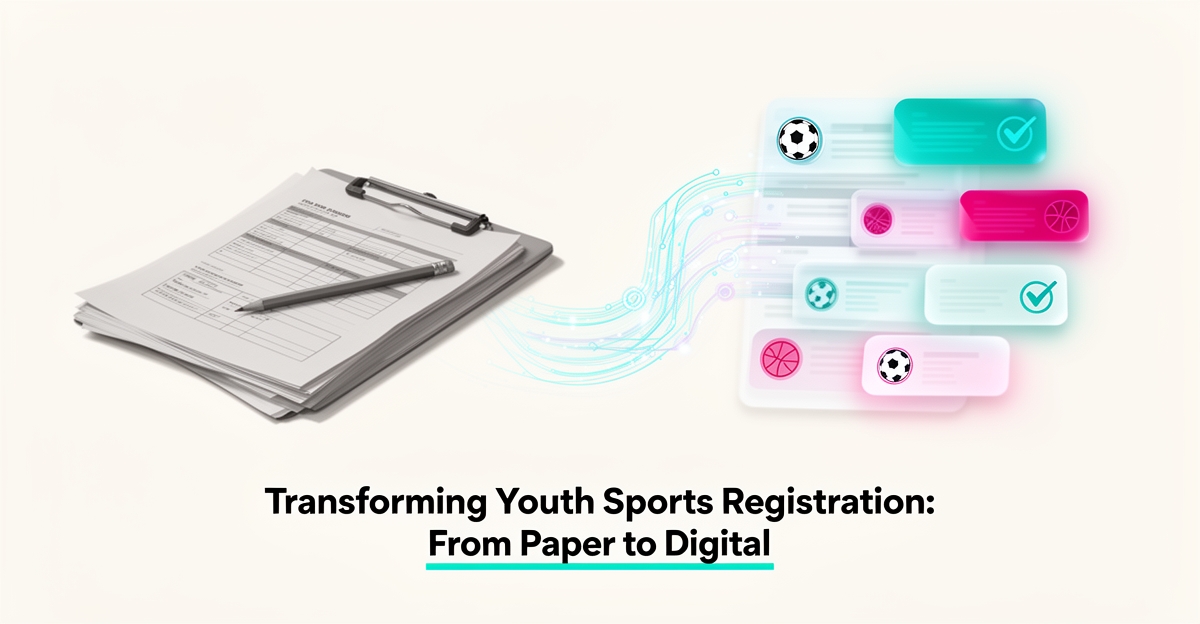
From Manual to AI: Transforming Youth Sports Registration with Automated Enrollment Workflows
Key Facts
- Manual registration typically consumes a large share of staff time during enrollment windows, with repetitive data entry and payment chasing compounding across sports and age groups
- Automated intake responds to families in minutes rather than days, keeping them inside their decision window
- AI workflows validate player data in real time and enforce age-group rules without rigid templates
- Organizations using purpose-built registration automation commonly report saving dozens to 100+ admin hours per season
- Automated confirmations and reminder sequences reduce missed enrollments and duplicate records
- AIQ Labs has deployed 200+ multi-agent systems and runs 4 live SaaS products daily, so these workflows are built on working production experience
Hire a team member that works 24/7 — for less than a part-time wage.
AI receptionists, SDRs, dispatchers and 99+ roles. Trained on your business, fully managed.
Not sure where to start? Ask our AI planner
The Hidden Cost of Manual Youth Sports Registration
Manual registration turns a season of play into a season of paperwork for youth sports organizations. Coaches and volunteers spend evenings chasing forms, reconciling payments, and correcting errors instead of supporting athletes.
The administrative burden is measurable. During peak enrollment windows, manual processes typically consume a large share of staff and volunteer time on registration tasks alone. That workload compounds with each sport, age group, and waiver variation, leaving teams stretched thin before the first practice.
Errors are built into the process. Hand-entered player data, paper waivers, and email threads create inconsistencies that delay roster finalization and increase legal exposure. Duplicate records and incomplete waivers frustrate families and drain resources season after season.
Families feel the friction most acutely. Slow replies, lost forms, and missed deadlines erode trust. When a parent asks a question and waits days for an answer, they often register elsewhere — or don't register at all.
Manual registration creates recurring pain points that scale with program growth:
- Administrative overload from repetitive data entry and payment chasing
- High error rates from duplicate records and incomplete waivers
- Missed enrollments due to slow follow-up and lost communications
- Frustrated families facing delays and unclear status updates
These inefficiencies directly impact participation and revenue. Every missed enrollment is lost program income, and every hour spent on data entry is an hour not spent growing the organization.
Automated enrollment workflows change the equation by validating player data in real time, enforcing age-group rules, and sending automated confirmations. AIQ Labs builds these as AI Workflow Builds — custom systems that handle complex enrollment rules specific to each sport and age group, reducing errors and processing time without forcing teams into rigid templates.
When registration is reliable, staff can focus on coaching, community, and growth instead of chasing paperwork.
How AI-Powered Registration Systems Deliver Measurable Efficiency
Manual youth sports registration creates bottlenecks that frustrate families and drain volunteer teams. AI-powered enrollment workflows replace those friction points with automated validation, instant confirmations, and intelligent routing.
Automated systems deliver speed gains where it matters most. Families get answers in minutes instead of days, keeping them inside their decision window. That acceleration is paired with reliable capture of every submission — automated intake records each registration and follows up on incomplete forms without human oversight, so nothing slips through the cracks.
Efficiency improvements compound across the season. Organizations using purpose-built registration automation commonly report saving dozens to 100+ admin hours per season, freeing staff for coaching and community work instead of data entry. The exact savings depend on your current process — which is why AIQ Labs starts by measuring your baseline before building anything.
Satisfaction rises when the process feels effortless. Clear confirmations, error prevention, and 24/7 availability mean families complete forms faster and organizations cut back-and-forth emails and phone calls. Faster responses reduce abandonment during peak enrollment windows, when parents are comparing programs and deciding where to spend their money.
AIQ Labs designs these workflows as custom builds that validate player data in real time and send automated confirmations. Instead of generic forms, systems are built to handle complex enrollment rules specific to each sport and age group, such as waiver requirements, skill tiers, and roster caps. For organizations that want ongoing hands-on support, AI Employees can handle intake, follow-ups, and family questions at a fraction of the cost of a human hire.
The measurable impact shows up in daily operations:
- Faster response times reduce abandonment during peak enrollment windows
- Complete capture of every submission ensures revenue capture and accurate roster planning
- Significant reductions in registration admin time free staff for higher-value work
- A smoother family experience strengthens retention and word-of-mouth recruitment
These outcomes directly address core manual-system challenges: late replies, lost forms, duplicate entries, and inconsistent communication. By automating validation and confirmation, organizations gain reliable data and a smoother experience for families.
When registration becomes a dependable, low-touch process, teams can focus on the field rather than spreadsheets.
Implementation Roadmap: From Assessment to Automated Workflows
Manual registration bottlenecks cost youth sports organizations time, revenue and families. An AI-powered enrollment workflow replaces spreadsheets and email chains with automated validation, confirmations and data sync.
Assessment starts with mapping the current registration journey and pain points. Organizations should document where errors occur, how long processing takes, and which rules vary by sport and age group. Clarifying these baselines makes ROI visible before any build begins.
Needs assessment also defines enrollment rules that are sport-specific. Age cutoffs, waiver requirements, roster caps and payment plans differ across leagues. AIQ Labs builds custom systems that handle complex enrollment rules specific to each sport and age group, ensuring logic is encoded once and applied consistently.
Selecting and configuring the right system means prioritizing integration over features. The platform must connect to existing CRM, payment and communication tools and automate confirmations without manual handoffs. When data flows directly into operations, the savings compound across every season.
Configuration should cover:
- Player data validation and duplicate prevention at point of entry
- Automated confirmations and reminder sequences for families
- Rule-based routing for age groups, divisions and waitlists
- Payment capture with declined transaction recovery
Training staff is not just software onboarding. Teams need clear playbooks for exceptions, audit trails and human-in-the-loop escalation. Continuous monitoring ensures the workflow adapts as seasons change and new requirements emerge.
Optimization is ongoing, not a one-time launch. Monitor completion rates, error rates and response times, then refine validation rules and notifications. Regular review turns early wins into long-term operational advantage.
AIQ Labs delivers this through a phased approach: you can start monthly, build in milestones, or own the system outright — no lock-in, no surprise pricing. Larger organizations with multiple programs may eventually graduate to a full AI Operating System that connects registration with scheduling, communication, and billing in one layer.
With the right assessment, configuration and governance, registration shifts from reactive admin work to a seamless enrollment experience that scales with growth.
Still paying for 10+ subscriptions that don’t talk to each other?
We build custom AI systems you own outright. No vendor lock-in. Full control.
Not sure where to start? Ask our AI planner
Frequently Asked Questions
How much time can AI-powered registration save youth sports organizations each season?
Will switching to AI registration actually reduce errors like duplicate waivers or missing forms?
Do families actually prefer automated registration over paper forms and email threads?
How much faster do families get responses with AI registration compared to manual processes?
Is AI registration only for big leagues, or can small youth sports organizations benefit too?
What happens if our organization has unique rules for different sports or age groups?
From Paperwork to Play: The Real Win in Youth Sports Registration
Manual registration drains youth sports organizations of time, accuracy, and trust — turning coaches into data clerks and families into frustrated participants. AI-powered enrollment workflows flip that script: validating data in real time, capturing every registration, cutting admin hours, and giving families a smoother experience. These aren't just efficiency gains; they're opportunities to redirect energy toward coaching, community, and sustainable growth. For organizations ready to move beyond spreadsheets and email chains, the next step is simple: take the 2-minute Fit Check or book a free 30-minute strategy call to map your biggest registration bottleneck. No obligation — just clarity on where automation can deliver real, measurable relief this season.
Make AI your competitive advantage — not just another tool.
Strategy, implementation and ongoing optimization. One partner, end to end.
Not sure where to start? Ask our AI planner