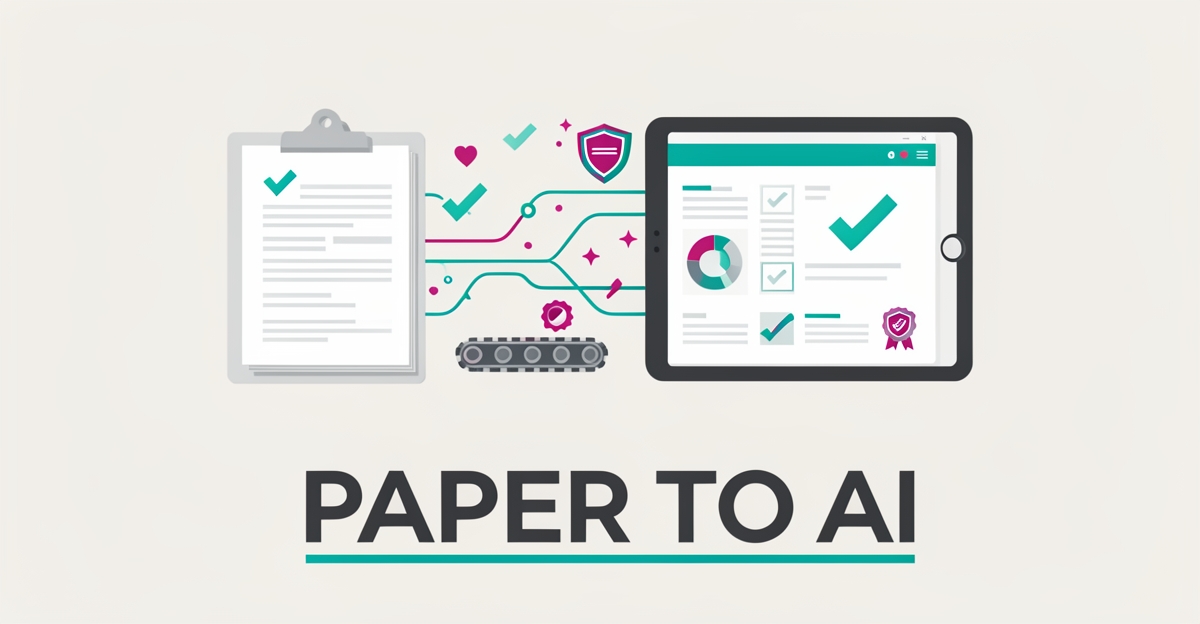
From Paper Checks to AI: How Food Safety Firms Can Automate Food Handler Training Records
Key Facts
- Industry estimates put unplanned downtime in food plants at tens of thousands of dollars per hour, making slow paper records a costly liability.
- Digital systems can cut audit preparation from weeks to days according to industry research.
- Food recalls continue to sicken hundreds of people each year, with hundreds of recalls reported annually in recent years.
- A large majority of food plants report unplanned stops per industry data, underscoring the cost of reactive operations.
- FSMA 204 pushes food firms toward real-time, lot-level traceability under the FDA's New Era of Smarter Food Safety, with compliance timelines firms should confirm directly with current FDA guidance as of late 2026.
- Automated food safety systems help food manufacturers sustain consistent HACCP compliance as reported in food manufacturing.
- AI-powered CMMS platforms are credited with substantially less downtime according to food manufacturing benchmarks.
Hire a team member that works 24/7 — for less than a part-time wage.
AI receptionists, SDRs, dispatchers and 99+ roles. Trained on your business, fully managed.
Not sure where to start? Ask our AI planner
The Cost of Paper: Why Manual Training Records Are a Liability
Food handler training records are more than just paperwork, they're a critical compliance lifeline. Yet many food safety firms still rely on paper-based systems that are slow, error-prone, and increasingly risky under evolving regulations. As FSMA 204 traceability expectations take hold, these manual processes expose companies to audit delays, recall vulnerabilities, and costly operational downtime.
Paper records create blind spots that auditors can't ignore. When training documentation is scattered across binders or filing cabinets, verifying completion during an inspection can take weeks instead of hours. Industry research suggests audit preparation time can drop from weeks to just days with digital systems, highlighting the inefficiency of manual methods. This delay isn't just inconvenient, it increases the likelihood of non-compliance findings and extends the window for potential contamination events to go undetected.
The financial stakes are too high to ignore. Unplanned downtime in food plants is estimated at tens of thousands of dollars per hour, and a single contamination event can trigger recalls that sicken hundreds and cost millions. Recent years have seen hundreds of food recalls annually, with illness and hospitalization figures that keep regulators focused on traceability. When training records aren't instantly accessible or verifiable, companies lose critical time during outbreak investigations, time that could mean the difference between containment and widespread harm.
Manual systems also fail under the weight of modern traceability demands. FSMA 204 pushes firms toward real-time, lot-level traceability across ingredients, equipment, and personnel, something paper records simply cannot deliver. Without automated tracking, firms struggle to prove which employees completed specific training modules, when certifications expire, or whether gaps exist across shifts or locations. This lack of visibility turns routine audits into high-stakes investigations and recalls into prolonged crises.
AIQ Labs helps food safety firms replace fragile paper trails with intelligent, auditable digital systems through its workflow build service. By automating training record creation, tracking, and verification, companies gain real-time compliance visibility, reduce audit preparation time, and eliminate the risk of lost or illegible documentation. As regulators shift focus from paperwork to proactive food safety culture, digital readiness isn't optional, it's the foundation of resilience.
How AI Automation Solves the Training Record Compliance Gap
Food handler training records are a compliance bottleneck that AI automation eliminates by removing human error from data entry and tracking. Paper-based systems often contain transcription mistakes, missed signatures, or outdated certifications that go unnoticed until an audit reveals critical gaps. Digital platforms capture training completion instantly through automated workflows, ensuring every record is accurate, timestamped, and verifiable without manual intervention.
This shift delivers measurable operational improvements, with audit preparation time dropping from weeks to just days when using digital systemsaccording to industry research. What once required teams to sift through physical binders across multiple sites now happens through centralized dashboards that instantly retrieve any employee's training history. Real-time tracking means compliance officers can see expiration dates and pending requirements as they occur, not weeks after they've been missed.
AI-powered platforms also support full traceability and sustained HACCP compliance across multi-site operationsas reported in food manufacturing environments. Every training event creates an immutable audit trail with electronic signatures, completion timestamps, and certification validity, eliminating the risk of lost or altered records. Supervisors receive automated alerts for expiring certifications, while managers gain site-specific oversight without sacrificing centralized control. For food safety firms managing dozens of client locations, this level of visibility transforms training records from a liability into a proactive compliance asset. Ready to see how AI can solve your specific training record challenges? Start the 2-minute Fit Check, then schedule a free 30-minute strategy call to map your biggest bottleneck and identify high-ROI automation opportunities.
Implementing AI-Powered Training Record Systems: A Step-by-Step Guide
A structured rollout makes the difference between an automation project that sticks and one that stalls at the pilot stage. Food safety firms that follow a deliberate, phased approach can move from paper binders to real-time digital training records in weeks rather than months, while avoiding the disruption that unplanned change brings to compliance-critical operations.
Step 1: Assess your current workflow. Map how training records are created, stored, and verified today. Identify every manual touchpoint, data entry, physical filing, expiration tracking, where errors creep in. This baseline also reveals which requirements can be grouped by similar methodology, letting you batch training modules and reduce redundant steps.
Step 2: Define your integration points. Food handler training records shouldn't live in a silo. Automated systems deliver the most value when they connect to broader food safety infrastructure, including HACCP compliance systems with digital logs and immutable timestamps, sanitation and CIP tracking, and environmental monitoring programs. Firms that automate these workflows report sustaining consistent HACCP compliance with automated systems, evidence that integration, not isolation, drives results.
Step 3: Build the automation layer. This is where AI does the heavy lifting: automated record generation, real-time tracking of certification expirations, and instant compliance verification across every client site. When AIQ Labs builds these systems, the goal is full traceability with real-time updates, every training activity timestamped, signed electronically, and retrievable instantly during an inspection or recall.
Step 4: Configure automated alerts. Proactive beats reactive. Configure the system to notify supervisors when certifications are expiring, when training requirements are coming due, and when compliance gaps appear at any location. With FSMA 204 traceability requirements now shaping enforcement expectations, automated alerts ensure no requirement slips through unnoticed.
Step 5: Train your staff and test the system. Even the best technology fails without adoption. Train every role on the new digital workflow, then pressure-test it with mock audits, trace training records, certifications, and compliance documentation by lot and shift. Firms that digitize documentation have cut audit preparation time from weeks to days, a gain only realized if your team can actually retrieve records on demand.
A few principles keep the rollout on track:
- Standardize procedures before automating them, automation amplifies messy processes.
- Build technician-proof SOPs that any staff member can follow without guesswork.
- Plan for backup procedures so a system outage never leaves you without records.
- Schedule routine maintenance and updates to keep the system compliant as regulations evolve.
Ownership matters here, too. A system you own outright, code, data, and all, can evolve with new FSMA requirements and expanding client sites, rather than locking you into a vendor's roadmap. That's the deployment model AIQ Labs follows: phased builds, client ownership, and ongoing optimization as regulations and operations change.
The firms that follow these steps position themselves for what auditors increasingly expect: real-time traceability across ingredients, equipment, and personnel, not just paper trails.
Still paying for 10+ subscriptions that don’t talk to each other?
We build custom AI systems you own outright. No vendor lock-in. Full control.
Not sure where to start? Ask our AI planner
Frequently Asked Questions
Why is relying on paper training records actually risky for food safety compliance?
How much time can automation actually save on audit preparation?
What FSMA 204 requirements make paper records obsolete?
How does AI automation actually improve traceability compared to manual logs?
What happens if we miss a certification expiration with a manual system?
Is it difficult to transition from paper binders to an automated training record system?
From Paper Binders to Real-Time Proof: Your Next Compliance Move
Paper-based food handler training records are no longer just inefficient, they're a liability as FSMA 204 traceability expectations reshape audits. Manual systems create blind spots during inspections, delay traceability, and leave firms exposed to downtime that can cost tens of thousands of dollars per hour and recalls that cost millions. Digital automation replaces that fragility with instant, verifiable proof: automated record creation, timestamped electronic signatures, real-time expiration tracking, and centralized visibility across every client site. The result is audit preparation that drops from weeks to days with digital systemsaccording to industry research, and the full traceability auditors now expect. If your team is still chasing binders, start with a workflow assessment, define integration points with HACCP and sanitation systems, and build technician-proof SOPs before automation. AIQ Labs builds custom, owned automation systems for food safety firms, via fixed-price workflow builds and broader AI operating systems, to make this shift without vendor lock-in. Start the Fit Check at https://aiqlabs.ai/apply, then book a free 30-minute strategy call at https://aiqlabs.ai/book to map your biggest bottleneck and identify a high-ROI automation path.
Make AI your competitive advantage — not just another tool.
Strategy, implementation and ongoing optimization. One partner, end to end.
Not sure where to start? Ask our AI planner