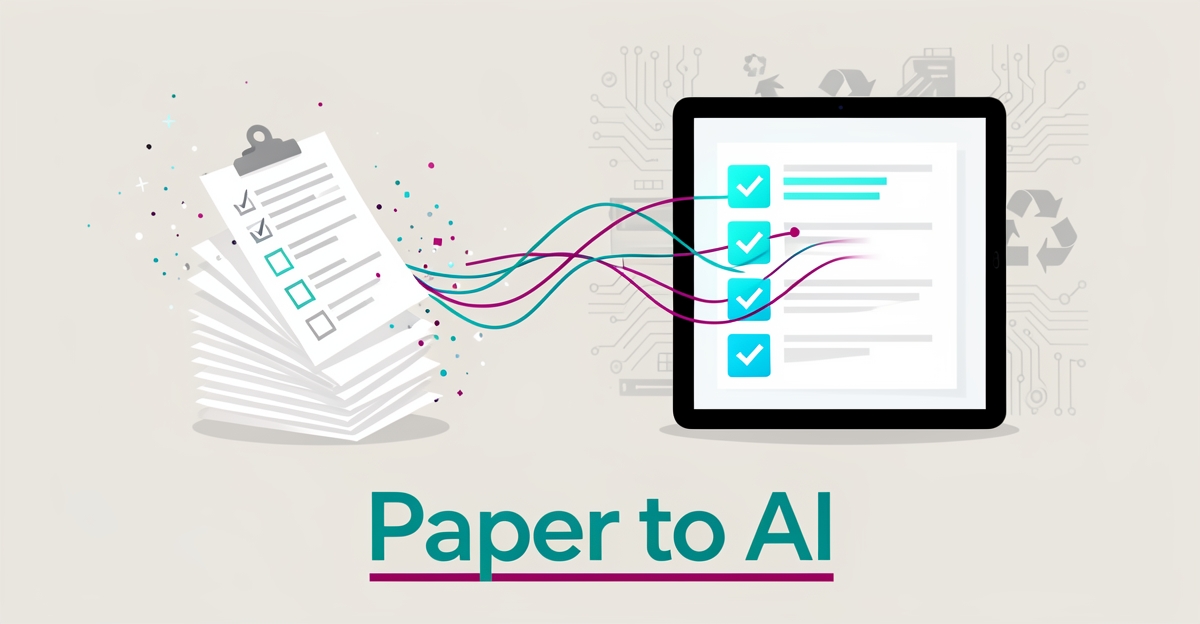
From Paper Forms to AI: Automating E-Waste Recycling Forms and Documentation
Key Facts
- The world generates tens of millions of metric tons of e-waste every year, and volumes keep climbing as device lifecycles shorten.
- Only a small fraction of global e-waste, commonly estimated at roughly a fifth, is formally collected and recycled, leaving the rest in undocumented channels.
- A large share of organizations still rely on paper forms despite digital alternatives being readily available.
- AI-powered compliance monitoring can dramatically reduce audit preparation time, transforming how recycling operators handle regulatory requirements.
- AI documentation systems auto-fill waste type, customer info, and disposal details while validating against compliance rules in real-time.
- AI is transforming e-waste recycling by optimizing processes and identifying reusable components for a circular economy, according to industry analysis.
Hire a team member that works 24/7 — for less than a part-time wage.
AI receptionists, SDRs, dispatchers and 99+ roles. Trained on your business, fully managed.
Not sure where to start? Ask our AI planner
The Paper Form Bottleneck in E-Waste Recycling
Every year, the world generates tens of millions of metric tons of electronic waste, a volume that keeps growing as device lifecycles shorten. Yet the documentation tracking where that waste goes often lives on clipboards, carbon copies, and filing cabinets.
The scale mismatch is stark. Industry monitoring consistently finds that only a small fraction of global e-waste, commonly estimated at roughly a fifth, is formally collected and recycled, meaning most discarded electronics enter undocumented channels. For recycling operators, every untracked ton represents not just lost material value but a compliance exposure, and paper forms make that exposure worse.
The problem is more common than most operators realize. Despite decades of digital transformation elsewhere, a large share of organizations still rely on paper forms, even when digital alternatives are readily available. In e-waste recycling, where every shipment requires accurate records of waste type, customer information, and disposal method, that reliance carries real consequences.
Paper-based documentation creates bottlenecks at three levels:
- Manual data entry, handwritten forms must be transcribed into systems later, doubling the workload and introducing transcription errors at every step.
- Lack of standardization, different technicians, sites, and partners fill out forms differently, making records inconsistent and difficult to aggregate for reporting.
- Error-prone records, illegible handwriting, missing fields, and incorrect waste classifications produce documentation that regulators and auditors can challenge.
These issues translate directly into delays, inaccuracies, and non-compliance with regulatory requirements. When an auditor requests disposal records, staff must hunt through physical files, reconstruct incomplete entries, and manually reconcile inconsistencies. The time cost is significant: AI-powered compliance monitoring can dramatically reduce audit preparation time, a signal of just how much of the traditional audit cycle is spent fighting bad paperwork rather than verifying actual compliance.
The urgency is only growing. Global paper consumption continues to climb, an ironic footprint for an industry whose mission is environmental recovery. Meanwhile, the volume of e-waste requiring documented, compliant handling rises year over year.
For e-waste operators, the takeaway is clear: the paper form is no longer a neutral administrative habit. It is an active constraint on throughput, accuracy, and regulatory standing. This is precisely the gap AI-driven documentation addresses, systems that auto-fill, validate, and store standardized forms capturing waste type, customer details, and disposal data. AIQ Labs builds these intelligent documentation systems so records are accurate at the point of capture, not corrected weeks later.
The question facing operators is no longer whether paper forms cause problems, the pattern settles that. It is how quickly documentation can move from the clipboard to a system that validates itself.
How AI Replaces Paper with Standardized, Compliant Documentation
Paper forms are still creating bottlenecks in e-waste operations while volumes keep rising. Manual capture slows intake, invites errors, and makes compliance hard to prove when auditors arrive.
AI replaces that friction with standardized, compliant documentation that is generated as waste moves through the chain. Systems auto-fill forms from inbound data, validate fields against regulations, and store records in a structured repository for instant retrieval. This shifts documentation from reactive paperwork to a real-time operational asset.
With so many organizations still using paper forms despite digital alternatives, e-waste businesses face the same inertia. Paper is prone to errors, lacks standardization, and is difficult to manage at scale. AI-powered digital forms are automated and accurate, standardized and compliant, and easy to manage and store.
Form filling becomes hands-off. AI extracts waste type, customer info, and disposal details from emails, invoices, manifests, and device scans, then populates the correct template. Validation rules check completeness, hazardous classifications, and chain-of-custody requirements before submission. Storage is centralized, searchable, and audit-ready.
Real-time monitoring is built in. AI analyzes data from ERP, PIM, and logistics systems to provide live visibility into intake, processing, and outbound shipments. Teams can spot exceptions early, track material flows, and report status without manual consolidation.
Compliance monitoring is where the impact compounds. AI-powered compliance monitoring can cut audit preparation time substantially and improve ongoing compliance visibility. Automated checks, audit trails, and standardized records mean evidence is ready on demand rather than rebuilt before an audit.
Integration makes the system practical. AI documentation generation sits alongside existing waste management tools so data does not silo. Typical integration points include:
- ERP systems for customer and financial records
- PIM systems for device and material master data
- Logistics platforms for pickup, transport, and facility tracking
- Compliance repositories for reporting and retention
The result is standardized, compliant documentation that captures waste type, customer info, and disposal details consistently across sites. Accuracy improves, errors drop, and reporting accelerates.
For e-waste businesses, this is documentation as a capability, not an admin burden. AIQ Labs builds intelligent systems that auto-fill, validate, and store forms, typically starting with a single high-cost workflow via AI Workflow Builds, improving accuracy and enabling faster audits and reporting.
From Forms to Full Workflow: AI Applications Across E-Waste Operations
Paper forms still create bottlenecks while e-waste volumes climb. With tens of millions of metric tons of e-waste generated globally each year, and only a small fraction formally collected and recycled, manual documentation is no longer sustainable.
AI moves e-waste operations beyond form filling into a connected workflow. Automated intake captures waste type, customer info and disposal details at the point of collection, then validates entries against compliance rules before storage. That standardization replaces the variability of paper with consistent, auditable records that travel with the material.
Predictive analytics turns historical collection data into forward-looking decisions. Models trained on ERP, PIM and logistics feeds forecast incoming volumes, optimize truck routes and flag high-risk streams before they arrive. Real-time monitoring and reporting give operations teams visibility without chasing spreadsheets.
Material recovery optimization benefits directly from accurate classification. AI systems analyze component data to identify reusable parts, route fractions to the right recovery line and support circular economy goals. Industry analysis consistently notes that AI is transforming e-waste recycling by optimizing recycling processes, identifying reusable components, and supporting a sustainable circular economy.
Risk management becomes proactive instead of reactive. Automated compliance monitoring tracks chain-of-custody, manifests and reporting requirements, while audit trails are generated continuously, reducing audit preparation time and improving compliance visibility across the operation.
The contrast with paper is stark:
- Accuracy: Automated and accurate vs prone to errors
- Standardization: Standardized and compliant vs lack standardization
- Manageability: Easy to manage and store vs difficult to manage
- Speed: Fast and efficient vs time-consuming
Paper persists despite the cost. A large share of organizations still use paper forms despite digital alternatives, and global paper consumption continues to rise. That volume reflects manual entry, rework and storage overhead that AI documentation generation eliminates.
For e-waste businesses, replacing paper with AI-generated, standardized and compliant documentation captures waste type, customer info and disposal details in one workflow. AIQ Labs builds intelligent systems that auto-fill, validate and store forms, improving accuracy, reducing errors and enabling faster audits and reporting across the full operation. When documentation, intake, logistics and reporting all connect, that becomes an AI Operating System your business owns outright.
Implementing AI Documentation for E-Waste Teams
The shift from paper to AI-powered documentation begins with a clear assessment of your current e-waste workflow. Many teams still rely on manual forms that are prone to errors and lack standardization, even though digital alternatives exist. Evaluating where delays, inaccuracies, or compliance risks occur helps pinpoint where automation will deliver the greatest impact. This foundational step ensures AI implementation targets real pain points rather than adding complexity.
Choosing the right AI partner means selecting a solution that automates form filling, validation, and secure storage while aligning with your operational needs. AIQ Labs builds custom AI documentation systems through flexible engagement models, Start Monthly for ongoing support, Build in Milestones for phased deployment, or Own It Outright for full control of the code and data. These systems auto-capture waste type, customer details, and disposal information, reducing manual entry and improving accuracy, while AI-powered compliance monitoring cuts audit preparation time and keeps records regulator-ready.
Successful integration connects the AI documentation layer with existing ERP, PIM, and logistics tools to create a seamless data flow. This eliminates silos and enables real-time tracking across collection, processing, and reporting stages. Teams then receive targeted training on the new system, focusing on how AI augments their role rather than replaces it, handling routine validation and storage so staff can focus on customer engagement and process optimization. The result is a standardized, auditable documentation process that scales with your business.
- Assess current workflows for inefficiencies in form handling
- Select an AI partner that automates filling, validation, and storage
- Integrate with ERP, PIM, and logistics systems for unified data
- Train teams on AI-augmented documentation processes
- Monitor accuracy, compliance, and audit readiness over time
By replacing paper with intelligent automation, e-waste businesses transform documentation from a bottleneck into a strategic asset, one that supports faster reporting, fewer errors, and stronger compliance outcomes. This shift not only saves time but also builds trust with regulators and customers through transparent, accurate records. As AI continues to evolve, teams that own their documentation systems gain the agility to adapt to new requirements without starting from scratch.
Still paying for 10+ subscriptions that don’t talk to each other?
We build custom AI systems you own outright. No vendor lock-in. Full control.
Not sure where to start? Ask our AI planner
Frequently Asked Questions
Why are paper forms such a problem for e-waste recycling companies?
How does AI actually replace paper forms in e-waste documentation?
Can AI help us prepare for compliance audits faster?
Will an AI documentation system work with our existing ERP and logistics tools?
Does AI only handle form filling, or can it do more in e-waste operations?
How do we get started moving from paper to AI documentation?
Turning Paper Trails into Smart Pathways
The evidence is clear: paper forms are no longer just an administrative habit, they're actively undermining e-waste recycling efforts by introducing errors, slowing compliance, and obscuring material value. With tens of millions of metric tons of e-waste generated each year and only a small fraction formally processed, the gap between waste volume and documented recovery is too wide to ignore. AI-powered documentation closes that gap by automating form filling, validation, and storage, turning a reactive paperwork burden into a real-time operational asset that improves accuracy, accelerates audits, and supports circular economy goals. For teams ready to move beyond manual processes, the path forward starts with assessing current workflows and exploring how intelligent documentation can integrate with existing systems. To see where AI can unlock the greatest impact in your e-waste operations, Start the Fit Check, a free, no-obligation first step that maps your biggest bottlenecks and highest-ROI opportunities.
Make AI your competitive advantage — not just another tool.
Strategy, implementation and ongoing optimization. One partner, end to end.
Not sure where to start? Ask our AI planner