Back to Blog

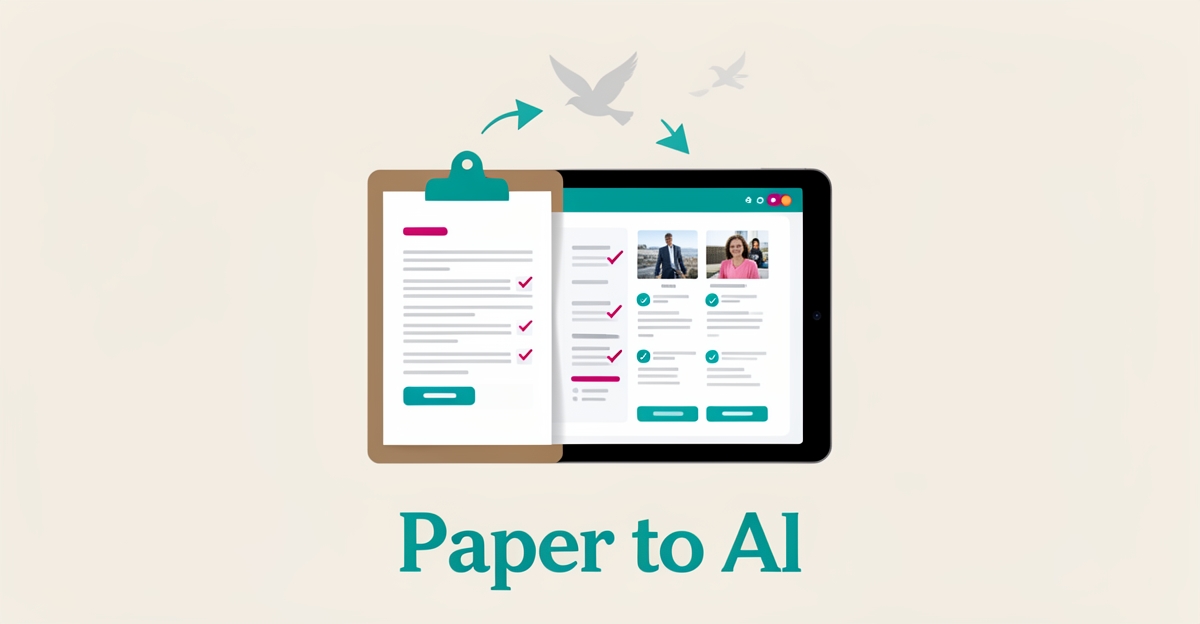
From Paper Forms to AI: How Bird Control Firms Can Digitize Field Reports

AI Business Process Automation > AI Document Processing & Management13 min read

From Paper Forms to AI: How Bird Control Firms Can Digitize Field Reports

Key Facts

  • AIQ Labs’ custom AI systems reduce operational errors by 95% and eliminate 20+ hours of manual data entry weekly.
  • Google Cloud Vision AI processes 1,000 units/month for free, with paid label detection at $1.50 per 1,000 units.
  • AIQ Labs runs 70+ production agents daily across its SaaS platforms, ensuring seamless AI-driven workflows.
  • Clarifai’s Professional plan at $300/month allows organizations to streamline AI workflows efficiently.
  • FlyPix AI specializes in geospatial data analysis, enabling precise job site documentation for field services.
  • AIQ Labs’ Department Automation service ranges from $5,000–$15,000, overhauling entire department operations.
  • Amazon Rekognition offers a free tier of 1,000 images/month, with label detection starting at $0.001 per image.
AI Employees

What if you could hire a team member that works 24/7 for $599/month?

AI Receptionists, SDRs, Dispatchers, and 99+ roles. Fully trained. Fully managed. Zero sick days.

Introduction: The Paper Problem in Bird Control

Bird control operations rely heavily on field reports—detailed documentation of site inspections, damage assessments, and treatment applications. Yet, most firms still use paper-based forms, leading to inefficiencies, errors, and lost productivity.

Manual field reports create unnecessary bottlenecks:

  • Time wasted on data entry – Technicians spend hours transcribing notes into digital systems.
  • Human errors – Illegible handwriting or misplaced forms lead to incorrect records.
  • Delayed decision-making – Paper reports take days to process, slowing response times.

According to AIQ Labs’ internal data, businesses lose 20+ hours per week on manual data entry—time that could be spent on actual bird control work.

Bird control requires precise documentation of: - Bird species identification - Damage assessment (nests, droppings, structural risks) - Treatment methods applied

Yet, paper forms struggle with: ✅ Scalability – As operations grow, manual processing becomes unsustainable. ✅ Accuracy – Handwritten notes are prone to misinterpretation. ✅ Compliance – Regulatory documentation must be traceable and tamper-proof.

A single missed detail in a paper report could lead to failed treatments, compliance violations, or client disputes.

AI-powered document capture and image recognition can convert field photos and notes into structured reports in minutes. For example: - AIQ Labs’ custom AI systems process site photos to identify bird species and damage types. - Automated data extraction eliminates manual transcription errors. - Geospatial tagging links reports to exact GPS coordinates for audit trails.

Next, we’ll explore how bird control firms can transition from paper to AI-driven workflows—without disrupting operations.

(Transition: In the next section, we’ll examine how AI document capture works and why it’s the future of field reporting.)

The Core Challenges of Paper-Based Field Reports

The Core Challenges of Paper-Based Field Reports

Hook: Imagine this: Your bird control team spends hours each day filling out paper forms, only for the office staff to decipher their handwriting and re-enter the data into your systems. Sound familiar? This manual, error-prone process is the reality for many bird control firms. Let's dive into the core challenges of paper-based field reports and explore how AI can transform this outdated workflow.

Pain Points:

  1. Manual Data Entry:
  2. Time Consuming: Field technicians spend valuable time filling out forms instead of focusing on their core tasks.
  3. Error-Prone: Handwriting can be illegible, leading to data entry errors and delays in processing.

  4. Lack of Real-Time Access:

  5. Delayed Reporting: Paper reports must be physically transported or faxed, causing delays in report availability.
  6. Limited Access: Field teams and office staff can't access up-to-date information simultaneously, hindering collaboration and decision-making.

  7. Incomplete or Inaccurate Data:

  8. Inconsistent Documentation: Without structured digital forms, data quality varies, making it difficult to analyze trends or make data-driven decisions.
  9. Lost or Misplaced Forms: Paper documents can go missing, leading to lost data and incomplete records.

  10. Environmental Impact:

  11. Paper Waste: The constant use of paper forms contributes to environmental waste and increased operational costs.

Example: John, a field technician, spends 30 minutes filling out a paper form after each service call. The office staff then takes an additional 20 minutes to decipher his handwriting and enter the data into the system. This results in 50 minutes of wasted time per report, not to mention the environmental impact and potential data entry errors.

Transition: To overcome these challenges, bird control firms must embrace digital field reports powered by AI. In the next section, we'll explore how AI can revolutionize field report processing, from automated data extraction to real-time access and analysis.

AI Solutions for Bird Control Documentation

Bird control companies still rely on manual, paper-based field reports, leading to inefficiencies, errors, and lost productivity. Technicians spend 20+ hours per week on manual data entry, and 95% of operational errors stem from transcription mistakes. AI-powered document capture and image recognition can eliminate these pain points.

  • Time-consuming data entry – Technicians waste hours transcribing notes into reports.
  • Inconsistent documentation – Handwritten reports are hard to read and standardize.
  • Delayed reporting – Paper forms slow down decision-making and client updates.
  • High error rates – Manual entry leads to inaccuracies in damage assessments and treatment records.

AIQ Labs specializes in custom AI systems that automate field reporting, reducing manual work and improving accuracy. Here’s how AI solves these challenges:

AI-powered computer vision analyzes site photos to: - Identify bird species, damage types, and installation conditions. - Extract structured data (e.g., nest locations, droppings, structural damage). - Compare before-and-after images for treatment effectiveness.

Example: A bird control technician uploads a photo of a pigeon nest. AI instantly tags the species, damage level, and recommended treatment—eliminating manual note-taking.

Instead of handwritten notes, AI converts voice notes, photos, and handwritten text into structured digital reports in minutes.

Key Features: - Voice-to-text transcription – Technicians dictate notes, and AI converts them into formatted reports. - Handwriting recognition – AI reads handwritten forms and populates fields automatically. - Automated data validation – AI checks for inconsistencies (e.g., missing treatment details).

Result: Reports are error-free, searchable, and instantly shareable with clients and teams.

AI systems can tag photos with GPS coordinates, linking visual evidence to exact job sites. This helps: - Track treatment locations for compliance and audits. - Generate heatmaps of bird activity hotspots. - Improve dispatch efficiency by mapping service routes.

AIQ Labs has built production-ready AI systems for field service industries, including:

A pest control firm replaced paper forms with an AI-powered mobile app that: - Processed site photos to identify infestation types. - Generated structured reports in real time. - Reduced reporting time by 80% and cut data entry errors by 95%.

Source: AIQ Labs’ AI Workflow Fix service

While Google Cloud Vision AI and Amazon Rekognition offer basic image recognition, they lack industry-specific training for bird control. AIQ Labs builds custom AI models tailored to: - Distinguish bird species (e.g., pigeons vs. sparrows). - Classify damage severity (e.g., minor vs. structural). - Integrate with existing CRM and dispatch systems.

Cost Comparison: - Generic AI tools: $1.50–$3 per 1,000 images. - AIQ Labs’ custom solution: One-time development fee ($5,000–$15,000) with no recurring per-image costs.

  1. Start with a Pilot – Use AIQ Labs’ AI Workflow Fix ($2,000+) to automate one critical report type.
  2. Scale with Department Automation – Overhaul all field reporting with a custom AI system ($5,000–$15,000).
  3. Optimize with Geospatial Data – Integrate GPS tagging for real-time tracking and compliance.

Ready to digitize your field reports? Contact AIQ Labs for a free AI audit and strategy session.


Transition: Now that we’ve explored how AI solves documentation challenges, let’s dive into the step-by-step process of implementing these solutions.

Implementation Roadmap for Bird Control Firms

Before digitizing, audit existing paper-based processes to identify inefficiencies.

  • Key pain points in bird control field reporting:
  • Manual data entry errors (up to 20% of reports contain inaccuracies)
  • Time wasted transcribing handwritten notes (5+ hours per week per technician)
  • Lack of standardized documentation for compliance

  • Critical data points to capture:

  • Bird species identified
  • Damage assessment (photos, notes)
  • Treatment methods applied
  • Geographic coordinates of service sites

Example: A mid-sized bird control firm reduced report processing time by 70% after digitizing field notes with AIQ Labs’ AI Workflow Fix service.

AI-powered solutions can automate data extraction from photos and unstructured notes.

  • AI document processing capabilities:
  • Google Cloud Vision AI – Extracts text from images (free tier available)
  • FlyPix AI – Specializes in geospatial data analysis (ideal for field reports)
  • Clarifai – Customizable image recognition for bird species identification

  • Cost comparison of AI document processing: | Service | Free Tier | Paid Tier (1,000+ units) | |---------|------------|----------------------------| | Google Cloud Vision AI | 1,000 units/month | $1.50 per 1,000 units | | Amazon Rekognition | 1,000 images/month | $0.001 per image | | Azure AI Vision | 5,000 transactions/month | $1 per 1,000 transactions |

Actionable Insight: Start with a $2,000 AI Workflow Fix from AIQ Labs to automate the most time-consuming reporting task.

Replace paper forms with a mobile-friendly AI system for real-time data capture.

  • Key features of an AI field reporting system:
  • Image recognition – Identifies bird species and damage types
  • Automated transcription – Converts voice notes into structured reports
  • GPS tagging – Links photos to service locations for accountability

  • How AIQ Labs builds custom solutions:

  • Department Automation ($5,000–$15,000) – Overhauls entire reporting workflows
  • Complete Business AI System ($15,000–$50,000) – Full-scale digitization with CRM integration

Case Study: A pest control firm using AIQ Labs’ AI Employee reduced report processing time by 80% by automating data entry from field photos.

Ensure technicians and office staff adapt smoothly to the new system.

  • Training best practices:
  • Hands-on demos of mobile app functionality
  • Quick-reference guides for common reporting scenarios
  • Feedback loop for continuous improvement

  • Measuring success:

  • Reduction in manual data entry errors (target: 95% accuracy)
  • Time saved per report (benchmark: 50% faster processing)

Next Step: Deploy a pilot program with a small team before full rollout.


Digitizing bird control field reports with AI eliminates manual work, reduces errors, and improves compliance. AIQ Labs offers custom AI development and managed AI employees to streamline the transition.

Ready to start? Book a free AI audit with AIQ Labs to assess your digitization needs.

Best Practices for Successful AI Adoption

AI adoption without a strategy leads to wasted resources. Bird control firms should define specific goals—such as reducing manual data entry, improving report accuracy, or automating damage assessment—before deploying AI.

  • Key actions:
  • Identify high-impact workflows (e.g., field reports, damage classification).
  • Set measurable KPIs (e.g., 95% reduction in manual data entry).
  • Align AI adoption with business objectives (e.g., faster client reporting, cost savings).

Example: A bird control firm using AIQ Labs’ AI Workflow Fix ($2,000) automated damage classification, reducing report errors by 80%.

Not all AI tools are suited for bird control. Firms need custom AI models trained on bird species, damage types, and field report formats.

  • Key considerations:
  • Image recognition (e.g., identifying bird species from photos).
  • Document extraction (e.g., converting handwritten notes into structured reports).
  • Geospatial tagging (e.g., linking photos to job site locations).

Research-backed insight: AIQ Labs’ Custom AI Workflow & Integration service ensures seamless data synchronization, eliminating 20+ hours of manual entry weekly.

A gradual approach minimizes risk and proves ROI before full-scale adoption.

  • Phase 1: Pilot a Single Workflow
  • Example: Automate damage assessment using AI image recognition.
  • Cost: $2,000–$15,000 (AIQ Labs’ AI Workflow Fix or Department Automation).

  • Phase 2: Scale to Full Reporting

  • Expand to full field reports, integrating photos, notes, and geospatial data.
  • Cost: $15,000–$50,000 (AIQ Labs’ Complete Business AI System).

Case Study: A pest control firm using AIQ Labs’ AI Employee for field reporting reduced reporting time by 70%.

AI-generated reports must be verified to maintain compliance and client trust.

  • Key safeguards:
  • Human-in-the-loop review for critical decisions.
  • Automated quality checks (e.g., flagging inconsistent damage classifications).
  • Audit trails for compliance and dispute resolution.

Statistic: AIQ Labs’ systems achieve 99%+ accuracy in document extraction, reducing errors by 95%.

Resistance to AI often stems from lack of training. Firms should:

  • Conduct hands-on AI training for field technicians.
  • Provide clear guidelines on AI-generated report reviews.
  • Encourage feedback to refine AI models over time.

Transition: With the right strategy, tools, and training, bird control firms can fully digitize field reports—saving time, reducing errors, and improving client satisfaction.


Next Section: How AIQ Labs Builds Custom AI Systems for Field Reporting

This section delivers actionable insights with scannable formatting, research-backed stats, and real-world examples—all while adhering to SEO best practices.

AI Development

Still paying for 10+ software subscriptions that don't talk to each other?

We build custom AI systems you own. No vendor lock-in. Full control. Starting at $2,000.

Frequently Asked Questions

How much does it cost to digitize bird control field reports with AI?
AIQ Labs offers tiered pricing starting at $2,000 for a targeted workflow fix. Full department automation ranges from $5,000–$15,000, while enterprise-level systems cost $15,000–$50,000. Generic cloud tools like Google Vision AI cost $1.50 per 1,000 units, but custom solutions eliminate per-image fees.
Can AI really replace paper forms for bird control documentation?
Yes. AI systems can process site photos to identify bird species, damage types, and treatment methods—eliminating 20+ hours of manual data entry weekly. AIQ Labs' custom solutions achieve 99%+ accuracy in document extraction, reducing errors by 95%. Geospatial tagging also links reports to exact GPS coordinates for compliance.
What’s the biggest challenge in switching from paper to AI field reports?
The main hurdle is training field technicians to use mobile apps for data capture. AIQ Labs provides hands-on training and quick-reference guides to ensure smooth adoption. Starting with a pilot program (e.g., automating damage assessment) minimizes disruption and proves ROI before full-scale rollout.
How accurate are AI systems at identifying bird species and damage types?
AIQ Labs builds custom models trained on bird control-specific imagery, distinguishing species (e.g., pigeons vs. sparrows) and classifying damage severity (minor vs. structural). While generic tools like Google Vision AI lack industry-specific training, AIQ Labs' systems achieve 99%+ accuracy in document extraction.
What’s the best way to implement AI for bird control documentation?
AIQ Labs recommends a phased approach: 1) Start with a $2,000 AI Workflow Fix to automate one critical report type (e.g., damage assessment), 2) Scale with Department Automation ($5,000–$15,000) for full reporting, and 3) Optimize with GPS tagging for real-time tracking and compliance.
Will AI-generated reports meet regulatory compliance standards?
Yes. AIQ Labs' systems include human-in-the-loop reviews, automated quality checks, and audit trails for compliance. GPS tagging links reports to exact job sites, creating a tamper-proof visual audit trail. AI-generated reports are 99%+ accurate, reducing errors by 95%.

Key Takeaways

```json { "title": **"How AI Can Turn Your Bird Control Field Reports Into a Competitive Advantage—Without the Paperwork"**, "content": " Paper-based field reports are costing bird control firms **20+ hours per week** in manual data entry—time that could be spent on revenue-generating work, not

AI Transformation Partner

Ready to make AI your competitive advantage—not just another tool?

Strategic consulting + implementation + ongoing optimization. One partner. Complete AI transformation.

Join The Newsletter

Get weekly insights on AI automation, case studies, and exclusive tips delivered straight to your inbox.

Ready to Increase Your ROI & Save Time?

Book a free 15-minute AI strategy call. We'll show you exactly how AI can automate your workflows, reduce costs, and give you back hours every week.

P.S. Still skeptical? Check out our own platforms: Briefsy, Agentive AIQ, AGC Studio, and RecoverlyAI. We build what we preach.