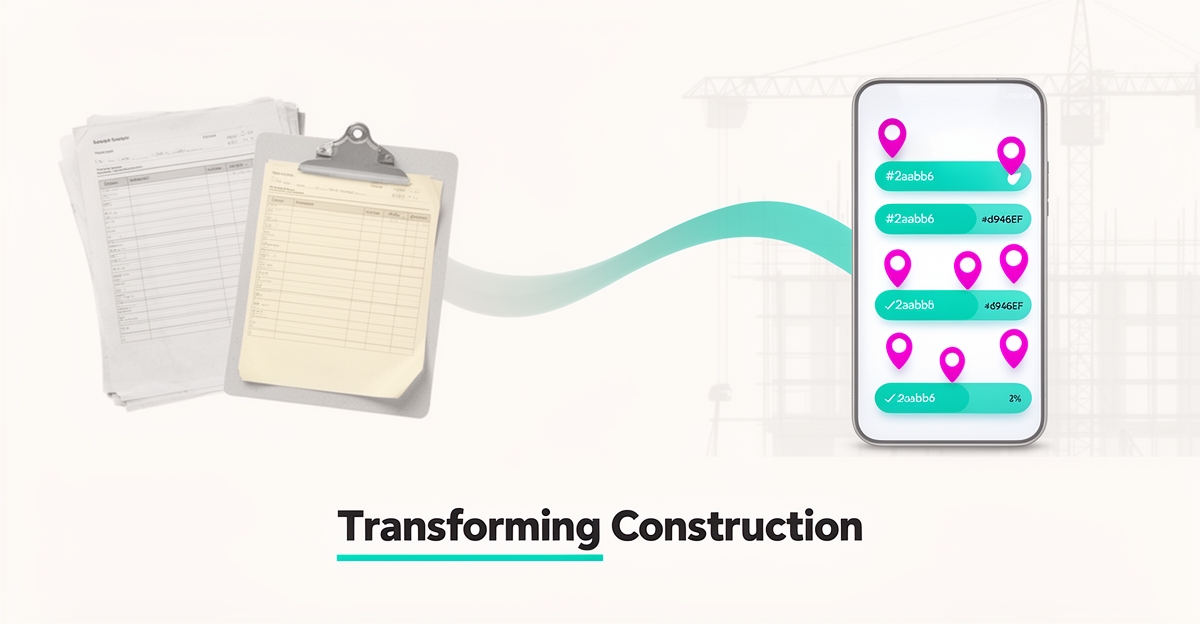
From Paper Logs to AI: How Construction Cleanup Companies Can Digitize Job Tracking
Key Facts
- Poor project documentation and communication cause 48% of rework on US construction sites, industry research shows.
- AI construction software accelerates project delivery speed by 15–25%, comparative data finds.
- AI-powered predictive cost management can cut construction budget overruns by 60–75%, a recent analysis reveals.
- 40% of construction companies expect AI to be a standard industry expectation within 2–3 years, according to industry research.
- AI construction software delivers 250–500% greater ROI than traditional methods over three years, cost comparisons show.
- For a 10-person team, traditional construction management costs $1.2M–$3.5M over three years versus $750K–$1.8M with AI software, TCO analysis indicates.
- In cleanup work, missing completion evidence makes clients question scope and withhold payment—accountability gaps become revenue gaps.
Hire a team member that works 24/7 — for less than a part-time wage.
AI receptionists, SDRs, dispatchers and 99+ roles. Trained on your business, fully managed.
Not sure where to start? Ask our AI planner
The Hidden Cost of Paper-Based Job Tracking in Construction Cleanup
Paper logs feel safe until a job slips. In construction cleanup, manual job logging, site check-ins and client updates create blind spots that compound fast on active sites.
Manual tracking forces crews to rely on memory, handwritten notes and end-of-day emails. Information moves slowly, gets lost between foreman and office, and arrives at clients late or incomplete. That lag erodes trust and makes accountability hard to prove when disputes arise.
Research shows industry research attributes 48% of rework on US construction sites to poor project documentation and communication. For cleanup contractors, rework means re-mobilizing crews, reordering disposal, and absorbing labor that was already billed.
Poor documentation also fuels budget overruns. A recent analysis found AI-powered predictive cost management can reduce budget overruns by 60–75%, highlighting how much risk manual tracking leaves exposed. Without real-time visibility, managers learn about delays after the fact.
The hidden costs show up daily:
- Delayed site check-ins push start times and compress cleanup windows
- Paper job logs create version confusion and lost completion photos
- Manual client updates trigger extra calls and slow approvals for invoicing
- Reactive problem-solving replaces proactive scheduling and resource planning
Traditional construction management relies on manual site visits, paper reports and spreadsheet tracking. That approach is prone to human error, delays in information flow and limited real-time visibility into progress. Project managers spend hours reconciling notes instead of directing crews.
The impact is measurable on timelines. Comparative data shows AI construction software accelerates project delivery speed by 15–25%. For cleanup firms juggling multiple sites, that acceleration translates to more jobs completed per crew per month.
Paper-based errors also damage client relationships. When completion evidence is missing or late, clients question scope and withhold payment. Cleanup work is high-trust and high-volume; accountability gaps become revenue gaps.
AI can take over manual job logging, site check-ins and client updates, ensuring every cleanup is tracked accurately and on time. AIQ Labs builds custom AI systems that integrate with existing tools, eliminating paper-based errors and improving accountability without forcing teams to change the tools they already use.
Moving from paper to automated tracking shifts the team from chasing information to managing work. That shift is where margins, reputation and repeat business are protected.
How AI Automation Eliminates Manual Logging Errors and Delays
Paper logs and scattered spreadsheets create a blind spot that costs cleanup crews time and money. When job details live on clipboards instead of a shared digital record, site check-ins get missed, completion updates lag, and clients are left guessing — errors that compound across every project.
AI-powered workflow automation replaces that fragmentation with real-time digital tracking. Computer vision analyzes site photos to verify progress automatically, while natural language processing converts field notes and voice messages into structured job records without manual entry. The result is a continuous, auditable trail from crew arrival to final walkthrough. According to industry research, AI construction software accelerates project delivery by 15–25% and cuts budget overruns by 60–75% through predictive cost management.
- Automated site check-ins via geofenced mobile prompts and photo verification
- Real-time job completion updates synced to client portals and internal dashboards
- Instant client notifications triggered by milestone events — no manual emails or calls
- Voice-to-text field reporting that captures punch-list items on the spot
- Unified audit trail linking crew hours, materials, and quality photos to each job
AIQ Labs builds custom AI systems that integrate with existing project management and communication tools, so cleanup companies can eliminate paper-based errors without ripping out their current stack. The same multi-agent architecture that powers our production platforms — handling 70-plus agents across live SaaS products — orchestrates check-ins, updates, and notifications as a single, reliable workflow.
Implementing AI Job Tracking: A Practical Roadmap for Cleanup Companies
Construction cleanup companies still relying on paper logs face avoidable errors and delays that impact accountability and client trust. Manual job tracking consumes valuable time that could be spent on actual cleanup work or business growth. Transitioning to AI-powered job tracking eliminates these inefficiencies by automating site check-ins, dispatching, and client updates with real-time accuracy.
The process begins with assessing current workflows to pinpoint where paper-based systems create bottlenecks—such as delayed crew check-ins, missed client communications, or inconsistent job documentation. AIQ Labs’ implementation process starts with a discovery phase that maps these pain points and designs a custom AI solution aligned with your operational needs. This ensures the technology integrates smoothly with existing tools like scheduling software or CRM systems without disrupting daily operations.
Companies can choose from three flexible implementation approaches based on their readiness and budget. The Start Monthly model deploys an AI Employee for dispatching or client communication with a flat monthly fee covering build, training, tool integrations, and ongoing optimization—costing less than a part-time hire. Build in Milestones breaks the project into phases, allowing approval and payment per completed workflow (like automated site check-ins) while retaining all progress made. Own It Outright delivers full ownership of a custom AI operating system after a single project price or monthly Build Partnership, ideal for companies seeking long-term control and scalability.
For construction cleanup specifically, AI Employees excel in roles like Dispatcher or Service Coordinator—handling real-time crew assignments, sending automated client updates after site visits, and logging completion data directly into your systems. These AI staff work 24/7/365, never miss a check-in, and continuously improve through performance monitoring. By removing manual logging, companies reduce errors tied to poor documentation—which accounts for 48% of rework on construction sites—and improve job tracking accuracy from start to finish.
This shift not only saves time but also strengthens client trust through consistent, transparent communication. Every cleanup is tracked accurately, ensuring accountability without the administrative burden. As AI becomes a standard expectation in construction—with 40% of companies anticipating this within 2-3 years—early adopters gain a competitive edge in reliability and operational efficiency. The result is a cleaner, more professional service backed by intelligent automation that scales with your business.
Start the Fit Check at https://aiqlabs.ai/apply to begin your free strategy call and map your highest-impact automation opportunity. Chat with an AI Transformation Agent at https://aiqlabs.ai/chat for instant answers about AI Employees and custom job tracking systems.
Still paying for 10+ subscriptions that don’t talk to each other?
We build custom AI systems you own outright. No vendor lock-in. Full control.
Not sure where to start? Ask our AI planner
Frequently Asked Questions
How much can AI-powered job tracking reduce budget overruns for construction cleanup companies?
What percentage of rework on construction sites is caused by poor documentation and communication?
Will switching to AI job tracking require my team to learn a completely new system?
How much faster can projects be completed with AI construction software compared to traditional tracking?
Is AI job tracking only for large construction companies, or can small cleanup businesses benefit too?
What kind of support do I get after implementing an AI Employee for dispatching or client updates?
Turn Paper Logs into Profit: Your Next Step Toward Smarter Cleanup
From delayed check-ins and lost documentation to reactive problem-solving and strained client trust, paper-based job tracking quietly erodes margins and reputation in construction cleanup. The data is clear: poor documentation drives nearly half of all rework, while AI-powered tracking accelerates delivery by 15–25% and cuts budget overruns by up to 75%. By automating site check-ins, client updates, and audit trails with AI that integrates into your existing tools, cleanup companies gain real-time visibility, reduce errors, and protect revenue—without disrupting how teams already work. The shift isn’t about replacing people; it’s about freeing them to focus on skilled work while AI handles the administrative load. If you’re ready to see where automation can make the biggest impact in your operations, start with a free, no-obligation strategy call. Start the Fit Check to map your highest-impact opportunity and discover how AI Employees or custom workflows can strengthen accountability, improve client trust, and scale with your business—on your terms.
Make AI your competitive advantage — not just another tool.
Strategy, implementation and ongoing optimization. One partner, end to end.
Not sure where to start? Ask our AI planner