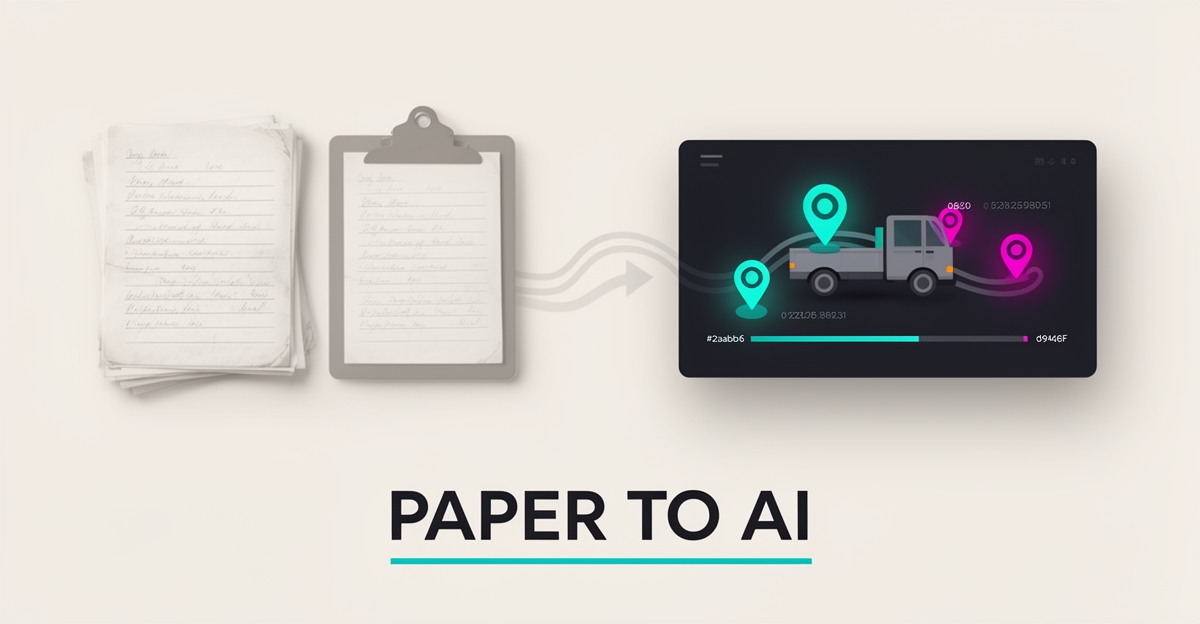
From Paper Logs to AI: How E-Waste Companies Can Automate Pickup Tracking
Key Facts
- 63 million metric tons of e-waste are generated globally, with only 22% formally recycled (Global E-Waste Monitor)
- AI-powered waste management cuts data collection time by 70-90% (industry analysis)
- AI robotic sorting systems can sort 80+ material categories (AMP Robotics)
- 58% of landfill methane emissions come from food waste (U.S. EPA data)
- Imaging AI identifies pickups with 95% accuracy using sensor data (Pello findings)
Hire a team member that works 24/7 — for less than a part-time wage.
AI receptionists, SDRs, dispatchers and 99+ roles. Trained on your business, fully managed.
Not sure where to start? Ask our AI planner
The Hidden Cost of Manual Pickup Tracking in E-Waste Operations
Paper logs were built for a slower waste stream. In e-waste operations they create a visibility gap that compounds with every pickup.
Manual tracking forces drivers and dispatchers to record dates, locations, and vehicle assignments by hand, then re-enter them into spreadsheets. The process is slow, error-prone, and rarely complete. Teams lose hours reconciling conflicting notes while collections slip through the cracks.
The scale of the problem is stark. Global E-Waste Monitor data shows 63 million metric tons of e-waste generated globally, with only 22% formally collected and recycled. That gap is driven in part by operational blind spots at the pickup level.
Traditional systems waste enormous time on data collection. Industry analysis highlights a 70-90% reduction in time spent on data collection with AI-powered waste management. When teams rely on paper, most of that time is spent chasing signatures, correcting entries, and rebuilding routes.
Inaccuracies cascade quickly. A missed signature becomes a missed collection, a missed collection becomes a compliance risk, and a compliance risk becomes lost revenue. Without real-time visibility, managers cannot confirm what was picked up, when, and by whom.
Common failures of manual pickup tracking include:
- Delayed or missing data entry that creates blind spots between field and office
- Duplicate or conflicting logs across drivers, dispatchers, and customers
- Inability to verify pickup completion or bin fullness in real time
- Manual reconciliation that consumes staff hours each week
These inefficiencies also limit sustainability impact. Research on AI in e-waste management notes that improved data accuracy and transparency are core benefits of automation, enabling higher recycling rates and reduced disposal costs.
E-waste businesses can replace logbooks and spreadsheets with AI-powered systems that automatically track pickup dates, customer locations, and vehicle assignments. AIQ Labs builds production-ready automation tools that integrate with existing ERP or CRM platforms, ensuring data accuracy and operational transparency without requiring large tech investments. Rebuild your most costly workflow with fixed-price, phased implementation.
The shift from manual to automated tracking is also about control. When pickup data is captured automatically, teams gain a single source of truth for routing, billing, and reporting. That visibility reduces rework, supports compliance, and protects margins in a sector where only a fraction of material is formally recovered.
Manual processes were acceptable when volumes were low. With rising e-waste generation and regulatory pressure, the hidden cost of paper logs is now a competitive liability.
AI-Powered Automation: Real-Time Tracking Without the Tech Overhaul
Manual pickup tracking with paper logs and spreadsheets creates delays and errors that slow down e-waste operations. AI-powered automation replaces these outdated methods with intelligent systems that auto-capture pickup data, optimize vehicle assignments, and sync with existing ERP or CRM tools, delivering real-time visibility without requiring a full tech overhaul.
By using imaging AI and sensor data, these systems achieve 95% accuracy in identifying pickups, eliminating guesswork and manual entry mistakes. This level of precision ensures that every collection is logged correctly the first time, reducing discrepancies in reporting and improving accountability across teams. AIQ Labs builds such capabilities into custom workflows that integrate directly with platforms like QuickBooks or Salesforce, so data flows seamlessly into existing systems.
Advanced AI can also sort and categorize over 80 different material types during processing, enabling e-waste companies to route items to the correct recycling streams automatically. This capability supports better compliance with environmental regulations while increasing recovery rates for valuable components. When combined with predictive analytics, AI doesn’t just track pickups, it forecasts optimal collection schedules based on historical volume, location density, and vehicle availability.
The result is a streamlined operation where dispatchers spend less time coordinating manually and more time managing exceptions. AI handles routine tasks like assigning the nearest available truck to a pickup request or updating job status in real time as crews complete stops. For SMBs in the e-waste space, this means enterprise-level tracking accuracy and efficiency without the complexity or cost of replacing core business systems.
Implementation Roadmap: From Pilot to Owned AI System
Many e-waste companies still rely on paper logs or scattered spreadsheets to track pickups, creating delays and errors that ripple through operations. Transitioning to AI-powered tracking doesn’t require a full system overhaul, it starts with fixing one broken workflow. AIQ Labs helps businesses begin small, validate results quickly, and scale with confidence using a phased approach that minimizes risk and maximizes ROI.
The first step is targeting a single, high-friction process, like manual pickup logging or vehicle assignment, where delays or inaccuracies directly impact service reliability. By rebuilding just this workflow with a custom AI solution, companies can eliminate 20+ hours weekly of manual data entry and reduce operational errors by 95%, based on AIQ Labs’ production systems. This focused fix delivers fast wins while laying the foundation for broader automation. Industry research shows that AI-powered waste platforms achieve 70-90% reduction in time spent on data collection, proving the immediate value of targeted automation.
Once the initial workflow is stable, the system integrates with existing tools like CRMs, scheduling software, or accounting platforms using deep two-way API connections. This ensures data flows seamlessly between systems without disrupting current operations, no rip-and-replace needed. AIQ Labs’ Build in Milestones model allows businesses to approve and pay for each integration phase as it ships, keeping everything built so far even if priorities shift. With 95% accuracy in identifying pickups using Imaging AI and sensor data, as demonstrated by smart bin technologies, these integrations maintain trust and transparency across teams. Real-world deployments confirm that AI-enhanced tracking reduces missed pickups and improves route efficiency from day one.
Finally, businesses scale to full ownership by expanding the AI system across departments, adding predictive routing, customer notifications, and compliance reporting, until it becomes a central operational hub. AIQ Labs’ Own It Outright model ensures clients receive complete control over the code, agents, and data, with no vendor lock-in or hidden dependencies. This end-to-end transformation turns fragmented tracking into a unified, intelligent system that scales with growth. Studies in waste management automation highlight that companies using AI for end-to-end workflow optimization see sustained improvements in recycling rates and cost savings, validating the long-term ROI of owned AI systems. By progressing from pilot to ownership through clear, manageable steps, e-waste companies transform tracking from a liability into a competitive advantage, without overextending resources.
Still paying for 10+ subscriptions that don’t talk to each other?
We build custom AI systems you own outright. No vendor lock-in. Full control.
Not sure where to start? Ask our AI planner
Frequently Asked Questions
How much time can AI-powered tracking save on data collection for e-waste companies?
What percentage of global e-waste is currently being formally collected and recycled?
Can AI systems integrate with our existing ERP or CRM tools without a full tech overhaul?
How accurate is AI in identifying e-waste pickups using imaging and sensor data?
What kinds of materials can AI-powered systems sort during e-waste processing?
Is it risky to start with AI automation if we're a small e-waste business?
Turning Pickup Chaos into Competitive Clarity
E-waste companies are sitting on a hidden inefficiency: paper logs and spreadsheets that bleed time, accuracy, and compliance. As volumes rise and regulations tighten, manual pickup tracking isn’t just outdated, it’s a liability. AI-powered automation changes that by capturing pickup data in real time, reducing manual entry by up to 90%, and syncing seamlessly with existing tools like QuickBooks or Salesforce. The result isn’t just cleaner logs, it’s faster routing, fewer errors, and the visibility needed to protect margins and meet sustainability goals. For businesses ready to move beyond guesswork, the path forward starts small: target one broken workflow, validate the impact, and scale with confidence. See how AI is already closing the e-waste collection gap. When you're ready to explore what’s possible, start with a free strategy call to map your biggest bottleneck and find the highest-ROI automation opportunity, no obligation, just clarity.
Make AI your competitive advantage — not just another tool.
Strategy, implementation and ongoing optimization. One partner, end to end.
Not sure where to start? Ask our AI planner