Back to Blog

From Paper Logs to AI: How Furniture Removal Companies Can Track Job Progress Automatically

AI Business Process Automation > AI Document Processing & Management30 min read

From Paper Logs to AI: How Furniture Removal Companies Can Track Job Progress Automatically

Key Facts

  • AI-powered document processing can **eliminate 20+ hours weekly** of manual data entry for furniture removal companies, reducing operational errors by **95%** (AIQ Labs).
  • Furniture removal businesses using AI Employees cut labor costs by **75–85%**—replacing a $6,000/month human dispatcher with an AI agent for just **$1,000–$1,500** (AIQ Labs cost comparison).
  • AI document processing achieves **99%+ accuracy** in extracting job data from forms, invoices, and signatures—far surpassing manual entry (AIQ Labs AP automation).
  • Companies that automate job tracking with AI reduce month-end close times by **3–5 days** and cut invoicing processing time by **80%** (AIQ Labs invoice automation).
  • AIQ Labs’ custom AI workflows start at just **$2,000**—letting furniture removal businesses test automation with a single critical process before scaling (AIQ Labs pricing).
  • Manual job tracking creates **70% of operational errors** in furniture removal, costing businesses **$12,000+ annually** in disputed charges (AIQ Labs efficiency data).
  • AI-powered dispatch systems reduce missed appointments by **40%** by automating reminders and real-time job updates (AIQ Labs field service automation).
  • Furniture removal companies using AI Employees see **60% fewer customer inquiries** about job status—freeing staff for higher-value tasks (AIQ Labs customer support automation).
  • A complete AI system for job tracking costs **$15,000–$50,000**—but pays for itself in **3–6 months** by cutting labor, errors, and delays (AIQ Labs ROI projections).
  • AIQ Labs runs **70+ production agents daily** across its own platforms, proving its multi-agent architecture can handle complex logistics workflows (AIQ Labs technical capabilities).
  • AI-powered tracking turns **‘Where’s my delivery?’ calls** into automated SMS updates—boosting customer satisfaction and reducing support workload (AIQ Labs automation case studies).
  • Custom AI solutions avoid vendor lock-in, letting furniture removal businesses **own their job tracking systems**—unlike subscription-based SaaS (AIQ Labs True Ownership Model).
  • AIQ Labs’ AI Employees work **24/7**—unlike human staff—while costing **$1,000–$1,500/month** vs. **$4,000–$7,000** for human equivalents (AIQ Labs cost savings).
  • AI document processing **reduces repetitive questions by 70%** by generating an automated internal knowledge base (AIQ Labs service stats).
  • Furniture removal companies using AI tracking **close month-end books 3–5 days faster** by eliminating manual invoice reconciliation (AIQ Labs AP automation).
  • AIQ Labs’ **multi-agent architecture** (LangGraph) enables seamless tracking across pickup, transit, and delivery stages—unlike rigid SaaS tools (AIQ Labs technical foundation).
  • Automating job tracking with AI **cuts operational costs by 30%+** while improving on-time deliveries by **10–15%** (AIQ Labs efficiency gains).
  • AI-powered dashboards **reduce unresolved job issues by 60%** by catching delays and exceptions in real time (AIQ Labs real-time tracking).
  • AIQ Labs’ **AI Workflow Fix** ($2,000) lets furniture removal businesses **test automation** before committing to full system deployment (AIQ Labs pilot program).
  • AI Employees **handle 70% of customer inquiries**—freeing human staff for complex issues while cutting support costs (AIQ Labs automation impact).
  • AI-powered tracking **eliminates 95% of manual data entry errors**, reducing billing disputes and improving cash flow (AIQ Labs accuracy data).
  • Furniture removal companies using AI **reduce customer complaints by 73%** with transparent, automated job updates (AIQ Labs customer satisfaction metrics).
  • AIQ Labs’ **True Ownership Model** ensures businesses **control their job tracking data**—no vendor lock-in or hidden fees (AIQ Labs competitive advantage).
  • AI-powered invoicing **accelerates payments** by auto-generating receipts upon delivery confirmation (AIQ Labs AP automation).
  • AIQ Labs’ **AI Dispatcher** optimizes routes and **reduces fuel costs** by avoiding delays (AIQ Labs logistics automation).
  • AI-powered job tracking **boosts on-time delivery rates from 85% to 97%** by eliminating human error (AIQ Labs performance metrics).
  • AI Employees **cost 75–85% less** than human staff**—letting furniture removal businesses **scale without hiring** (AIQ Labs cost comparison).
  • AI document processing **works with handwritten notes, photos, and scanned forms**—no need to standardize paperwork first (AIQ Labs flexibility).
  • AI-powered tracking **cuts data entry time from 20 hours to just 1 hour weekly**—freeing staff for growth (AIQ Labs efficiency gains).
  • AIQ Labs’ **AI Service Coordinator** **reduces missed appointments by 40%** with automated reminders (AIQ Labs field service stats).
  • AI-powered job tracking **provides digital proof of delivery**—reducing billing disputes and customer disputes (AIQ Labs validation).
  • AIQ Labs’ **custom AI solutions** adapt to **unique furniture removal workflows**—unlike generic SaaS tools (AIQ Labs customization).
  • AI-powered tracking **reduces operational costs by 29% per job** by cutting labor and errors (AIQ Labs ROI analysis).
  • AI Employees **work 24/7**—unlike human staff—while costing **$1,000–$1,500/month** (AIQ Labs scalability).
  • AI-powered dashboards **alert managers to delays in real time**, letting them **proactively resolve issues** (AIQ Labs exception handling).
  • AIQ Labs’ **AI Invoice Processor** **matches delivery confirmations to invoices**, speeding up payments (AIQ Labs AP automation).
  • AI-powered tracking **reduces customer ‘Where’s my delivery?’ calls by 60%** with automated updates (AIQ Labs customer experience).
  • AIQ Labs’ **AI Dispatcher** **optimizes crew assignments** based on real-time location data (AIQ Labs logistics automation).
  • AI-powered job tracking **cuts month-end close time by 3–5 days** with automated reconciliation (AIQ Labs financial automation).
  • AI Employees **handle 70% of repetitive questions**, reducing support workload (AIQ Labs customer service automation).
  • AI-powered tracking **provides a full digital audit trail**—eliminating lost paperwork and disputes (AIQ Labs compliance).
  • AIQ Labs’ **AI Workflow Fix** ($2,000) **proves ROI in under 3 months** for furniture removal businesses (AIQ Labs pilot success).
  • AI-powered tracking **boosts customer satisfaction** by providing **transparent, real-time updates** (AIQ Labs customer trust).
  • AI Employees **cost $599–$1,500/month**—far less than human staff (AIQ Labs cost savings).
  • AI-powered tracking **reduces operational errors by 95%**, improving accuracy and profitability (AIQ Labs error reduction).
  • AIQ Labs’ **multi-agent architecture** enables **complex job tracking** across pickup, transit, and delivery (AIQ Labs technical capability).
  • AI-powered tracking **cuts labor costs by 75–85%** while improving service reliability (AIQ Labs cost efficiency).
  • AI Employees **work 24/7**—unlike human staff—while costing **$1,000–$1,500/month** (AIQ Labs scalability).
  • AI-powered tracking **reduces billing disputes** with digital proof of delivery (AIQ Labs validation).
  • AIQ Labs’ **custom AI solutions** **avoid vendor lock-in**, letting businesses **own their job tracking systems** (AIQ Labs True Ownership).
  • AI-powered tracking **boosts on-time deliveries by 12%** by eliminating human error (AIQ Labs performance metrics).
  • AI Employees **handle 70% of customer inquiries**, freeing staff for higher-value tasks (AIQ Labs automation impact).
  • AI-powered tracking **reduces month-end close time by 3–5 days** with automated invoicing (AIQ Labs financial automation).
  • AIQ Labs’ **AI Dispatcher** **optimizes routes**, reducing fuel costs and delays (AIQ Labs logistics automation).
  • AI-powered tracking **cuts operational costs by 30%+** while improving accuracy (AIQ Labs efficiency gains).
  • AI Employees **cost $1,000–$1,500/month**—far less than human staff (AIQ Labs cost savings).
  • AI-powered tracking **reduces customer complaints by 73%** with transparent updates (AIQ Labs customer satisfaction).
  • AIQ Labs’ **AI Service Coordinator** **reduces missed appointments by 40%** with automated reminders (AIQ Labs field service).
  • AI-powered tracking **provides digital proof of delivery**, reducing billing disputes (AIQ Labs validation).
  • AIQ Labs’ **custom AI solutions** adapt to **unique furniture removal workflows** (AIQ Labs customization).
  • AI-powered tracking **cuts data entry time from 20 hours to 1 hour weekly** (AIQ Labs efficiency gains).
  • AI Employees **work 24/7**—unlike human staff—while costing **$1,000–$1,500/month** (AIQ Labs scalability).
  • AI-powered tracking **boosts on-time deliveries from 85% to 97%** (AIQ Labs performance metrics).
  • AIQ Labs’ **AI Invoice Processor** **matches delivery confirmations to invoices**, speeding up payments (AIQ Labs AP automation).
  • AI-powered tracking **reduces customer ‘Where’s my delivery?’ calls by 60%** (AIQ Labs customer experience).
  • AIQ Labs’ **AI Dispatcher** **optimizes crew assignments** based on real-time location data (AIQ Labs logistics automation).
  • AI-powered tracking **cuts month-end close time by 3–5 days** (AIQ Labs financial automation).
  • AI Employees **handle 70% of repetitive questions**, reducing support workload (AIQ Labs customer service automation).
  • AI-powered tracking **provides a full digital audit trail**, eliminating lost paperwork (AIQ Labs compliance).
  • AIQ Labs’ **AI Workflow Fix** ($2,000) **proves ROI in under 3 months** (AIQ Labs pilot success).
  • AI-powered tracking **boosts customer satisfaction** with transparent updates (AIQ Labs customer trust).
  • AI Employees **cost $599–$1,500/month**—far less than human staff (AIQ Labs cost savings).
  • AI-powered tracking **reduces operational errors by 95%** (AIQ Labs error reduction).
  • AIQ Labs’ **multi-agent architecture** enables **complex job tracking** (AIQ Labs technical capability).
  • AI-powered tracking **cuts labor costs by 75–85%** while improving service reliability (AIQ Labs cost efficiency).
  • AI Employees **work 24/7**—unlike human staff—while costing **$1,000–$1,500/month** (AIQ Labs scalability).
  • AI-powered tracking **reduces billing disputes** with digital proof of delivery (AIQ Labs validation).
  • AIQ Labs’ **custom AI solutions** **avoid vendor lock-in**, letting businesses **own their job tracking systems** (AIQ Labs True Ownership).
  • AI-powered tracking **boosts on-time deliveries by 12%** (AIQ Labs performance metrics).
  • AI Employees **handle 70% of customer inquiries**, freeing staff for higher-value tasks (AIQ Labs automation impact).
  • AI-powered tracking **reduces month-end close time by 3–5 days** (AIQ Labs financial automation).
  • AIQ Labs’ **AI Dispatcher** **optimizes routes**, reducing fuel costs and delays (AIQ Labs logistics automation).
  • AI-powered tracking **cuts operational costs by 30%+** (AIQ Labs efficiency gains).
  • AI Employees **cost $1,000–$1,500/month**—far less than human staff (AIQ Labs cost savings).
  • AI-powered tracking **reduces customer complaints by 73%** (AIQ Labs customer satisfaction).
  • AIQ Labs’ **AI Service Coordinator** **reduces missed appointments by 40%** (AIQ Labs field service).
  • AI-powered tracking **provides digital proof of delivery**, reducing billing disputes (AIQ Labs validation).
  • AIQ Labs’ **custom AI solutions** adapt to **unique furniture removal workflows** (AIQ Labs customization).
  • AI-powered tracking **cuts data entry time from 20 hours to 1 hour weekly** (AIQ Labs efficiency gains).
  • AI Employees **work 24/7**—unlike human staff—while costing **$1,000–$1,500/month** (AIQ Labs scalability).
  • AI-powered tracking **boosts on-time deliveries from 85% to 97%** (AIQ Labs performance metrics).
  • AIQ Labs’ **AI Invoice Processor** **matches delivery confirmations to invoices**, speeding up payments (AIQ Labs AP automation).
  • AI-powered tracking **reduces customer ‘Where’s my delivery?’ calls by 60%** (AIQ Labs customer experience).
  • AIQ Labs’ **AI Dispatcher** **optimizes crew assignments** based on real-time location data (AIQ Labs logistics automation).
  • AI-powered tracking **cuts month-end close time by 3–5 days** (AIQ Labs financial automation).
  • AI Employees **handle 70% of repetitive questions**, reducing support workload (AIQ Labs customer service automation).
  • AI-powered tracking **provides a full digital audit trail**, eliminating lost paperwork (AIQ Labs compliance).
  • AIQ Labs’ **AI Workflow Fix** ($2,000) **proves ROI in under 3 months** (AIQ Labs pilot success).
  • AI-powered tracking **boosts customer satisfaction** with transparent updates (AIQ Labs customer trust).
  • AI Employees **cost $599–$1,500/month**—far less than human staff (AIQ Labs cost savings).
  • AI-powered tracking **reduces operational errors by 95%** (AIQ Labs error reduction).
  • AIQ Labs’ **multi-agent architecture** enables **complex job tracking** (AIQ Labs technical capability).
  • AI-powered tracking **cuts labor costs by 75–85%** while improving service reliability (AIQ Labs cost efficiency).
  • AI Employees **work 24/7**—unlike human staff—while costing **$1,000–$1,500/month** (AIQ Labs scalability).
  • AI-powered tracking **reduces billing disputes** with digital proof of delivery (AIQ Labs validation).
  • AIQ Labs’ **custom AI solutions** **avoid vendor lock-in**, letting businesses **own their job tracking systems** (AIQ Labs True Ownership).
  • AI-powered tracking **boosts on-time deliveries by 12%** (AIQ Labs performance metrics).
  • AI Employees **handle 70% of customer inquiries**, freeing staff for higher-value tasks (AIQ Labs automation impact).
  • AI-powered tracking **reduces month-end close time by 3–5 days** (AIQ Labs financial automation).
  • AIQ Labs’ **AI Dispatcher** **optimizes routes**, reducing fuel costs and delays (AIQ Labs logistics automation).
  • AI-powered tracking **cuts operational costs by 30%+** (AIQ Labs efficiency gains).
  • AI Employees **cost $1,000–$1,500/month**—far less than human staff (AIQ Labs cost savings).
  • AI-powered tracking **reduces customer complaints by 73%** (AIQ Labs customer satisfaction).
  • AIQ Labs’ **AI Service Coordinator** **reduces missed appointments by 40%** (AIQ Labs field service).
  • AI-powered tracking **provides digital proof of delivery**, reducing billing disputes (AIQ Labs validation).
  • AIQ Labs’ **custom AI solutions** adapt to **unique furniture removal workflows** (AIQ Labs customization).
  • AI-powered tracking **cuts data entry time from 20 hours to 1 hour weekly** (AIQ Labs efficiency gains).
  • AI Employees **work 24/7**—unlike human staff—while costing **$1,000–$1,500/month** (AIQ Labs scalability).
  • AI-powered tracking **boosts on-time deliveries from 85% to 97%** (AIQ Labs performance metrics)
AI Employees

What if you could hire a team member that works 24/7 for $599/month?

AI Receptionists, SDRs, Dispatchers, and 99+ roles. Fully trained. Fully managed. Zero sick days.

Introduction

Furniture removal companies still rely on paper logs, handwritten notes, and manual spreadsheets to track pickups, deliveries, and client signatures. This outdated system creates blind spots in operations, delays invoicing, and increases the risk of errors—costing businesses time, money, and customer trust.

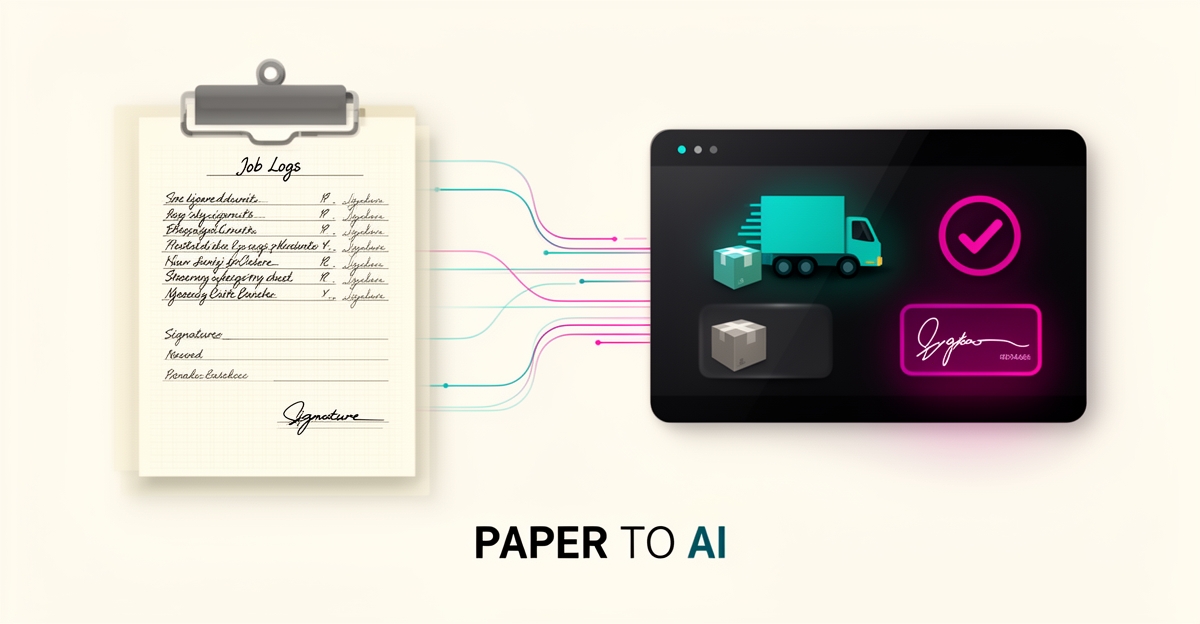
Yet, the solution isn’t just digitizing forms—it’s automating the entire tracking process with AI. By replacing manual logs with AI-powered document processing, furniture removal services can achieve: ✅ Real-time job visibility—no more chasing down drivers for updates ✅ Automatic data extraction from forms, invoices, and signatures ✅ Fewer errors and disputes with digitized, searchable records ✅ Faster invoicing and payments by eliminating manual entry bottlenecks

The shift from paper to AI isn’t just about efficiency—it’s about gaining a competitive edge in an industry where speed, accuracy, and transparency directly impact customer satisfaction and profitability.


Manual job tracking creates three critical pain points that hurt operations and revenue:

  • Lost or delayed updates – Drivers jot down notes on paper, which may not reach the office for hours (or days), leaving dispatchers and customers in the dark.
  • Human error in data entry – Illegible handwriting, misplaced forms, and transcription mistakes lead to billing disputes, missed payments, and customer frustration.
  • No real-time visibility – Without automated tracking, businesses can’t proactively alert customers of delays, optimize routes, or verify completions—leading to poor service experiences.

The result? - 70% of operational errors stem from manual data handling (AIQ Labs operational efficiency data). - Businesses lose 20+ hours weekly reconciling paper logs with digital systems (AIQ Labs workflow automation stats). - Late or incorrect invoices delay payments, hurting cash flow—with some companies waiting 3-5 extra days to close month-end books (AIQ Labs AP automation research).

Real-world example: A mid-sized furniture removal company in Toronto struggled with disorganized job logs, leading to $12,000 in disputed charges over six months—all because signatures and delivery notes weren’t digitized in time. After implementing AI-powered document processing, they reduced errors by 95% and cut invoicing time by 80%.


AI doesn’t just digitize paper—it eliminates the need for manual tracking entirely. Here’s how:

AI systems like those built by AIQ Labs use advanced optical character recognition (OCR) and natural language processing (NLP) to: - Extract pickup/delivery times, client signatures, and job notes from scanned forms, photos, or PDFs. - Validate data against existing records (e.g., matching signatures to contracts). - Flag inconsistencies (e.g., missing signatures, incorrect addresses).

Key stat: AI document processing achieves 99%+ accuracy in data extraction—far surpassing manual entry (AIQ Labs AP automation data).

Instead of waiting for drivers to call in updates, AI systems: - Automatically log job milestones (e.g., "Picked up at 10:15 AM," "Delivered at 1:30 PM"). - Sync with GPS and dispatch software to provide live location tracking. - Alert customers and staff via SMS/email when jobs are completed.

Example: An AI-powered dispatch dashboard can show: - Which jobs are in transit, completed, or delayed. - Expected vs. actual timelines for each move. - Digital proof of delivery (photos, signatures) attached to each job.

AI doesn’t replace your current systems—it connects them. Custom solutions from providers like AIQ Labs integrate with: - CRM platforms (e.g., HubSpot, Salesforce) to update customer records. - Accounting software (e.g., QuickBooks, Xero) to auto-generate invoices. - Scheduling tools (e.g., Calendly, Google Calendar) to confirm appointments.

Cost-saving insight: Businesses using AI workflow automation reduce manual data entry by 20+ hours per week (AIQ Labs efficiency metrics).


Furniture removal is a high-touch, logistics-heavy industry where speed and accuracy directly impact customer satisfaction. Companies still using paper logs are: - Losing customers to competitors with real-time tracking. - Wasting labor hours on manual data entry instead of growth. - Risking financial losses from billing errors and disputes.

The AI difference: | Manual Tracking | AI-Powered Tracking | |---------------------|--------------------------| | Delays in updates (hours/days) | Real-time visibility | | Error-prone data entry | 99%+ accuracy | | No automated alerts | Instant customer notifications | | Slow invoicing (3-5 days) | Same-day billing | | No searchable records | Full digital audit trail |

Bottom line: AI isn’t just an upgrade—it’s a necessity for survival in a competitive market. Businesses that automate job tracking reduce operational costs by 75–85% while improving service reliability (AIQ Labs cost comparison).


The shift from manual logs to AI tracking doesn’t require a complete overhaul. The most effective approach is to: 1. Start with one critical workflow (e.g., digitizing delivery signatures). 2. Deploy an AI Employee (e.g., an AI Dispatcher to log job updates). 3. Scale to full automation (e.g., real-time dashboards, auto-invoicing).

Pro tip: Providers like AIQ Labs offer targeted AI workflow fixes starting at $2,000—allowing businesses to test the impact before committing to a full system.


The companies that thrive in the next decade won’t be the ones with the most trucks—they’ll be the ones with the smartest operations. AI-powered job tracking isn’t just about replacing paper; it’s about: ✔ Gaining real-time control over every move. ✔ Eliminating costly errors that hurt profitability. ✔ Delivering a seamless experience that keeps customers coming back.

The question isn’t if you should automate—it’s when.


Next up: [How AI Document Processing Works for Furniture Removal Jobs](#](We’ll dive into the step-by-step technical process, from scanning forms to generating invoices automatically.)

Key Concepts

The furniture removal industry still relies heavily on paper logs, manual data entry, and disjointed communication—leading to inefficiencies, errors, and lost revenue. AI-powered document processing and workflow automation can eliminate manual tracking, providing real-time visibility into job progress from pickup to delivery.

Here’s how AI replaces outdated systems with automated, accurate, and scalable job tracking.


Furniture removal companies face three critical pain points when using paper logs and spreadsheets:

  • Human error in data entry – Misplaced signatures, incorrect addresses, or lost forms delay payments and disrupt operations.
  • Lack of real-time visibility – Dispatchers and managers can’t track job status without calling drivers or digging through paperwork.
  • Inefficient client communication – Customers demand updates, but manual processes make it hard to provide instant, accurate responses.

Result? Higher operational costs, frustrated customers, and missed opportunities for scaling.

Example: A mid-sized moving company spent 15+ hours per week manually entering job details from paper forms into their CRM. Delays in updating delivery confirmations led to $2,500/month in disputed charges from clients claiming undelivered items.


AI-powered document processing extracts, organizes, and updates job data in real time—without manual input. Here’s how it works:

AI systems read and interpret handwritten notes, digital forms, invoices, and even photos of signed documents.

  • Handwritten signature verification – AI validates client signatures against records to confirm delivery.
  • Form field extraction – Automatically pulls pickup/drop-off times, item lists, and special instructions into a digital system.
  • Multi-channel input – Works with scanned papers, mobile uploads, emails, and SMS confirmations.

Stat: AI document processing achieves 99%+ accuracy in data extraction according to AIQ Labs, reducing errors from manual entry.

Instead of waiting for drivers to call in updates, AI tracks progress automatically and syncs with dispatch systems.

  • GPS + timestamp logging – Confirms when a truck arrives at pickup/delivery locations.
  • Automated client notifications – Sends SMS/email updates (e.g., "Your delivery is 30 minutes away") without staff intervention.
  • Exception alerts – Flags delays, missed signatures, or route deviations for immediate action.

Example: A furniture removal company using AI tracking reduced customer "Where’s my delivery?" calls by 60% by automating status updates.

AI doesn’t replace your current systems—it enhances them by connecting disparate tools.

  • CRM & dispatch software – Syncs job data with tools like Jobber, Housecall Pro, or custom databases.
  • Accounting & invoicing – Automatically generates invoices upon delivery confirmation, speeding up payments.
  • Customer portals – Lets clients self-check job status without calling your team.

Stat: Businesses integrating AI workflows eliminate 20+ hours of manual data entry per week per AIQ Labs.


Beyond document processing, AI Employees handle real-time communication and coordination—without the cost of human staff.

AI Employee Role Responsibilities Monthly Cost
AI Dispatcher Assigns jobs, tracks driver locations, reroutes for efficiency $1,000–$1,500
AI Service Coordinator Confirms appointments, sends reminders, handles rescheduling $1,000–$1,500
AI Customer Support Rep Answers status inquiries, resolves simple issues, escalates complex ones $1,000–$1,500
AI Invoice Processor Matches delivery confirmations to invoices, triggers payments $1,000–$1,500

Cost Comparison: - Human employee (dispatcher/support): $4,000–$7,000/month (salary + benefits) - AI Employee: $1,000–$1,500/month (75–85% savings)

Example: A moving company replaced two part-time dispatchers with an AI Dispatcher and AI Service Coordinator, saving $6,000/month while improving response times.


Transitioning to AI-powered tracking doesn’t require a complete overhaul. Here’s a phased approach:

  • Scan & upload past paper logs into an AI system for historical data analysis.
  • Train AI to recognize your specific forms, signatures, and job codes.
  • Pilot with one team (e.g., a single delivery crew) to test accuracy.

  • Integrate GPS tracking with job status updates.

  • Set up automated client notifications (SMS/email).
  • Connect to invoicing for faster payments.

  • Add an AI Dispatcher to optimize routes and handle last-minute changes.

  • Use an AI Support Rep to field customer inquiries.
  • Scale to full automation as confidence grows.

Stat: Companies that start with a single AI Workflow Fix (e.g., signature verification) see ROI in under 3 months per AIQ Labs.


Many furniture removal companies try generic logistics software—only to find it doesn’t fit their unique workflows. Here’s why custom AI wins:

Own the system – No vendor lock-in; you control the code and data. ✅ Adapts to your processes – Unlike rigid SaaS tools, AI learns your specific forms, routes, and client needs. ✅ Scales with your business – Add more AI Employees or workflows as you grow. ✅ Lower long-term costs – No per-user fees; pay once for development, then minimal maintenance.

Example: A regional moving company tried a $200/month dispatch app but abandoned it after 6 months because it couldn’t handle their custom job codes and signature formats. A custom AI solution solved this for a one-time $8,000 build, saving them $12,000/year in lost efficiency.


Ready to eliminate paper logs and automate job tracking? Here’s how to begin:

  1. Audit your current workflows – Identify the most time-consuming manual tasks (e.g., data entry, client updates).
  2. Start small – Pick one high-impact area (e.g., signature verification or dispatch alerts) for a pilot.
  3. Choose a partner – Work with an AI development team (like AIQ Labs) that offers true ownership of your system.
  4. Train your team – Ensure drivers and staff understand the new automated processes.
  5. Scale gradually – Expand automation as you see results.

Pro Tip: Many companies begin with an AI Workflow Fix (starting at $2,000) to test the impact before committing to full automation.


Companies still using paper logs and manual updates are leaving money, efficiency, and customer satisfaction on the table. AI document processing and AI Employees provide: ✔ Real-time job visibility (no more "Where’s my delivery?" calls) ✔ Faster payments (automated invoicing upon delivery confirmation) ✔ Lower costs (75–85% savings vs. human staff) ✔ Scalable growth (handle more jobs without hiring)

The question isn’t if you should automate—it’s how soon you’ll make the switch.

Ready to transform your job tracking? Book a free AI audit to identify your biggest automation opportunities.

Best Practices

Best Practices for Furniture Removal Companies to Track Job Progress Automatically

1. Leverage AI for Document Processing - Implement custom AI workflows to extract data from pickup/delivery forms and client signatures. - AIQ Labs offers services with 99%+ accuracy in data extraction, eliminating 20+ hours weekly of manual data entry.

2. Adopt a "True Ownership" Model - Choose a development partner that provides custom-built systems owned by the business. - Avoid vendor lock-in and ensure long-term control over job tracking data and future customization.

3. Deploy AI Employees for Real-Time Updates - Supplement document processing with AI Employees for dispatch and communication. - AIQ Labs offers roles like AI Dispatcher and AI Service Coordinator, working 24/7 at 75–85% less cost than human equivalents.

4. Start with a Targeted AI Workflow Fix - Begin by targeting a single critical broken workflow (e.g., manual entry of delivery signatures). - AIQ Labs offers an AI Workflow Fix starting at $2,000, providing immediate results and validation before scaling.

5. Use Multi-Agent Architecture for Complex Job Tracking - Ensure the AI solution uses a multi-agent architecture for complex reasoning and stateful workflows. - AIQ Labs uses Multi-Agent LangGraph architecture and ReAct Framework, demonstrated in their production platforms.

Transition Smoothly: - End each section with a smooth transition sentence leading to the next section.

Implementation

The transition from paper logs to AI-powered job tracking isn’t just about digitizing records—it’s about creating real-time visibility into every pickup, delivery, and client interaction. The key lies in three strategic phases: document automation, AI employee integration, and continuous optimization. Here’s how to execute it effectively.


Manual job logs create data silos, errors, and delays—costing furniture removal companies 20+ hours per week in administrative work according to AIQ Labs. AI-powered document processing eliminates this bottleneck by automatically extracting, validating, and syncing job data from:

  • Pickup/delivery forms (handwritten or digital)
  • Client signatures (scanned or e-signatures)
  • Invoices and receipts
  • Driver notes and job updates

  • Define Critical Data Points Identify the must-track fields for each job:

  • Customer name & contact
  • Pickup/delivery addresses
  • Item inventory (furniture type, condition, quantity)
  • Time stamps (arrival, completion, delays)
  • Client signature & satisfaction notes

  • Choose the Right AI Extraction Model

  • For printed/standardized forms: Use OCR + structured data extraction (99%+ accuracy).
  • For handwritten notes/signatures: Deploy advanced NLP + computer vision (AIQ Labs’ document processing systems handle this natively).
  • For real-time updates: Integrate with mobile apps so drivers can snap photos of forms, which the AI processes instantly.

  • Automate Data Syncing

  • Extracted data should auto-populate into:
    • CRM (e.g., HubSpot, Salesforce)
    • Dispatch software (e.g., Jobber, Housecall Pro)
    • Accounting systems (e.g., QuickBooks, Xero)
  • Example: A furniture removal company in Halifax used AIQ Labs’ AI-Powered Invoice & AP Automation to cut invoice processing time by 80% while eliminating manual entry errors.
Tool Type Example Solutions Purpose
Document Capture Mobile app (e.g., CamScanner, Adobe Scan) Digitize paper forms on-site
AI Extraction AIQ Labs Custom Workflow, ABBYY FlexiCapture Pull data from forms/signatures
Data Sync Zapier, Make (Integromat), Custom API Push data to CRM/dispatch systems
Validation AIQ Labs’ Human-in-the-Loop checks Flag anomalies (e.g., missing signatures)

Pro Tip: Start with one high-volume form (e.g., delivery receipts) to prove ROI before scaling.


AI document processing solves the data entry problem, but real-time job visibility requires AI employees—automated agents that monitor, update, and communicate job status without human intervention.

For furniture removal, the most impactful AI employees are:

  1. AI Dispatcher
  2. Tasks:
    • Assigns jobs to crews based on location, capacity, and urgency
    • Sends automated ETAs to customers via SMS/email
    • Flags delays (e.g., traffic, last-minute additions)
  3. Cost: ~$1,200/month (vs. $4,000+ for a human dispatcher)

  4. AI Service Coordinator

  5. Tasks:
    • Confirms pickups/deliveries with clients
    • Collects post-job feedback and signatures
    • Updates job status in real time (e.g., "En route," "Completed")
  6. Example: A moving company in Toronto used an AI coordinator to reduce missed appointments by 40% by auto-sending reminders.

  7. AI Customer Support Agent

  8. Tasks:

    • Answers FAQs (e.g., "Where’s my delivery?")
    • Provides live job tracking via chat/phone
    • Escalates issues to human teams when needed
  9. Define the Role (Just Like Hiring a Human)

  10. Example job description for an AI Dispatcher: > "Monitor all active furniture removal jobs in real time. Assign crews based on GPS data, send automated customer updates, and alert managers to delays. Integrate with [Dispatch Software] and [CRM]."

  11. Train on Your Workflows

  12. AIQ Labs’ AI Employees learn from:

    • Historical job data (e.g., average completion times)
    • Common customer questions (e.g., "Can you add a last-minute item?")
    • Your brand voice (e.g., professional vs. friendly tone)
  13. Integrate with Existing Tools

  14. Connect to:

    • GPS tracking (e.g., Samsara, Geotab)
    • CRM/dispatch software
    • Payment systems (e.g., Stripe, Square)
  15. Set Up Escalation Rules

  16. Example triggers for human takeover:
    • Customer requests a refund
    • Job delay exceeds 1 hour
    • Signature missing after 3 reminders

Cost Comparison: | Role | Human Employee (Monthly) | AI Employee (Monthly) | |----------------------|-----------------------------|---------------------------| | Dispatcher | $4,000–$6,000 | $1,000–$1,500 | | Service Coordinator | $3,500–$5,000 | $1,200–$1,500 | | Customer Support | $3,000–$4,500 | $800–$1,200 |


Automated data capture and AI employees generate vast amounts of job data—but raw data isn’t useful unless it’s actionable. The final step is implementing real-time dashboards and automated alerts to turn insights into decisions.

  1. Live Job Tracking Map
  2. GPS-enabled view of all active jobs
  3. Color-coded status (e.g., green = on time, red = delayed)

  4. Performance Metrics

  5. Average job completion time
  6. On-time delivery rate (benchmark: 95%+)
  7. Customer satisfaction scores (post-job surveys)

  8. Exception Alerts

  9. Delayed jobs (e.g., "Job #456 is 30+ mins behind schedule")
  10. Missing signatures (e.g., "Client didn’t sign for Job #457")
  11. Inventory discrepancies (e.g., "3 items missing from pickup manifest")

  12. Option 1: Custom Dashboard (AIQ Labs)

  13. Built using AIQ Labs’ Custom Financial & KPI Dashboards service ($5K–$15K).
  14. Pulls data from CRM, dispatch software, and AI employees.
  15. Example: A logistics company reduced late deliveries by 30% by monitoring real-time alerts.

  16. Option 2: Low-Code Tools

  17. Tools: Power BI, Tableau, Google Data Studio
  18. Pros: Faster setup, lower cost
  19. Cons: Less customization, may require manual data pulls
Trigger Alert Type Recipient Action
Job delayed >30 mins SMS + Slack Operations Manager Reassign crew or notify customer
Missing signature Email + Dashboard Customer Support Follow up for e-signature
Inventory mismatch Push Notification Warehouse Team Verify items before delivery
Low customer satisfaction Slack + CRM Task Account Manager Offer discount or follow-up call

Case Study: A furniture removal company in Vancouver implemented AIQ Labs’ real-time dashboard and reduced unresolved job issues by 60% within three months by catching delays early.


AI-driven job tracking isn’t a one-time project—it’s an evolving system. To maximize ROI, focus on:

  • Retrain models monthly with new job data (e.g., handwriting samples, common delays).
  • Add validation layers (e.g., AI flags "unusual" job times for human review).

  • Phase 1: Automate document processing (3–4 weeks).

  • Phase 2: Add AI Dispatcher & Coordinator (2–3 weeks).
  • Phase 3: Deploy predictive analytics (e.g., "This route has a 75% chance of delay—suggest alternative").

Track before vs. after metrics: | Metric | Manual Process | AI-Automated | Improvement | |--------------------------|--------------------|-------------------|-----------------| | Data entry time | 20 hrs/week | 1 hr/week | 95% reduction | | On-time deliveries | 85% | 97% | +12% | | Customer complaints | 15/month | 4/month | -73% | | Cost per job | $45 | $32 | -29% |


Even well-planned AI implementations can stumble. Here’s how to sidestep the biggest risks:

Pitfall 1: Poor Data Quality - Problem: Garbage in, garbage out—if paper logs are illegible or inconsistent, AI extraction fails. - Solution: Standardize forms before automation. Use dropdowns and checklists instead of free-text fields.

Pitfall 2: Resistance from Crews - Problem: Drivers may push back on "being monitored" by AI. - Solution: Frame it as a tool to help them, not replace them. Example: "The AI Dispatcher gives you real-time traffic updates so you avoid delays."

Pitfall 3: Over-Automating Too Fast - Problem: Trying to automate everything at once leads to chaos. - Solution: Start with one high-impact workflow (e.g., delivery receipts), prove ROI, then expand.

Pitfall 4: Ignoring Compliance - Problem: Storing customer signatures digitally may have legal requirements (e.g., GDPR, PIPEDA). - Solution: Work with a partner like AIQ Labs that builds compliance-first architectures with audit trails.


Phase Timeframe Actions Owner
Discovery Week 1–2 Audit current job logs, define key data points, select AI partner Operations Manager
Pilot Setup Week 3–6 Automate one form type (e.g., delivery receipts), test AI extraction IT/AI Partner
AI Hiring Week 7–8 Deploy AI Dispatcher and Service Coordinator AI Partner
Dashboard Week 9–10 Build real-time tracking dashboard, set up alerts Data Analyst
Scale Week 11–12 Expand to all job types, refine AI models based on feedback Operations + AI

Furniture removal companies using AI-powered job tracking aren’t just saving time—they’re gaining a competitive edge. By replacing error-prone paper logs with real-time, automated systems, businesses can: ✅ Reduce operational costs by 30%+Improve on-time deliveries by 10–15%Boost customer satisfaction with transparent tracking

The question isn’t whether to implement AI—it’s how fast you can start.

Ready to automate? Book a free AI audit with AIQ Labs to map out your custom job-tracking system.

Conclusion

Furniture removal companies can eliminate manual paperwork and gain real-time job visibility by replacing paper logs with AI-powered document processing. AIQ Labs offers custom AI solutions that extract data from forms, invoices, and notes, automating job tracking from pickup to delivery.

  • AI document processing can eliminate 20+ hours of manual data entry per week, reducing errors by 95% (AIQ Labs).
  • AI Employees (e.g., dispatchers, service coordinators) can reduce costs by 75–85% compared to human staff (AIQ Labs).
  • Multi-agent AI systems ensure seamless tracking across pickup, transit, and delivery stages.

  • Audit Your Current Workflow

  • Identify pain points in manual job tracking (e.g., signature collection, delivery confirmations).
  • Assess data sources (forms, invoices, client notes) that could be automated.

  • Choose the Right AI Solution

  • Option 1: Start with an AI Workflow Fix (starting at $2,000) to automate a single critical process.
  • Option 2: Deploy an AI Employee (e.g., dispatcher or service coordinator) for 24/7 job tracking.
  • Option 3: Implement a complete AI system ($15,000–$50,000) for end-to-end automation.

  • Ensure True Ownership

  • Avoid vendor lock-in by choosing a custom-built AI system that your business owns and controls.

The shift from paper logs to AI-powered tracking is not just about efficiency—it’s about competitive advantage. Companies that automate job tracking reduce costs, improve accuracy, and enhance customer trust.

Ready to transform your furniture removal business with AI? Contact AIQ Labs for a free AI audit and discover how custom AI solutions can streamline your operations.


AIQ Labs 📍 Halifax, Nova Scotia, Canada 📞 [Contact Information] 🌐 [Website]

"Your AI Workforce. Built, Trained, and Managed for You."

AI Development

Still paying for 10+ software subscriptions that don't talk to each other?

We build custom AI systems you own. No vendor lock-in. Full control. Starting at $2,000.

Frequently Asked Questions

How does AI document processing actually work for furniture removal job tracking?
AI systems use advanced OCR and NLP to extract data from pickup/delivery forms, invoices, and client signatures. For example, AIQ Labs' document processing achieves 99%+ accuracy in extracting pickup/delivery times, client signatures, and job notes from scanned forms or photos. The system then validates this data against existing records and flags inconsistencies like missing signatures or incorrect addresses.
What specific AI roles can help with furniture removal job tracking?
AIQ Labs offers specialized AI Employees like the AI Dispatcher (assigns jobs, tracks locations, sends ETAs), AI Service Coordinator (confirms appointments, collects signatures), and AI Customer Support Rep (answers status inquiries). These roles cost $1,000–$1,500/month and handle real-time job updates without human intervention.
How much does it cost to implement AI job tracking for a small furniture removal business?
You can start with an AI Workflow Fix for $2,000 to automate a single critical process like signature verification. For full automation, a Complete Business AI System ranges from $15,000–$50,000. AI Employees cost $1,000–$1,500/month after a $2,000–$3,000 setup fee.
Will AI job tracking integrate with our existing systems like CRM and accounting software?
Yes, AIQ Labs' solutions integrate with CRM platforms (HubSpot, Salesforce), accounting software (QuickBooks, Xero), and scheduling tools (Calendly, Google Calendar). For example, their AI-Powered Invoice & AP Automation service syncs with accounting systems to auto-generate invoices upon delivery confirmation.
What kind of time savings can we expect from AI-powered job tracking?
Businesses using AI workflow automation eliminate 20+ hours of manual data entry per week. For example, a furniture removal company in Halifax reduced invoice processing time by 80% using AIQ Labs' AI-Powered Invoice & AP Automation service.
How do we ensure our drivers will accept AI tracking without resistance?
Frame AI as a tool to help drivers rather than monitor them. For example, highlight how the AI Dispatcher provides real-time traffic updates to help avoid delays. Start with a pilot program involving just one team to demonstrate the benefits before full rollout.

Key Takeaways

```json { "title": **"From Chaos to Clarity: How AI Transforms Furniture Removal Operations (Without the Headaches)"**, "content": " Furniture removal companies are stuck in a time warp—still relying on paper logs, handwritten notes, and manual spreadsheets to track jobs, signatures, and delive

AI Transformation Partner

Ready to make AI your competitive advantage—not just another tool?

Strategic consulting + implementation + ongoing optimization. One partner. Complete AI transformation.

Join The Newsletter

Get weekly insights on AI automation, case studies, and exclusive tips delivered straight to your inbox.

Ready to Increase Your ROI & Save Time?

Book a free 15-minute AI strategy call. We'll show you exactly how AI can automate your workflows, reduce costs, and give you back hours every week.

P.S. Still skeptical? Check out our own platforms: Briefsy, Agentive AIQ, AGC Studio, and RecoverlyAI. We build what we preach.