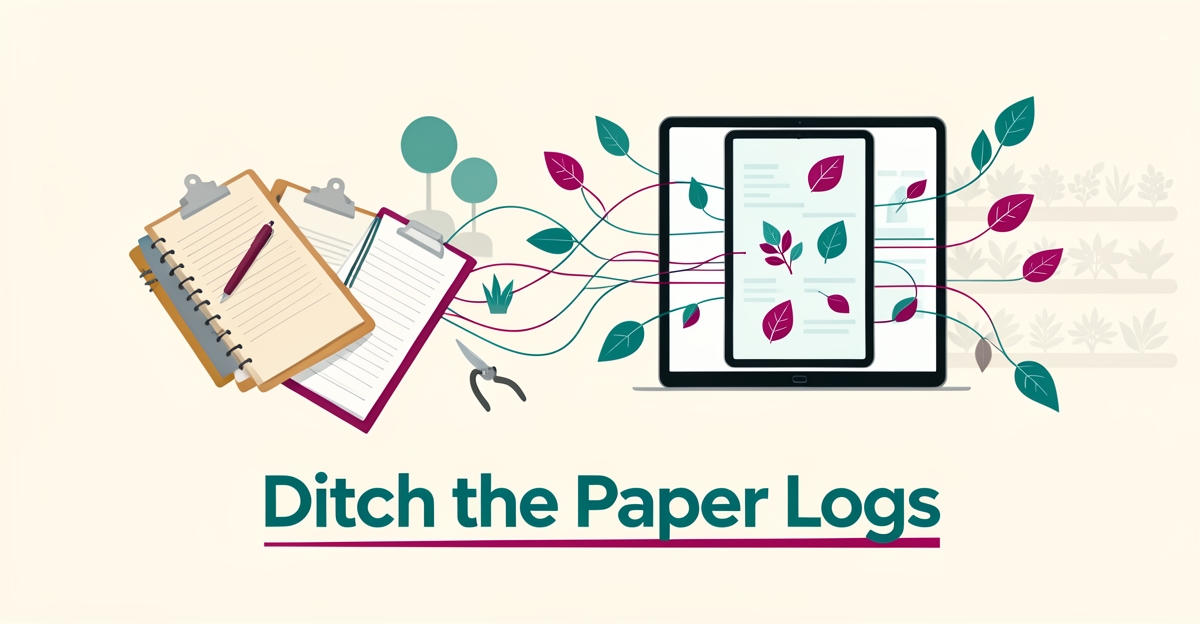
# From Paper Logs to AI: How Garden Maintenance Businesses Can Automate Client Record-Keeping
**Quick Answer:** Paper logs quietly cost garden maintenance businesses hours of admin every week. AI-powered record-keeping captures service history automatically, flags recurring issues, and generates client reports without manual data entry, so you focus on gardening, not paperwork. Start with a free strategy call.
## Key Facts
- Manual data entry and documentation tasks typically shrink from 10–20 minutes to a few minutes per job when AI handles the capture and filing
- Modern AI document processing reliably extracts structured details from messy real-world inputs like photos, voice notes, and handwritten tickets
- Small trade businesses commonly lose 20+ hours a week to administrative work that automation can absorb
- AI-powered systems can flag recurring issues, chronic drainage, repeat pest patterns, underperforming plantings, automatically
- Every hour spent deciphering handwriting and reconstructing timelines is an hour not spent on billable, revenue-generating work
- Well-designed AI systems turn scattered notes into searchable, structured records you own outright
## Table of Contents
- [The Hidden Cost of Paper Logs in Garden Maintenance](#the-hidden-cost-of-paper-logs-in-garden-maintenance)
- [What AI-Powered Record-Keeping Actually Does for a Garden Business](#what-ai-powered-record-keeping-actually-does-for-a-garden-business)
- [How to Implement AI Record-Keeping Without Disrupting Your Crew](#how-to-implement-ai-record-keeping-without-disrupting-your-crew)
- [Choosing the Right Approach: Off-the-Shelf Tools vs. Owned Systems](#choosing-the-right-approach-off-the-shelf-tools-vs-owned-systems)
## The Hidden Cost of Paper Logs in Garden Maintenance
Every garden maintenance business owner knows the feeling: you finish a long day of pruning, planting, and client consultations, only to face a stack of handwritten service logs that need filing, deciphering, and somehow translating into invoices. What should take minutes stretches into hours of administrative work that generates zero revenue.
The time drain is real. Tasks that take 10–20 minutes by hand, transcribing a visit, cross-referencing a schedule, writing up a treatment log, can typically be cut to a few minutes with AI assistance. For garden maintenance businesses juggling dozens of client properties, those recovered minutes multiply into hours each week.
But the true cost extends beyond time. Paper-based systems create three critical vulnerabilities:
- **Lost service history:** When logs are scattered across notebooks, clipboards, and memory, tracking what was done at each property becomes guesswork. Was the Japanese maple pruned in March or May? Which fertilizer blend worked best for the Henderson estate? Paper systems make this institutional knowledge fragile and dependent on individual memory.
- **Missed recurring issues:** A client mentions drainage problems during a spring visit. By summer, that note is buried under dozens of other entries. Manual systems lack the pattern recognition to flag that this is the third time brown patch has appeared in the northeast corner, or that certain shrubs consistently underperform in specific microclimates.
- **Administrative overhead consuming billable hours:** Every hour spent deciphering handwriting, cross-referencing schedules, or reconstructing service timelines is an hour not spent on revenue-generating work. For small operations, this can consume 20+ hours weekly, time that could fund growth or simply reduce owner burnout.
The errors compound. A misread date leads to premature or delayed treatments. A lost note about plant sensitivities results in using the wrong herbicide. A forgotten conversation about budget constraints creates awkward billing disputes. These aren't hypothetical risks, they're the daily friction that erodes client trust and operational efficiency.
Modern AI document processing addresses these challenges by automatically capturing, organizing, and analyzing service records. Rather than replacing human expertise, these tools handle the repetitive documentation work, freeing garden professionals to focus on horticultural judgment and client relationships. The technology learns your business patterns, flags anomalies, and transforms scattered notes into actionable intelligence.
For businesses ready to make this transition, AIQ Labs rebuilds the one workflow that costs you the most, client record-keeping included, through [AI Workflow Builds](/workflow-builds) delivered in fixed-price phases. The goal isn't to eliminate the human element but to eliminate the administrative burden that prevents skilled professionals from doing their best work.
## What AI-Powered Record-Keeping Actually Does for a Garden Business
Imagine your team finishing a job and having the client's entire service history updated before they even leave the driveway. That is the practical reality of AI-powered record-keeping: a system that turns every visit into structured, searchable data without anyone touching a clipboard. Instead of scattered notebooks and memory, an AI-driven platform digitizes each client profile and automat
AI Employees
Hire a team member that works 24/7 — for less than a part-time wage.
AI receptionists, SDRs, dispatchers and 99+ roles. Trained on your business, fully managed.
See If You’re a Fit — AI Employees from $700/mo
Not sure where to start? Ask our AI planner
ically logs what was done, what was found, and what needs attention next.
The system works by capturing inputs your crew already creates, photos, voice notes, job tickets, and extracting the relevant details into a permanent record. It tracks service history across seasons, so you know precisely when a bed was last mulched, which irrigation zone was repaired, or what treatment was applied to a persistent patch of lawn. More importantly, it learns to flag recurring issues. If a property shows repeated drainage failures or the same pest problem returns each spring, the system surfaces that pattern automatically, letting you proactively recommend a lasting fix rather than repeatedly treating symptoms.
This is not speculative. The same extraction discipline that sales and field-service teams apply to call notes and deal records works for garden service logs: once the AI identifies the signal, a recurring pest note, a photo of water pooling, it files it correctly every time. Modern document-processing systems handle messy real-world inputs reliably, which is exactly what handwritten tickets and truck-cab voice notes are.
For a garden maintenance operation, that reliability translates into four concrete capabilities:
- **Automated service history:** Every visit, treatment, and materials note is logged against the client profile without manual entry.
- **Recurring issue detection:** The system flags repeat problems like chronic drainage or pest patterns so you can propose permanent solutions.
- **Instant client reports:** Generate a seasonal summary or pre-service briefing in seconds, not after an hour of reconstructing notes.
- **Structured data ownership:** Records live in a system you control, ready for scheduling, invoicing, or compliance review.
The result is a single source of truth that travels with the client. When a homeowner asks why a bed keeps failing, you pull up three years of photos and treatment logs and show them the pattern. That level of documentation builds trust and justifies premium work. AIQ Labs builds these as production-ready systems that clients own outright, AIQ has deployed 200+ multi-agent systems and runs four live SaaS products daily, integrating with the scheduling and invoicing tools you already use rather than forcing a new subscription stack.
Adopting this does not require a data science team. The emphasis is on mapping risks and keeping humans in the loop for judgment calls. Your crews keep working; the AI simply ensures nothing is forgotten, misfiled, or left in a truck cab. The outcome is fewer errors, faster reporting, and a business that scales without adding administrative headcount.
## How to Implement AI Record-Keeping Without Disrupting Your Crew
Many garden maintenance businesses hesitate to adopt AI record-keeping, fearing disruption to their crew's daily routines. However, a phased, practical approach can transform paper logs into intelligent systems without slowing down operations. Starting small and building confidence through early wins creates momentum for broader adoption.
Begin by defining clear, measurable objectives, such as cutting manual log entry time in half or reducing service documentation errors within three months. Focused automation of a single, well-defined task typically delivers rapid, visible time savings. These goals should align with solving specific pain points, like lost paper logs or inconsistent client history tracking.
Launch a pilot with one client segment, for example, digitizing service logs for residential lawn care clients before expanding to commercial properties. Use this phase to test how AI captures service details, identifies recurring issues (like pest outbreaks or irrigation problems), and generates simple reports. Integrate the pilot with existing scheduling and invoicing workflows so crews continue using familiar tools while AI works silently in the background. This minimizes disruption and allows staff to see value without changing their core routines.
Train crews through hands-on, role-specific sessions, focusing on what they need to do differently, not the AI's inner workings. Highlight how the system reduces their administrative burden, such as auto-populating service notes after a job is marked complete. Monitor results weekly: track time saved, error reduction, and crew feedback. Responsible AI practices are essential, ensure client data is encrypted, access is role-based, and audit trails exist for all record changes. Iterate based on pilot learnings before scaling to other segments or adding features like predictive maintenance alerts. This steady, crew-friendly path turns AI from a perceived threat into a practical ally.
## Choosing the Right Approach: Off-the-Shelf Tools vs. Owned Systems
For garden maintenance businesses evaluating AI solutions, the choice between off-the-shelf tools and custom-owned systems hinges on alignment with operational goals, technical capacity, and desired customization level. Generic subscription platforms often promise quick deployment but can introduce integration complexity when connecting with scheduling, invoicing, or client management tools already in use, potentially creating data silos that un
AI Development
Still paying for 10+ subscriptions that don’t talk to each other?
We build custom AI systems you own outright. No vendor lock-in. Full control.
See If You’re a Fit — AI Employees from $700/mo
Not sure where to start? Ask our AI planner
dermine the very efficiency they aim to improve. Successful AI implementation depends on assessing technical skills and resources, as well as defining clear objectives such as reducing manual work time, factors that off-the-shelf tools may not adequately address without significant workaround effort.
Vendor lock-in represents another critical risk with subscription-based models, where businesses become dependent on a provider's roadmap, pricing changes, or feature limitations, restricting long-term adaptability. In contrast, owned systems eliminate this dependency, granting full control over data, customization, and future development. While upfront investment may appear higher, the long-term cost structure of owned systems avoids recurring subscription fees and scales predictably with business growth, unlike models where costs compound with user count or usage tiers. This approach treats the system as a strategic asset rather than an ongoing operational expense.
Ultimately, the right approach begins with a clear assessment of business needs: Are you seeking a tactical fix for a single workflow, or building a foundation for company-wide intelligence? AIQ Labs offers three entry points, [AI Employees](/ai-employees) for managed AI staff, [AI Workflow Builds](/workflow-builds) to rebuild the one workflow that costs the most at a fixed price, and [AI Operating Systems](/ai-operating-systems) for a connected operating layer built in phases and owned outright. Payment models, Start Monthly, Build in Milestones, or Own It Outright, let you begin small, validate impact, and scale ownership without forfeiting control. See [pricing](/pricing) for how each model works; no fake prices, just clear terms. For those ready to move beyond manual logs toward intelligent, self-owned record-keeping, the path forward starts with a focused discovery phase to map high-ROI opportunities. [Start the two-minute Fit Check](/apply) to explore how a custom AI system could transform your client documentation, then schedule a [free 30-minute strategy call](/book) to see what's possible for your specific operation.
## Frequently Asked Questions
**Will AI record-keeping actually save my crew time or just add more tech to manage?**
AI automates the repetitive documentation your crew already creates, like photos and voice notes, so service history updates before you leave the driveway. Manual data entry tasks that take 10–20 minutes by hand typically drop to a few minutes with AI assistance.
**How accurate is AI at pulling useful info from messy field notes and photos?**
Modern AI document processing extracts structured signals from unstructured inputs with high fidelity, which is exactly what handwritten tickets, voice notes, and job-site photos demand. Humans stay in the loop for judgment calls.
**What's the real cost of sticking with paper logs for garden maintenance?**
Paper logs create lost service history, missed recurring issues, and administrative overhead that can consume 20+ hours weekly of non-billable time. Misread dates and lost notes also lead to wrong treatments and billing disputes that erode client trust.
**Can AI help me spot repeat problems before they become expensive?**
Yes, the system learns your business patterns and flags anomalies automatically. It surfaces repeat issues like chronic drainage or pest patterns so you can propose permanent fixes instead of repeatedly treating symptoms.
**Do I need to replace my scheduling and invoicing tools to use AI record-keeping?**
No, custom AI systems can integrate directly into existing workflows. AIQ Labs builds production-ready systems that integrate with the scheduling and invoicing tools you already use rather than forcing a new subscription stack.
**How do I implement AI without disrupting my crew's daily routine?**
Start with a pilot on one client segment and integrate silently in the background so crews keep using familiar tools. Keep humans in the loop for judgment calls, encrypt client data, use role-based access, and maintain audit trails for all record changes.
## The Clipboard Stays in the Truck
Paper logs served their purpose when crews were smaller and seasons simpler. Today, they quietly drain the business, 20-plus hours a week spent deciphering handwriting, reconstructing timelines, and chasing details that should be at your fingertips. The shift to AI-powered record-keeping isn't about adding another screen to the job site; it's about removing the administrative weight that keeps skilled horticulturists from doing the work clients actually pay for. When service history, recurring issues, and client reports live in a system that updates itself, the crew finishes the day with documentation complete and the owner reclaims time for growth, not paperwork. AIQ Labs builds these systems as owned assets, not rented tools, 200+ multi-agent systems deployed, and four live SaaS products the company runs daily, integrating with the scheduling and invoicing platforms you already use. Start with the two-minute Fit Check at [aiqlabs.ai/apply](/apply), then join a free 30-minute strategy call to map the highest-ROI automation for your operation, no obligation, just clarity on what's possible.
AI Transformation Partner
Make AI your competitive advantage — not just another tool.
Strategy, implementation and ongoing optimization. One partner, end to end.
See If You’re a Fit — AI Employees from $700/mo
Not sure where to start? Ask our AI planner