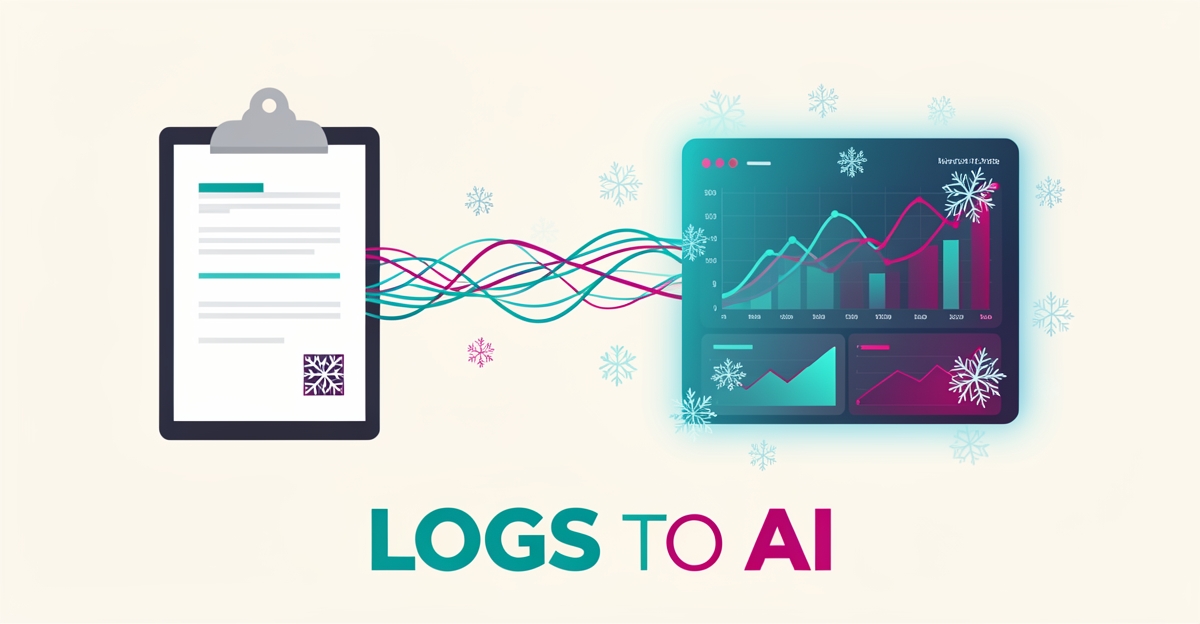
From Paper Logs to AI: How Ice Management Businesses Can Automate Service Reporting
Key Facts
- Manual reporting creates a lag between work done and insight received, forcing decisions based on memory and incomplete snapshots
- Transcription mistakes, illegible handwriting, and lost sheets mean the numbers managers see rarely match the work in the field
- Industry analyses consistently find that weak data foundations and poor change management are the leading reasons AI projects stall in pilot mode
- Real-time dashboards let teams detect operational anomalies and reroute crews same-day instead of firefighting after the fact
- Responsible AI reporting rests on four pillars: security, fairness, accuracy with human oversight, and transparency
Hire a team member that works 24/7 — for less than a part-time wage.
AI receptionists, SDRs, dispatchers and 99+ roles. Trained on your business, fully managed.
Not sure where to start? Ask our AI planner
Why Paper Logs Are Costing Ice Management Businesses Visibility
Paper logs feel simple until the season peaks and the visibility disappears. Service crews write notes by hand, office staff retype them, and managers wait days for a summary that is already out of date.
Manual reporting creates a lag between work done and insight received. Decisions rely on memory and incomplete snapshots rather than live performance. That delay turns small issues into customer complaints and missed service windows.
Error-prone data entry compounds the problem. Transcription mistakes, illegible handwriting, and lost sheets mean the numbers managers see do not match the work in the field. Industry research consistently notes that most organizations lack the data, analytics, and software foundations to move AI projects into production at scale, a gap that starts with messy manual inputs.
Delayed insights force reactive decision making. Without real-time dashboards, teams cannot spot delivery patterns, crew utilization, or recurring service issues as they happen. Proactive issue identification is replaced by firefighting after the fact.
The cost shows up in three persistent ways:
- Visibility gaps where service completion, route efficiency, and customer satisfaction remain invisible until weekly reports compile
- Data quality erosion from duplicate entries, missing fields, and transcription errors that undermine trust
- Slow response cycles that prevent same-day adjustments to staffing, resupply, and priority calls
A strong data foundation is a prerequisite for any AI adoption. Scaling guidance across the industry emphasizes that successful AI adoption means operationalizing beyond proof-of-concept demos, and that weak change management is the most common reason AI projects stall or fail.
Real-time visibility changes the operating model. Live dashboards display current KPIs so stakeholders can monitor operations instantly and make quick decisions. Seeing data as it happens is a significant advantage over traditional reporting that relies on historical snapshots.
Organizations that move from paper to automated capture also improve accuracy and efficiency. Case studies across logistics and field-service sectors show measurable revenue and productivity gains after implementing real-time data platforms, the business impact of timely, unified information is well documented.
For ice management businesses, this means service reporting becomes a source of competitive advantage rather than administrative drag. AIQ Labs builds production-ready reporting systems that generate real-time dashboards, helping companies make data-driven decisions about service performance and delivery patterns. The shift requires data integration, modeling, and governance, but the payoff is proactive visibility instead of retrospective guesswork.
How AI-Driven Reporting Creates Real-Time Performance Visibility
The shift from paper logs to AI-driven reporting transforms how ice management businesses monitor their operations. Instead of waiting days for compiled reports, teams access live data streams that reveal performance as it unfolds. This immediate visibility enables faster responses to changing conditions and supports more agile decision-making across service delivery.
Automated data capture eliminates the delays and errors inherent in manual logging. Sensors, mobile inputs, and integrated systems feed information directly into centralized platforms where AI processes it continuously. Real-time dashboards then translate this data into clear visualizations of key metrics like route efficiency, service completion times, and resource utilization. Teams using real-time visibility tools typically detect operational anomalies far faster than those relying on periodic reports, often catching same-day issues that weekly summaries would have surfaced too late.
AI enhances this visibility by analyzing patterns across multiple data streams simultaneously. It correlates service timing with weather conditions, equipment performance, and customer feedback to uncover hidden inefficiencies. For example, AI might reveal that certain routes consistently underperform during specific temperature ranges or that particular vehicle types experience more delays in high-traffic zones. These insights enable targeted improvements that boost overall service reliability.
Unified data integration is critical to achieving a complete operational picture. By connecting dispatch systems, GPS tracking, customer relationship tools, and maintenance logs, AI creates a single source of truth. This eliminates silos where valuable insights might be fragmented or lost. When all data flows into one analytics environment, patterns emerge that would remain invisible in isolated datasets. For instance, linking service completion times with customer satisfaction scores can reveal how delays impact retention, information that paper logs could never connect efficiently. Any such integration should prioritize accuracy and transparency so the team trusts what the system reports.
The result is a feedback loop where improved visibility drives better decisions, which in turn generate more valuable data for continuous optimization. Dispatchers can reroute crews in real time based on emerging weather patterns. Managers can identify training needs by analyzing service quality trends across teams. Leadership gains the ability to forecast resource needs with greater accuracy, reducing both underutilization and costly overtime. This level of insight was simply unattainable with paper-based reporting, where data was often outdated by the time it was compiled. By embracing AI-driven reporting, ice management businesses move from reactive record-keeping to proactive performance management, turning every service event into an opportunity for improvement.
Building a Data-First Foundation for Responsible AI Reporting
Here's a hard truth: most AI projects don't fail because the technology doesn't work, they fail because the data underneath them doesn't. For ice management businesses moving from paper logs to AI-driven reporting, what happens before the first dashboard ships determines everything that comes after.
Industry research is blunt about this. Most organizations lack the data, analytics, and software foundations to move individual AI projects into production at scale. Even as generative AI hype cools, the need for strong data, organizational, and process foundations remains the critical prerequisite for successful adoption.
For an ice management operation, that foundation starts with digitizing and unifying service records, route completions, delivery times, customer interactions, weather events, into a single source of truth. Paper logs scattered across clipboards and trucks can't feed an AI system. Clean, integrated data from your CRM, scheduling tools, and operational systems can.
Data quality is only half the equation, though. The other half is people. Industry reports consistently find that weak change management is the number one reason AI projects stall or fail. Dispatchers, route managers, and office staff need training, clear communication about why the shift matters, and feedback loops so the system earns their trust rather than their resentment.
It also helps to hold AI reporting to a responsible standard. A practical framework for any business adopting these tools rests on four foundational pillars:
- Security and privacy of the underlying data
- Fairness and bias mitigation in how data is analyzed
- Accuracy with human oversight, "AI supports, humans decide"
- Transparency and explainability in what the system reports
The payoff for getting this right is real. Organizations that implement real-time data and AI platforms have reported measurable revenue and productivity gains, evidence that well-founded AI reporting translates directly into business results, not just prettier charts.
This is where a data-first partner matters. AIQ Labs starts with a structured readiness assessment, your current technology stack, data infrastructure, and team capabilities, before building real-time dashboards or automating a single report. That assessment is built into [AI Workflow Builds](/workflow-builds), where the one workflow that costs you the most gets rebuilt at a fixed price, in phases. Skipping the assessment is how businesses end up with a stalled pilot instead of a working system.
The message from the research is consistent: scaling AI isn't about chasing the next model or breakthrough. It's about building the right foundation first. For ice management businesses, that foundation, quality data, unified systems, governance, and a team that's ready, is the difference between AI reporting that transforms operations and AI reporting that never leaves the pilot stage.
Implementation Roadmap From Logs to Live Dashboards
Moving from paper logs to AI-powered reporting transforms how ice management businesses track performance and make decisions. The shift begins with integrating data from field operations, scheduling tools, and customer systems into a unified platform where it can be analyzed in real time. This foundation enables accurate modeling of service patterns, delivery efficiency, and resource utilization across winter seasons.
Once data is unified, the next step involves creating meaningful relationships between datasets, linking weather conditions, route times, material usage, and customer feedback to uncover actionable insights. Proper data modeling ensures that dashboards reflect true operational realities rather than isolated metrics. Teams can then design interactive visualizations that highlight key performance indicators such as response times, service completion rates, and material spread efficiency, allowing managers to spot trends and anomalies instantly.
Automation builds on this foundation by configuring alerts for deviations from expected patterns, like delayed routes or over-application of de-icing agents, and triggering report generation without manual intervention. Throughout this process, security controls must protect sensitive operational and customer data, ensuring only authorized personnel can access specific views or export reports. These steps, executed with a focus on data quality and change management, position ice management companies to move beyond reactive logging toward proactive, AI-enhanced service optimization.
How you pay for this matters as much as how you build it. AIQ Labs offers three straightforward paths: Start Monthly, Build in Milestones, or Own It Outright, no fake prices, no invented numbers. If reporting is one broken workflow inside a larger operation, an [AI Workflow Build](/workflow-builds) is usually the right entry point. If you want reporting, dispatch, and customer communication connected in one operating layer you own outright, that's an [AI Operating System](/ai-operating-systems), built in phases. Either way, start with the [2-minute Fit Check](/apply), then book a free 30-minute strategy call to identify your highest-impact automation opportunity.
Still paying for 10+ subscriptions that don’t talk to each other?
We build custom AI systems you own outright. No vendor lock-in. Full control.
Not sure where to start? Ask our AI planner
Frequently Asked Questions
Why are paper logs causing problems for ice management businesses during peak season?
How does AI-driven reporting improve real-time visibility for ice management operations?
What is the biggest reason AI projects fail in ice management businesses according to research?
Can AI reporting actually increase revenue for ice management companies?
What are the four pillars of responsible AI that ice management businesses should follow?
What is the first step AIQ Labs takes when helping an ice management business transition to AI-driven reporting?
Turn Your Service Logs Into a Competitive Edge
Moving from paper logs to AI-driven reporting isn't just about digitizing notes, it's about gaining real-time visibility that transforms how ice management businesses operate. By unifying data from field operations, scheduling, and customer systems, companies can spot inefficiencies as they happen, adjust staffing and routes on the fly, and make decisions based on current conditions rather than outdated summaries. This shift reduces errors, accelerates response times, and turns service reporting into a source of proactive insight instead of administrative drag. The foundation matters: clean data, integrated systems, and team readiness determine whether AI delivers lasting value or stalls in pilot mode. If you're ready to see where your biggest opportunity lies, start with the [2-minute Fit Check](/apply), then book a free 30-minute strategy call. Whether the right entry point is an [AI Workflow Build](/workflow-builds) for the one workflow that costs you most, or a full [AI Operating System](/ai-operating-systems) you own outright, you'll know before you spend a dollar.
Make AI your competitive advantage — not just another tool.
Strategy, implementation and ongoing optimization. One partner, end to end.
Not sure where to start? Ask our AI planner