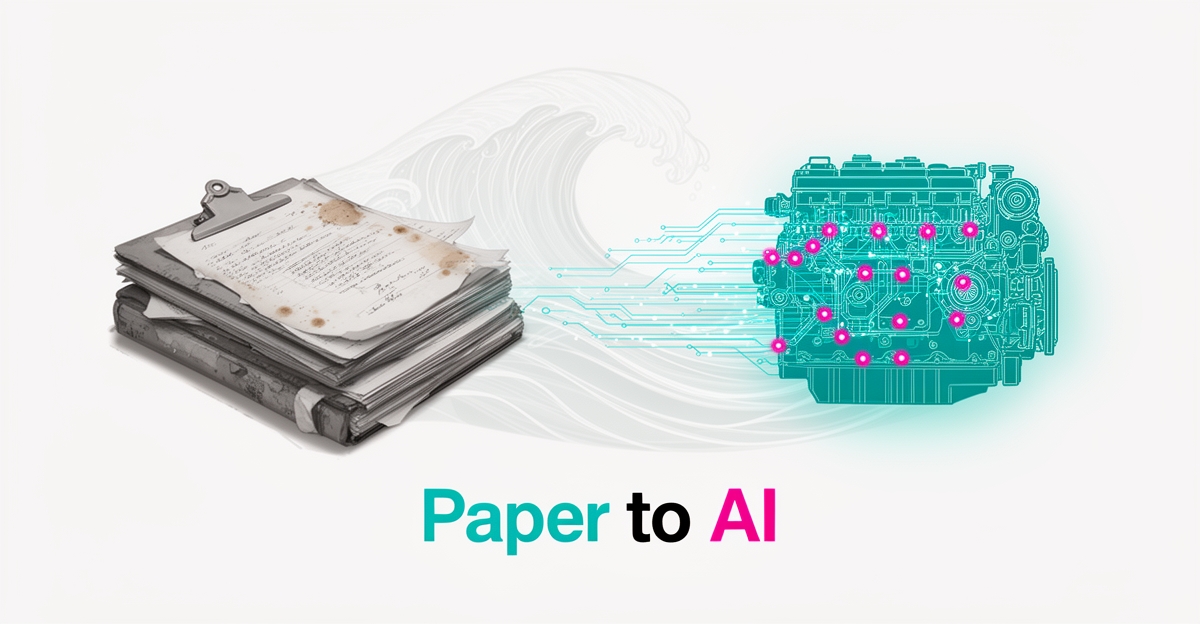
From Paper Logs to AI: How Marine Engine Shops Can Digitize Repair Histories
Key Facts
- Total vessel losses have fallen sharply over the past decade per Allianz Safety and Shipping Review reporting.
- Manual admin tasks, including permit management, can consume a meaningful share of crew time — industry reporting has suggested up to 20% according to Marine Log.
- Seafarer surveys have reported increased workload and stress tied to rising compliance demands per ISWAN data cited in Marine Log.
- Enclosed-space fatalities remain a persistent safety concern in shipping according to Marine Log.
Hire a team member that works 24/7 — for less than a part-time wage.
AI receptionists, SDRs, dispatchers and 99+ roles. Trained on your business, fully managed.
Not sure where to start? Ask our AI planner
The Hidden Cost of Paper Logs in Marine Engine Shops
Shipping has gotten measurably safer over the past decade, with total vessel losses falling sharply per Allianz Safety and Shipping Review reporting. Yet marine engine shops still lose time and accuracy to paper-based repair logging. Manual administrative tasks, including permit management and safety reporting, can consume a significant share of crew time — industry reporting has suggested up to 20% — pulling skilled mechanics away from the work that actually earns money. Rising compliance demands add to the strain, with seafarer surveys reporting increased workload and elevated stress per ISWAN data cited in Marine Log.
Paper logs create risks that go beyond inconvenience. Illegible handwriting, misplaced documents, and delayed data entry produce incomplete repair histories, making it hard to spot recurring engine issues or plan maintenance ahead of time. Those gaps push shops into reactive repairs instead of proactive maintenance, driving up downtime and the chance of safety incidents. As Esa Henttinen, Executive Vice President for Safety Solutions at NAPA, has observed, the data exists — but without digital infrastructure, it stays trapped in formats that prevent real-time intervention.
AIQ Labs helps marine engine shops overcome these limitations by turning paper logs into intelligent, searchable databases. By layering AI-driven data enrichment on top of your existing shop tools, repair histories become dynamic resources that track wear patterns, flag emerging problems, and support predictive maintenance schedules. That shift cuts administrative fatigue, reduces human error, and lets mechanics focus on precision work instead of paperwork.
- Eliminates time lost to manual data entry and file retrieval
- Reduces errors from illegible or incomplete records
- Enables trend analysis for proactive maintenance planning
- Improves access to historical data across shifts and locations
- Supports compliance with digital audit trails
Digitizing repair histories isn’t just about modernization — it’s about unlocking the value sitting in every service record. When paper logs are replaced with AI-augmented systems, marine engine shops gain the clarity needed to prevent failures before they occur, turning reactive repairs into strategic maintenance decisions. That foundation sets the stage for deeper AI integration, where data doesn’t just record the past — it informs the future.
How AI Transforms Repair Histories into Predictive Maintenance Tools
AI turns paper-based repair logs into intelligent, searchable databases that go well beyond record-keeping. By digitizing historical repair data — recurring faults, part replacements, service intervals — AI systems can identify patterns that signal emerging issues before they become failures. That shift from reactive to proactive maintenance reduces unplanned downtime and extends engine life, directly addressing the workload and stress concerns seafarer surveys have raised per ISWAN data cited in Marine Log.
These AI-enhanced systems can integrate with permit-to-work platforms to give real-time visibility into equipment health, automatically flagging components that show wear trends or repeated interventions. If a fuel injector shows a pattern of early failure across multiple vessels, for example, the system can recommend adjusted maintenance intervals — turning isolated repair notes into fleet-wide insights. As Esa Henttinen of NAPA has emphasized, the missing link is the digital infrastructure that makes existing incident data actionable in real time, so intervention happens before incidents rather than after per Marine Log.
By converting fragmented paper logs into unified, AI-augmented databases, marine engine shops can forecast maintenance needs more accurately, optimize spare parts inventory, and shrink the administrative load that currently eats into crew time as reported in Marine Log. This transformation supports safer, more efficient operations and lays the foundation for continuous, data-driven improvement.
- Digitize and centralize historical repair records
- Apply AI to detect recurring failure patterns
- Forecast maintenance needs based on usage and wear trends
- Integrate insights into permit-to-work systems for proactive alerts
- Reduce manual logging and administrative burden on crews
With AIQ Labs, shops can build owned systems — through AI Workflow Builds for a single high-cost workflow, or a full AI Operating System when you want one connected layer across the operation — that turn repair histories into a strategic asset for predictive maintenance and risk mitigation. To see how this applies to your shop, start with a free strategy call to assess your current workflows and identify high-impact opportunities.
Practical Steps to Digitize Your Shop’s Repair History with AIQ Labs
Paper logs hide patterns until a failure forces a manual search through binders. Marine engine shops lose hours to transcription, misfiled work orders, and reactive maintenance that could have been prevented.
Digitizing repair histories starts with understanding the current workflow and the cost of staying analog. Manual administrative tasks, including permit management and safety reporting, can take up to 20% of crew time according to industry reporting. That burden fuels fatigue and mistakes, while seafarer surveys report increased workload from compliance demands and elevated stress levels.
A phased implementation path keeps risk low and ownership high. AIQ Labs aligns the work to a proven process for marine engine shops that want custom data systems integrated with existing shop tools — no vendor lock-in.
Assessment and data capture forms the foundation. Teams map paper logs, service reports, and permit-to-work records, then digitize them into a structured, searchable database. This creates a single source of truth for engine wear, recurring issues, and maintenance intervals.
Architecture and integration follow. Custom AI systems connect to shop management software, parts inventories, and telematics where available. The goal is real-time visibility across the fleet and shop floor, putting data in mechanics’ hands before an incident rather than after.
Model training and enrichment turn raw history into predictive intelligence. AI models learn from historical repairs to identify patterns, forecast maintenance needs, and flag high-risk components. The system can also support permit-to-work workflows with automated checks and risk alerts.
Deployment is staged and practical. A single workflow or department system can be built first, then expanded. Payment options match the way you want to work:
- Start Monthly — a flat plan that costs far less than a part-time hire, with build, training, integrations, monitoring, and improvements included
- Build in Milestones — approve and pay per phase, keeping everything built so far
- Own It Outright — a full AI operating system with complete ownership of code, agents, and data when complete
Training and change management ensure adoption. Personnel learn to query repair histories in natural language, review AI-generated risk scores, and update records as work completes. Continuous monitoring validates accuracy and refines predictions.
The maritime industry has already shown what digitization can deliver. Total vessel losses have fallen sharply over the past decade per Allianz Safety and Shipping Review reporting, and connected-data platforms have demonstrated how shipping insights scale once information is digital.
As Esa Henttinen, Executive Vice President for Safety Solutions at NAPA, notes in Marine Log, the data has always existed; what has been missing is the digital infrastructure to make it actionable in real time.
Shops that move from paper to owned AI shift from reactive repairs to proactive maintenance — reducing downtime and protecting crews.
Still paying for 10+ subscriptions that don’t talk to each other?
We build custom AI systems you own outright. No vendor lock-in. Full control.
Not sure where to start? Ask our AI planner
Frequently Asked Questions
Why do paper logs still cause problems in marine engine shops?
How does AI actually turn old repair logs into predictive maintenance?
Is digitizing repair histories worth the effort for a small shop?
Will AI replace mechanics or just add more tech to learn?
What proof is there that digitizing helps safety in shipping?
How do we start digitizing without disrupting daily operations?
Your Repair History Is a Data Goldmine—Start Digging
Paper logs aren't just inconvenient — they're actively costing your shop time, accuracy, and foresight. Manual administration eats into crew time per industry reporting, while fragmented records hide the recurring failure patterns AI could surface as predictive maintenance insights. The industry's long-term drop in vessel losses shows what data-driven operations can achieve — and as NAPA's Esa Henttinen notes, the data has always existed; what's been missing is the infrastructure to make it actionable in real time. That's where AIQ Labs comes in: custom-built, searchable repair databases that integrate with your existing shop tools and that you own outright — no vendor lock-in, no subscription sprawl. The path forward is practical and phased: assess your current workflows, digitize your records, and let AI turn decades of service history into a strategic asset. Start with the two-minute Fit Check at aiqlabs.ai/apply, then book a free 30-minute strategy call to map your highest-impact opportunities. If there isn't a clear win, we'll tell you that too — no obligation, just clarity.
Make AI your competitive advantage — not just another tool.
Strategy, implementation and ongoing optimization. One partner, end to end.
Not sure where to start? Ask our AI planner