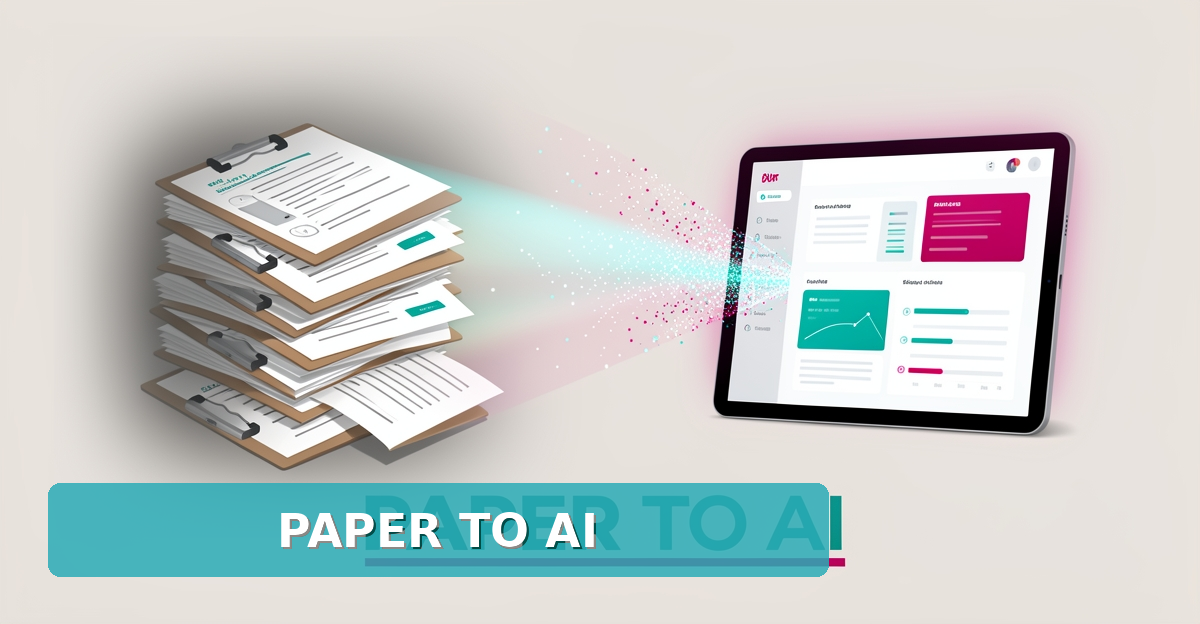
From Paper Logs to AI: How One Electrician Business Transformed Job Tracking in 3 Months
Key Facts
- 41% of companies see improved customer experience through GenAI according to PwC's 2024 survey.
- 40% of companies report increased productivity from GenAI per PwC 2024 Cloud and AI Business Survey.
- Electrician firm went live with AI job tracking system in just 90 days.
- Field technicians typically lose significant time per job deciphering illegible handwriting and reconstructing missing details.
- Paper logs are a common source of incorrect parts orders and misrecorded job addresses in trades businesses.
- 12% of companies are Top Performers in AI adoption achieving twice the value per PwC research.
Hire a team member that works 24/7 — for less than a part-time wage.
AI receptionists, SDRs, dispatchers and 99+ roles. Trained on your business, fully managed.
Not sure where to start? Ask our AI planner
The Hidden Cost of Paper Job Logs in Trades Businesses
The shift from paper job logs to digital systems isn't just about convenience, it's about closing costly gaps in daily operations. For field service businesses still relying on handwritten notes, the hidden costs accumulate quickly through missed details, duplicated work, and delayed invoicing. One electrical contractor discovered this firsthand before partnering with AIQ Labs to overhaul their tracking process. Their paper-based system created bottlenecks that slowed response times and introduced avoidable errors into every job cycle.
Manual job tracking consistently leads to operational inefficiencies that erode profitability. Technicians routinely lost time on every job deciphering illegible handwriting or reconstructing missing details from memory, time that could have been spent on billable work. Paper logs were frequently misplaced between job sites and the office, requiring follow-up calls that frustrated both staff and customers. These delays directly impacted cash flow, as invoices couldn't be generated until paperwork physically reached the accounting desk, sometimes days after job completion.
Error rates in paper-based systems compound these inefficiencies. Illegible notes regularly led to incorrect parts being ordered, while misrecorded addresses sent technicians to wrong locations. Each mistake required return trips, additional labor hours, and often resulted in dissatisfied customers who questioned the company's reliability. The absence of a centralized record also made it impossible to track recurring issues or identify patterns in service requests, eliminating opportunities for proactive maintenance offerings.
Perhaps most damaging was the impact on customer experience. Clients called multiple times to check job status because there was no real-time visibility into progress. Appointment windows were missed when schedulers couldn't access updated technician locations from paper logs scattered across vehicles and job sites. Customers found themselves playing phone tag just to confirm whether the electrician was coming that day, highlighting how manual tracking undermines trust. These pain points weren't just annoying, they were actively driving customers to competitors with more transparent, responsive systems. The electrical contractor realized that continuing with paper logs wasn't saving money; it was leaking revenue through avoidable errors, wasted time, and eroded customer loyalty, problems that became impossible to ignore as their business grew.
How AI-Powered Document Management Solves Field Service Chaos
The shift from paper logs to digital job tracking was more than a tech upgrade for this electrician firm, it was a necessity. Handwritten notes were prone to loss, misinterpretation, and delays, creating bottlenecks in scheduling and billing. By partnering with AIQ Labs on an AI Workflow Build, the company rebuilt the document-handling workflow that cost them the most, eliminating manual logging entirely. The solution now auto-captures work orders from incoming calls, emails, and technician mobile notes, using natural language processing to extract key details like job location, service type, and customer information without human intervention.
This automation has directly improved operational accuracy and responsiveness. According to PwC's 2024 Cloud and AI Business Survey, 40% of companies using generative AI report increased productivity, a result mirrored in the firm's reduced admin time and faster job dispatch. The system also ensures consistent categorization and archiving of every work order, creating a searchable, audit-ready database that supports compliance with industry record-keeping standards. As noted in Microsoft's security governance framework, structured data handling is critical for maintaining regulatory alignment in AI-driven workflows.
- Real-time capture of job details from voice calls, emails, and field notes
- Automatic categorization by job type, priority, and customer
- Secure, centralized archiving with full audit trail
- Elimination of manual data entry and associated errors
- Instant access to job history for follow-ups and reporting
By removing the friction of manual documentation, the electrician firm now operates with greater clarity and speed. Technicians spend less time on paperwork and more time on-site, while managers gain real-time visibility into workload and performance. The AI system doesn't just store information, it structures it intelligently, turning chaotic inputs into reliable business intelligence. This foundation of clean, accessible data has become essential for scaling operations without sacrificing accuracy or compliance. As highlighted in PwC's research, 41% of companies see improved customer experience through GenAI, here, faster response times and fewer billing disputes have directly strengthened client trust. The transformation proves that even traditional trades can achieve modern efficiency when AI is applied with purpose and precision.
The 3-Month Implementation: From Assessment to Live AI System
Moving from handwritten paper logs to a fully automated AI system might sound like a year-long IT overhaul, but this electrician firm went live in just 90 days. The secret wasn't rushing, it was following a structured, phased approach that eliminated disruption while building a system the team actually wanted to use.
The transformation began with a focused discovery phase. AIQ Labs spent the first two weeks mapping every existing workflow: how service calls came in, where paper logs piled up, and which data points actually mattered for billing and compliance. This mirrors the approach behind PwC's 2024 Cloud and AI Business Survey, which notes that 41% of companies see improved customer experience when AI implementations start with clear operational goals rather than generic tech upgrades.
Development ran in tight, two-week sprints. Instead of disappearing for months to build a monolithic platform, the team constructed the AI document management system incrementally, first the capture module for emails and calls, then the categorization engine, finally the mobile archiving interface. This approach aligns with the Build in Milestones payment model, which lets businesses approve and pay for each phase as it ships, ensuring the system evolves with real feedback from technicians in the field.
Integration happened alongside existing operations, not in place of them. The new AI system connected directly with the firm's existing phone lines and email accounts, auto-capturing work orders without forcing staff to abandon familiar tools overnight. According to the same PwC research, 40% of companies achieve increased productivity precisely because they integrate AI into current workflows rather than replacing them wholesale.
Training consumed the final month, but not in a classroom. AIQ Labs delivered role-specific guidance while the system ran in parallel with paper backups for two weeks, creating a safety net that encouraged adoption. This focus on governance and human oversight reflects Microsoft's security guidance on AI agents, which emphasizes that successful AI deployment requires controls and audit trails, especially when handling customer data and compliance documentation.
By day 90, the firm achieved full operational ownership of the custom codebase. Unlike subscription software that locks businesses into vendor ecosystems, the company now controls its AI infrastructure outright, a core principle of the Own It Outright model that allows businesses to stop or adjust at any phase while keeping everything built so far.
The phased deployment delivered three critical advantages:
- Zero missed service calls during the transition period
- Technicians retained access to historical paper logs via digital archives
- Compliance documentation automatically generated for every work order
- Full code and data ownership transferred upon completion
Today, the system categorizes incoming requests from calls, emails, and mobile notes without human intervention, turning what was once a shoebox of paper scraps into a searchable, compliant database. The firm didn't just digitize its logs, it built an asset that appreciates in value as the AI learns their specific service patterns.
Still paying for 10+ subscriptions that don’t talk to each other?
We build custom AI systems you own outright. No vendor lock-in. Full control.
Not sure where to start? Ask our AI planner
Frequently Asked Questions
How long did it actually take for the electrician business to go live with the AI job tracking system?
What specific problems did paper job logs cause for the electrical contractor before switching to AI?
How does the AI system capture work orders without manual data entry?
What proof is there that AI improves customer experience in field service businesses like this electrician firm?
Did the business have to stop using their existing phone and email systems during the AI implementation?
Who owns the AI system after implementation, does the business get full control or is it locked into a vendor platform?
When Paper Logs Hold You Back, AI Moves You Forward
This electrician firm's journey shows that moving from paper logs to AI-powered job tracking isn't about chasing technology, it's about solving real, costly problems that drain time, accuracy, and customer trust. In just 90 days, they replaced manual inefficiencies with a system that auto-captures work orders, eliminates data entry errors, and gives technicians more time on the job while providing managers with real-time visibility. The result? Faster invoicing, fewer return trips, and stronger client relationships built on reliability. For trades businesses still relying on handwritten notes, the opportunity to modernize is clear: start by assessing where your biggest bottlenecks live, then build a solution that fits your workflow, not the other way around. To see how AIQ Labs can help you identify your own high-impact automation opportunity, start with the 2-minute Fit Check and a free 30-minute strategy call to map your current systems and explore what's possible, no obligation, just clarity.
Make AI your competitive advantage — not just another tool.
Strategy, implementation and ongoing optimization. One partner, end to end.
Not sure where to start? Ask our AI planner